Develop number recognition Addition Worksheets for Ages 4-7
5 filtered results
-
From - To
Enhance your child's mathematical journey with our engaging number recognition addition worksheets designed specifically for ages 4 to 7. These worksheets provide a fun and interactive way for young learners to identify numbers and practice addition skills simultaneously. Featuring colorful illustrations and age-appropriate exercises, our resources create a meaningful learning experience that encourages children to develop a strong foundation in mathematics. Each worksheet is carefully crafted to nurture confidence and independence as kids explore numbers and simple addition concepts. Perfect for home or classroom use, these worksheets are an essential tool for fostering essential skills in early education. Start their learning adventure today!
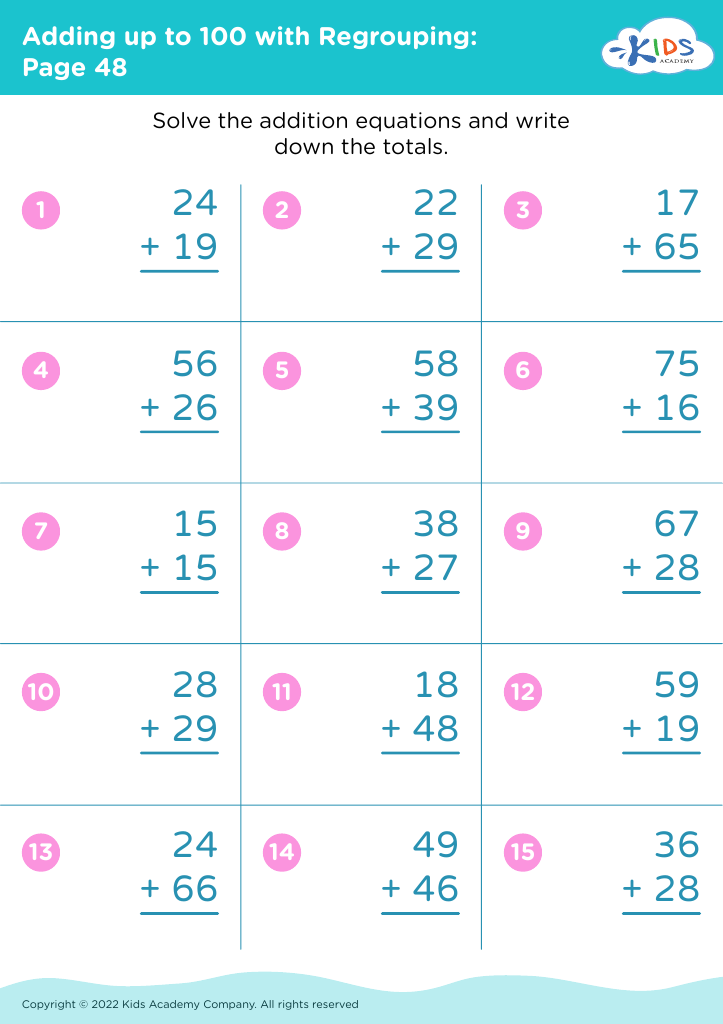
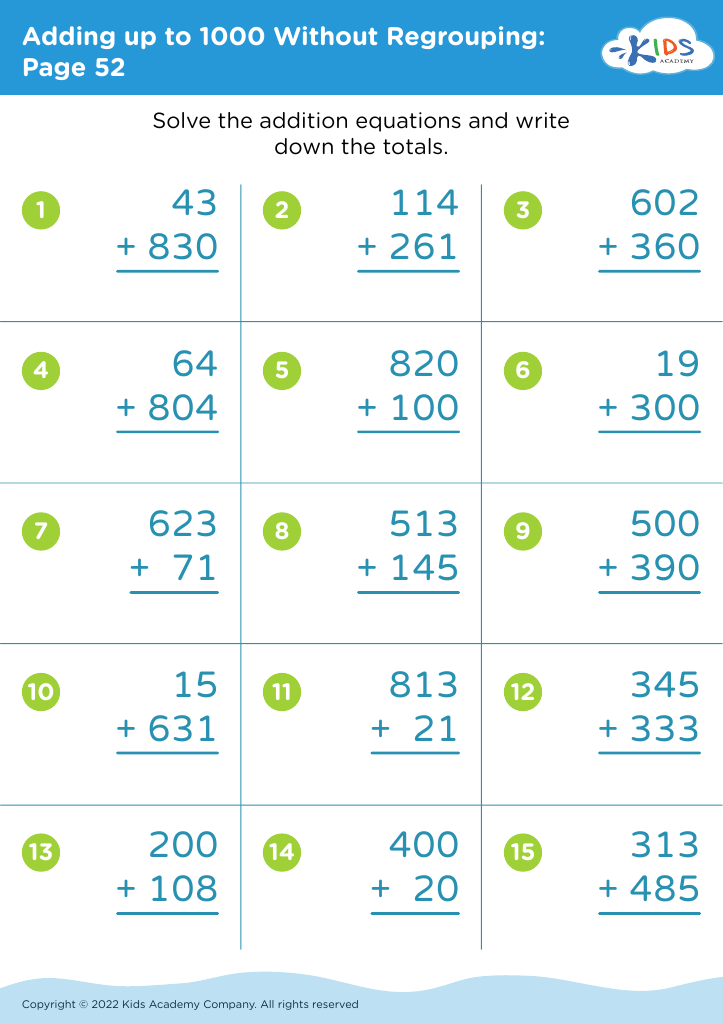
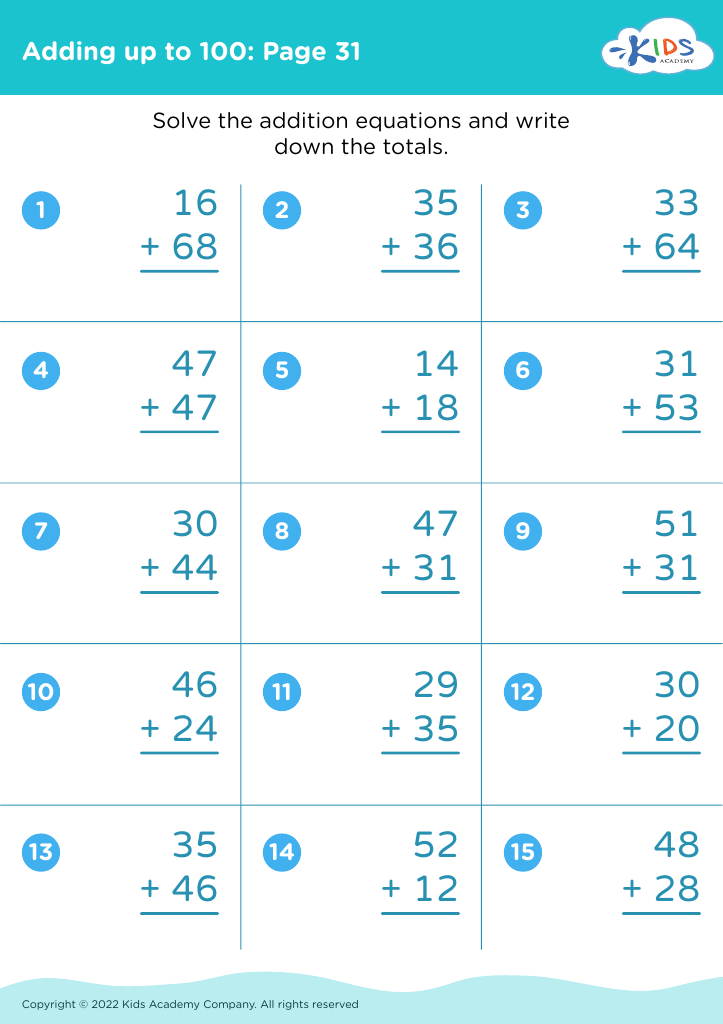
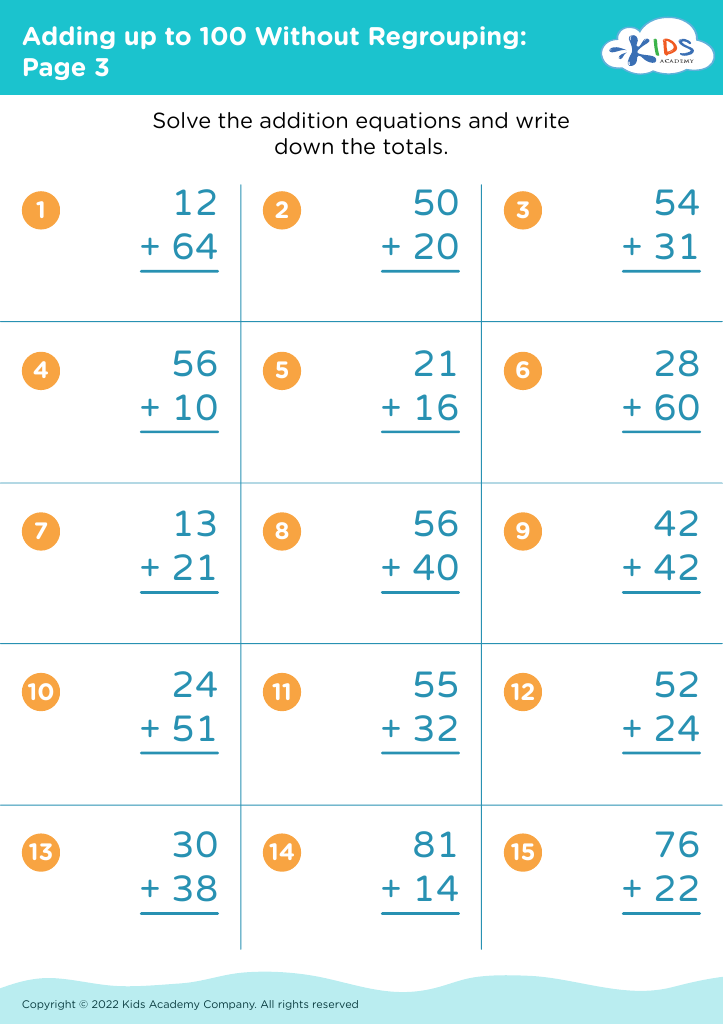
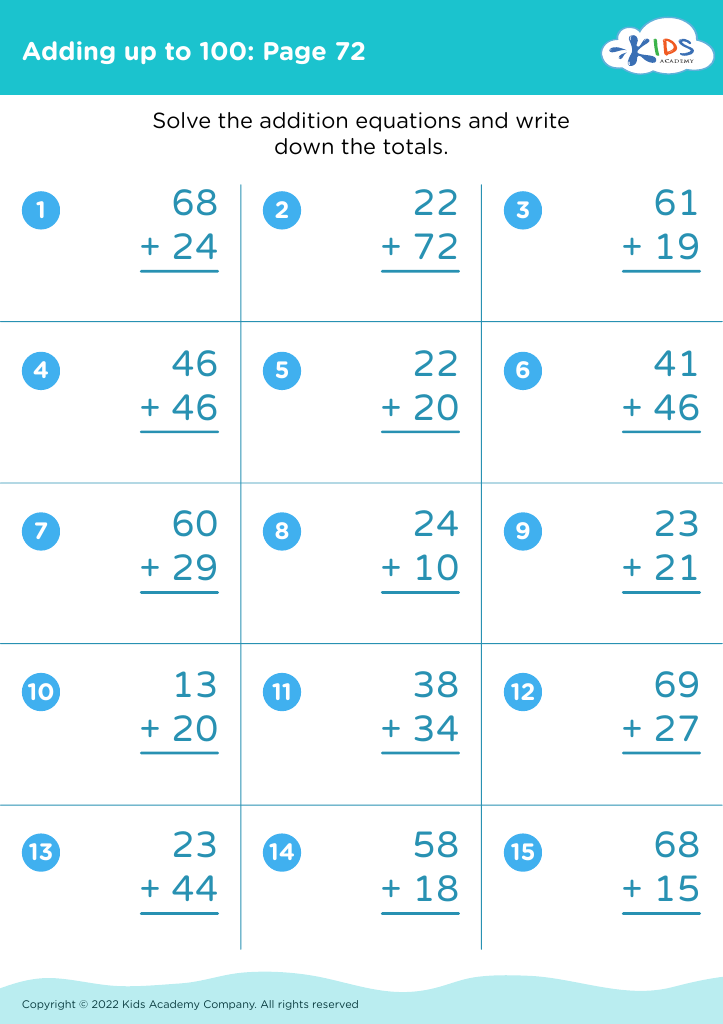








Number recognition and addition are foundational skills crucial for children aged 4-7, as they form the basis for all future mathematical learning. Parents and teachers should prioritize these skills because they foster confidence and competence in young learners. Early mastery of number recognition—identifying and understanding numbers 0-20—enables children to engage meaningfully with their environment, whether they're counting toys, sorting items, or playing games.
Additionally, mastering simple addition helps children develop critical thinking and problem-solving abilities. Understanding how to combine numbers through addition introduces concepts of quantity and value, paving the way for more complex operations like subtraction, multiplication, and division. Early experiences with math also encourage cognitive development and enhance a child's ability to follow logical sequences, which are key skills not only in math but across the curriculum.
Moreover, strengthening math skills at a young age can positively impact overall academic performance and attitudes towards learning. It is essential for parents and teachers to create a supportive environment filled with engaging activities—games, songs, and hands-on experiences—that make learning these skills fun. Nurturing a positive relationship with mathematics early on lays the groundwork for lifelong enthusiasm and success in this crucial subject area.








