Enhances counting skills Addition Worksheets for Ages 4-7
5 filtered results
-
From - To
Enhance your child’s counting skills with our engaging Addition Worksheets designed for kids aged 4-7. These fun and interactive activities promote foundational math skills while making learning enjoyable. Our worksheets focus on developing counting proficiency, incorporating visual aids and hands-on exercises to capture your child’s attention. With a variety of exercises tailored for different learning styles, children can confidently explore basic addition concepts by counting objects, solving colorful puzzles, and enjoying relatable themes. Ideal for homeschooling or classroom use, these resources not only foster essential math skills but also build a love for learning. Start your child’s math journey today!
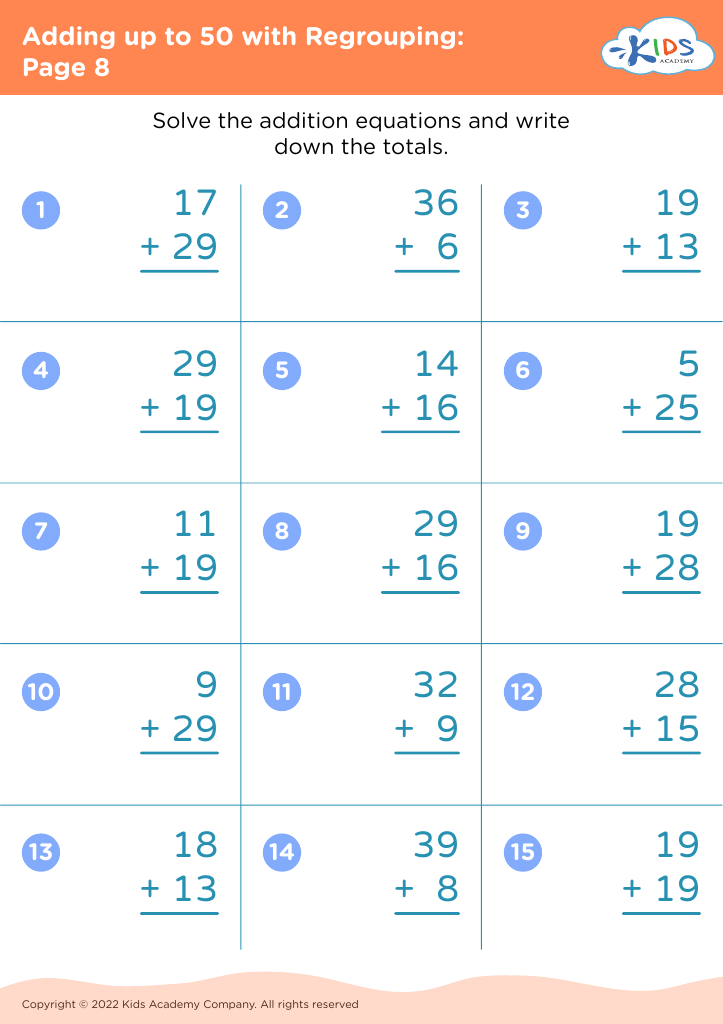
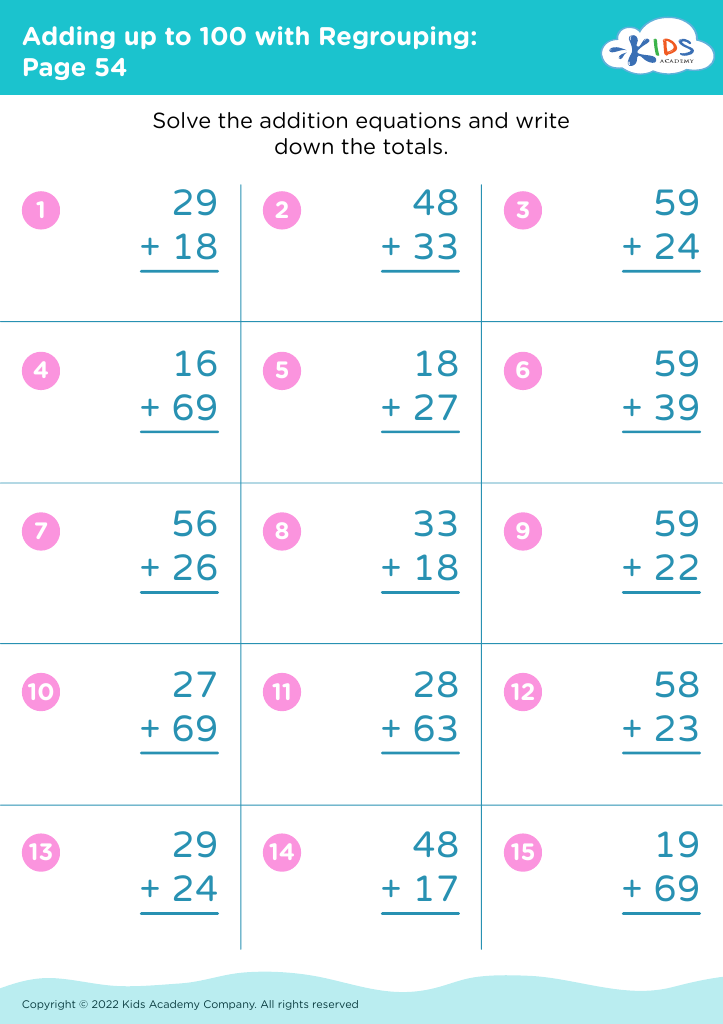
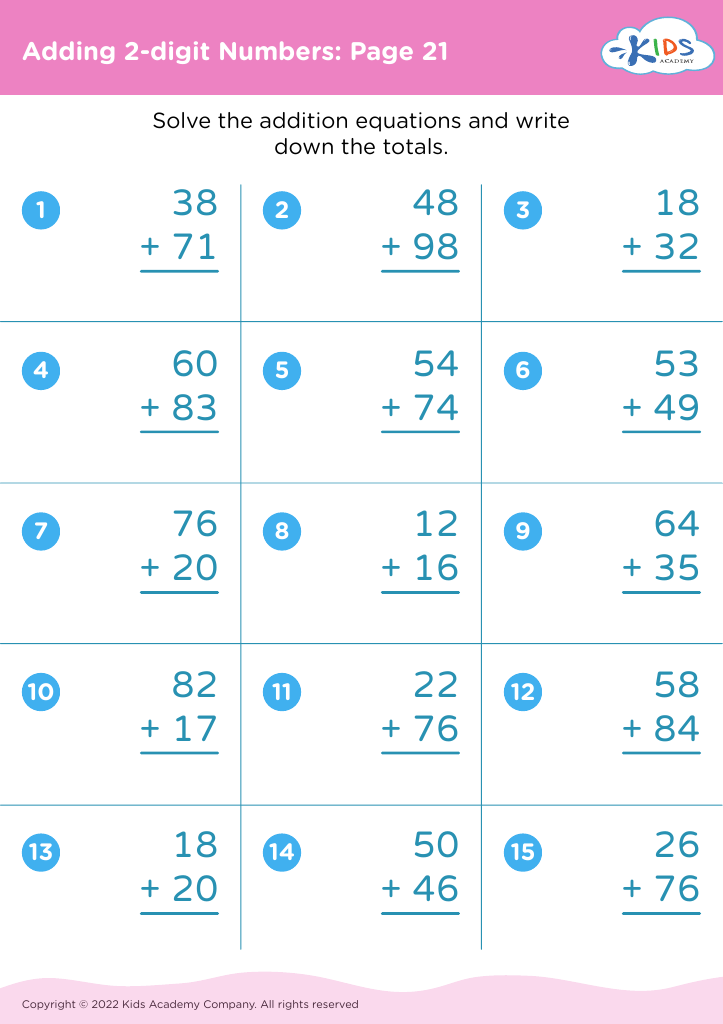
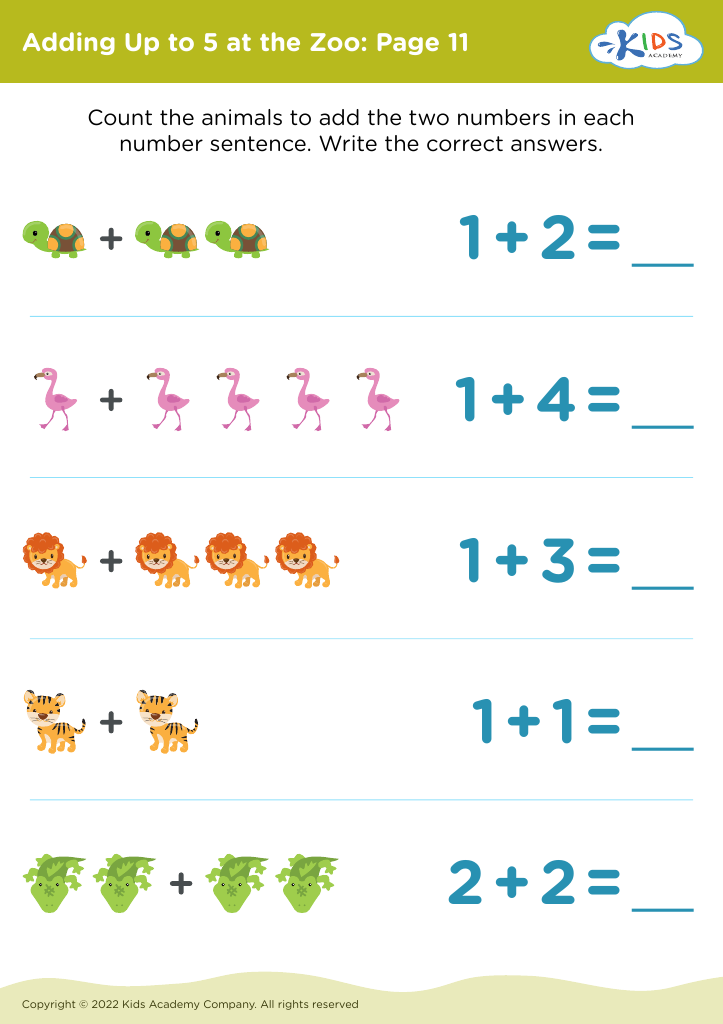
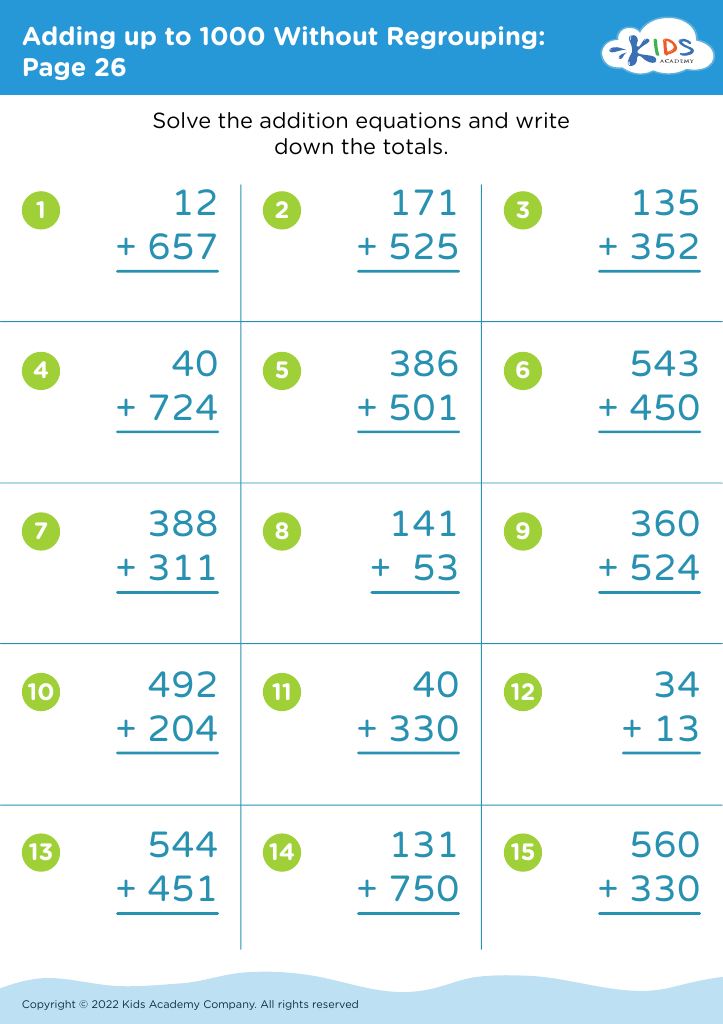








Enhancing counting skills and addition for children aged 4-7 is vital for several reasons. First, these foundational math skills are essential for everyday tasks, such as handling money, measuring ingredients for cooking, or determining time. By developing these skills early, children build confidence and competence in mathematics, important for their future educational experiences.
Moreover, early exposure to counting and addition fosters cognitive development. It helps children understand patterns, logic, and problem-solving skills—building blocks for more advanced math concepts later on. Engaging in counting activities promotes critical thinking, as children learn to achieve results through various approaches.
Teachers and parents play a crucial role in promoting these skills. Interactive games, hands-on activities, and real-life applications create an engaging environment for learning. This practical approach makes math enjoyable and reduces anxiety toward the subject, encouraging a lifelong appreciation for learning.
Finally, strong counting and addition abilities support overall academic success. Children who master these skills early are more likely to excel in subsequent math classes, setting the stage for a prosperous academic career. Investing time and resources in developing these competencies greatly benefits children in their early years and beyond.








