Fine motor development Addition Worksheets for Ages 4-7
4 filtered results
-
From - To
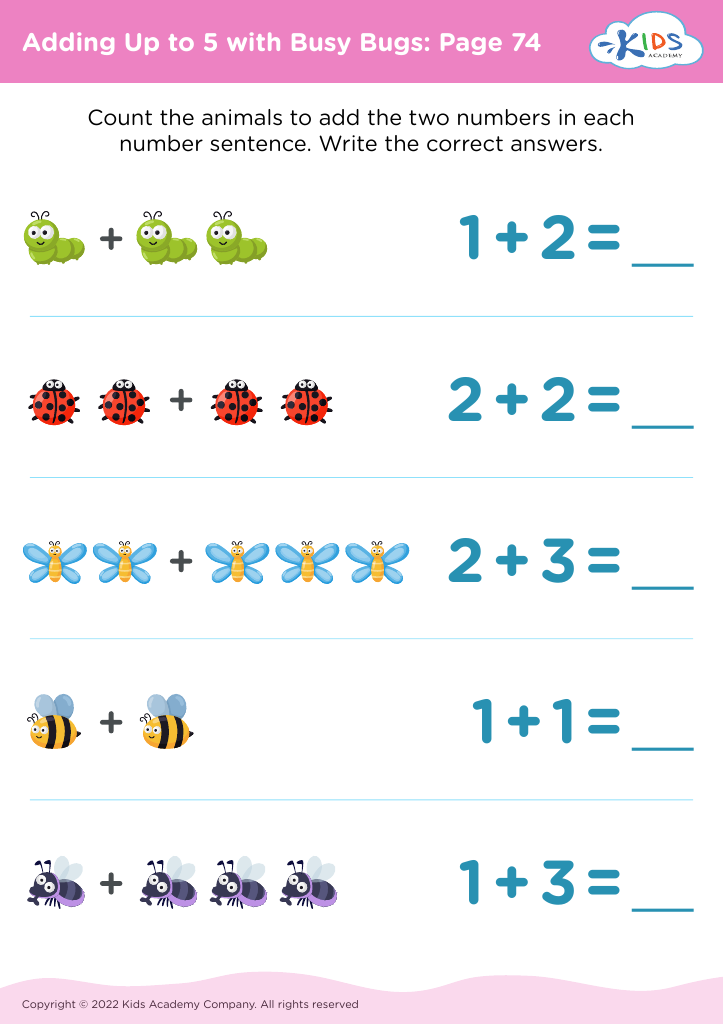
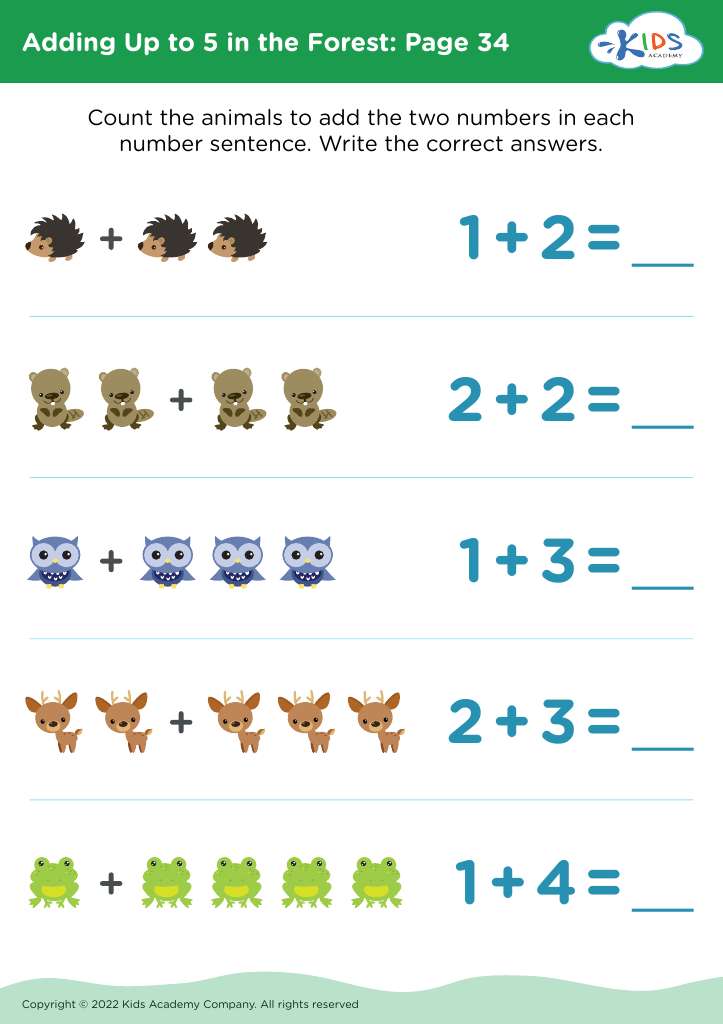
Enhance your child's fine motor skills and math abilities with our engaging addition worksheets designed specifically for ages 4-7! These printable activities are perfect for preschoolers and early learners, helping them practice addition while simultaneously improving their hand-eye coordination and dexterity. Each worksheet features colorful illustrations and simple problems that make learning enjoyable and interactive. As children color, trace, and complete the exercises, they develop essential fine motor skills necessary for writing and other activities. Foster a love for learning in your young ones with our educational worksheets that seamlessly blend math practice and fine motor development! Start their journey to success today!
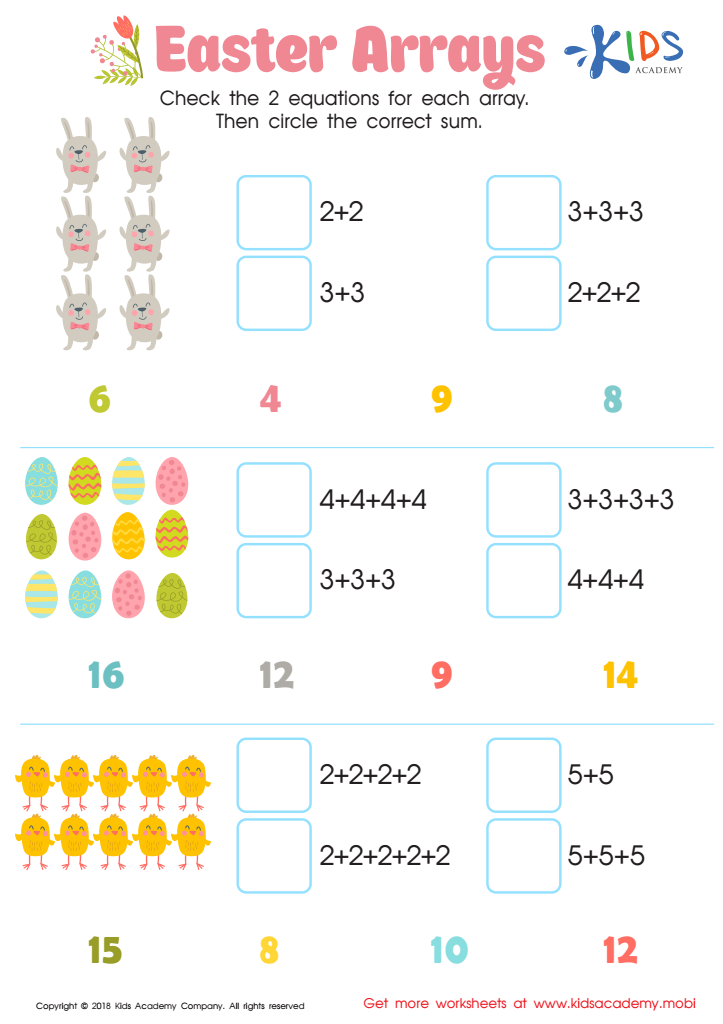
Easter Arrays Worksheet
 Assign to My Students
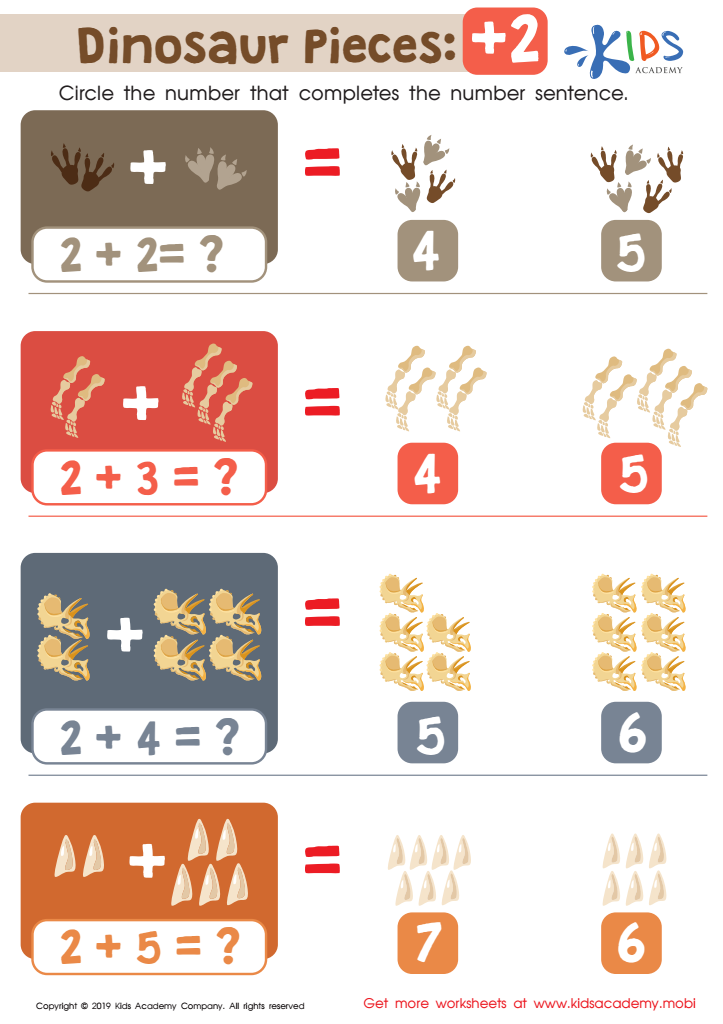
Dinosaur Pieces: +2 Worksheet








Fine motor development is crucial for children aged 4-7 as it lays the foundation for essential skills that will impact their academic and daily life. This stage marks a significant period when children refine their hand-eye coordination, dexterity, and overall control of small muscles in their hands and fingers. These skills are vital for a variety of tasks—including writing, drawing, cutting with scissors, and managing buttons and zippers—which are integral to their independence and self-sufficiency.
Parents and teachers should care about fine motor development because it is closely linked to cognitive and social development. Proficiency in fine motor tasks enhances a child’s ability to engage in classroom activities and enhances their confidence. For instance, strong fine motor skills contribute to better handwriting, which religiously affects academic performance.
Moreover, promoting fine motor activities fosters creativity and encourages problem-solving abilities through hands-on experiences like crafting or building. As children manipulate objects, they learn to improve focus and concentration. Therefore, nurturing fine motor skills creates a well-rounded approach that prepares children not only academically but also social and emotional growth, making it a critical focus for both parents and educators alike.








