Improving mathematical skills Addition Worksheets for Ages 4-7
4 filtered results
-
From - To
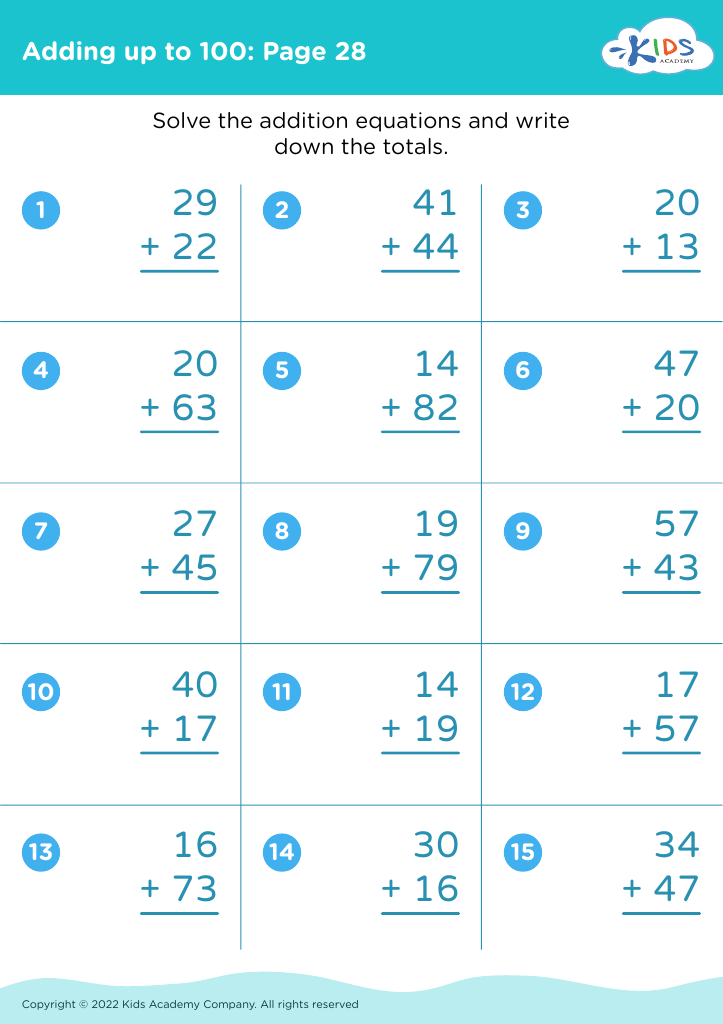
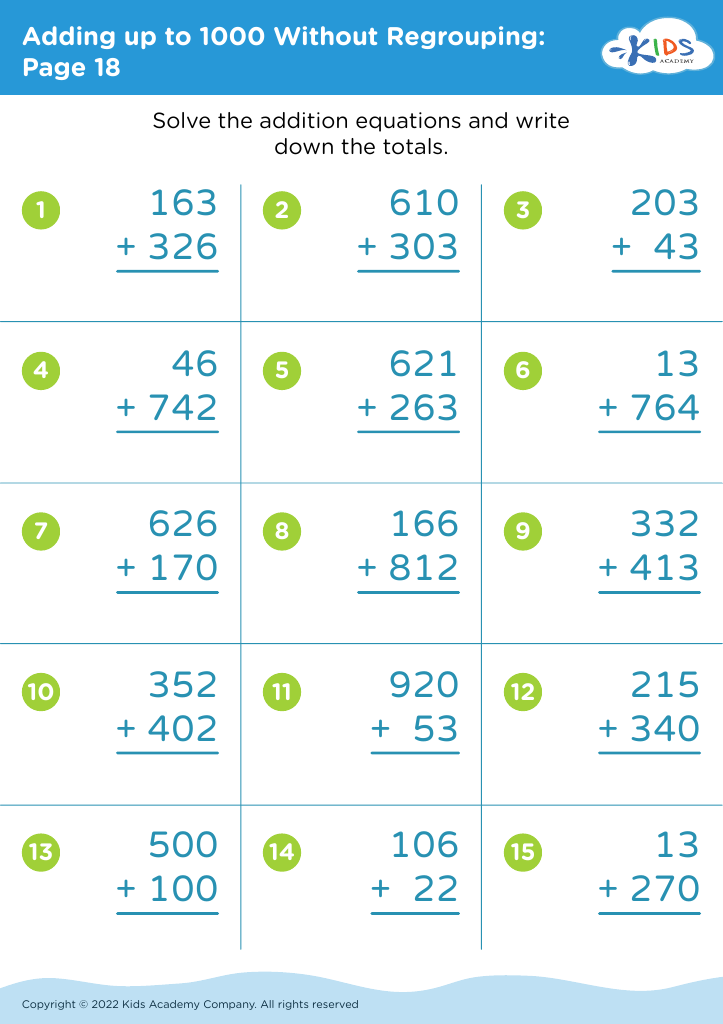
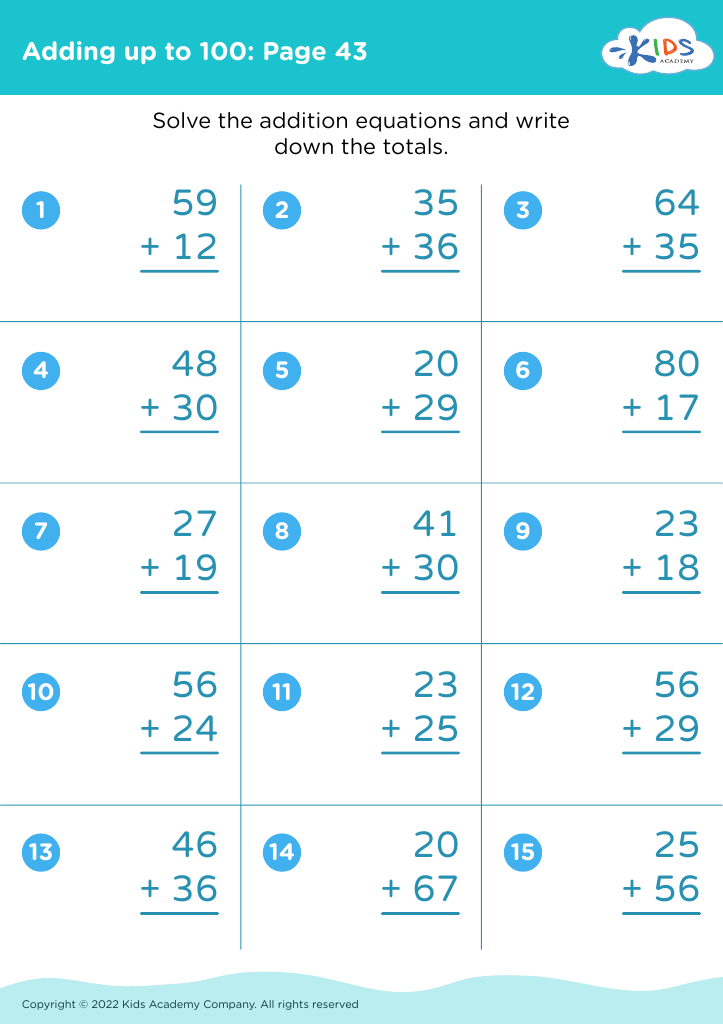
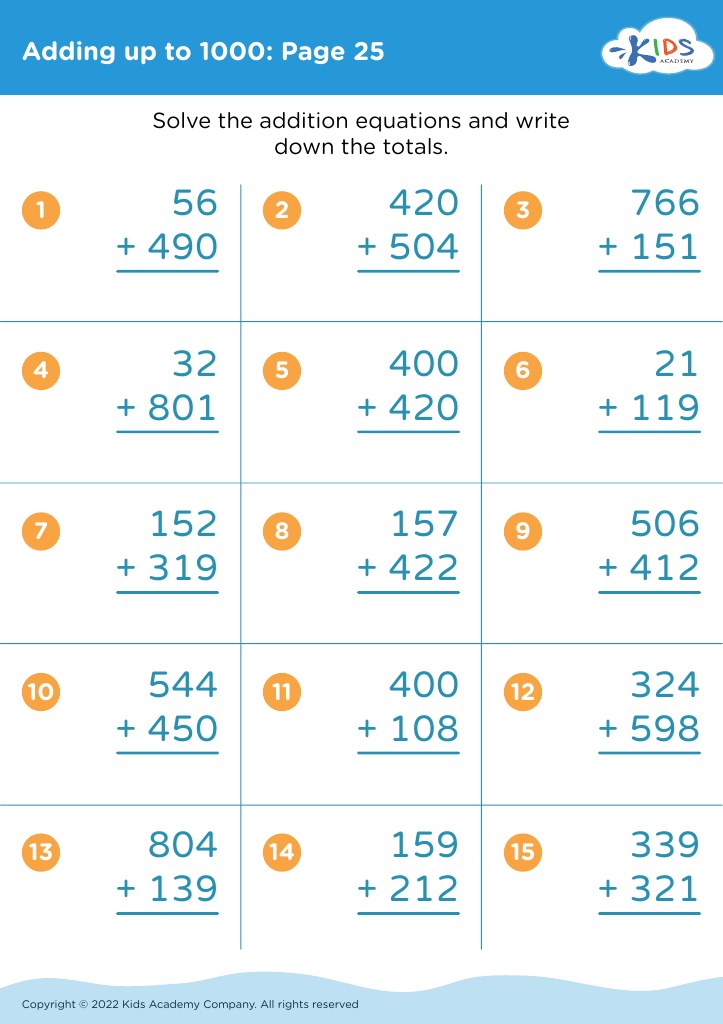
Introducing "Improving Mathematical Skills: Addition Worksheets for Ages 4-7" by Kids Academy! Designed to enhance young learners' fundamental math abilities, these engaging worksheets make mastering addition fun and interactive. With colorful visuals and age-appropriate challenges, our worksheets help build confidence and develop essential skills in early math. Each worksheet is crafted to support both classroom learning and at-home practice, ensuring that children gain a solid foundation in arithmetic. Ideal for ages 4-7, our addition worksheets are your perfect partner in making math an enjoyable and rewarding experience for your child. Visit Kids Academy today!




.jpg)



Improving mathematical skills, particularly in addition, for children aged 4-7 is vital as it forms the foundation for their future learning and cognitive development. At this tender age, children's brains are highly malleable and receptive to new information. Mastering addition early not only builds their numerical proficiency but also develops critical thinking and problem-solving skills that they will use throughout their lives.
Addition is a core mathematical concept that is fundamental to more advanced math topics, such as subtraction, multiplication, and division. Early competence in addition sets the stage for smoother transitions to these complex areas. Furthermore, being proficient in basic math boosts children's confidence in their abilities, fostering a positive attitude towards learning in general.
Moreover, math skills are instrumental in everyday life. Simple tasks like counting money, telling time, or measuring ingredients require a basic understanding of addition. Introducing addition at an early age helps children apply these skills in real-life scenarios effectively.
Parents and teachers play a crucial role in fostering a stimulating environment that inspires curiosity and enhances learning. When children see adults valuing mathematical skills, they tend to mirror this enthusiasm. Involving them in fun, interactive addition activities can turn learning into an enjoyable experience, laying a robust groundwork for lifelong educational success.








