Improving subtraction skills Addition Worksheets for Ages 4-7
3 filtered results
-
From - To
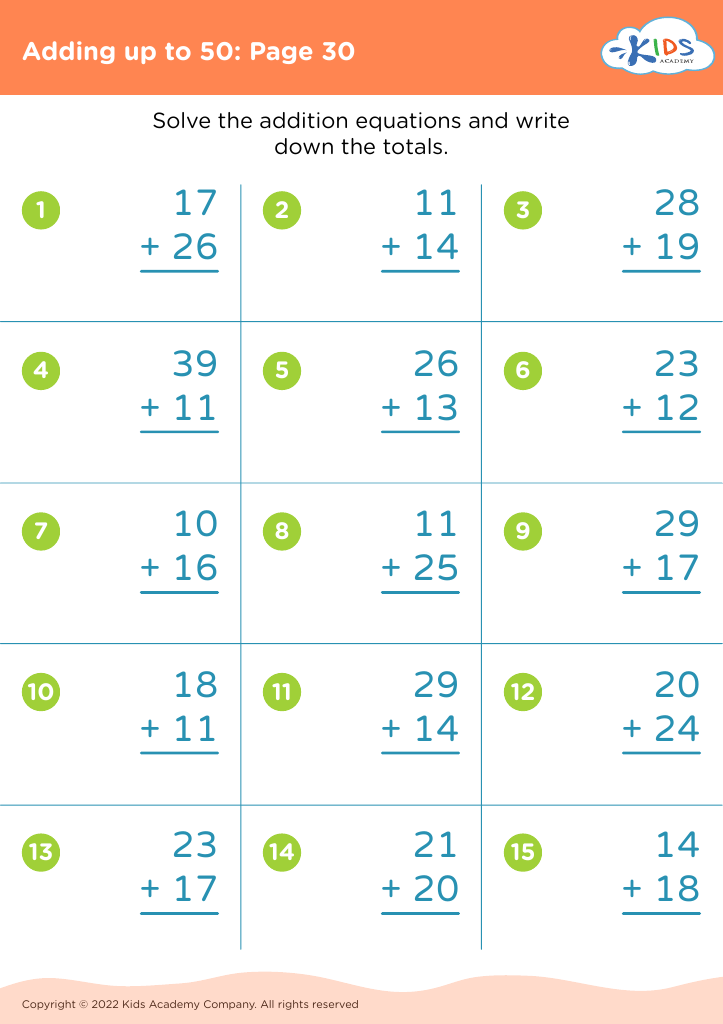
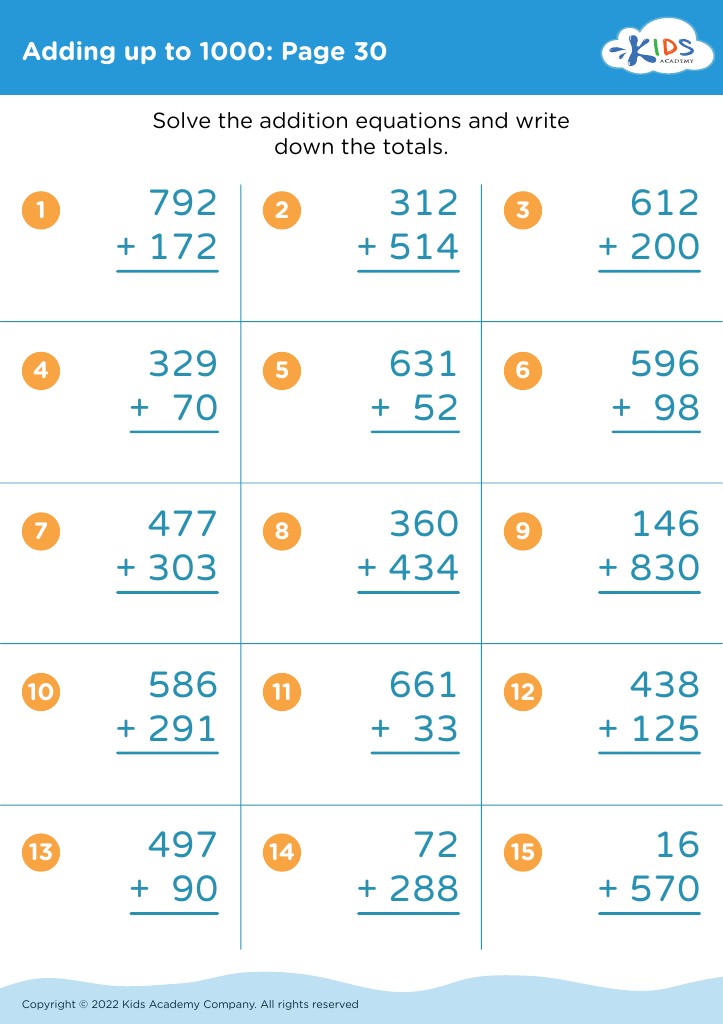
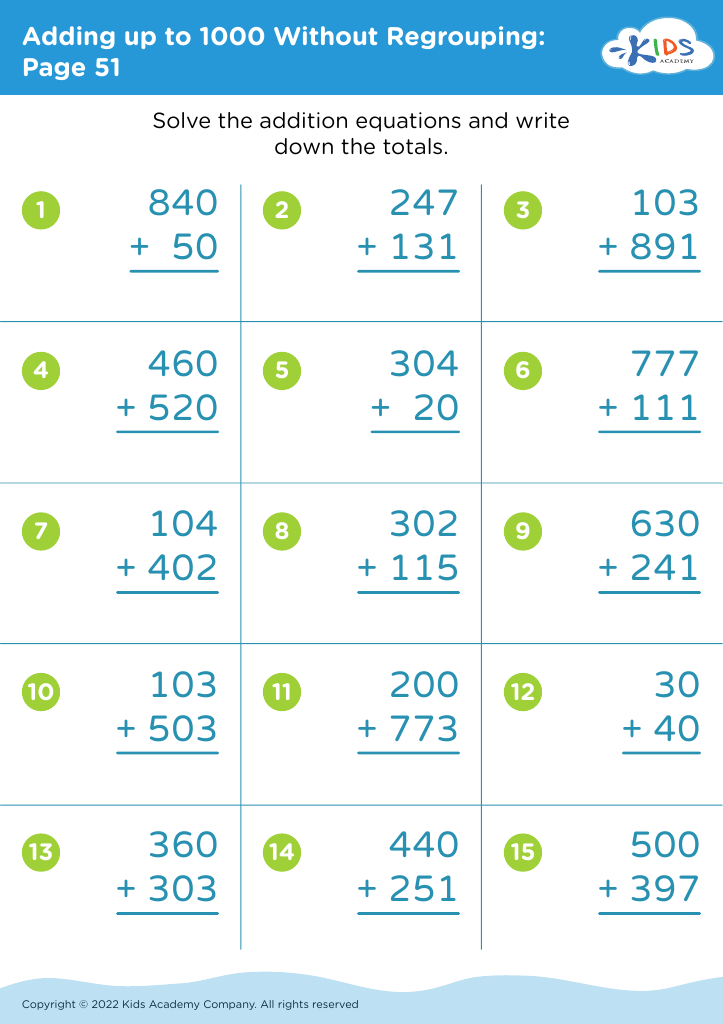
Enhance your child’s math journey with our "Improving Subtraction Skills Addition Worksheets" designed specifically for ages 4-7. These engaging worksheets provide a fun and interactive approach to mastering subtraction concepts, laying a solid foundation for mathematical understanding. Packed with colorful illustrations and age-appropriate exercises, your little learners will enjoy practicing their skills while building confidence in math. Each worksheet encourages critical thinking and problem-solving, making math enjoyable and accessible. Whether used at home or in the classroom, these resources are ideal for reinforcing subtraction in a playful way. Watch your child's skills grow with our expertly crafted worksheets!







Improving subtraction skills for children aged 4-7 is crucial for several reasons. First, foundational mathematical concepts established during these formative years significantly shape a child's future learning. Mastery of subtractive reasoning enables children to tackle more advanced mathematical concepts later on, fostering a positive learning trajectory.
Second, subtractive comprehension enhances critical thinking and problem-solving abilities. Children learn to manipulate numbers, understand relationships, and develop strategies for deduction, skills that are essential not just in math, but in their daily lives.
Additionally, reinforcing subtraction skills promotes confidence. As children gain a sense of achievement through mastering subtraction, they build self-esteem and a love for learning. This can lead to a lifelong interest in math and academia, countering the common apprehension that so many students face towards mathematics.
Moreover, subtraction is integral to understanding everyday situations such as sharing, budgeting, and time management—helping children navigate real-world scenarios effectively. Parents and teachers play a vital role in this skill enhancement, using engaging techniques, such as games and practical applications, that make learning enjoyable and relevant. Investing time in improving subtraction skills strengthens both educational outcomes and fundamental life skills for young learners.








