Mental math practice Addition Worksheets for Ages 4-7
8 filtered results
-
From - To
Unlock your child's potential with our Mental Math Practice Addition Worksheets designed specifically for ages 4-7! These fun, engaging worksheets help young learners develop essential math skills, building a strong foundation in addition. Through colorful, age-appropriate exercises, children enhance their problem-solving abilities and mental calculation speed. Our worksheets encourage independent learning, fostering confidence in math from an early age. With tailored challenges to match their growing abilities, kids remain motivated and excited about mastering addition. Perfect for home or classroom use, these worksheets are your go-to resource for nurturing a lifelong love of numbers. Download today and watch your child's math skills soar!
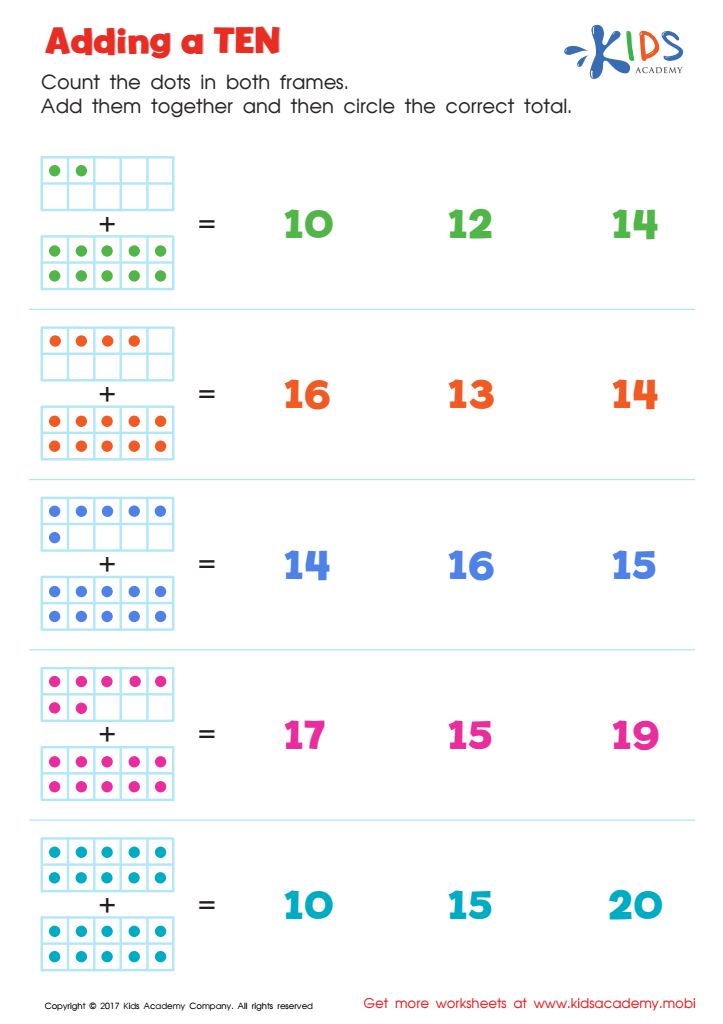
Adding a Ten Worksheet
 Assign to My Students
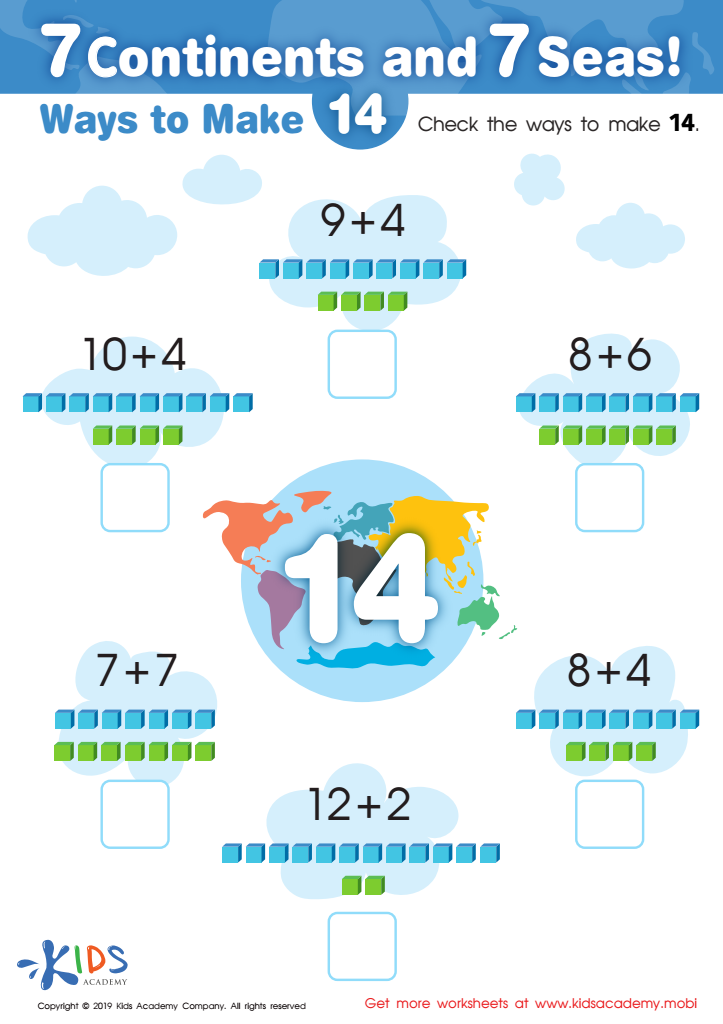
7 Continents and 7 Seas Worksheet
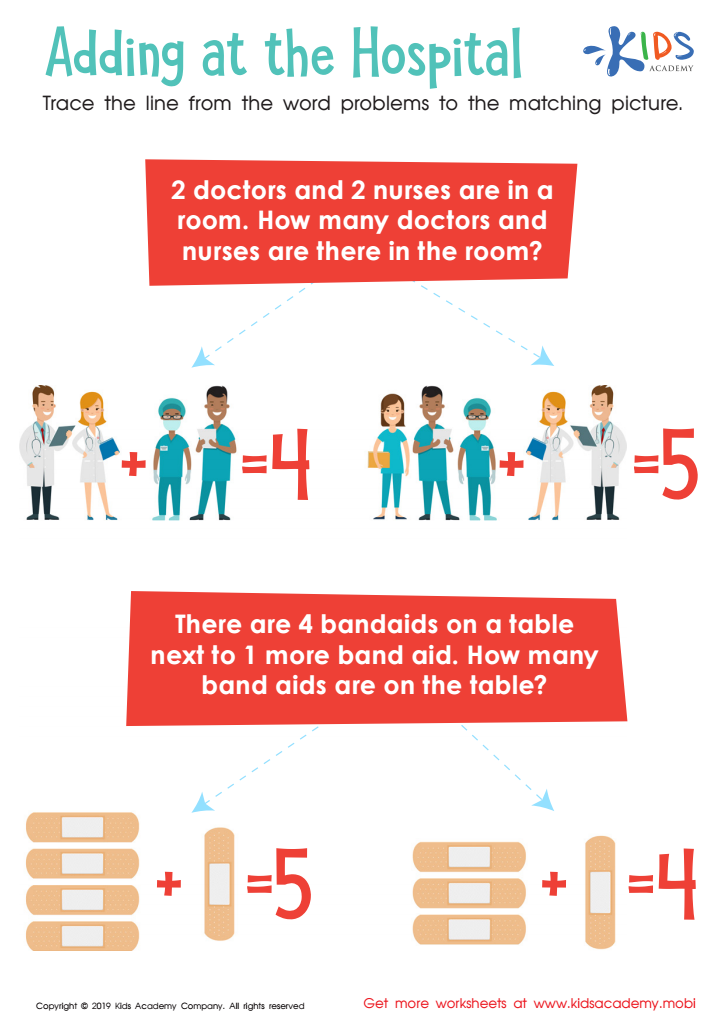
Adding at the Hospital Worksheet
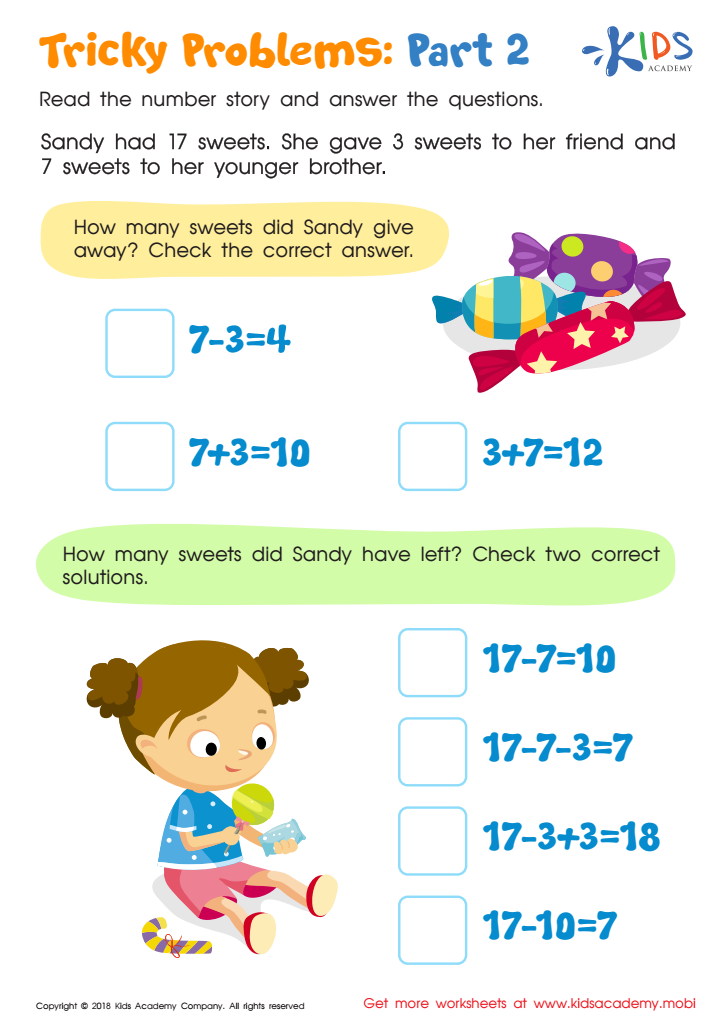
Tricky Problems Worksheet: Part 2
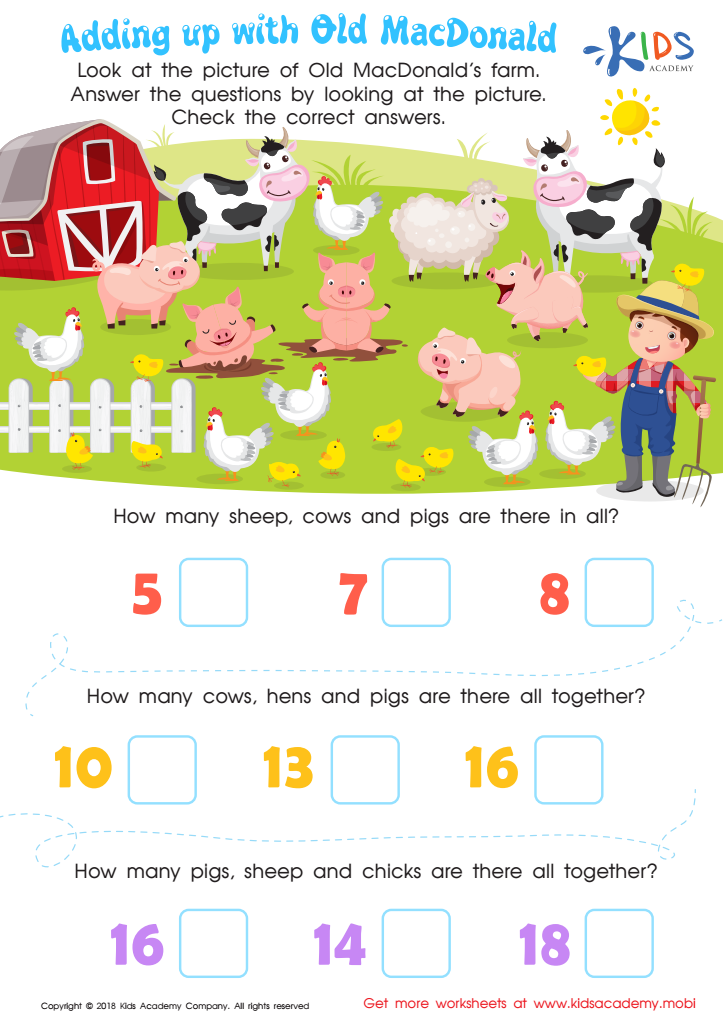
Adding Up with Old MacDonald Worksheet
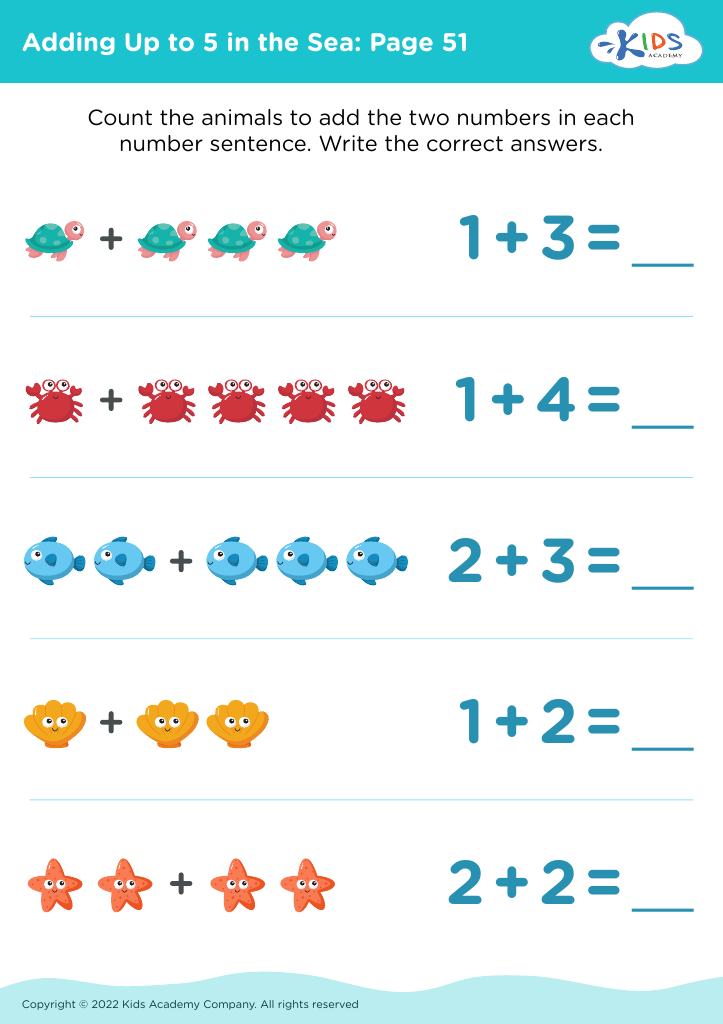
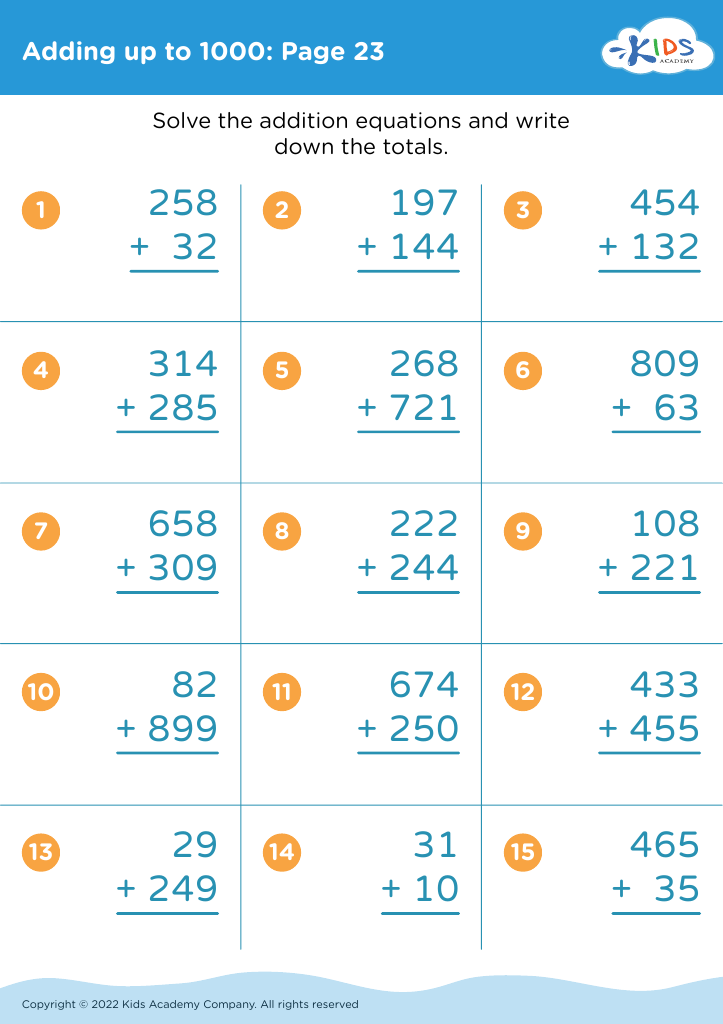
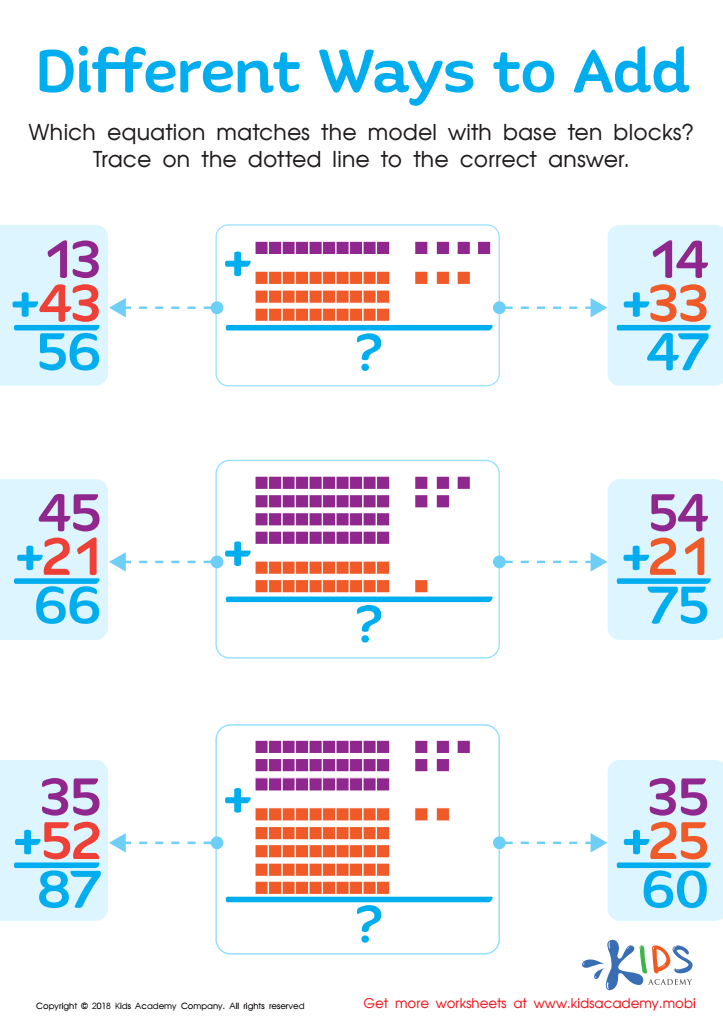
Different Ways to Add Worksheet








Parents and teachers should prioritize mental math practice, especially addition, for children aged 4-7 because it lays the foundation for their numerical and cognitive development. During these formative years, young minds are highly receptive to new information, and mental math fosters critical thinking skills, number sense, and problem-solving abilities.
When children practice adding numbers mentally, they enhance their memory, concentration, and processing speed. They learn to visualize numbers, which is essential for understanding mathematical relationships and patterns. This early exposure to arithmetic boosts their confidence and reduces math anxiety, paving the way for more complex mathematical concepts in the future.
Moreover, incorporating mental math into daily activities can make learning fun and engaging, bridging the gap between abstract concepts and real-life applications. For instance, asking children to mentally add items while shopping or counting steps while climbing stairs embeds mathematical thinking into everyday experiences.
For teachers, regular mental math practice can provide immediate feedback on students' understanding, allowing timely intervention and personalized instruction. It also encourages a classroom environment where mathematics is seen as a dynamic and integral skill rather than a rote task.
In summary, mental math practice in early childhood builds a strong numerical foundation, fosters critical cognitive skills, and instills a positive attitude towards mathematics that can benefit children throughout their academic journey.








