Filters

29 filtered results

Clear all filters
Favorites
With answer key
Interactive

29 filtered results

Difficulty Level

Grade


Enhance your child's mathematical journey with our "Problem-solving Abilities Addition Worksheets for Ages 4-7." These expertly designed worksheets focus on developing critical thinking and foundational math skills through engaging addition problems. Perfect for early learners, each worksheet is crafted to spark curiosity and build confidence in solving practical math challenges. Encourage your young mathematicians to explore, reason, and solve problems independently, setting a strong foundation for future academic success. Visit Kids Academy to access these fun and educational addition activities, and give your child the tools they need to excel in math through enjoyable practice.
Check out this FREE Trial Lesson on Addition for age 4-7!

Unknown Parts Addition Word Problems

Favorites
With answer key
Interactive
  • 4-7
  • Problem-solving abilities
  • Addition
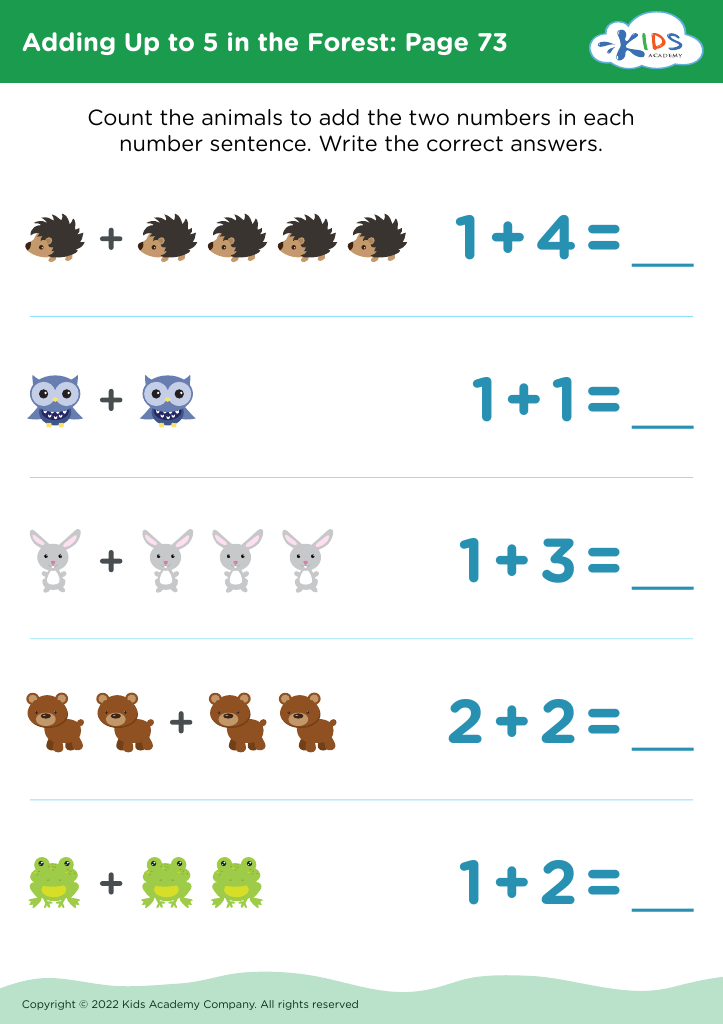
Adding Up to 5 in the Forest: Page 73
Worksheet
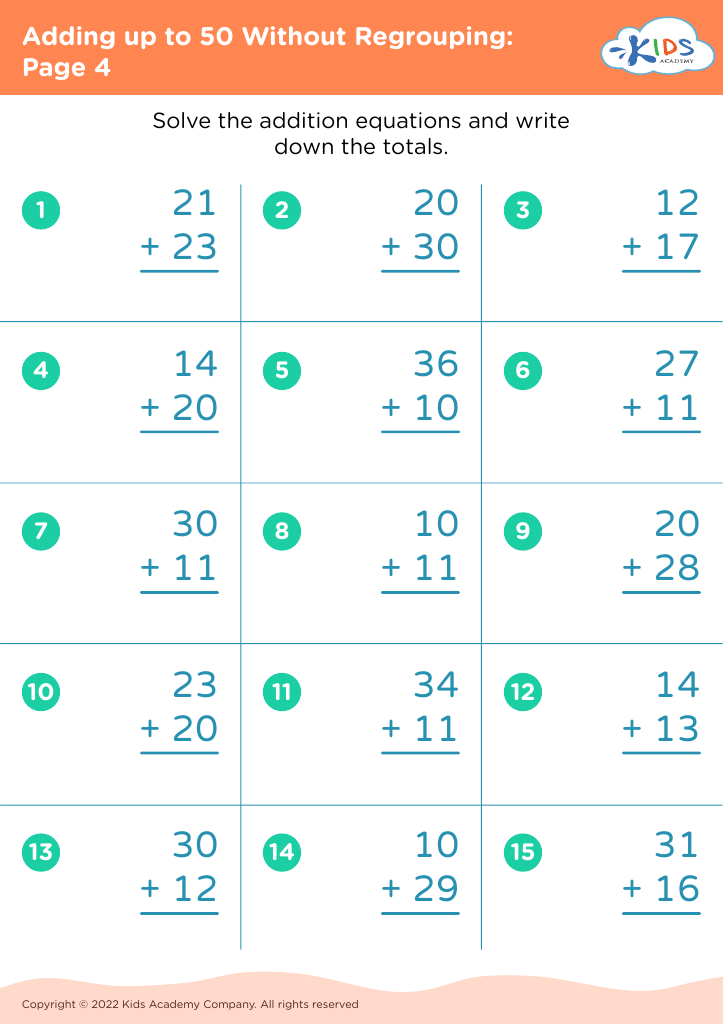
Adding up to 50 Without Regrouping: Page 4
Worksheet
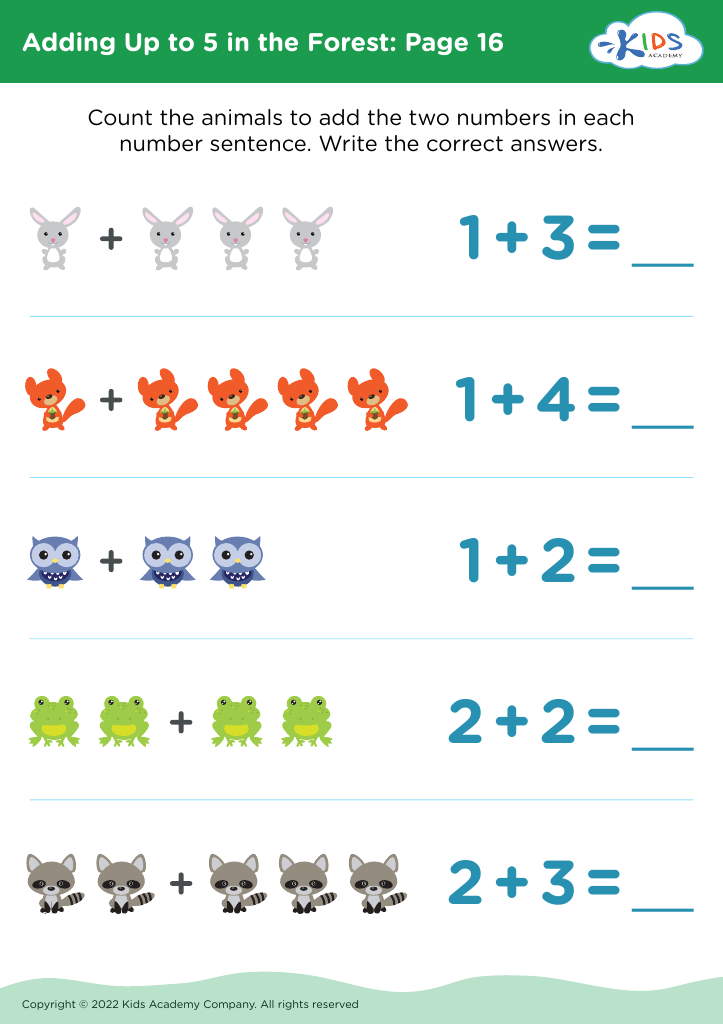
Adding Up to 5 in the Forest: Page 16
Worksheet
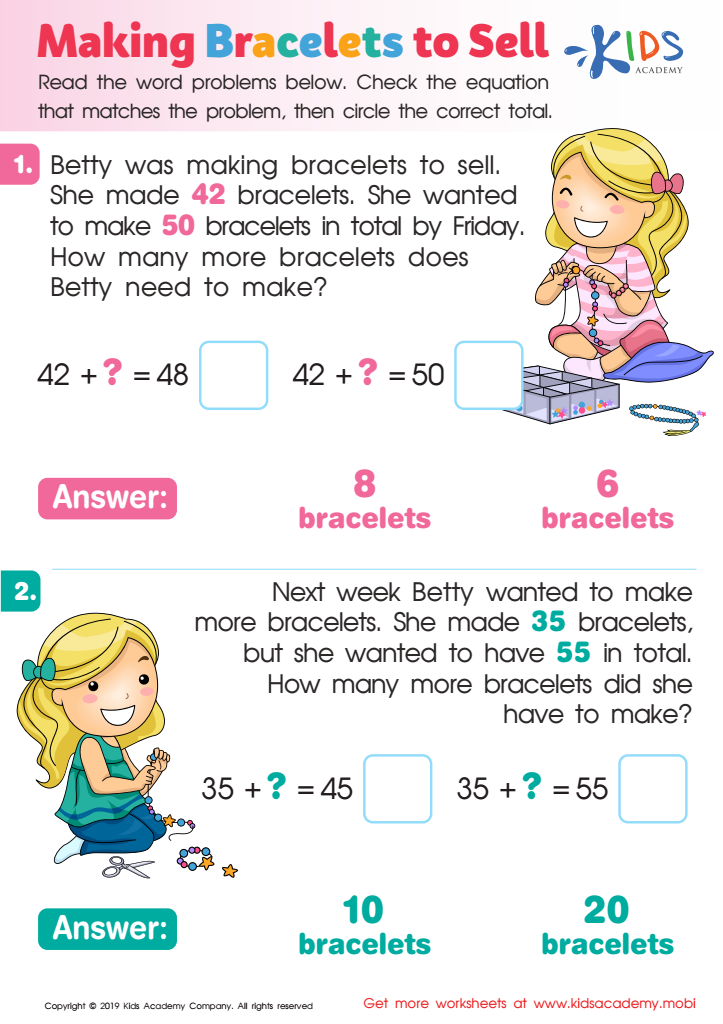
Making Bracelets to Sell Worksheet

Making Bracelets to Sell Worksheet

Got kids who love crafting? This worksheet will be right up their alley! Let them use their creative and problem-solving skills to check equations and decide the correct total. It's just like making beads into a bracelet but on paper! Print out this downloadable PDF and get ready for a fun craft session.
Making Bracelets to Sell Worksheet
Worksheet
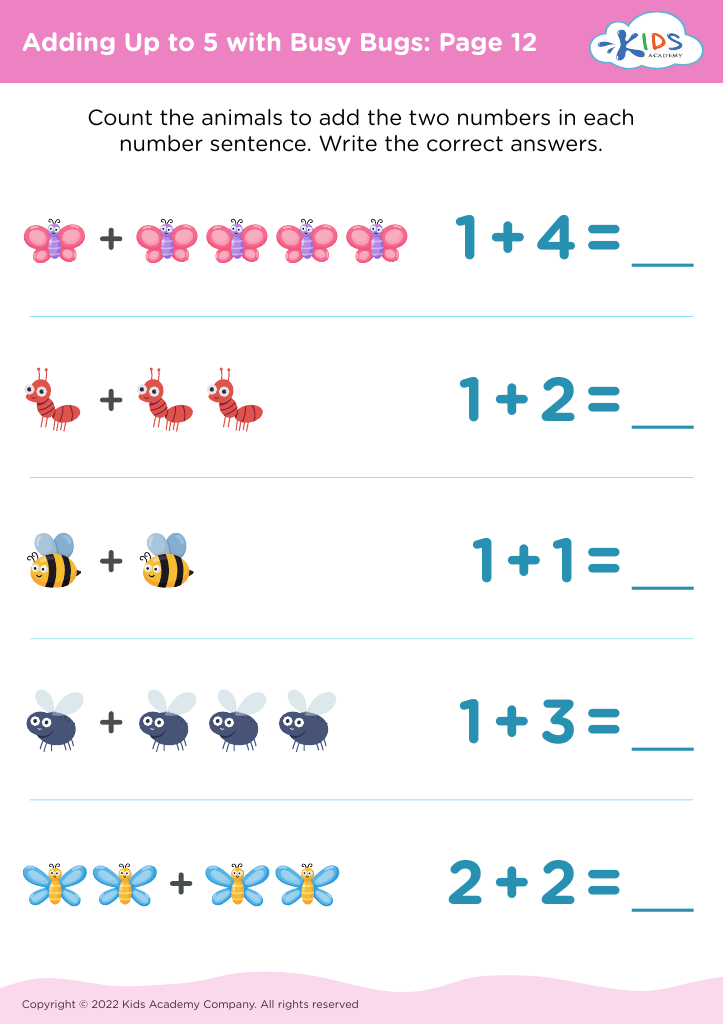
Adding Up to 5 with Busy Bugs: Page 12
Worksheet
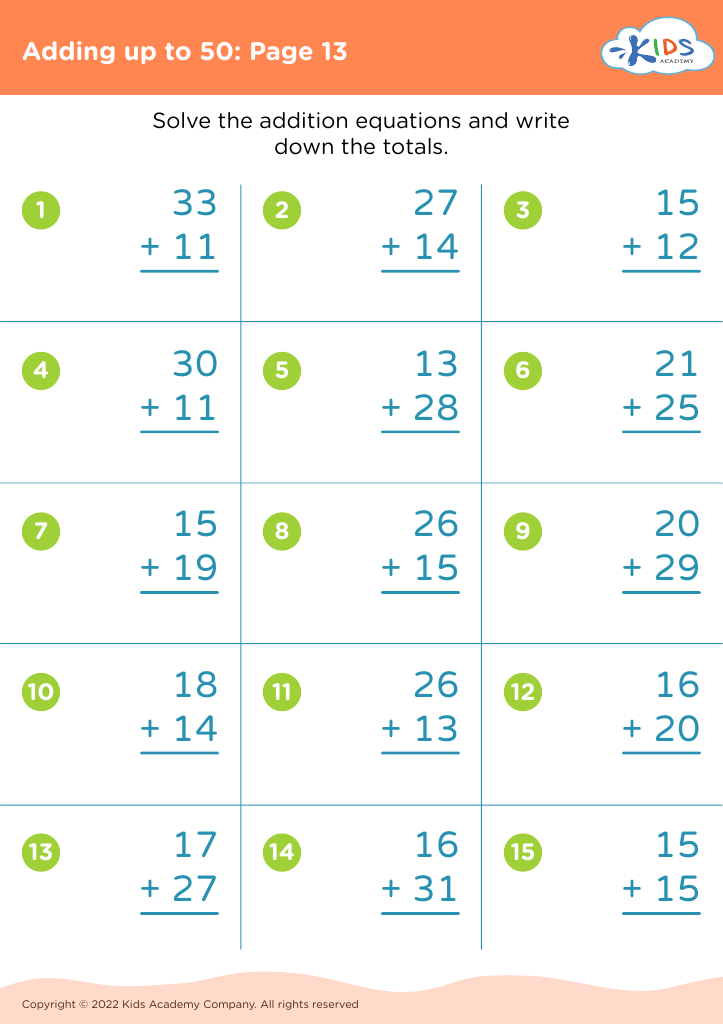
Adding up to 50: Page 13

Adding up to 50: Page 13

Adding up to 50: Page 13
Worksheet
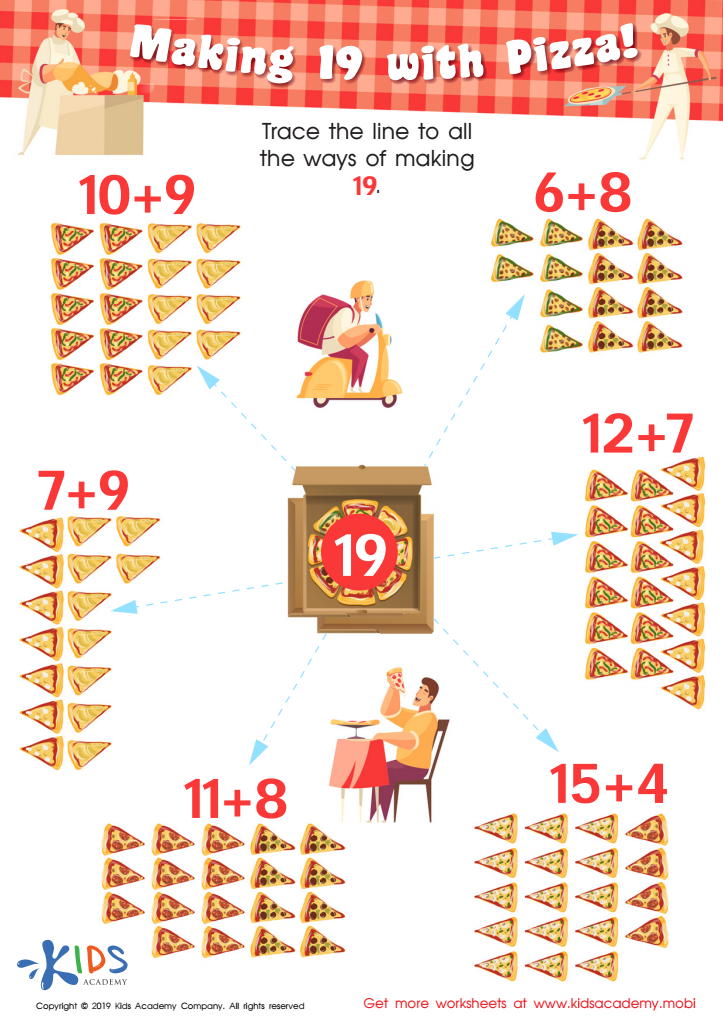
Making 19 with Pizza! Worksheet
Making 19 with Pizza! Worksheet

Who loves pizza? Your kids do! Next time you need to teach them math, make it fun by combining it with something they enjoy. This worksheet uses a pizza-themed problem to help them practice solving equations. Have them trace the line to figure out how to make 19. It's a great way to make learning math fun!
Making 19 with Pizza! Worksheet
Worksheet
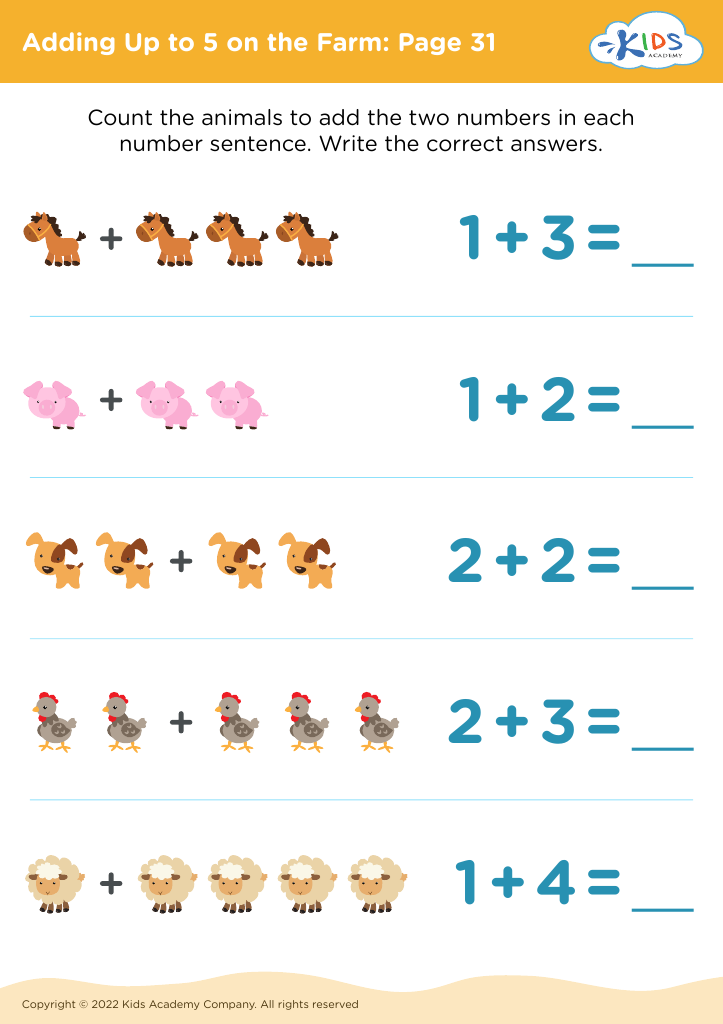
Adding Up to 5 on the Farm: Page 31
Worksheet
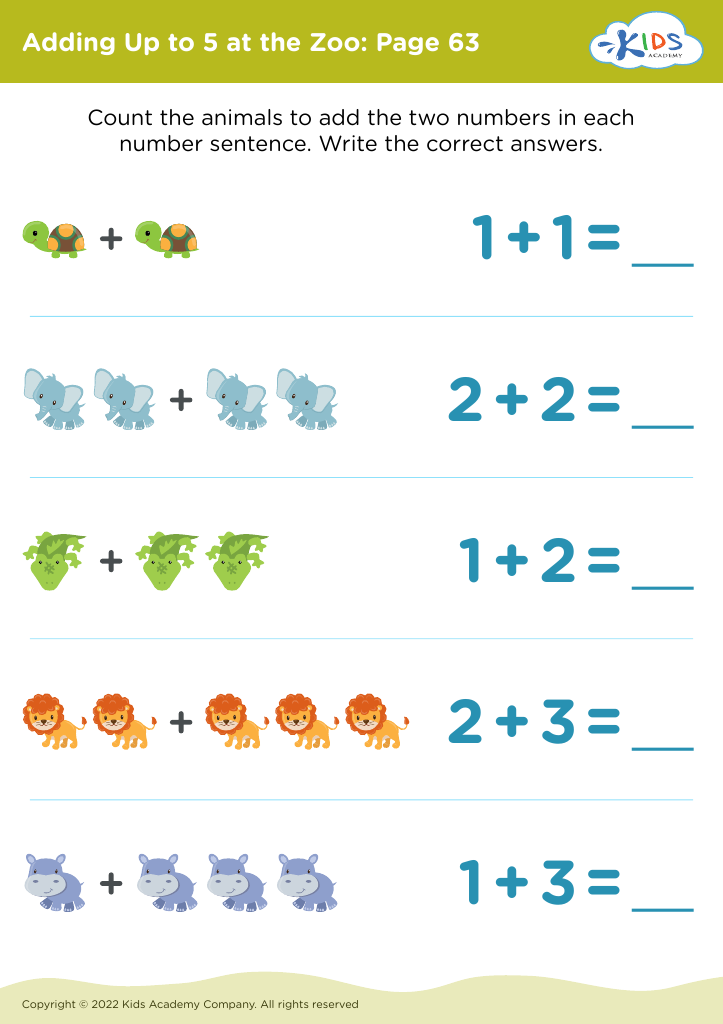
Adding Up to 5 at the Zoo: Page 63
Worksheet
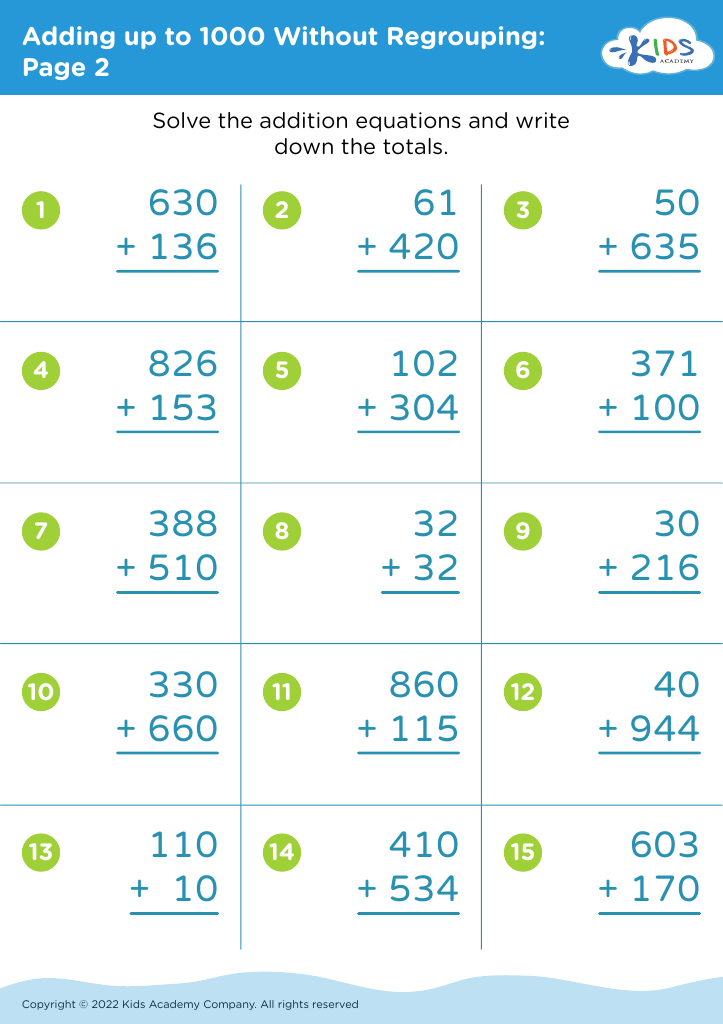
Adding up to 1000 Without Regrouping: Page 2
Worksheet
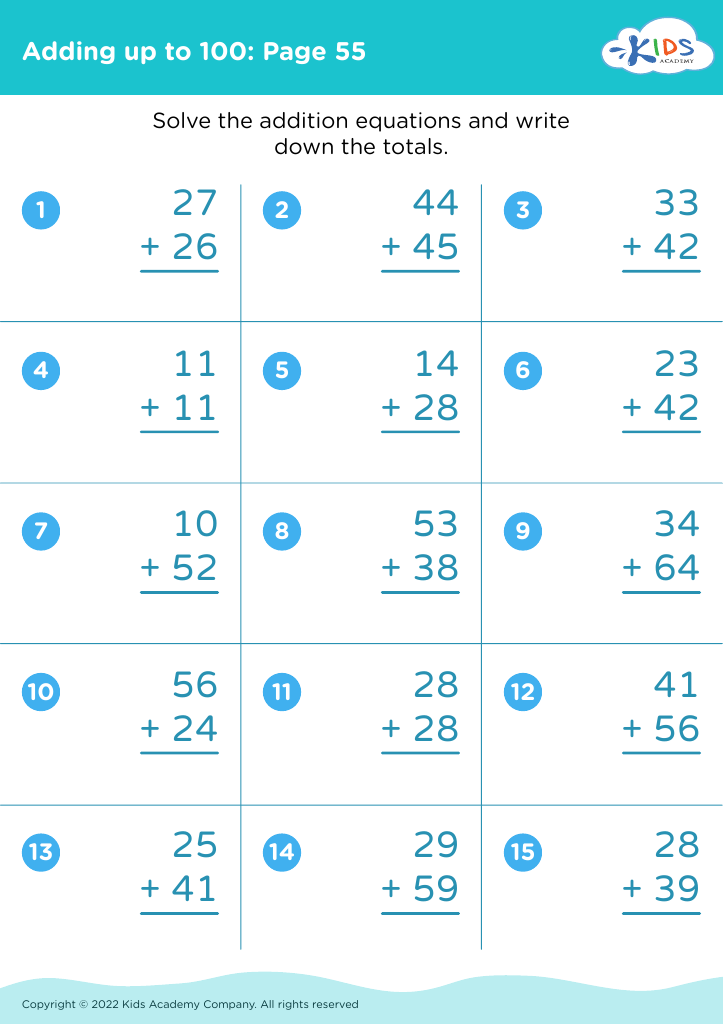
Adding up to 100: Page 55

Adding up to 100: Page 55

Adding up to 100: Page 55
Worksheet
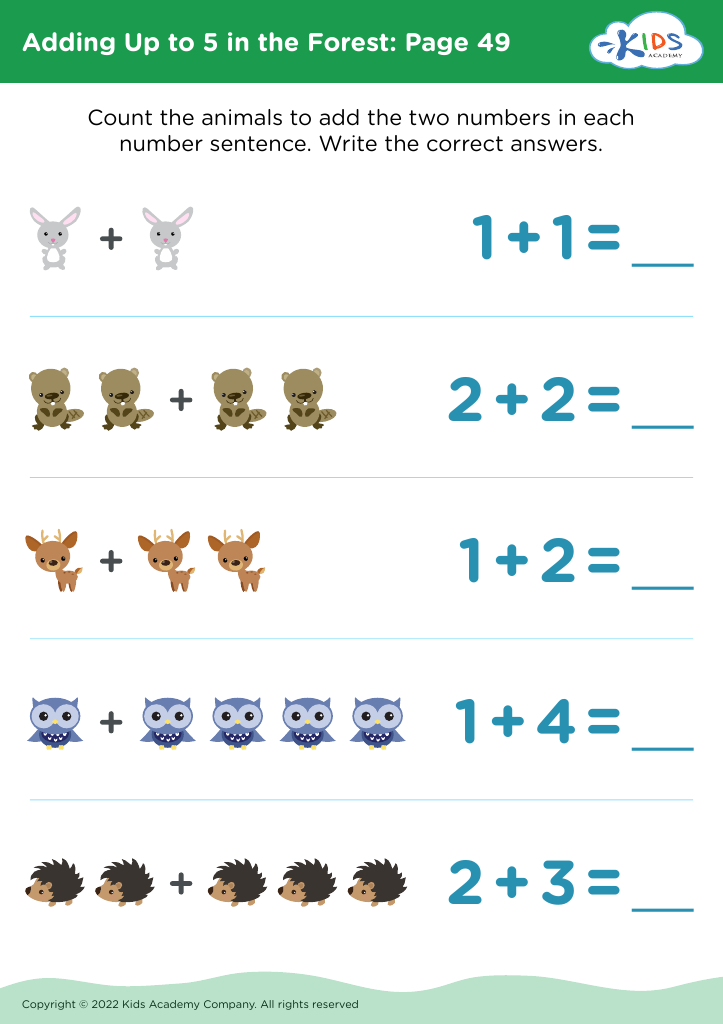
Adding Up to 5 in the Forest: Page 49
Worksheet
Adding at the Hospital Worksheet
Adding at the Hospital Worksheet
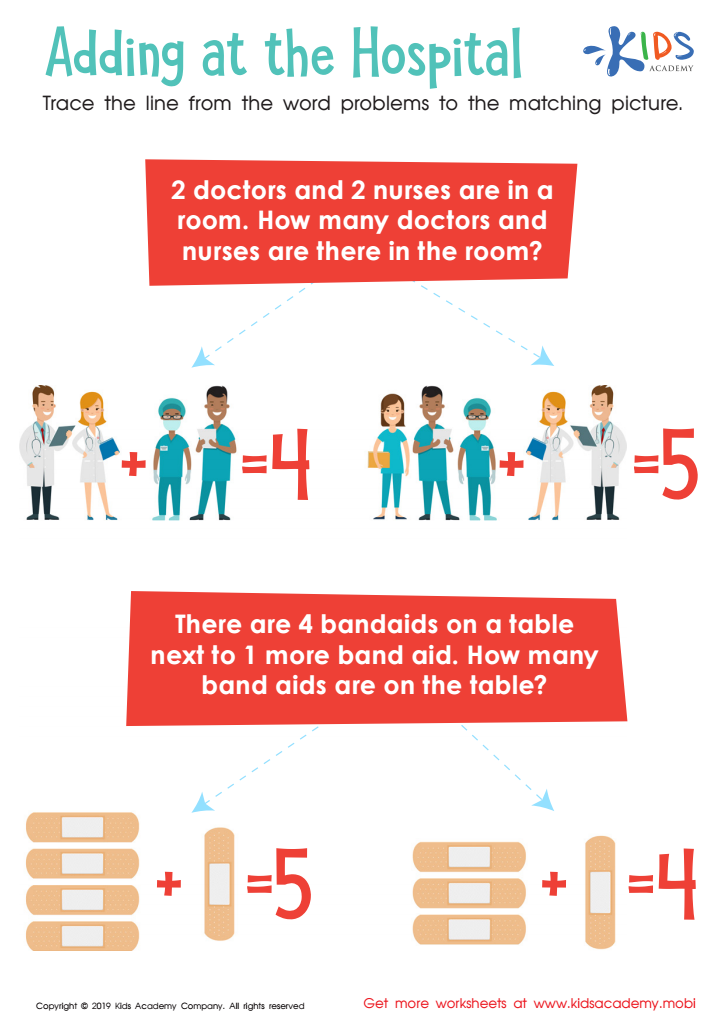
A hospital visit doesn't have to be scary for kids. With this worksheet, they can count along with doctors and nurses, by reading the word problems and tracing lines to the corresponding picture. Guide them through it and you'll help them have a fun experience.
Adding at the Hospital Worksheet
Worksheet
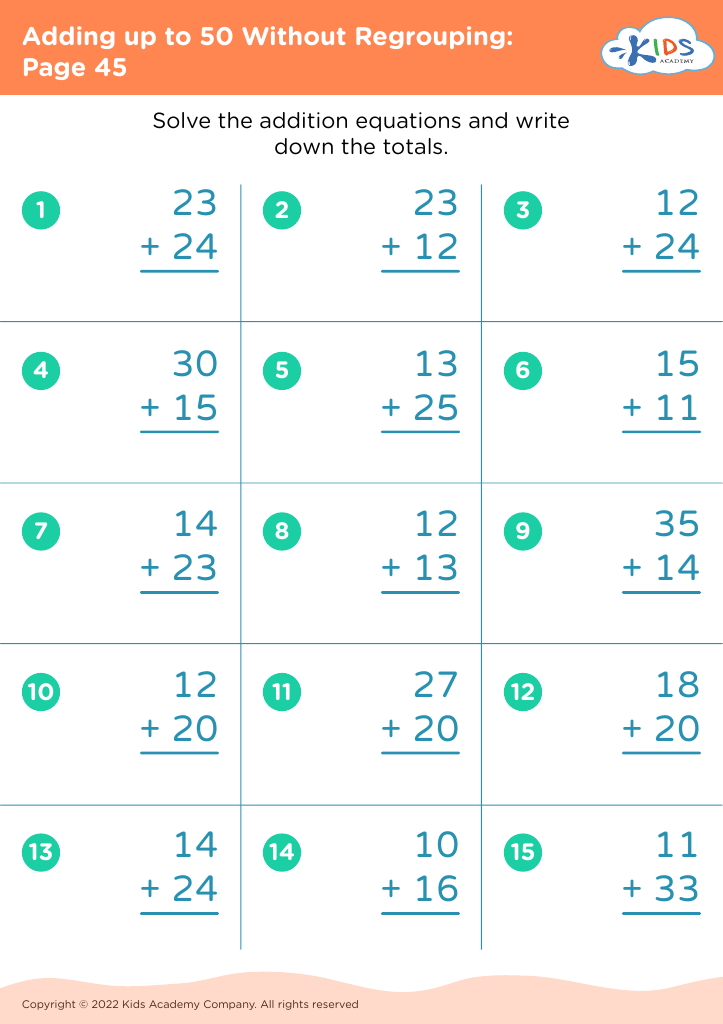
Adding up to 50 Without Regrouping: Page 45
Worksheet
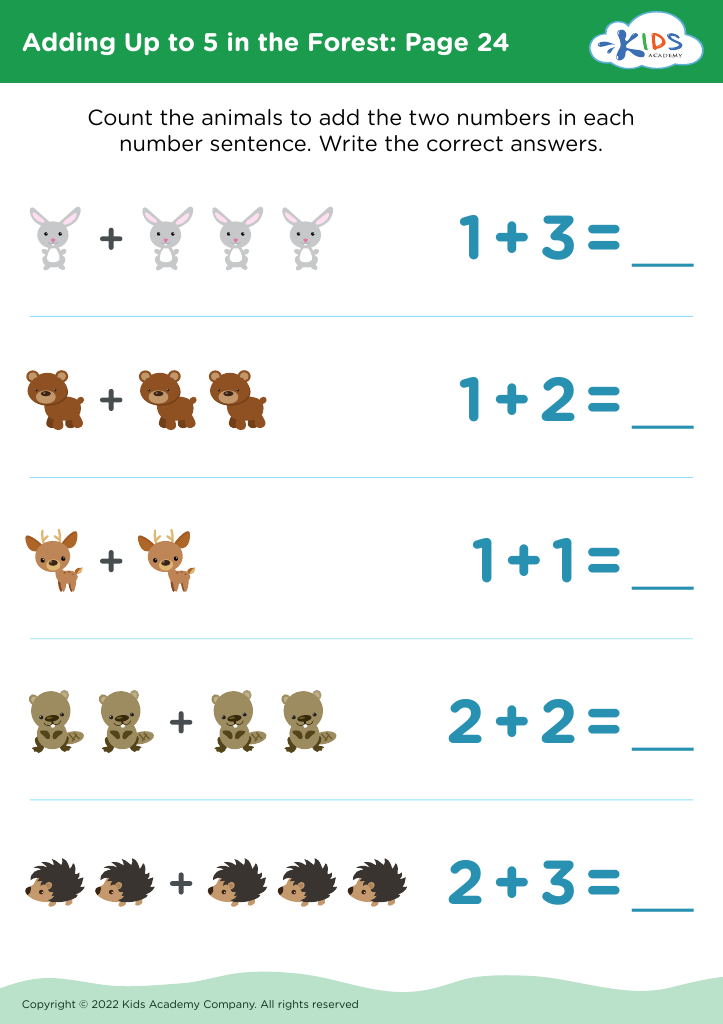
Adding Up to 5 in the Forest: Page 24
Worksheet
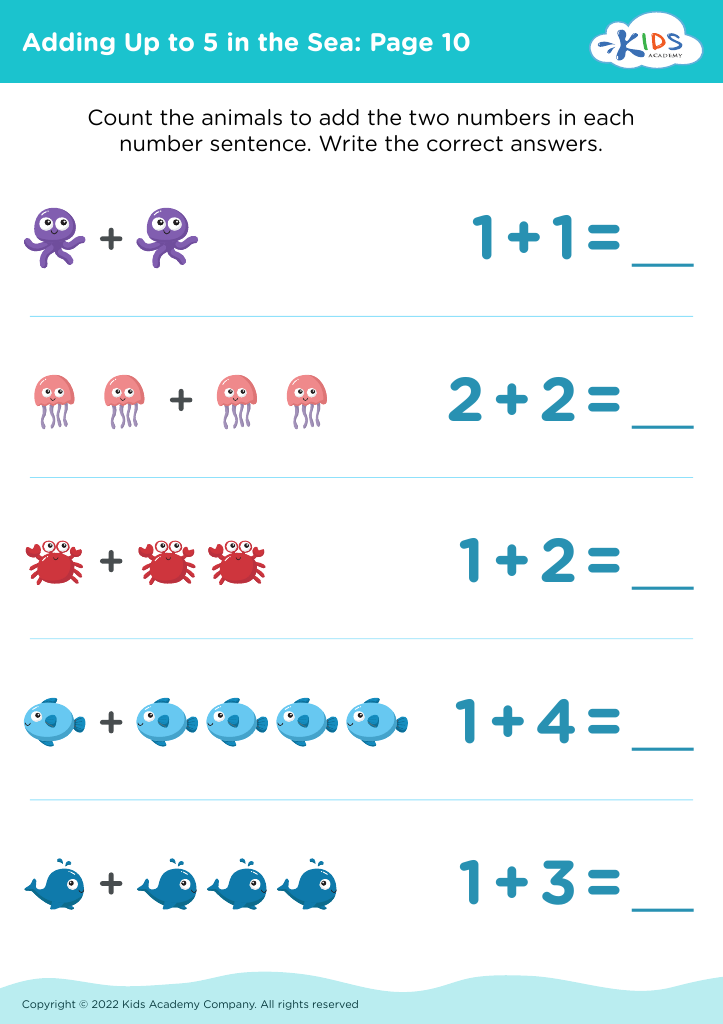
Adding Up to 5 in the Sea: Page 10
Worksheet
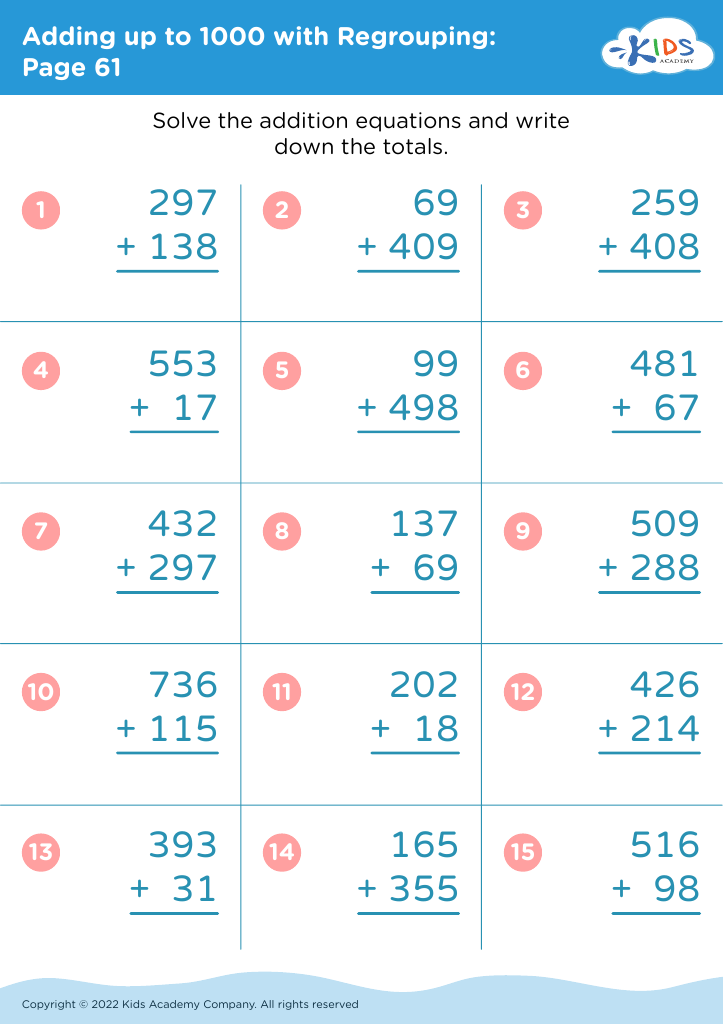
Adding up to 1000 with Regrouping: Page 61
Worksheet
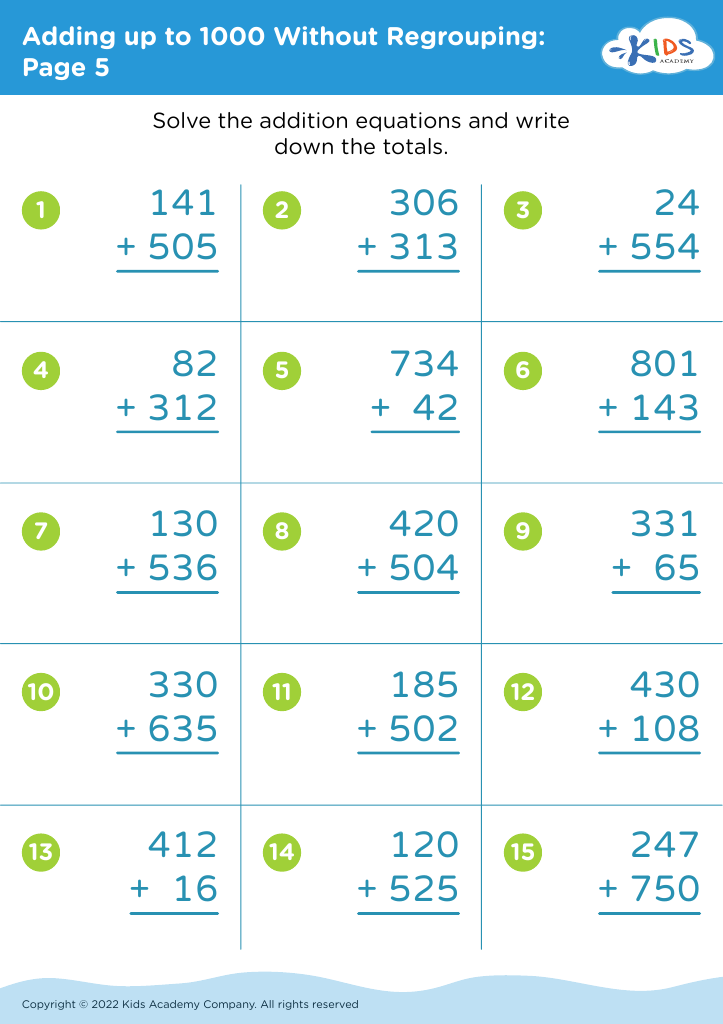
Adding up to 1000 Without Regrouping: Page 5
Worksheet
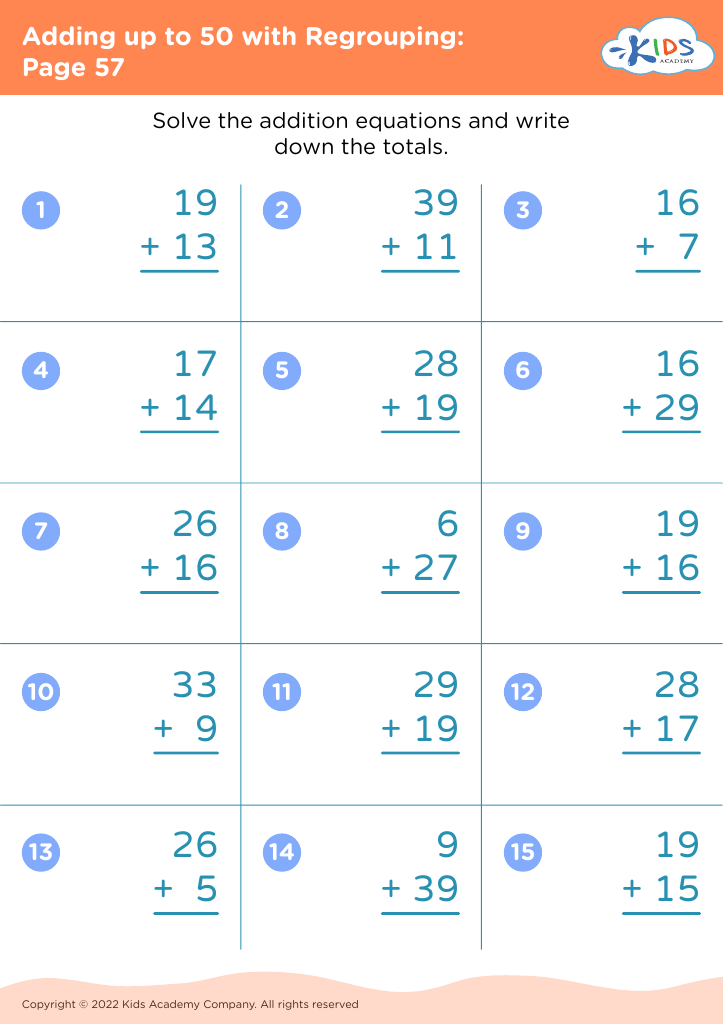
Adding up to 50 with Regrouping: Page 57
Worksheet
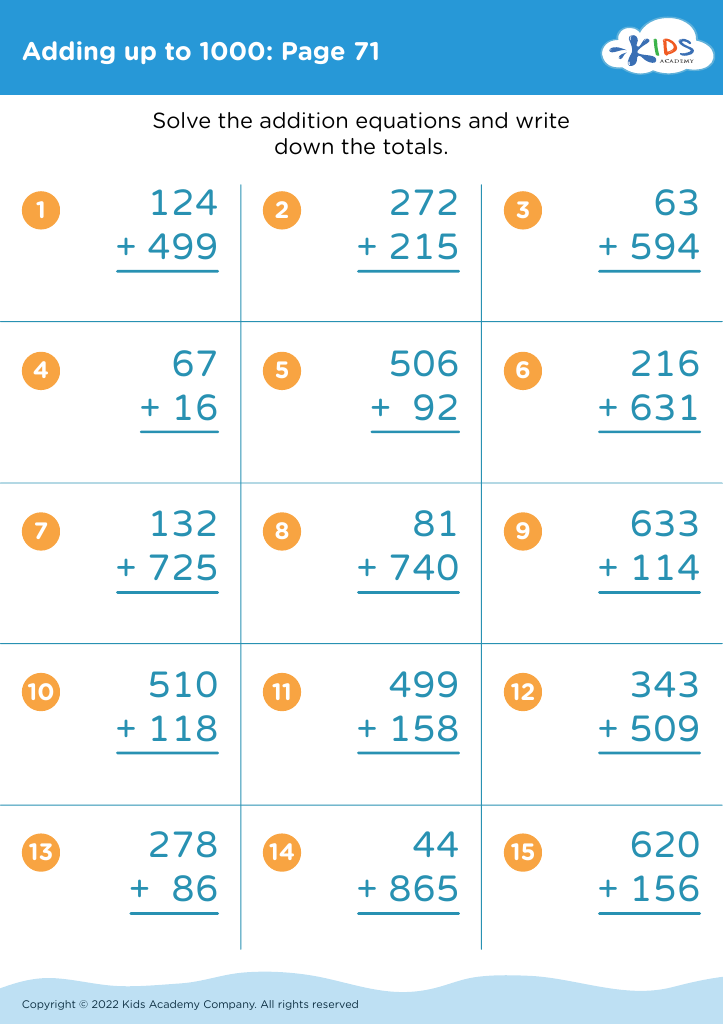
Adding up to 1000: Page 71

Adding up to 1000: Page 71

Adding up to 1000: Page 71
Worksheet
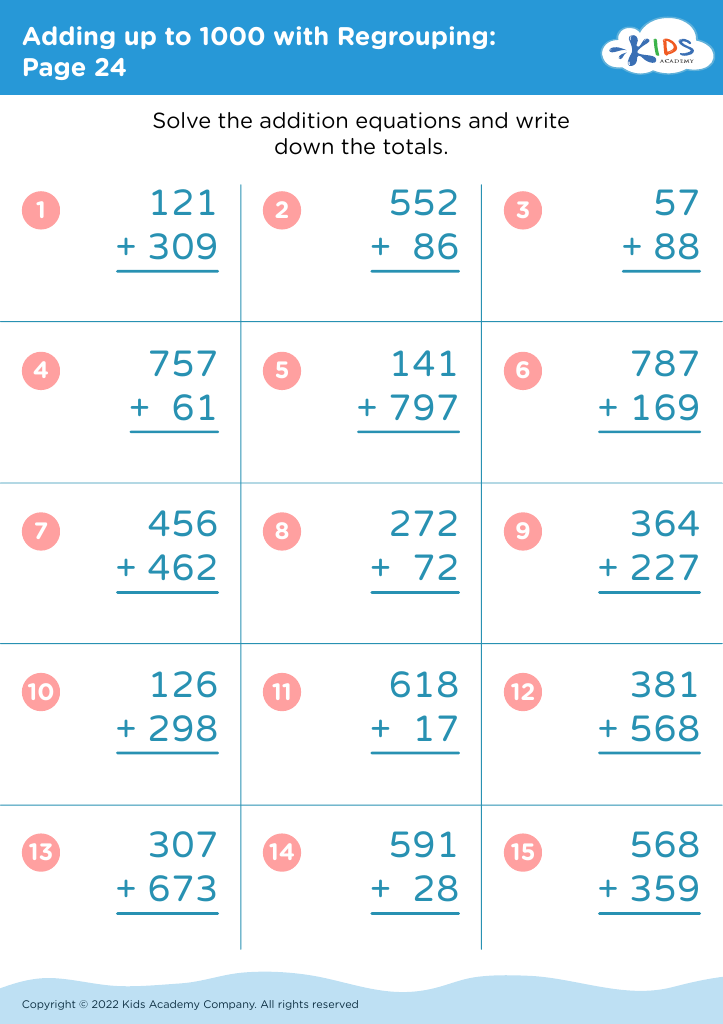
Adding up to 1000 with Regrouping: Page 24
Worksheet
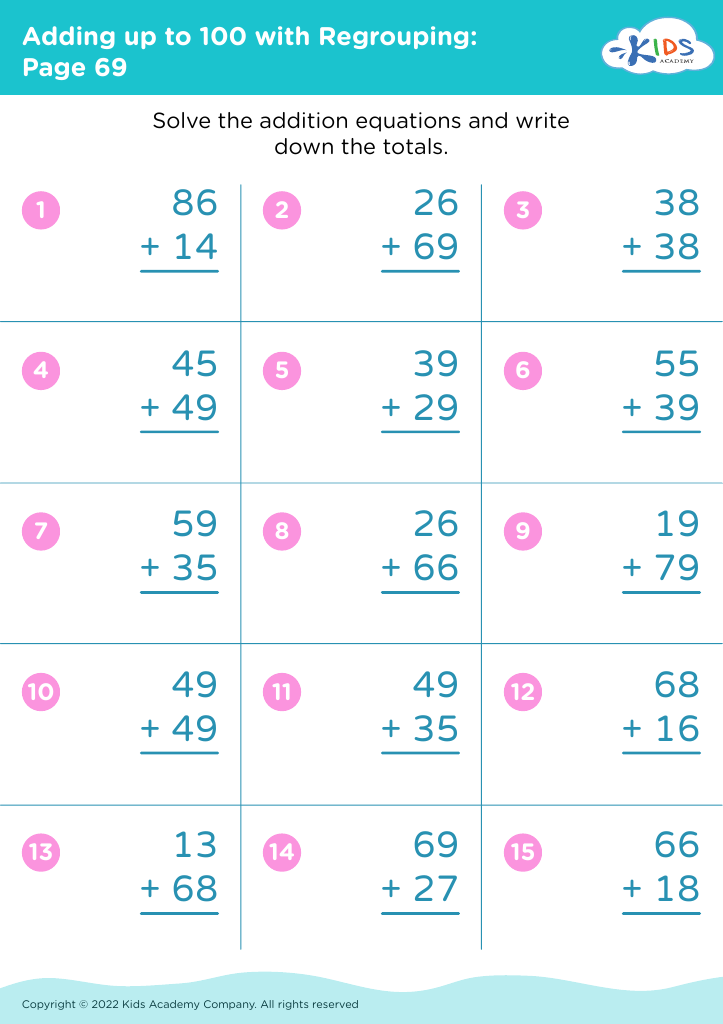
Adding up to 100 with Regrouping: Page 69
Worksheet
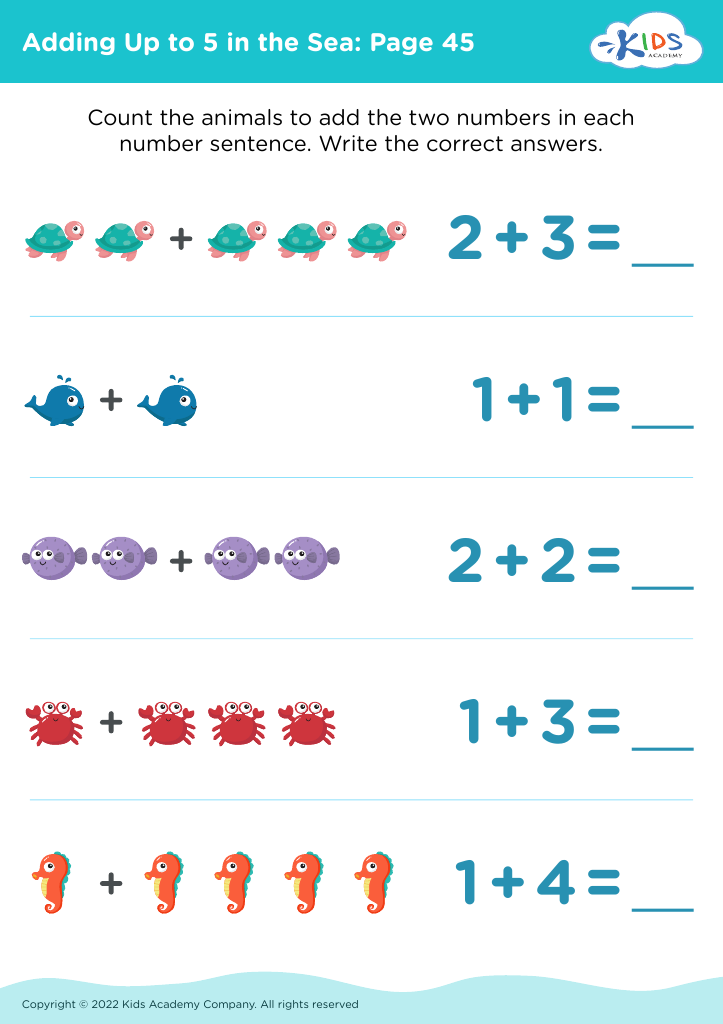
Adding Up to 5 in the Sea: Page 45
Worksheet
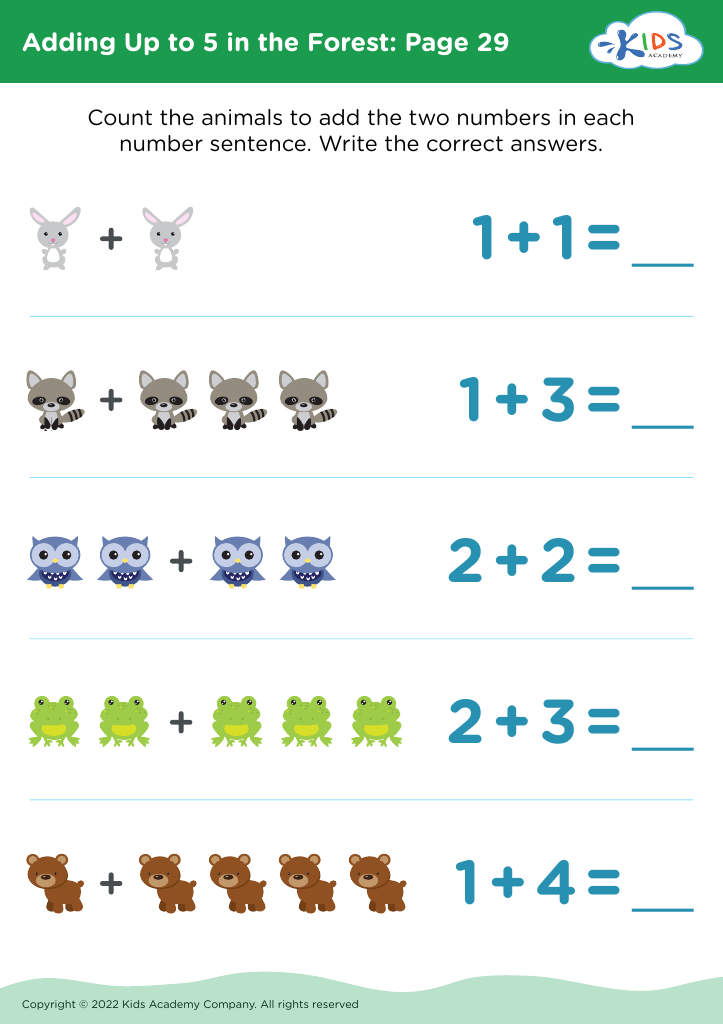
Adding Up to 5 in the Forest: Page 29
Worksheet


Problem-solving abilities, particularly addition, are foundational skills for young children aged 4-7 that play a critical role in their cognitive development and academic success. During these formative years, children's brains are highly adaptable, making it the ideal time to introduce concepts that strengthen their mathematical reasoning and logical thinking. Understanding addition is more than just learning to add numbers; it equips children with a strategy for approaching various problems in structured and systematic ways.

Parents and teachers should care deeply about nurturing these abilities because early proficiency in problem-solving sets the stage for later academic challenges. Addition fosters critical skills such as counting, recognizing number patterns, and basic arithmetic operations, which serve as building blocks for more complex math concepts. Moreover, these problem-solving abilities are transferable to other areas such as science and reading comprehension, promoting overall intellectual agility.

Furthermore, early success in math can boost a child's confidence and enthusiasm for learning. This positive experience helps mitigate the math anxiety that often develops during later school years. By prioritizing the development of problem-solving skills in addition, parents and teachers not only support children's immediate academic performance but also contribute to their long-term educational and life success.