
Understand multiplication Addition Worksheets for Ages 4-7
6 filtered results
Difficulty Level
Grade
Age
-
From - To
Subject
Activity
Standards
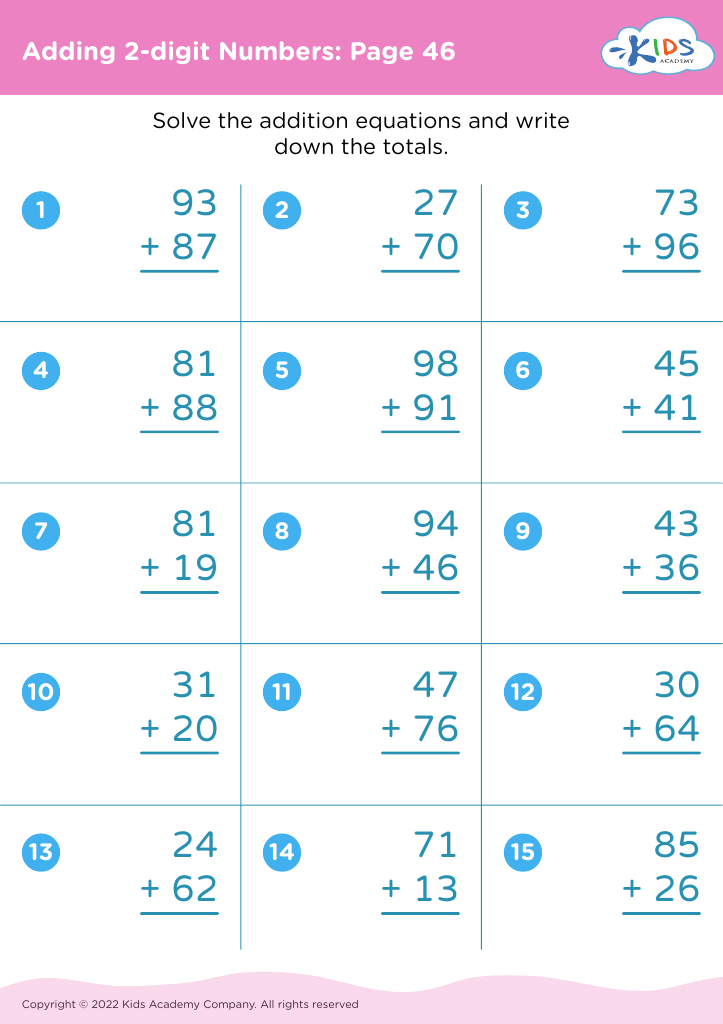
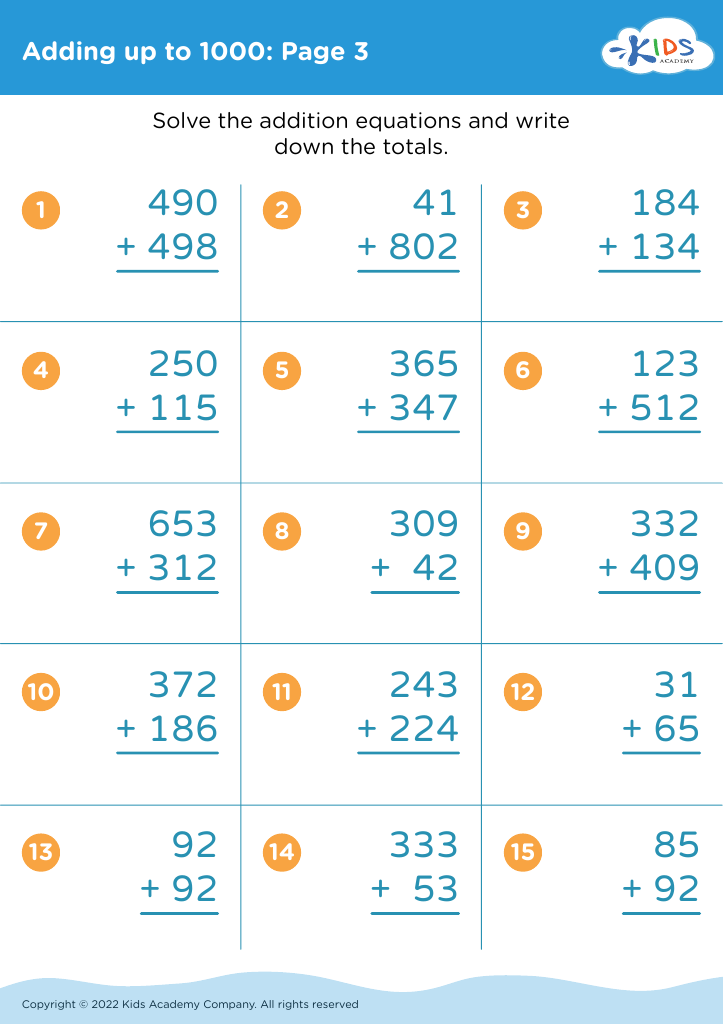
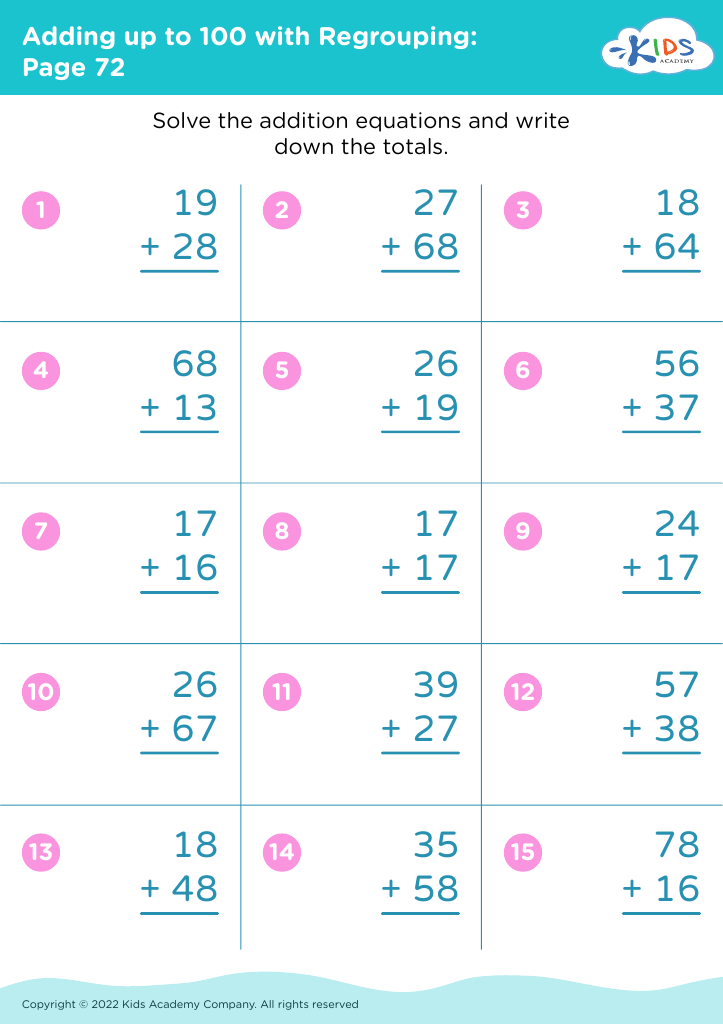
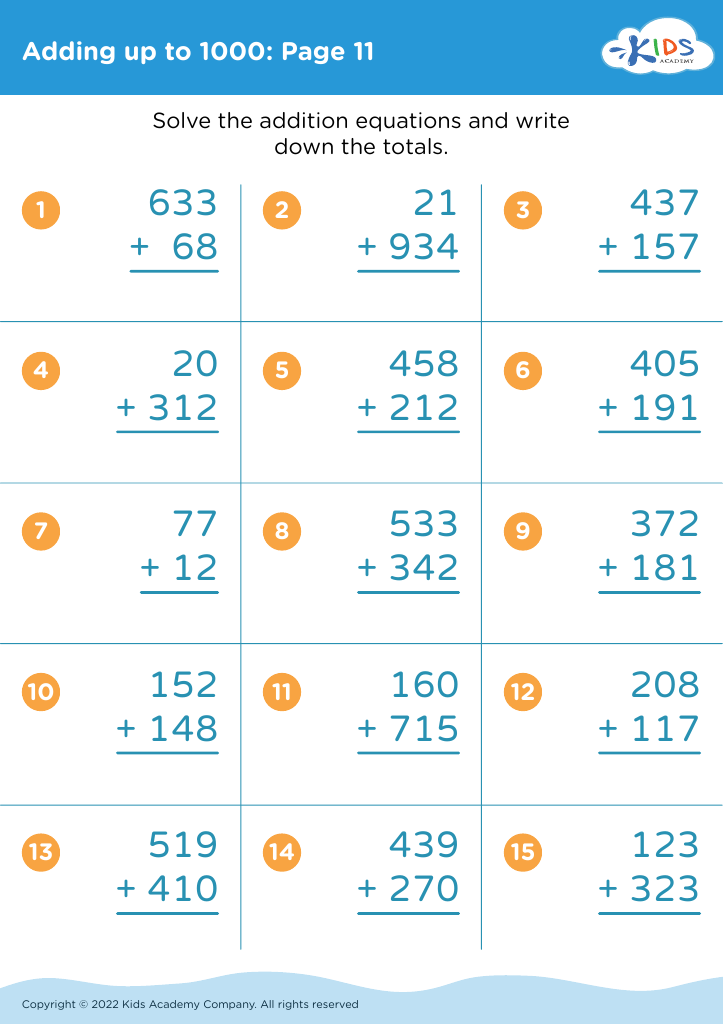
Enhance your child's math skills with our "Understand Multiplication Addition Worksheets" tailored for ages 4-7. Our engaging worksheets help children grasp the foundations of multiplication through the lens of addition, making complex concepts simple and fun. Each worksheet is designed to develop skills progressively, ensuring that young learners stay motivated and confident. With colorful graphics and interactive exercises, these worksheets transform learning into an enjoyable adventure. Kids will practice combining groups and reinforcing basic addition, setting a solid base for future math success. Perfect for parents and teachers looking to support early math development in a playful and effective way.
Favorites
With answer key
Interactive
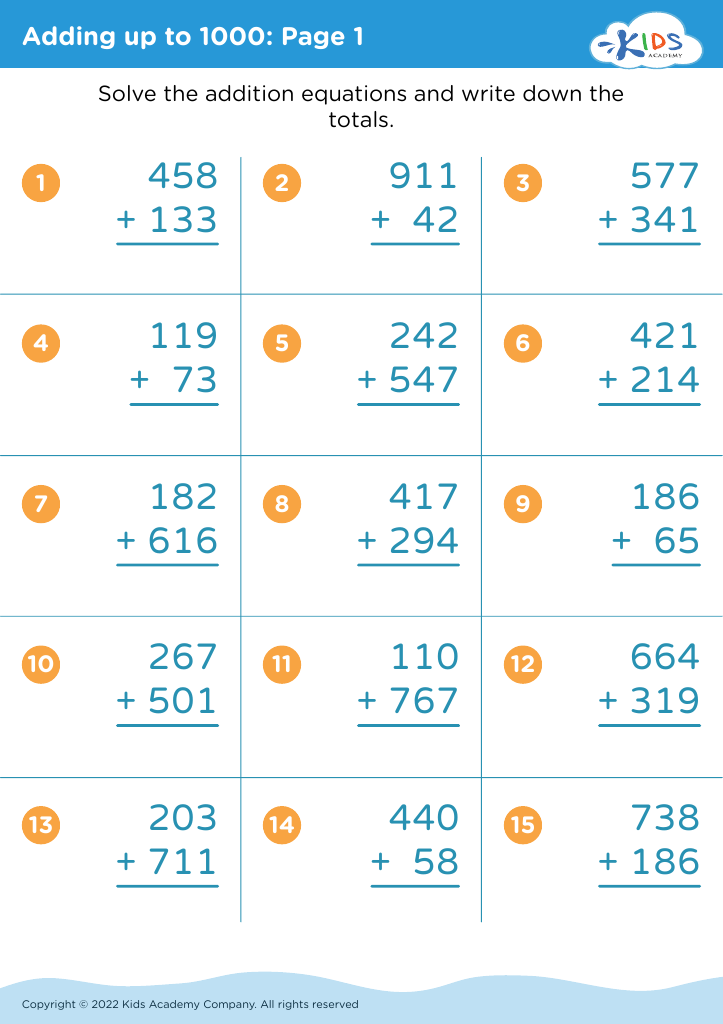
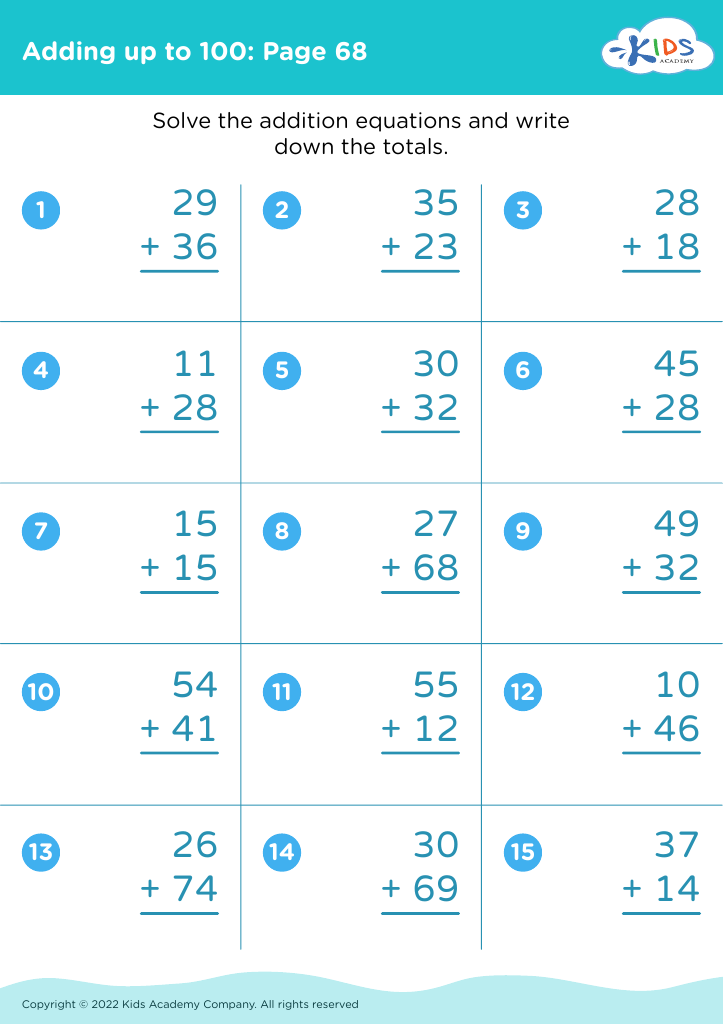
Join Kids Academy for Free
Who is primarily going to use this learning content?








Understanding multiplication as an extension of addition is vital for children ages 4-7 because it lays the groundwork for future mathematical comprehension. Learning multiplication through the lens of addition—repeated addition—enables young minds to grasp complex concepts more easily and establishes a solid conceptual framework. At this early age, children are naturally curious and absorb new information rapidly, making it an optimal period for introducing fundamental mathematical principles.
For example, recognizing that 3 times 4 is the same as adding 4 three times (4 + 4 + 4) reinforces a child's understanding of numbers and how they interact. This concrete foundation encourages critical thinking and helps children approach problem-solving with greater confidence. Moreover, familiarity with these concepts can enhance a child’s performance in school, leading to a positive attitude towards learning and a love for mathematics.
From a developmental perspective, mastering these early concepts supports cognitive skills such as pattern recognition, logical reasoning, and attention to detail. It also ensures that children are not overwhelmed when they encounter more abstract math in later grades. Starting with these basic principles enables continual academic growth and can prevent future struggles with more advanced mathematical thinking. Thus, parents and teachers should prioritize integrating multiplication and addition concepts early on.








