Understand patterns Addition Worksheets for Ages 4-7
6 filtered results
-
From - To
Discover our engaging "Understand Patterns Addition Worksheets" designed for young learners aged 4-7! These worksheets encourage children to recognize and create addition patterns, fostering essential math skills while making learning enjoyable. Through vibrant illustrations and interactive exercises, kids will strengthen their understanding of number relationships and enhance their critical thinking abilities. Tailored to complement early education curricula, these resources support home and classroom learning. Ideal for parents and teachers alike, our worksheets are perfect for reinforcing foundational math concepts in a playful and supportive environment. Explore the joys of learning with our easy-to-follow patterns addition worksheets today!
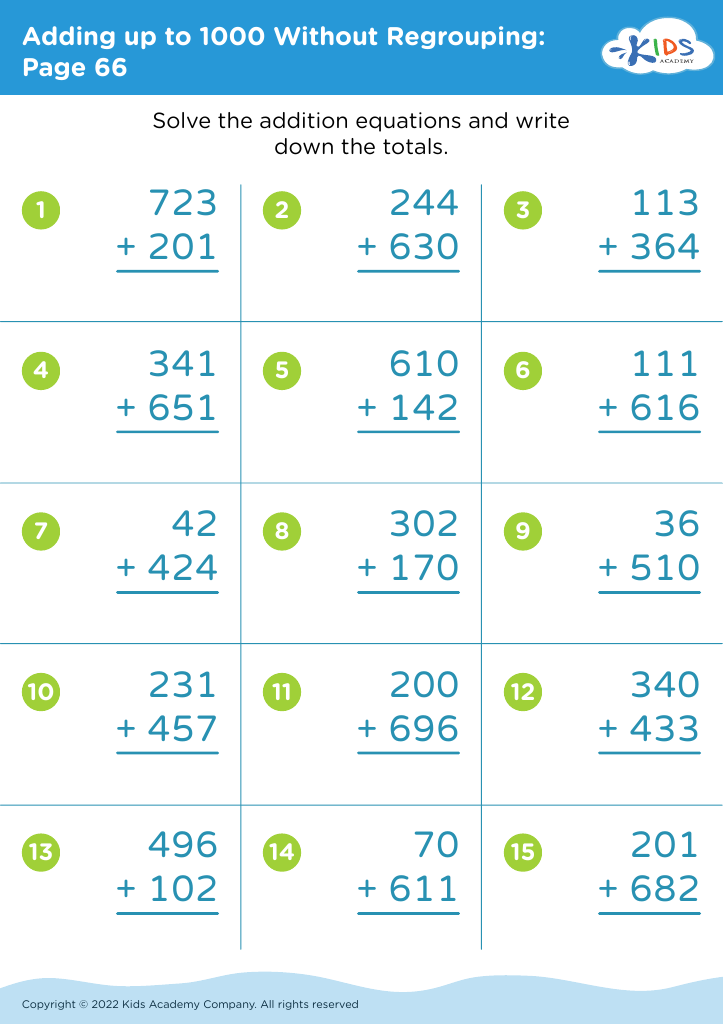
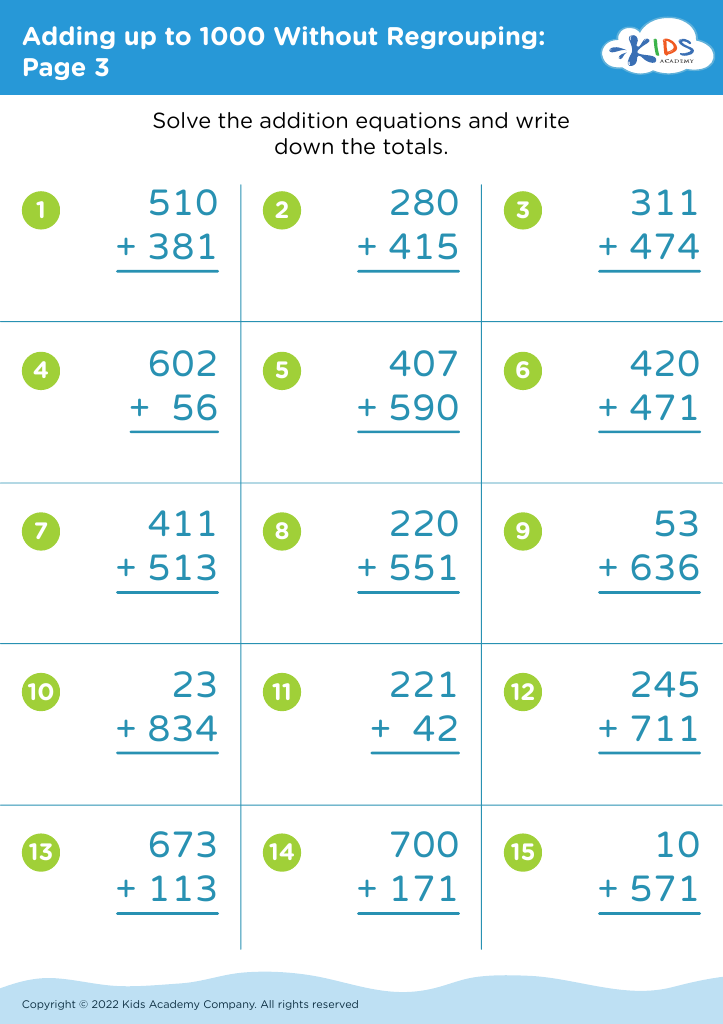
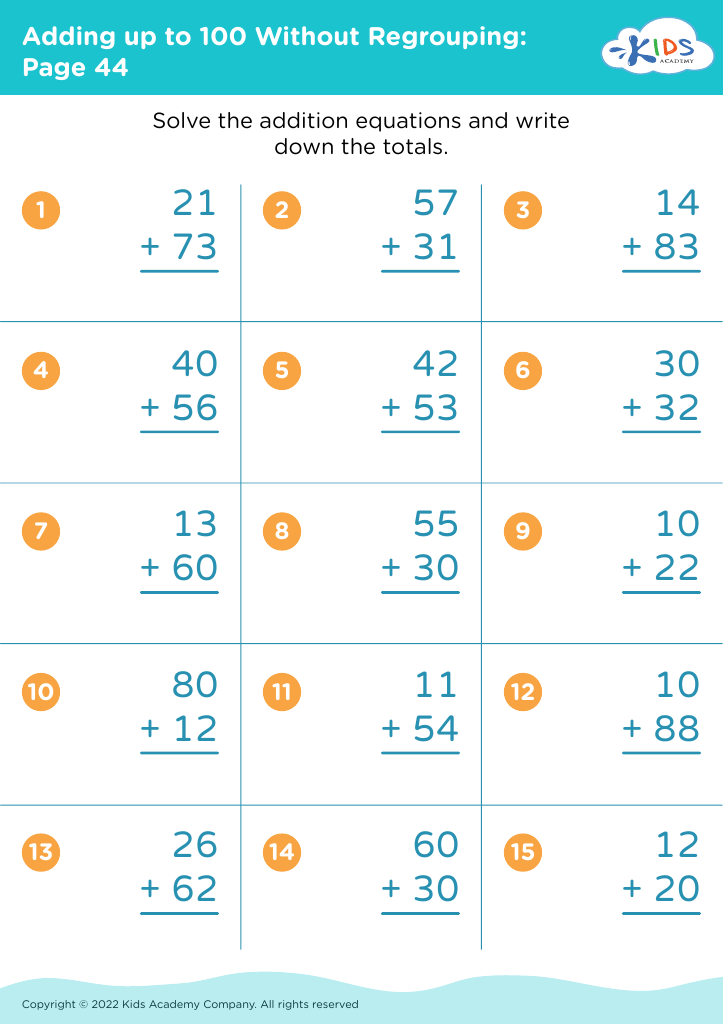
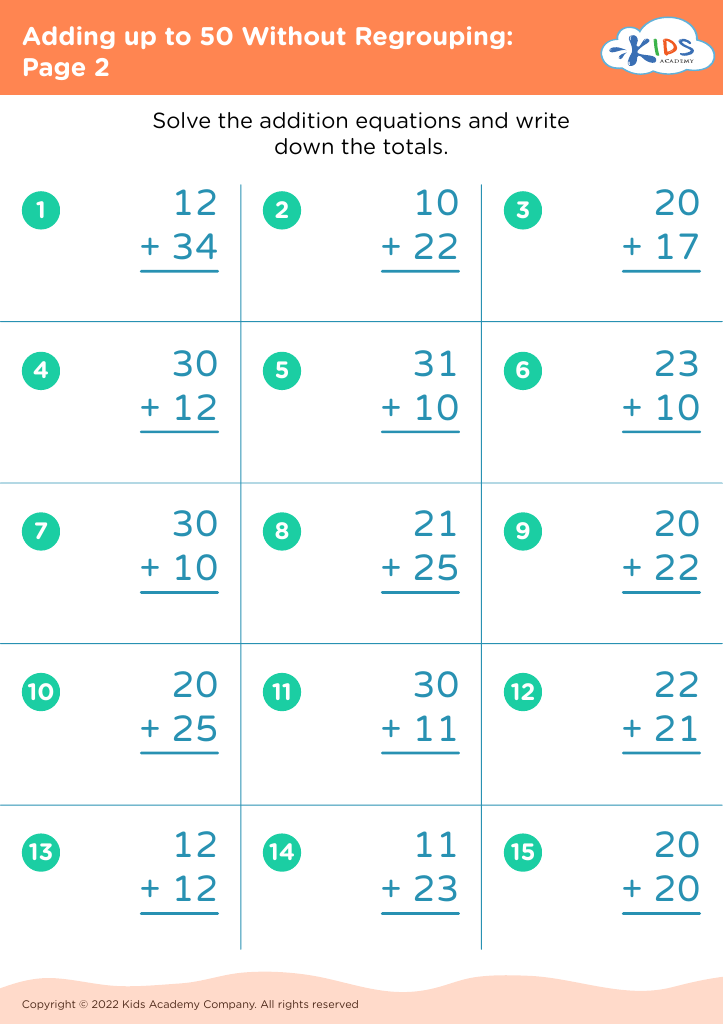
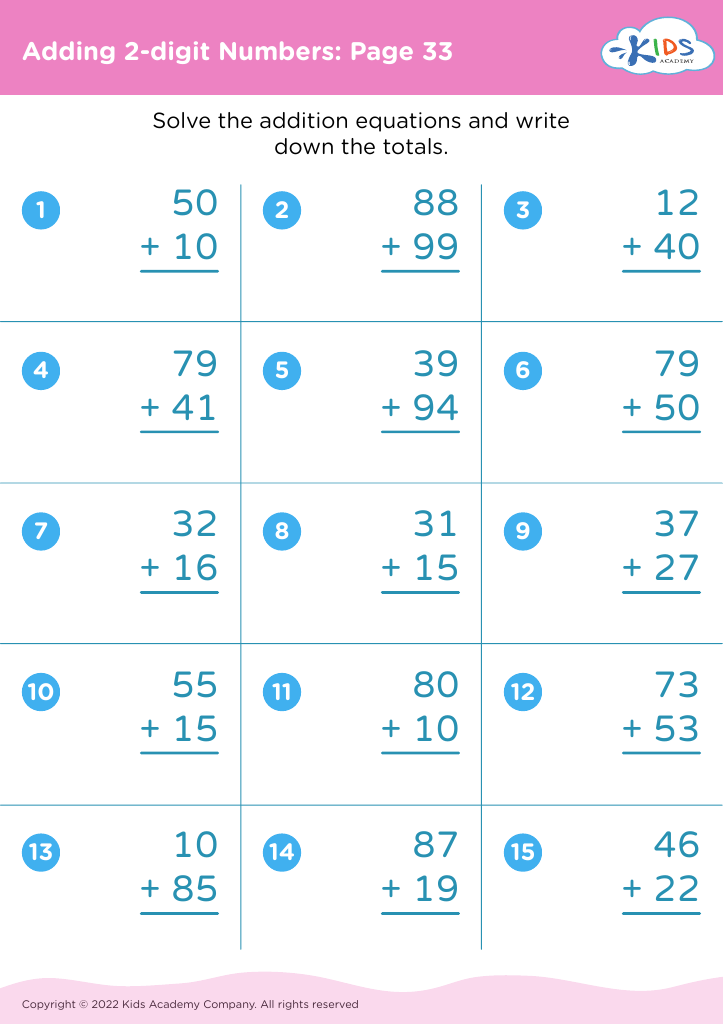
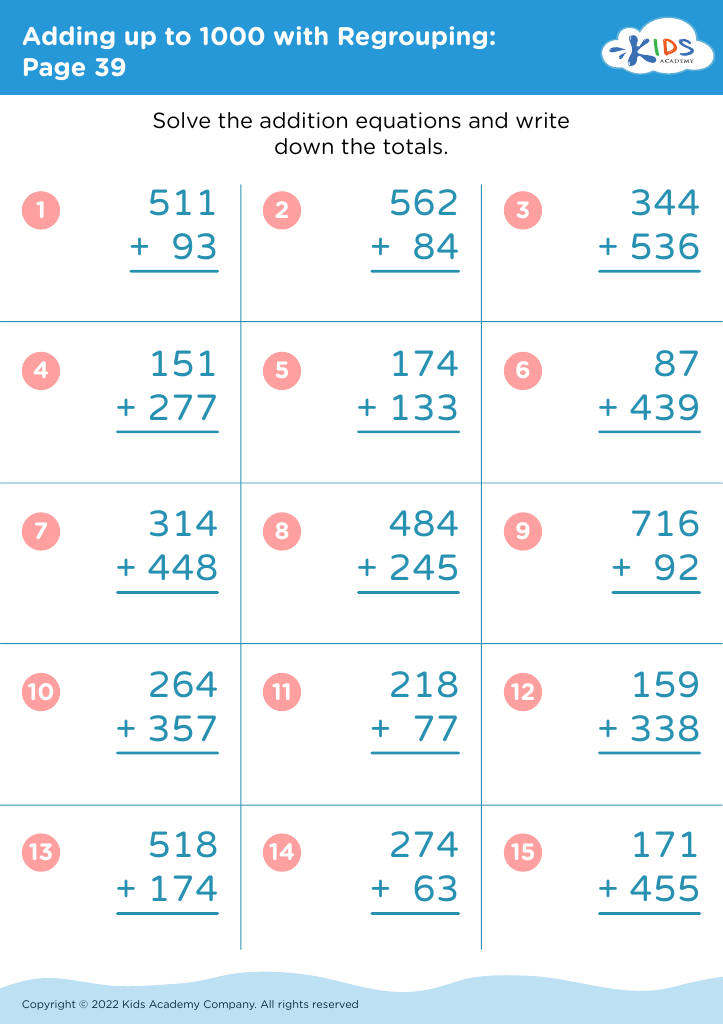








Understanding patterns in addition is a crucial skill for children ages 4-7, as it lays the foundation for their mathematical development. This age group is particularly receptive to learning patterns, which can aid in their ability to recognize sequences and make predictions—important cognitive skills in problem-solving. When children understand addition patterns, such as using skip counting or recognizing number patterns (like pairs that sum to a specific number), they gain confidence and fluency with numbers.
Teachers and parents should care about this because mastering addition patterns not only helps young learners perform addition operations more effectively but also fosters critical thinking and analytical skills. Patterns serve as the building blocks for more complex mathematical concepts they'll encounter later, such as multiplication and algebra.
Moreover, teaching patterns makes learning more engaging and interactive, creating a playful environment where children resonate with math. With early grasp of these skills, children become more eager to explore math, enhancing their overall academic experience. Ultimately, by emphasizing patterns in addition, we prepare children for lifelong mathematical success, ensuring they develop a constructive attitude towards learning math and problem-solving beyond the classroom.








