Vocabulary development Addition Worksheets for Ages 4-7
5 filtered results
-
From - To
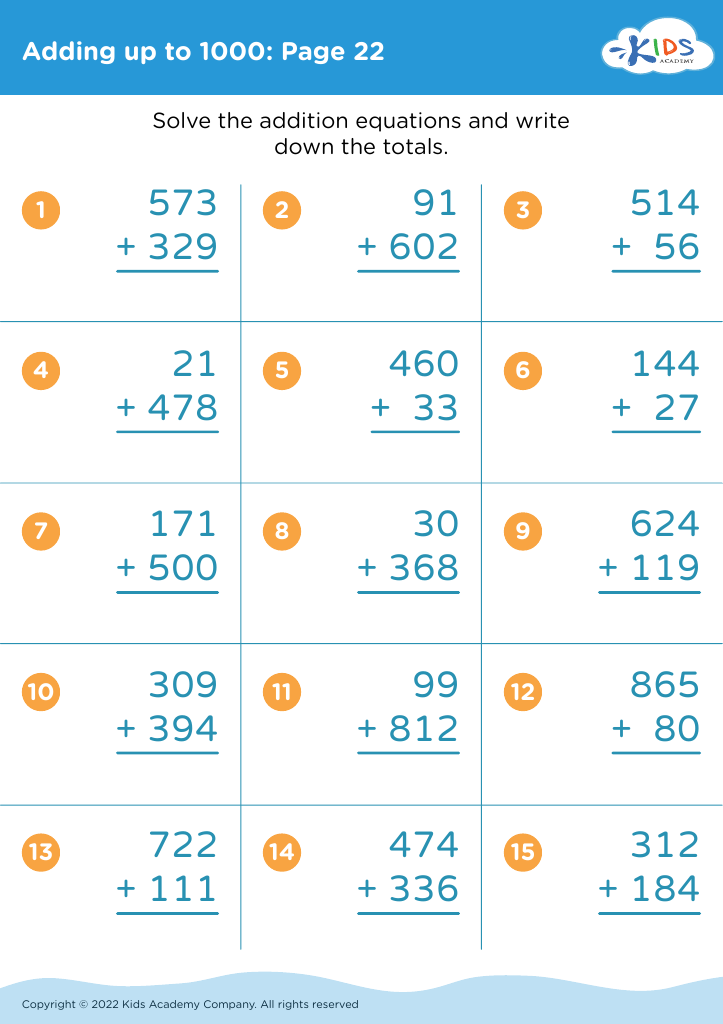
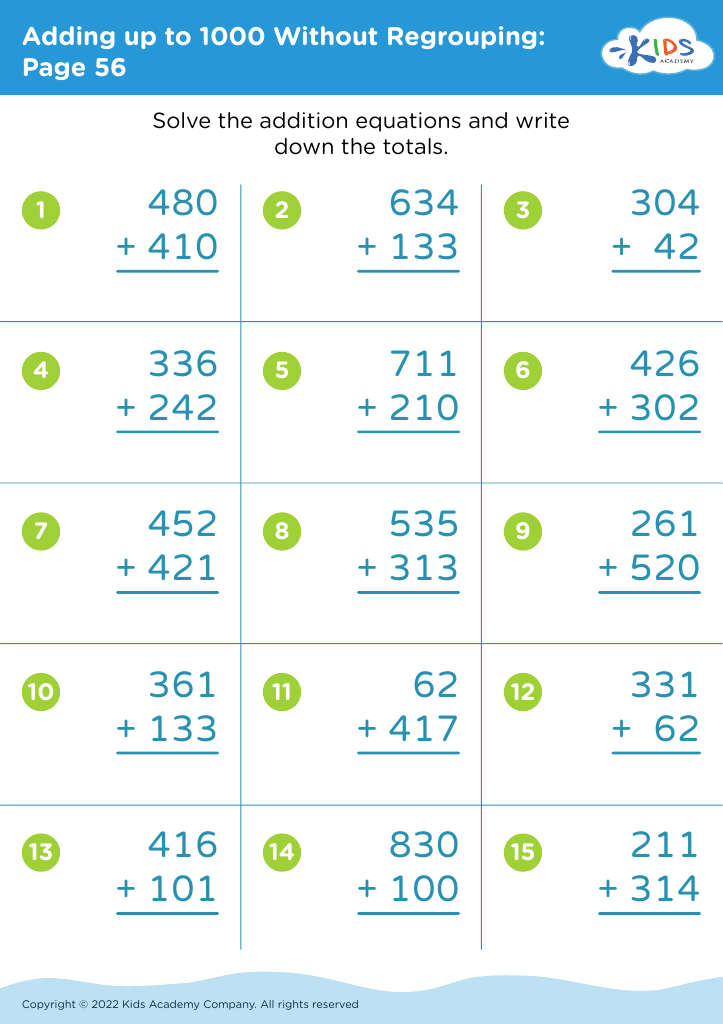
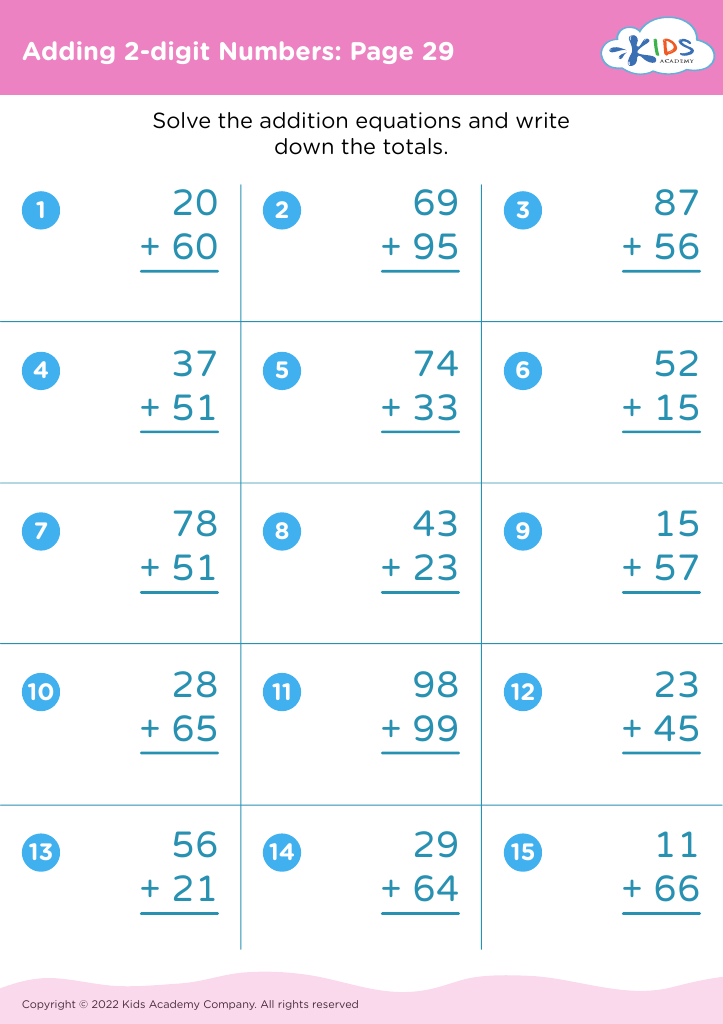
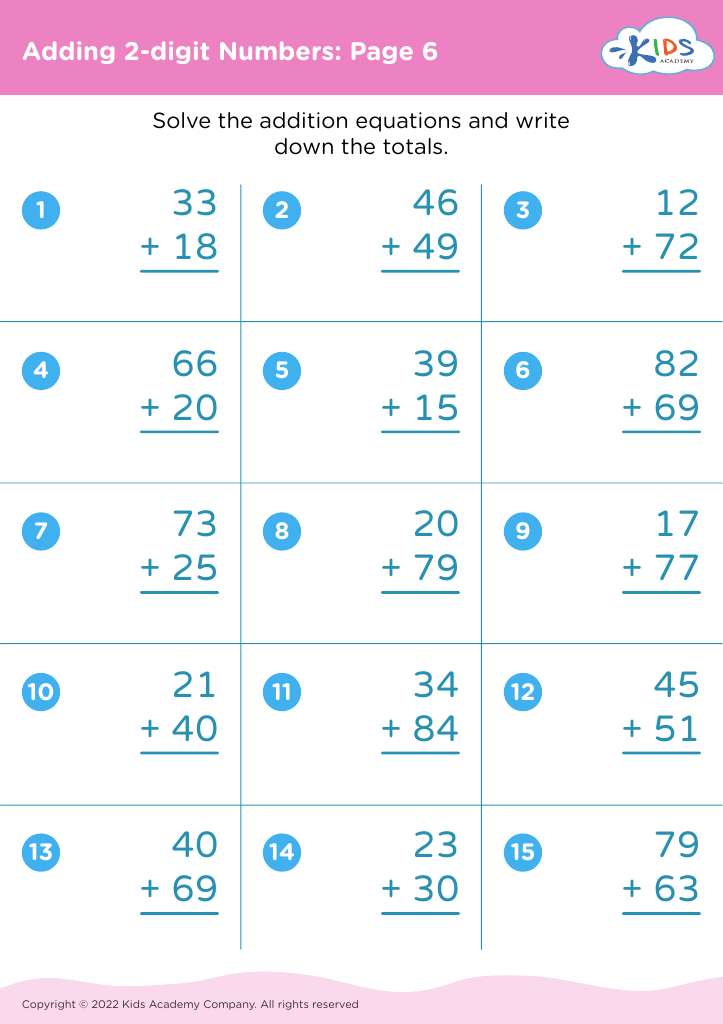
Discover our engaging "Vocabulary Development Addition Worksheets" designed for children ages 4-7! These interactive resources not only bolster addition skills but also enhance vocabulary comprehension. Each worksheet introduces key mathematical terms in a fun, age-appropriate way, fostering both numerical understanding and language development. With colorful illustrations and stimulating exercises, kids will enjoy learning as they connect words to numbers. Perfect for home or classroom use, these worksheets provide an effective tool for reinforcing essential math concepts while growing students' vocabulary. Dive into our wide range of activities to support your child's literacy and mathematical journey today!








Vocabulary development during the critical ages of 4 to 7 is crucial for a child's overall cognitive and linguistic growth. During these formative years, children experience rapid brain development and are particularly receptive to language acquisition. A rich vocabulary enhances reading comprehension, as children learn to connect words with ideas, ultimately fostering better communication skills.
When parents and teachers emphasize vocabulary development, they play a vital role in shaping a child's future success in school and beyond. A robust vocabulary supports early literacy skills, enabling children to succeed in reading and writing. Furthermore, it fosters critical thinking and problem-solving abilities, as children learn to express their thoughts more precisely.
Additionally, a well-developed vocabulary helps children build relationships and navigate social situations, boosting their confidence in interactions with peers and adults. Engaging in conversations, reading diverse books, and playing language-rich games can create a language-rich environment that encourages exploration and curiosity. Parents and teachers should prioritize this aspect of development with a zealous approach, recognizing that a strong vocabulary lays the foundational skills necessary for lifelong learning and achievement. Investing in vocabulary not only supports academic success but also nurtures emotional and social growth, setting children on a path to reach their full potential.








