Basic Math Skills Money Worksheets for Ages 4-7
3 filtered results
-
From - To
Enhance your child's foundational math skills with our engaging Basic Math Skills Money Worksheets designed for ages 4-7. These interactive worksheets provide a fun, hands-on approach to learning essential concepts like counting coins, understanding value, and making simple transactions. By integrating play and education, our resources help young learners develop confidence in handling money while reinforcing counting and addition skills. Perfect for home or classroom use, these worksheets cater to various learning styles, ensuring your child grasps important mathematical principles early on. Start building their financial literacy today, and watch them enjoy the journey of learning through play!
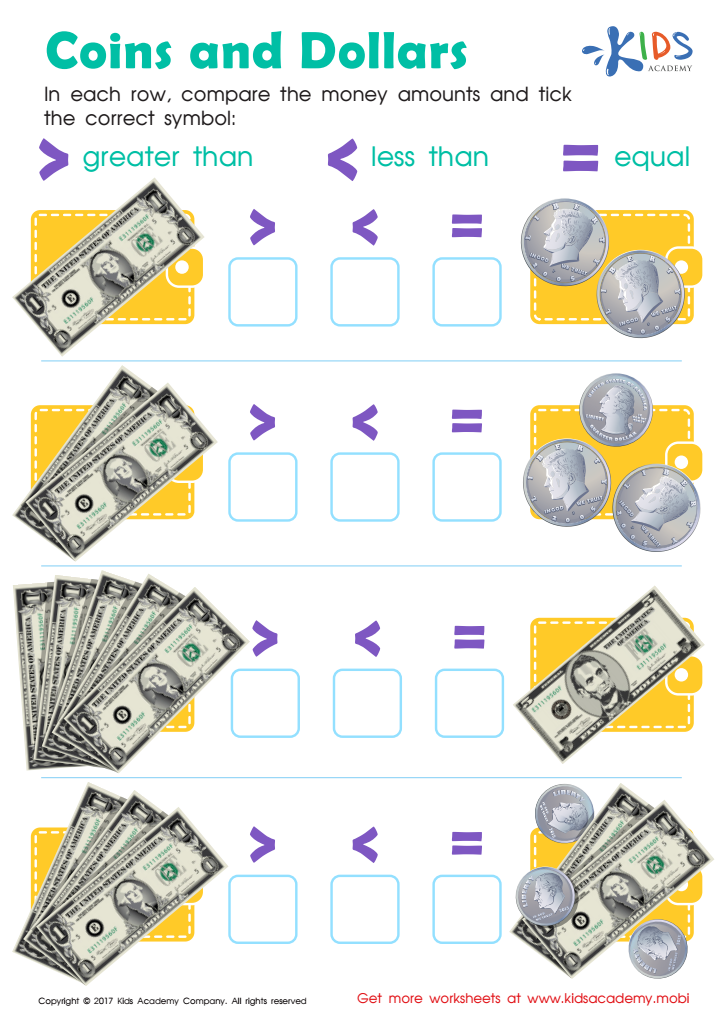
Money: Coins Dollars Printable
 Assign to My Students
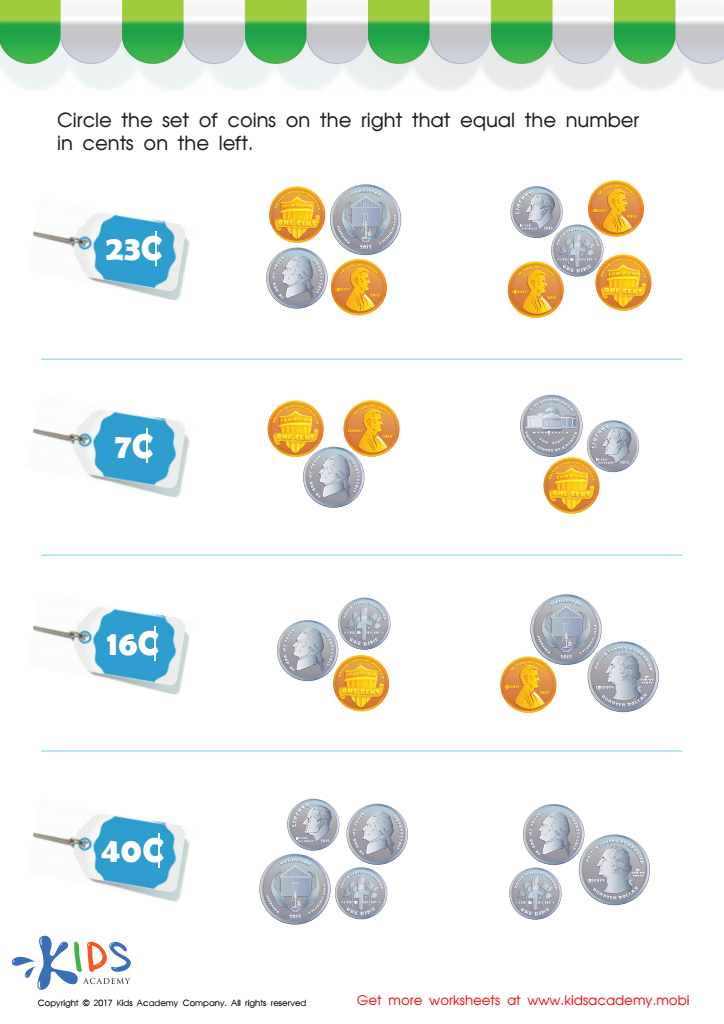
Picking the Coins You Need Money Worksheet
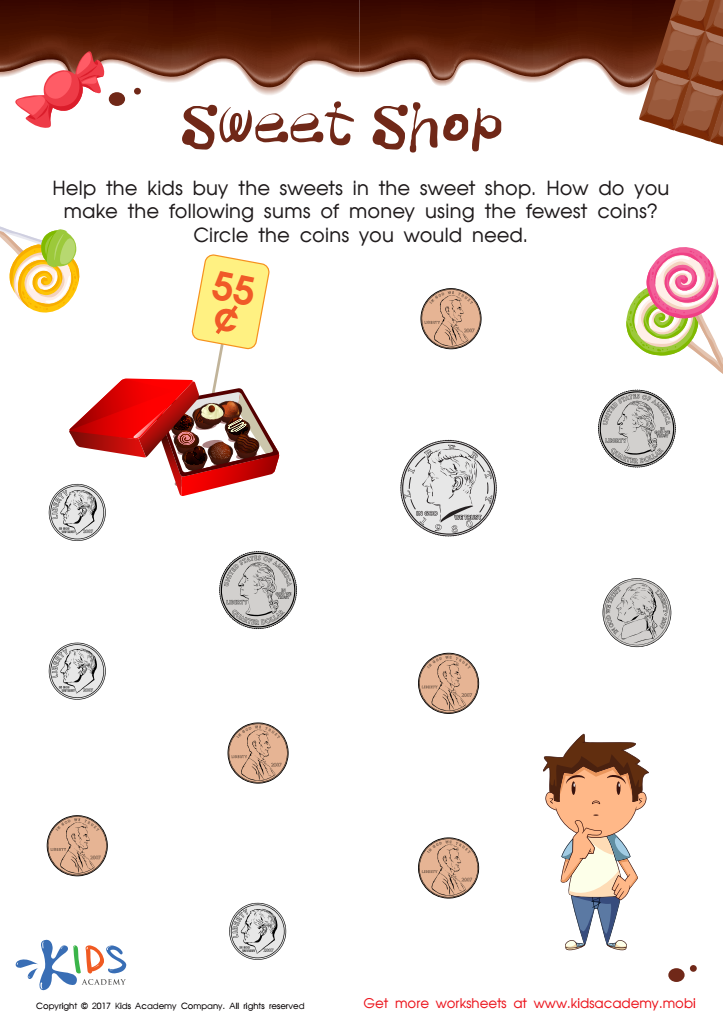
Sweet Shop – Counting Coins Worksheet







Basic math skills related to money are crucial for children ages 4-7 because they lay the foundation for financial literacy, a skill that is essential throughout life. At this age, children are naturally curious about their surroundings, including concepts of value, exchange, and counting. By introducing basic math skills through money, parents and teachers can enhance children's understanding of numbers and improve their ability to perform simple calculations.
Learning to recognize coins and understand their values helps to boost children's confidence in managing money. This early exposure teaches them about saving, spending, and the importance of making smart financial decisions. In addition, engaging in playful activities, such as setting up a pretend store or counting allowance, makes learning practical and enjoyable.
Recognizing the significance of these skills encourages a proactive approach to instilling positive financial habits. As children grasp these concepts, they develop critical thinking skills, which are transferable to other mathematical areas and real-life situations. Ultimately, fostering these basic math skills not only prepares children for future academic success but also equips them to navigate the complexities of financial responsibility as responsible adults. Parents and teachers play a key role in shaping their understanding of money and its place in their everyday lives.








