Money recognition Money Worksheets for Ages 4-7
5 filtered results
-
From - To
Empower your child with essential money recognition skills using our engaging Money Worksheets designed for ages 4-7. These expertly crafted worksheets help young learners identify and understand various coins and bills while enhancing their counting abilities. The hands-on activities blend fun with education, making it easy for kids to grasp the basics of money. Ideal for both classroom and home use, our printable resources provide a foundational understanding critical for future financial literacy. Give your little ones the tools they need to confidently navigate their early math journey with our comprehensive and interactive money recognition worksheets.
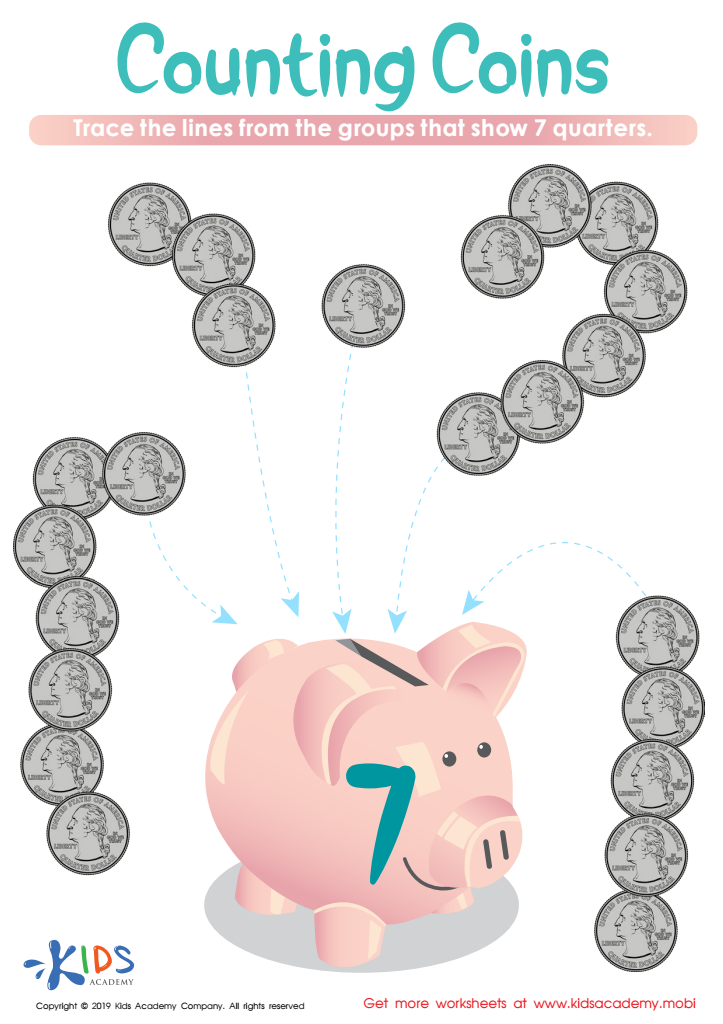
Counting Coins Worksheet
 Assign to My Students
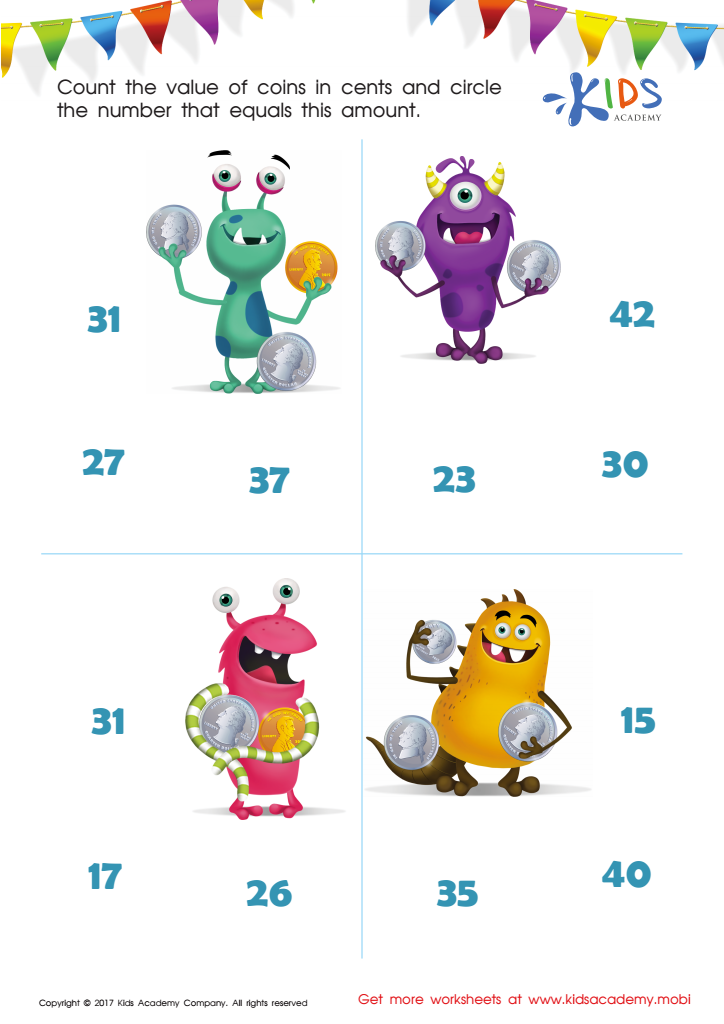
How Many Coins Money Worksheet
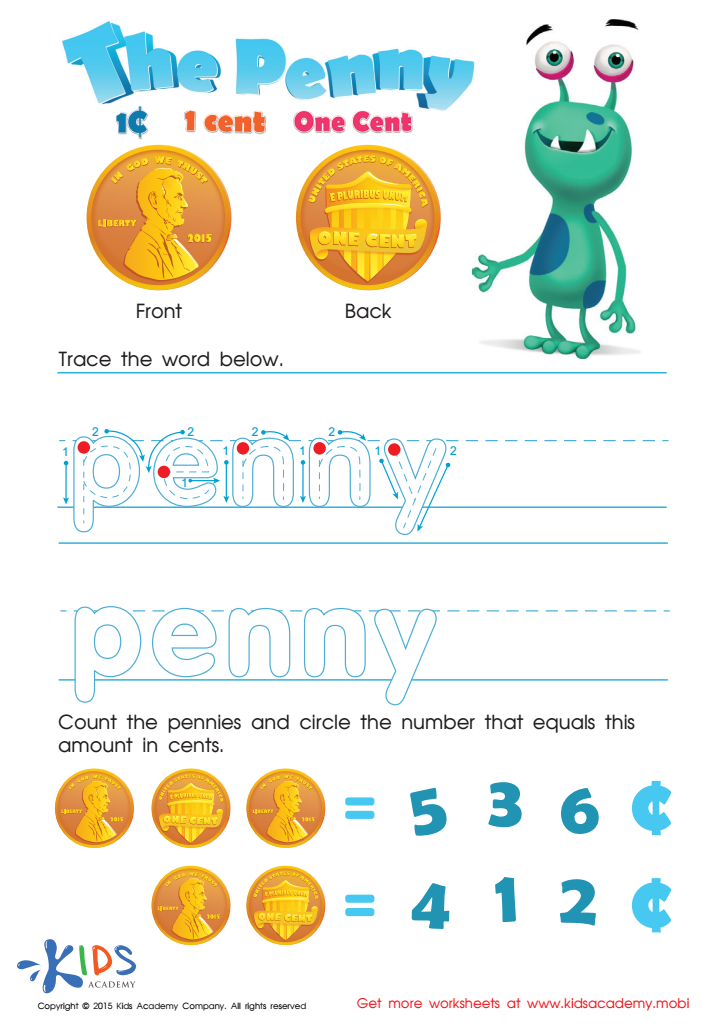
One Cent or the Penny Money Worksheet
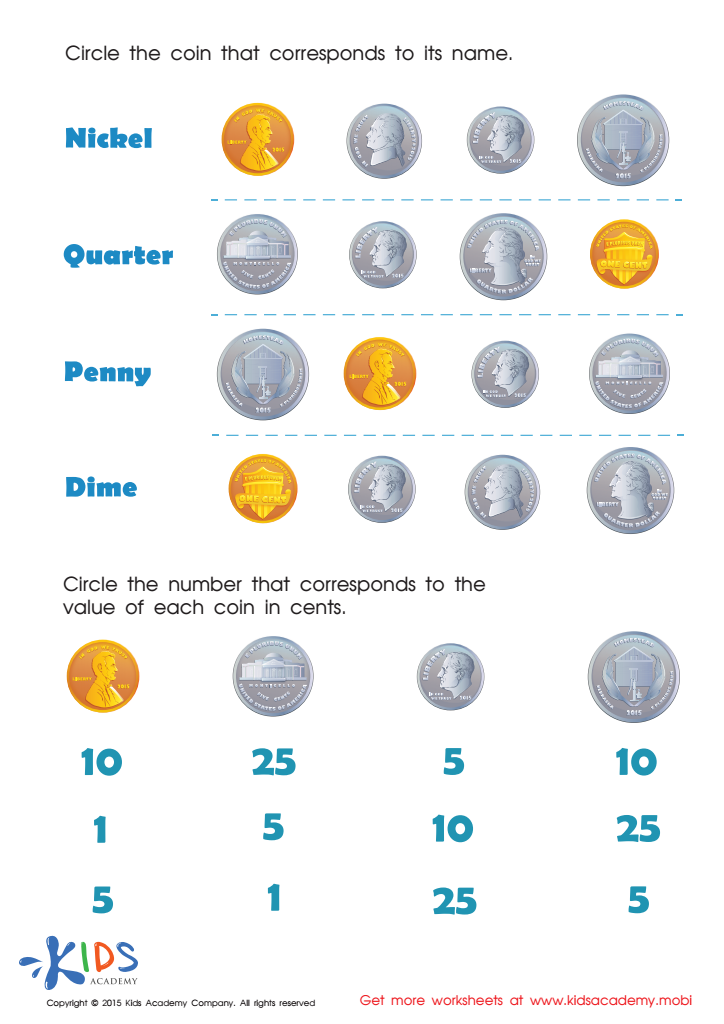
Coin Names and Values Money Worksheet
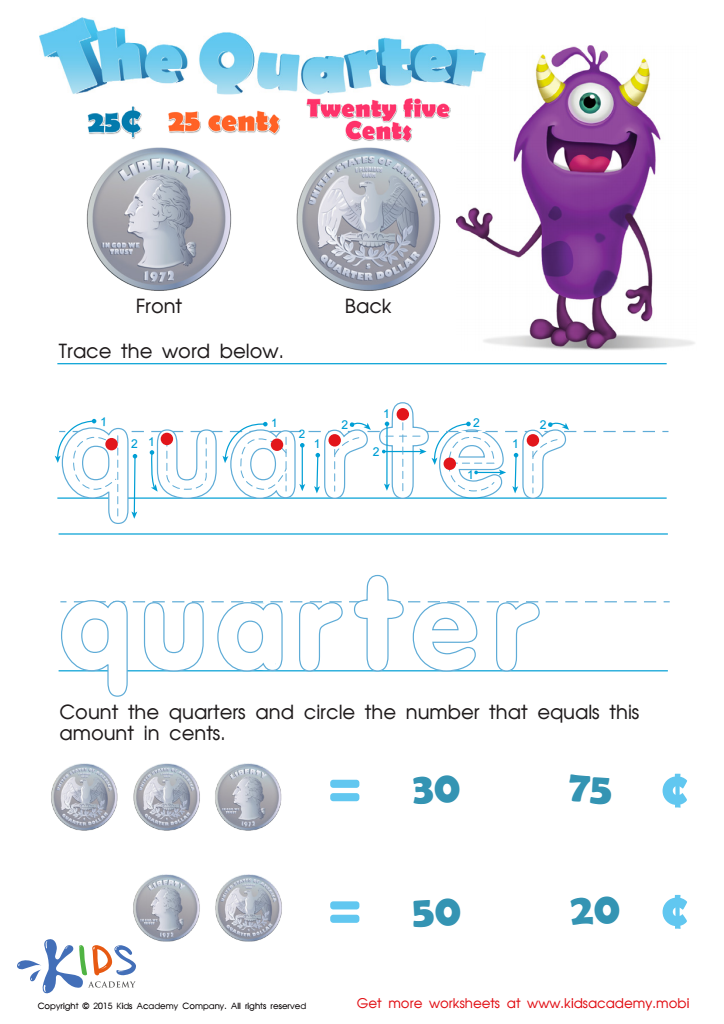
Twenty Five Cents or the Quarter Money Worksheet








Introducing money recognition to children aged 4-7 is essential for their cognitive and practical development. At this formative age, children are like sponges, soaking up knowledge and skills rapidly. Understanding money—be it recognizing coins and bills or grasping the basics of value—lays a critical foundation for future financial literacy and responsible money management.
Firstly, early money recognition helps to develop basic math skills. Counting, addition, and subtraction become exciting and tangible when linked to real-world concepts like money. For instance, understanding that five pennies make a nickel introduces the idea of equivalence and sets the stage for more complex mathematical concepts later on.
Additionally, it fosters decision-making and critical thinking. Learning to compare prices and understanding affordability helps children make thoughtful judgments. This can lead to developing budgeting skills and the importance of saving from a young age, shaping responsible financial habits.
Moreover, early exposure to money concepts encourages communication skills. Children engage in dialogues about cost, value, and choice, which can enhance their vocabulary and social skills. It also instills a sense of independence and confidence, allowing children to interact more comfortably in various settings, such as buying a snack or a toy.
In summary, early money recognition equips children with essential life skills. It not only supports their academic growth but also prepares them for real-world experiences, fostering overall development and competency.








