
Understanding graphs Graphs Worksheets for Ages 4-7
3 filtered results
Difficulty Level
Grade
Age
-
From - To
Subject
Activity
Standards
Boost your child's analytical skills with our "Understanding Graphs" worksheets designed for ages 4-7. Our printable worksheets help young learners grasp basic graph concepts through engaging and enjoyable activities. Children will learn to read, interpret, and create simple bar, line, and pictographs. Each worksheet is crafted to align with early math standards, promoting critical thinking and problem-solving. Perfect for both classroom and home use, these educational resources are tailored to support varied learning styles and paces, making complex concepts accessible and fun for your little mathematicians. Visit Kids Academy to start your child's graph-learning journey today!
Favorites
With answer key
Interactive
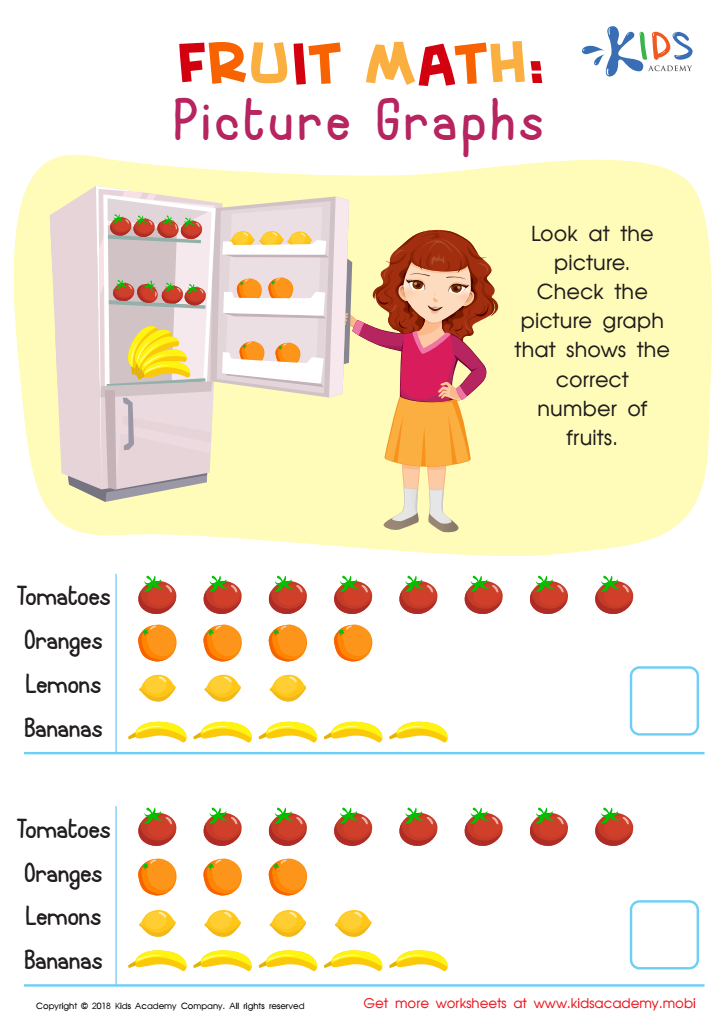
Fruit Math: Picture Graphs Worksheet
Help your child learn to draw graphs by having them look at pictures. Ask them to identify a graph that accurately portrays the data and have them explain why. This will prepare them to easily draw more complex graphs in the future. For example, have them look at the picture with the number of fruits in the colorful worksheet and explain why the graph is accurate.
 Assign to My Students
Fruit Math: Picture Graphs Worksheet
Worksheet
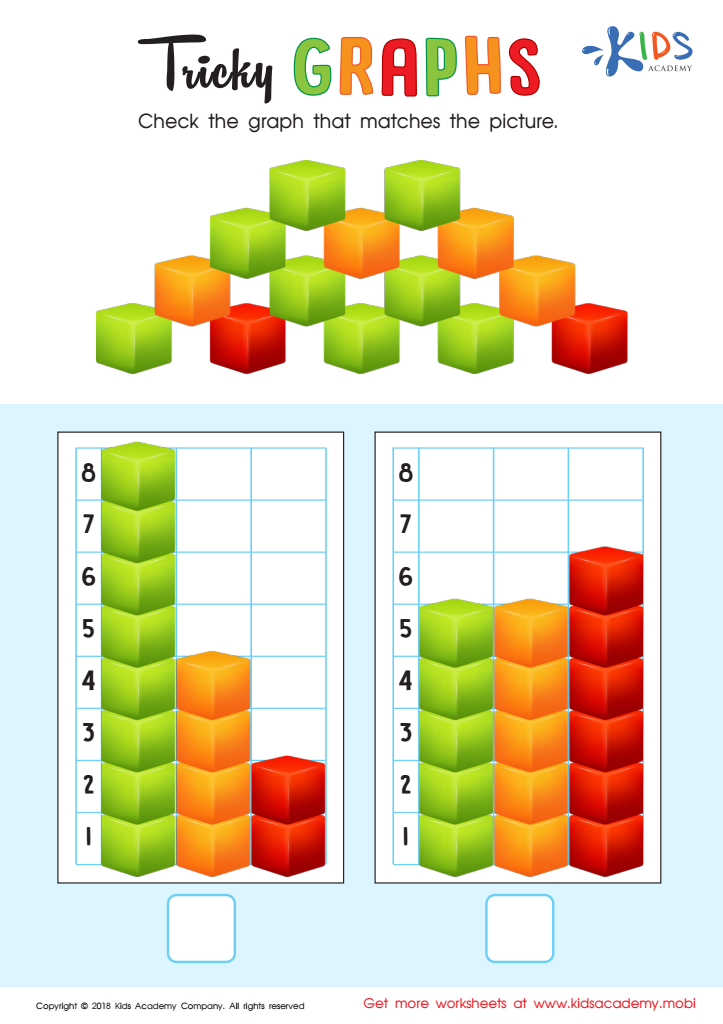
Tricky Graphs Worksheet
Looking for a fun way to sharpen your kid's graphing skills? Get this colorful PDF worksheet! They'll get to practice visual discrimination, counting, and creating bar graphs. Plus, graphing and reading graphs are essential for problem-solving in math.
Tricky Graphs Worksheet
Worksheet
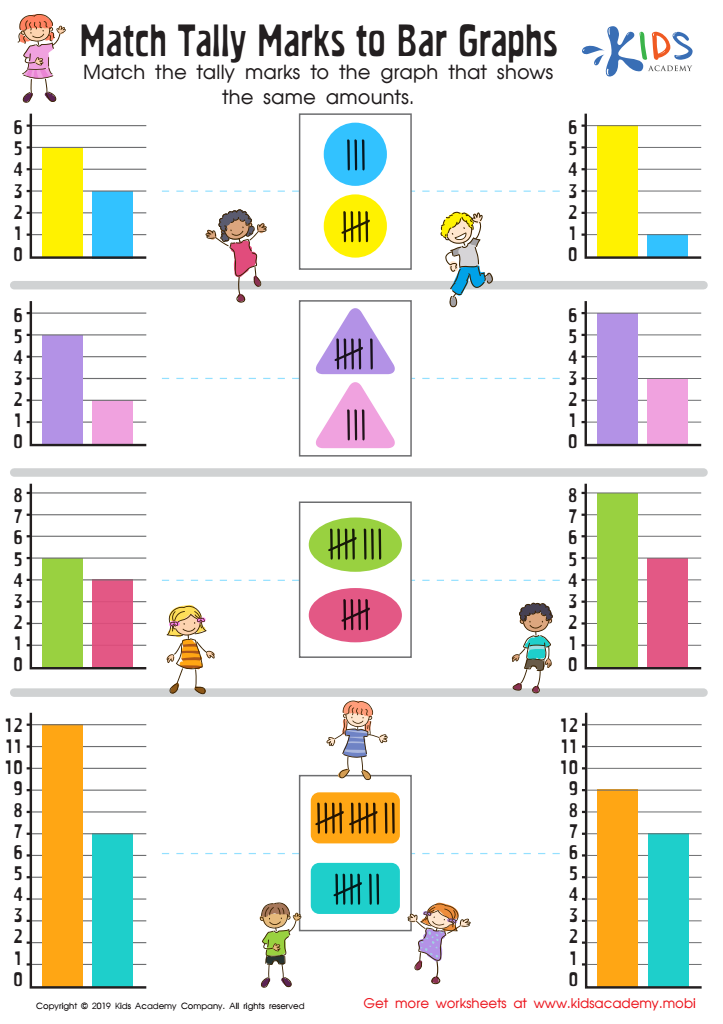
Match Tally Marks to Bar Graphs Worksheet
Learning math can be tough for kids. Rules and formulas can be confusing. Don't worry, this worksheet can help them understand graphs better. Show them how to match the tally marks with the graph that shows the same amount. It will help them grasp the basics and prepare them for more complex equations.
Match Tally Marks to Bar Graphs Worksheet
Worksheet
Join Kids Academy for Free
Who is primarily going to use this learning content?








Introducing young children (ages 4-7) to graphs is vital because it sets the stage for critical thinking and analytical skills that they will use throughout their academic and personal lives. At this age, children are naturally curious and highly receptive to new concepts, making it an optimal time to teach them how to observe, interpret, and make sense of visual data.
Graphs, such as bar charts and pictograms, provide a visual representation of information, which helps children grasp abstract ideas more concretely. By understanding graphs, children learn how to organize information logically, recognize patterns, and make comparisons. These skills are foundational for subjects they'll encounter later, like mathematics, science, and social studies.
Moreover, engaging with graphs aids in language development and cognitive growth. When children explain what a graph shows, they practice using specific vocabulary and improve their communication skills. This type of dialogue encourages deeper comprehension and retention of the material.
Furthermore, early engagement with graphs builds confidence and encourages a positive attitude towards math-related tasks. It demystifies complex data and demonstrates that numbers and information can be fun and accessible. Ultimately, fostering an early understanding of graphs equips children with essential life skills, such as problem-solving, decision-making, and logical reasoning, holds long-term benefits for their academic journey and beyond.








