Counting skills improvement Math Worksheets for Ages 4-7
3 filtered results
-
From - To
Boost your child's counting skills with our engaging Math Worksheets specially designed for ages 4-7! Kids Academy offers a variety of interactive and professionally crafted printables that make learning numbers fun and easy. Our worksheets cover essential counting concepts, including number sequencing, recognition, and simple addition. With colorful illustrations and playful themes, these resources not only enhance mathematical understanding but also keep young learners motivated and excited. Perfect for both classroom use and home practice, these worksheets provide the foundation for strong math skills. Start your child’s journey toward numerical proficiency today with Kids Academy!
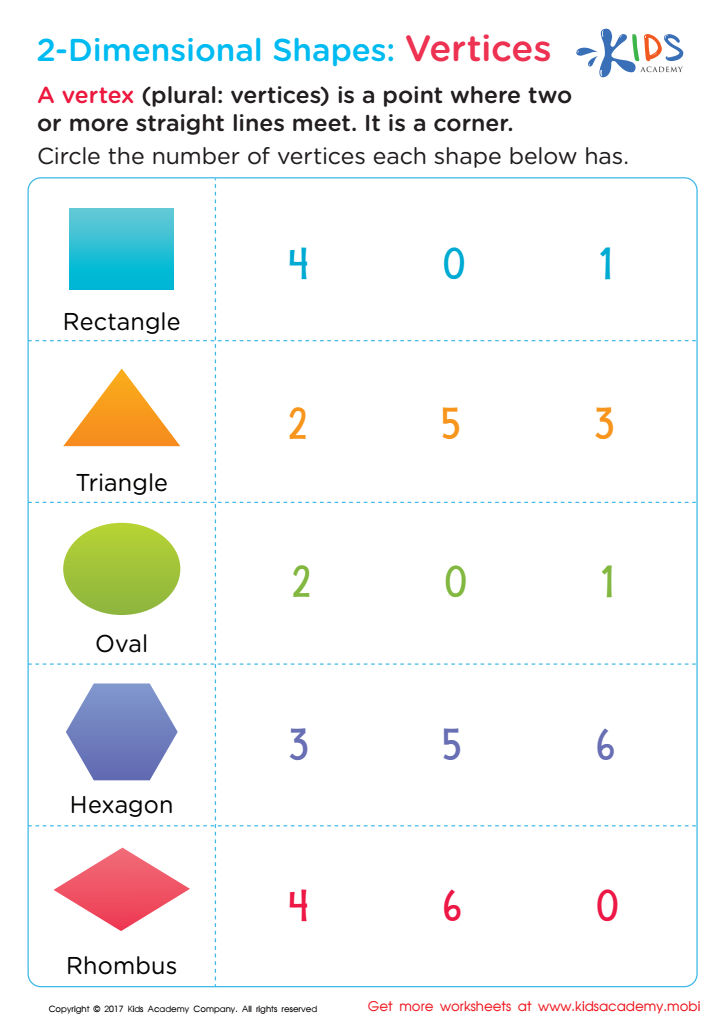
Two–Dimensional Shapes: Vertices Printable
 Assign to My Students
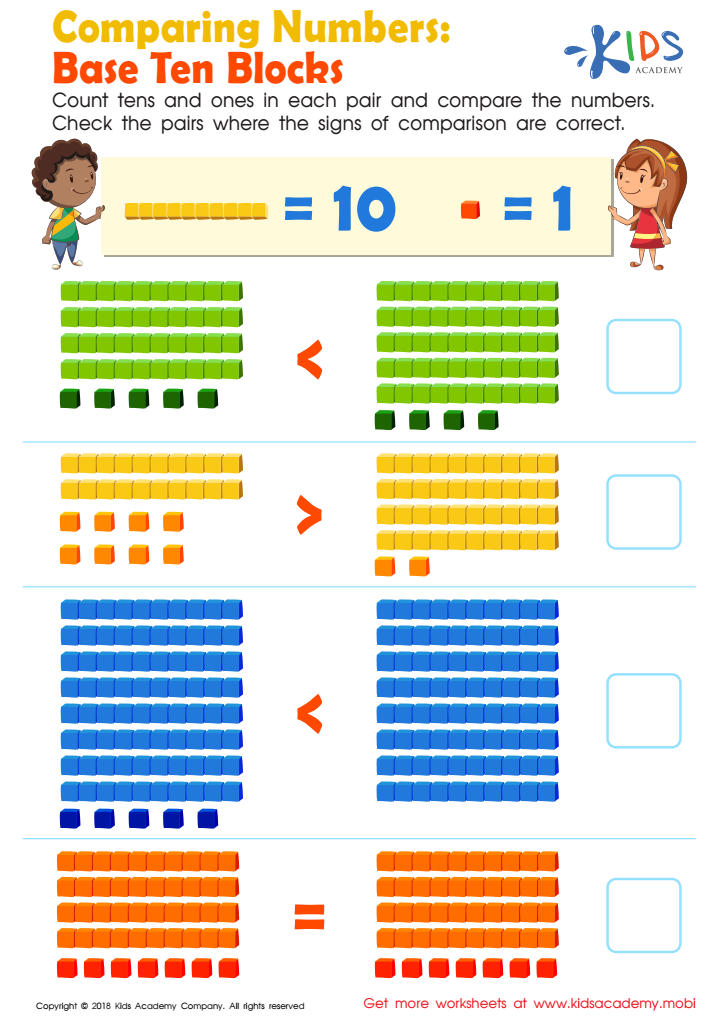
Comparing Numbers: Base Ten Blocks Worksheet
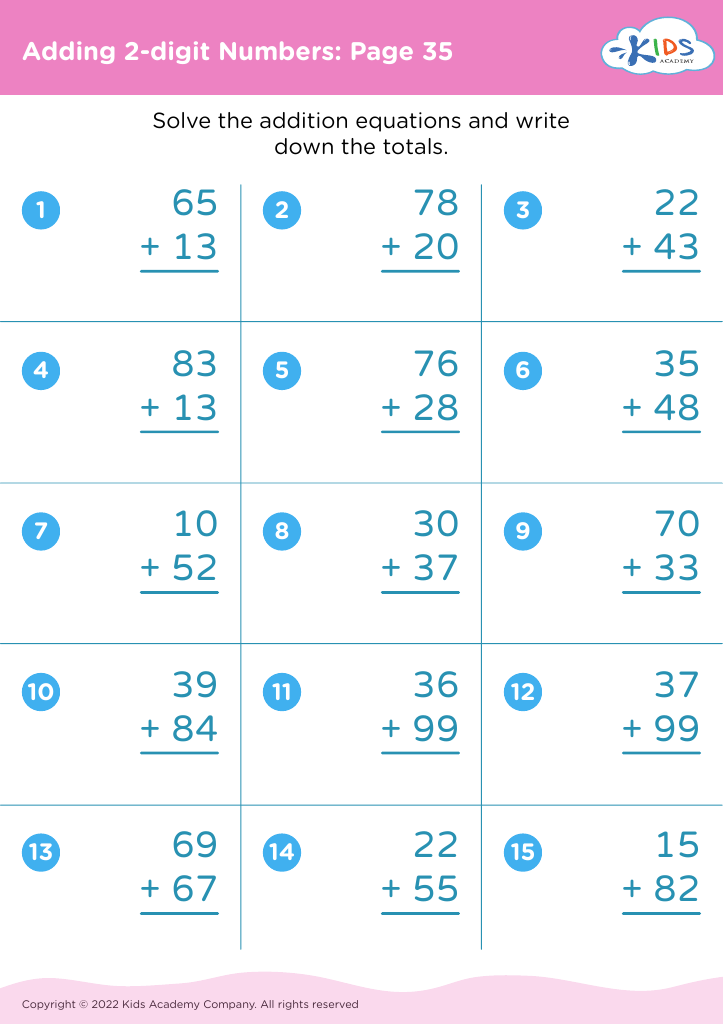


.jpg)
.jpg)


Counting skills are a vital foundation for young children's mathematical development. For children aged 4-7, enhancing these skills helps in grasping basic arithmetic concepts, which is crucial for their future academic success. When children learn to count, they not only recognize numbers, but understand quantities and develop number sense—an essential skill for higher-level math.
Counting also contributes significantly to cognitive development. It fosters memory skills, attention to detail, and sequential thinking. These abilities are transferable and can aid children in a variety of subjects and real-life tasks, from following multi-step instructions to understanding time and space relations.
Additionally, counting strengthens problem-solving skills. As children count objects, they learn to compare quantities and recognize patterns, which are foundational skills in both numeracy and broader cognitive abilities. This early practice with numbers builds their confidence and lays the groundwork for more complex mathematical concepts such as addition, subtraction, and even basic fractions.
Moreover, improving counting skills helps children develop positive attitudes towards math. Early success in understanding numbers can reduce math anxiety and encourage a proactive approach to learning more advanced topics later on.
Overall, investing time in developing counting skills between ages 4-7 equips children with critical analytical tools, setting a strong foundation for lifelong learning and practical everyday skills.








