Historical Knowledge Math Worksheets for Ages 4-7
5 filtered results
-
From - To
Explore our collection of Historical Knowledge Math Worksheets designed for young learners aged 4-7! These engaging and interactive resources seamlessly blend math skills with fascinating historical facts, making learning both educational and fun. Each worksheet encourages children to practice essential math concepts while discovering important historical figures and events, enriching their understanding of the world around them. Tailored to nurture curiosity and critical thinking, our worksheets promote a dynamic learning environment. Perfect for at-home learning or classroom settings, these valuable tools help kids develop a love for math and history alike. Inspire the next generation with our creative and informative worksheets today!
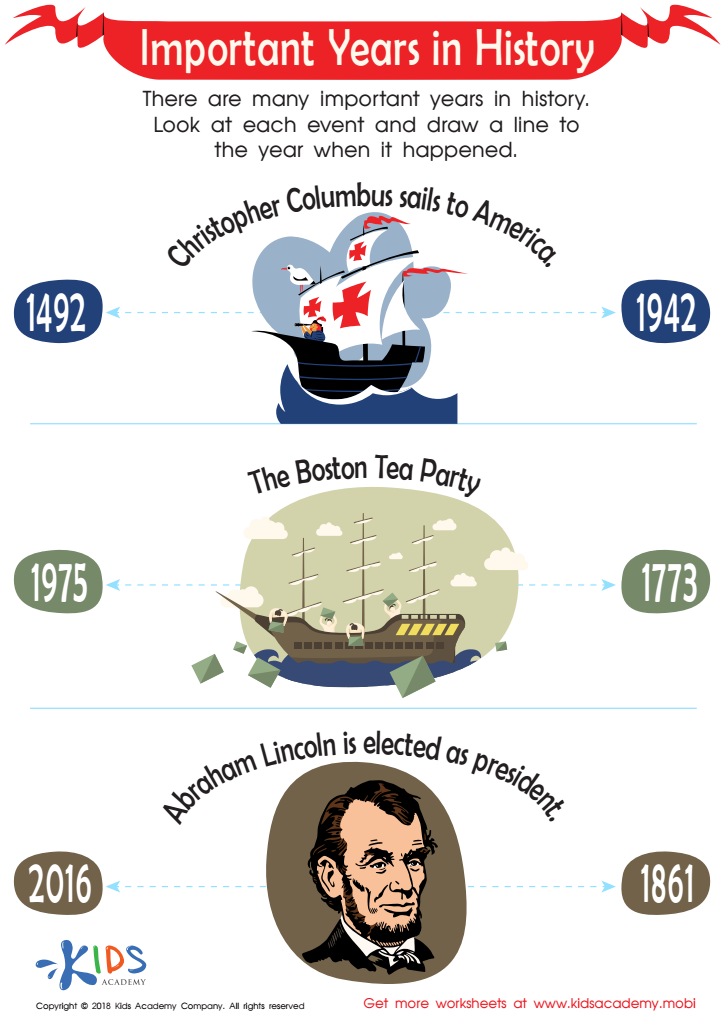
Important Years in History Worksheet
 Assign to My Students
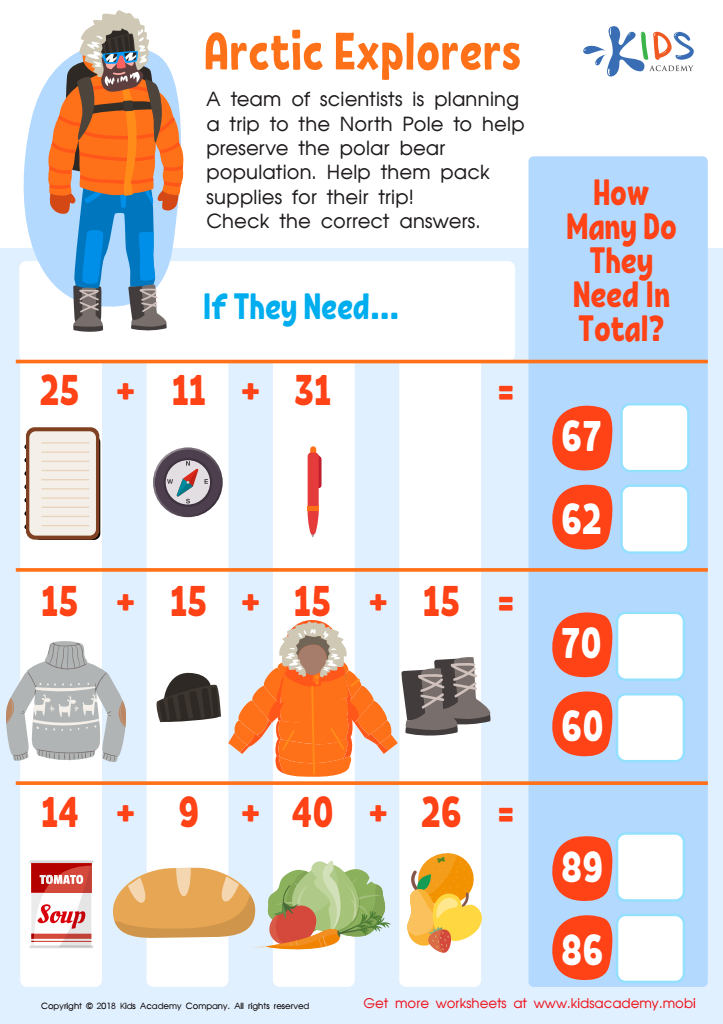
Arctic Explorers Worksheet
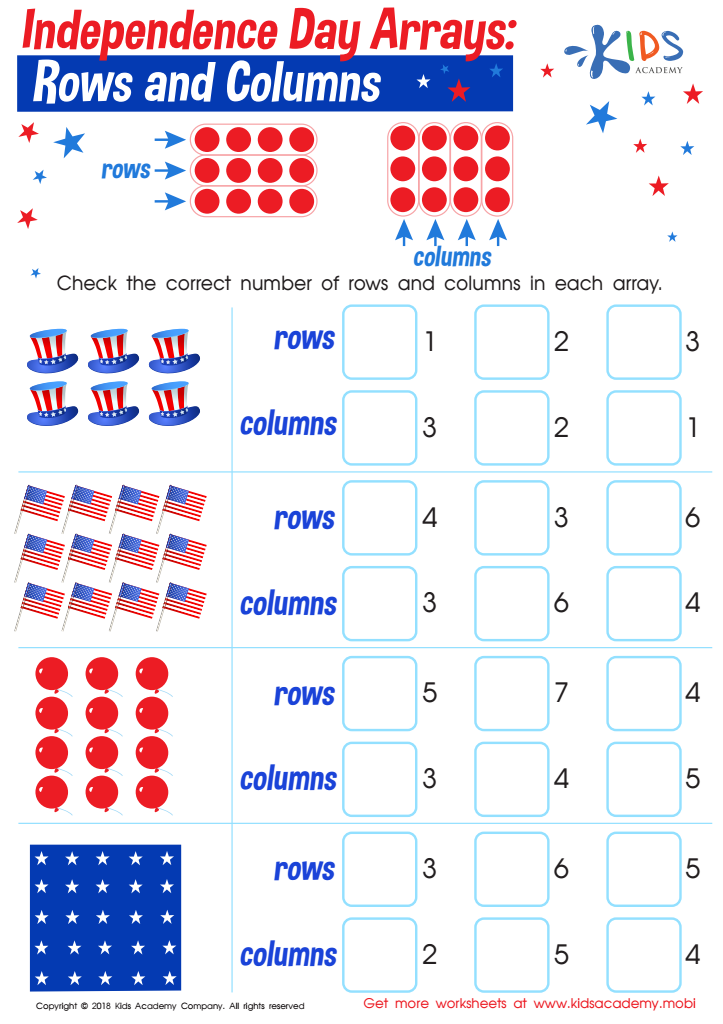
Independence Day Arrays: Rows and Columns Worksheet
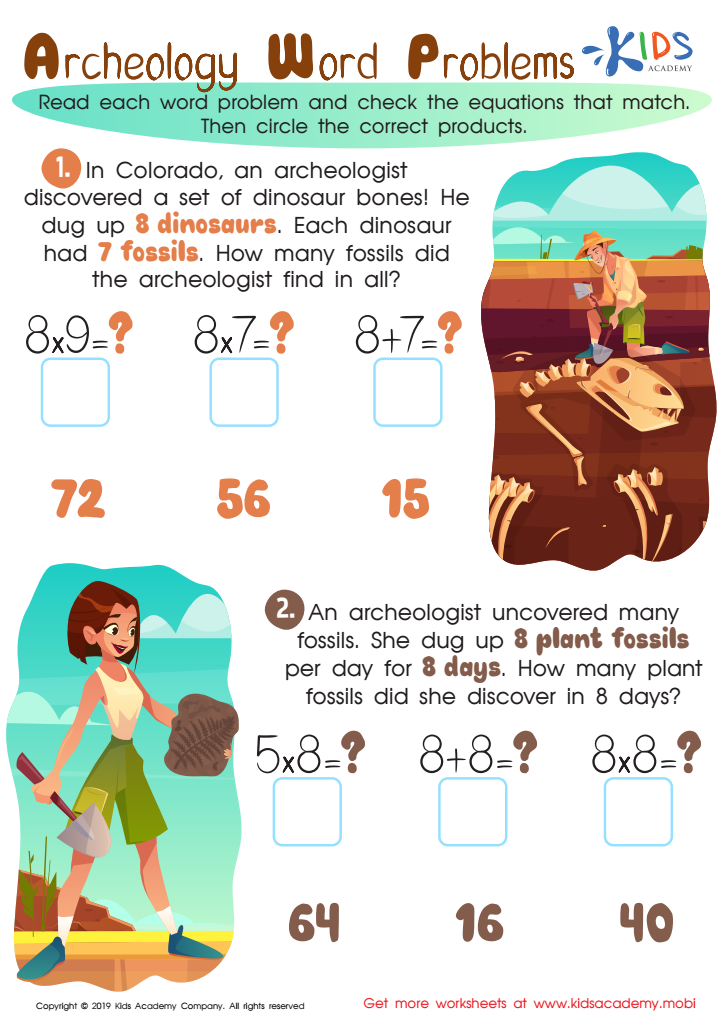
Archeology Word Problems Worksheet
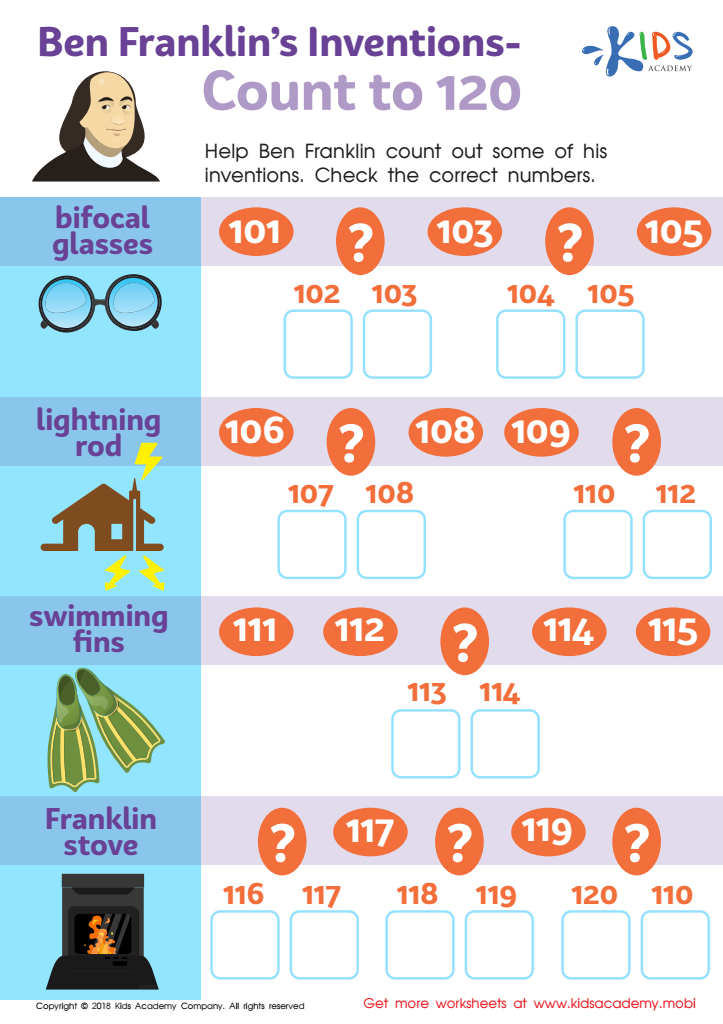
Ben Franklin’s Inventions – Count to 120 Worksheet







Parents and teachers should care about integrating historical knowledge in math for children aged 4 to 7 for several compelling reasons. First, historical context helps make abstract mathematical concepts relatable. By understanding how early civilizations used math for trade or astronomy, children can grasp the significance of numbers and operations in everyday life.
Introducing history alongside math nurtures critical thinking skills. It encourages kids to consider why certain methods were developed and how they evolved, fostering an inquisitive mindset. This dual approach also supports cultural awareness and diversity, showing students that various cultures contributed to mathematical discoveries, enriching their learning experience.
Moreover, integrating historical stories with math reinforces literacy skills. Engaging narratives make math less intimidating and more enjoyable, helping children connect emotionally with the subject. This connection can inspire a lasting interest in mathematics.
Building a foundation that intertwines history and math cultivates well-rounded learners. It emphasizes the role of math in shaping human progress and problem-solving. Ultimately, teaching math within its historical framework equips young learners with a broader understanding of the world, making them more informed and engaged citizens.








