Money management skills Math Worksheets for Ages 4-7
3 filtered results
-
From - To
Empower your children with essential money management skills using our specially designed Math Worksheets for Ages 4-7. These engaging activities introduce young learners to fundamental concepts of counting, savings, and spending. Our expertly crafted worksheets make learning fun and interactive, helping kids understand the value of money through age-appropriate tasks. Ideal for parents and educators, these resources encourage financial literacy from an early age. Develop confidence in your child's math competencies while imparting crucial life skills. Discover our printable worksheets and lay a solid foundation for your child's future financial well-being.
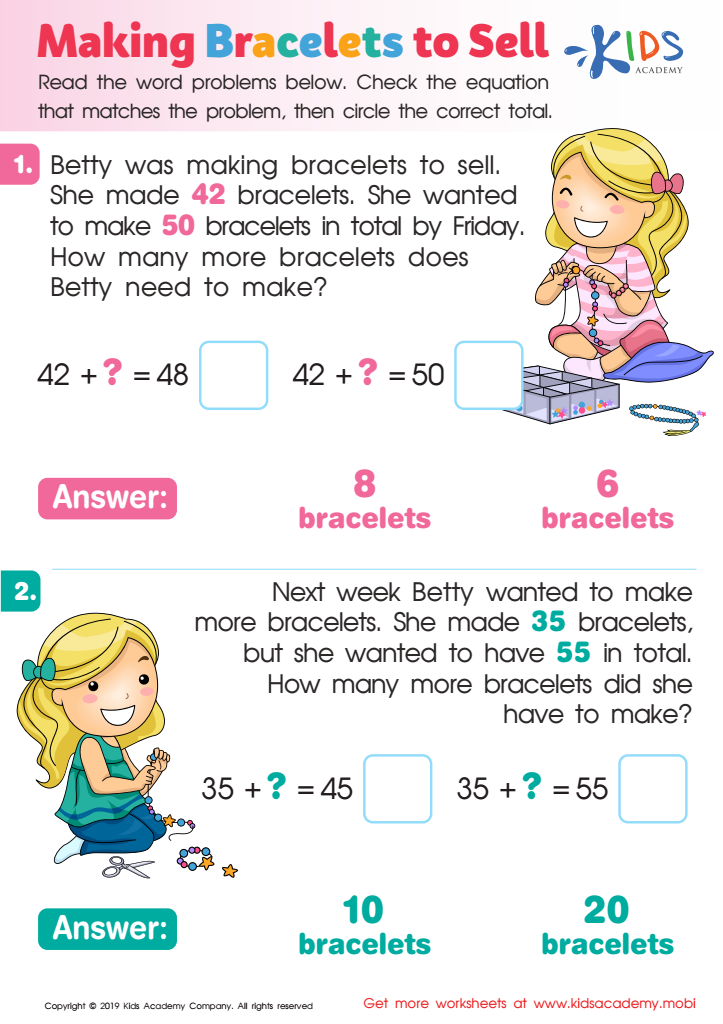
Making Bracelets to Sell Worksheet
 Assign to My Students
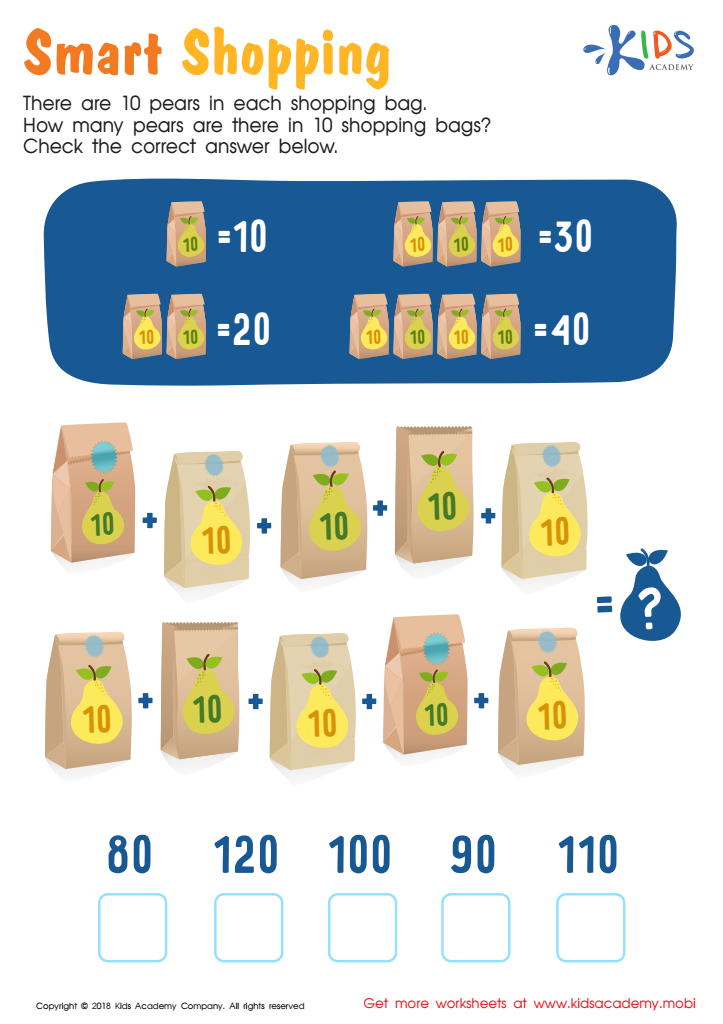
Smart Shopping: Trade Tens for a Hundred Worksheet
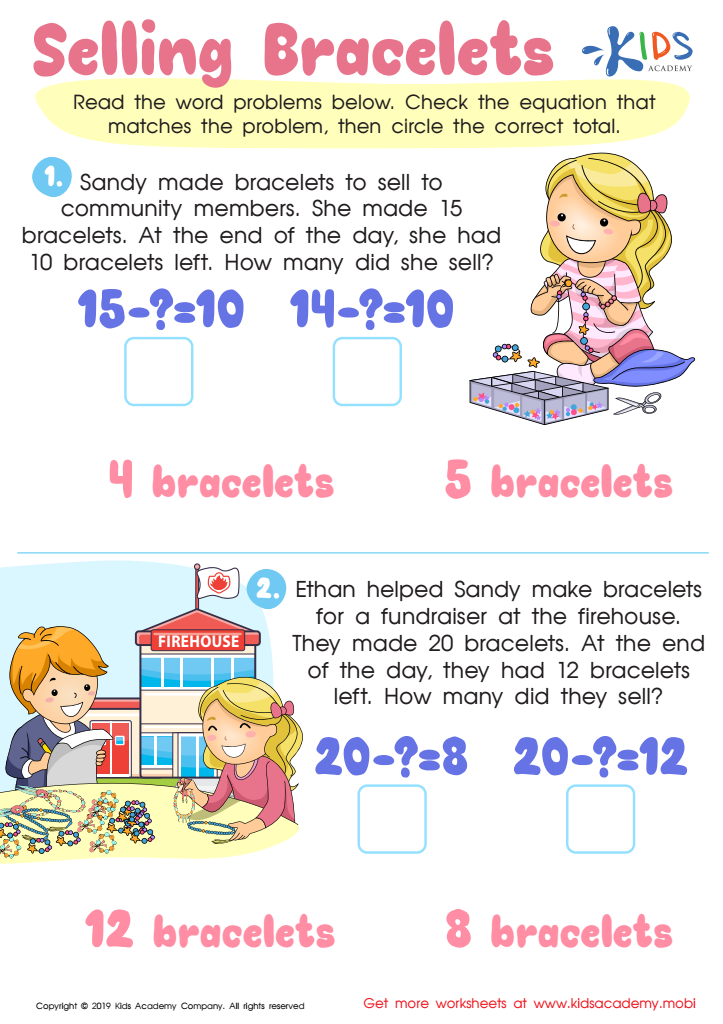
Selling the Bracelets Worksheet








Parents and teachers should care deeply about teaching money management skills to children aged 4-7 because these formative years lay the foundation for healthy financial habits. At a young age, children's brains are incredibly receptive to new concepts, and introducing basic money management principles during this time can set the stage for future financial responsibility. Simple math skills like counting, addition, and subtraction can be applied in real-life scenarios such as understanding the value of coins and bills, making small purchases, and recognizing simple budgeting needs.
Teaching kids about money isn't just about arithmetic; it's about instilling values such as patience, prioritization, and decision-making. For instance, when children learn to save up for a desired toy, they grasp the concepts of saving and delayed gratification. These lessons extend beyond just financial literacy; they encourage a sense of responsibility and forethought that can benefit children in various aspects of their lives.
Moreover, early money management education can help reduce the anxiety and stress associated with finances later in life. By making financial literacy a fun and integral part of their learning journey early on, we equip children with the tools they need to lead more secure, empowered, and responsible lives. Ultimately, these foundational skills can contribute to a generation of financially savvy individuals who are better prepared to navigate the complexities of adult life.








