
Motor skills development Math Worksheets for Ages 4-7
6 filtered results
Difficulty Level
Grade
Age
-
From - To
Subject
Activity
Standards
Enhance your child's education with our Motor Skills Development Math Worksheets for ages 4-7. Specially designed to combine essential math skills with fine motor practice, these printable worksheets engage young learners through hands-on activities. Children will develop crucial coordination abilities as they trace numbers, count objects, and solve puzzles. Ideal for preschool to early elementary students, these exercises stimulate brain development and lay a strong foundation for future academic successes. Perfect for both classroom use and homeschooling, our worksheets offer a fun, interactive way to strengthen both math and motor skills in early learners.
Favorites
With answer key
Interactive
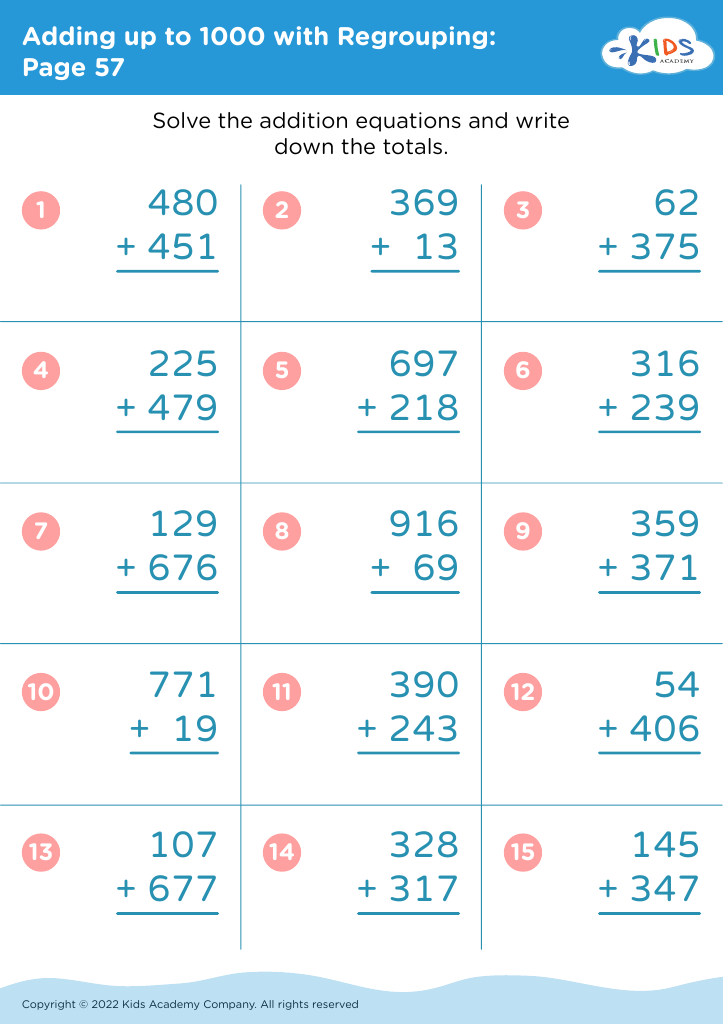
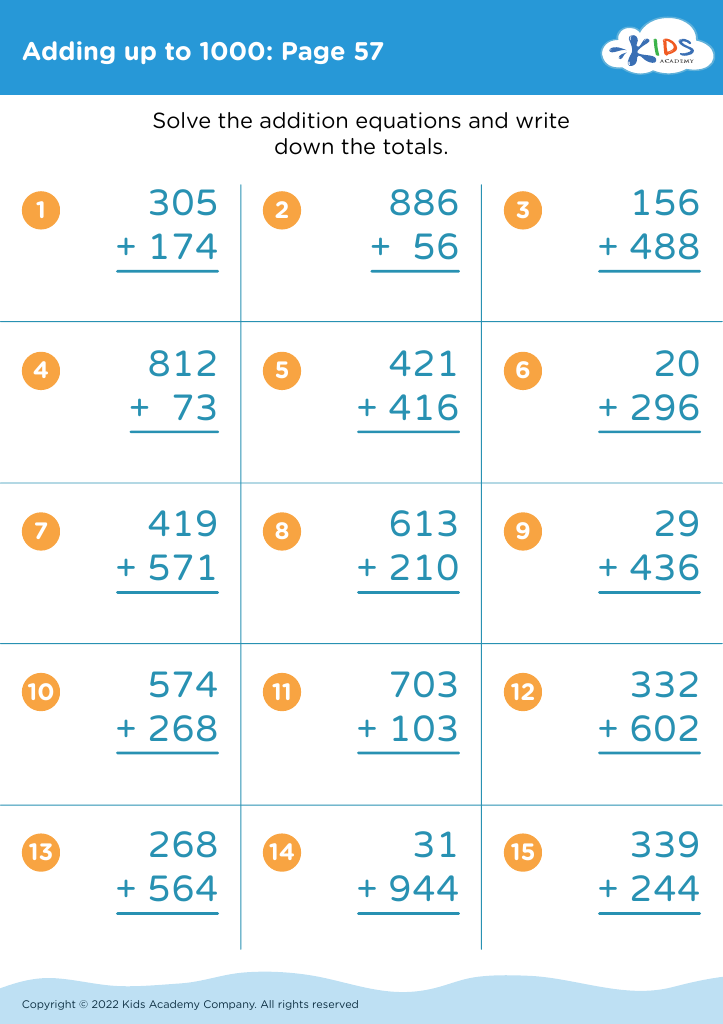
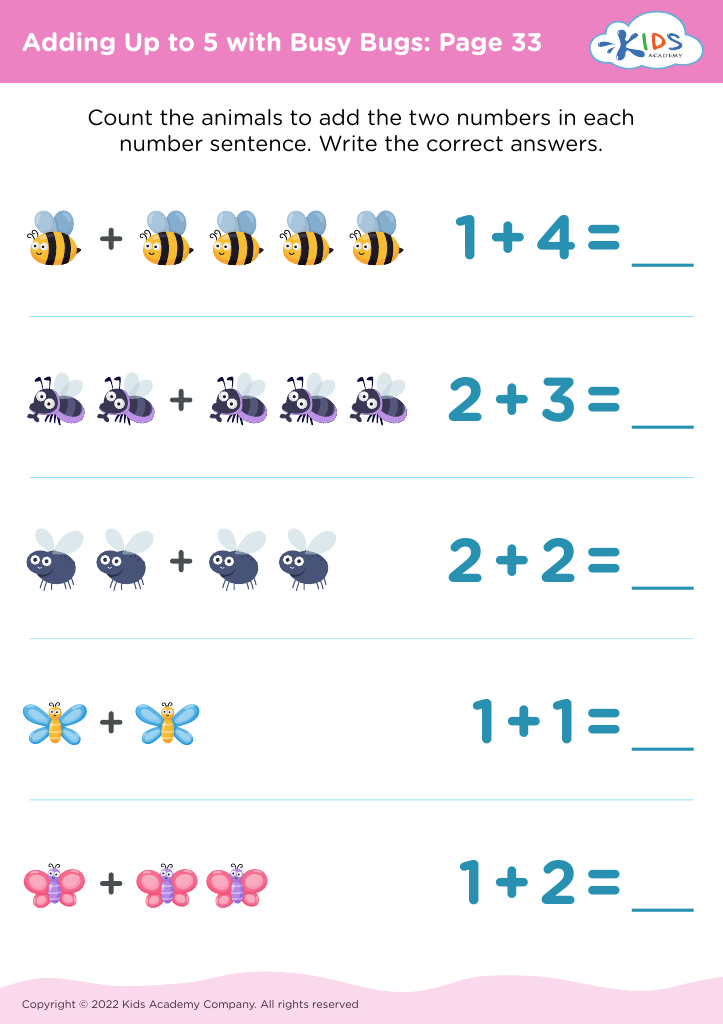
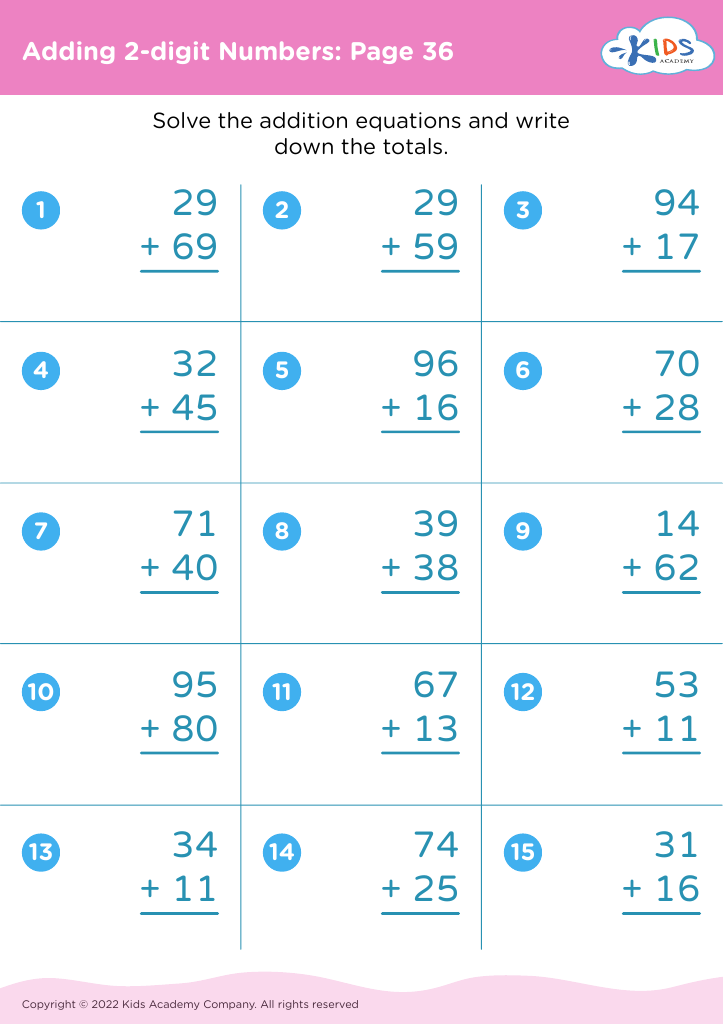
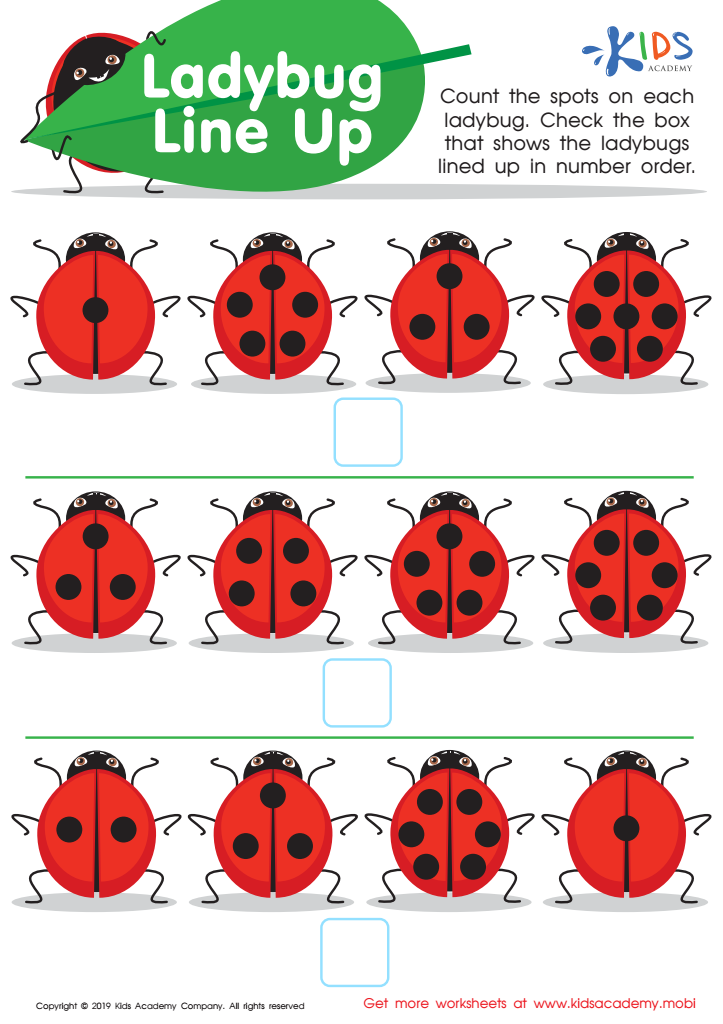
Ladybug Line Up Worksheet
Count the spots on the back of each ladybug in the three groups. Help kids check the box under each group that shows the ladybugs in proper number order. Ladybugs are an adorable insect with unique spots. This worksheet encourages counting and ordering.
 Assign to My Students
Ladybug Line Up Worksheet
Worksheet
Join Kids Academy for Free
Who is primarily going to use this learning content?








Motor skills development and early math skills are deeply interconnected in young children ages 4-7, and both play vital roles in their overall growth. For parents and teachers, understanding this interplay is crucial for fostering holistic development.
Fine motor skills, which involve the small muscles in the hands, fingers, and wrists, are essential for daily activities like writing, cutting with scissors, and manipulating small objects. Engaging children in tasks that enhance these skills, such as drawing shapes, building blocks, or sorting small items, directly supports their mathematical understanding. For instance, activities like puzzle assembly improve hand-eye coordination and spatial awareness, which are fundamental elements in geometry.
Gross motor skills, involving larger muscle groups used for activities like jumping, running, and climbing, are equally important. These abilities influence children's ability to learn concepts of measurement, distance, and physical properties. For example, jumping in a hopscotch grid helps children internalize counting, steps, and numerical sequences.
Early math skills foster cognitive processes such as problem-solving, logical thinking, and pattern recognition. When children practice math through hands-on activities that require motor coordination, they build a solid foundation for more abstract mathematical concepts.
Hence, an integrated approach to motor and math skill development in early education ensures balanced growth, setting the stage for future academic success and everyday functionality.








