Subtraction skills Math Worksheets for Ages 4-7 - Page 2
27 filtered results
-
From - To
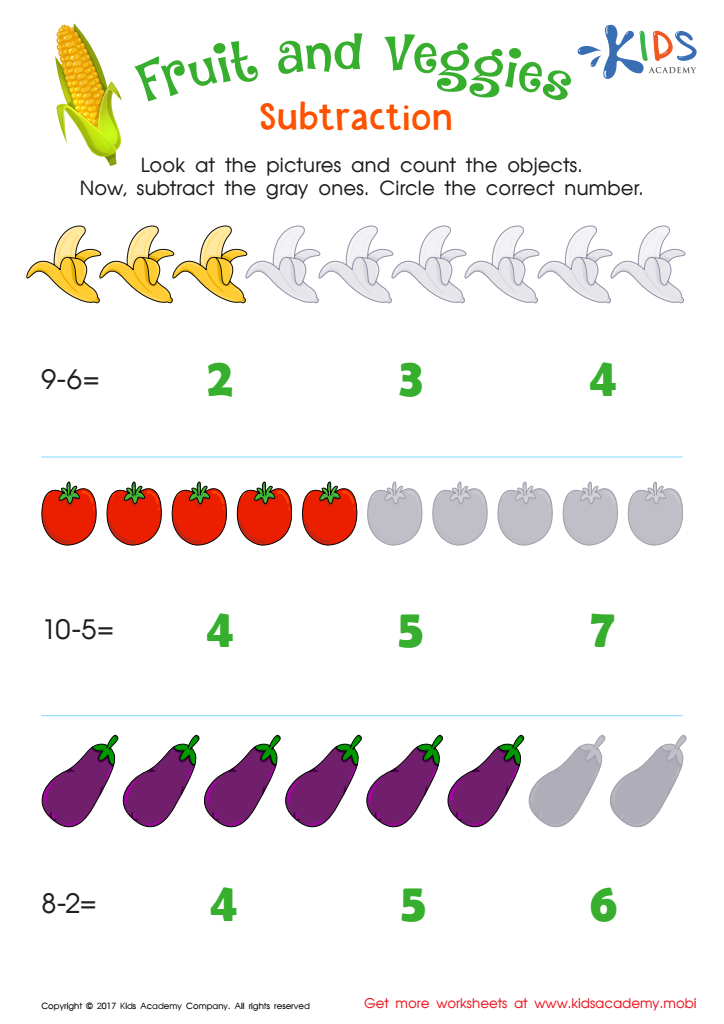
Fruit and Veggies Subtraction Worksheet
 Assign to My Students
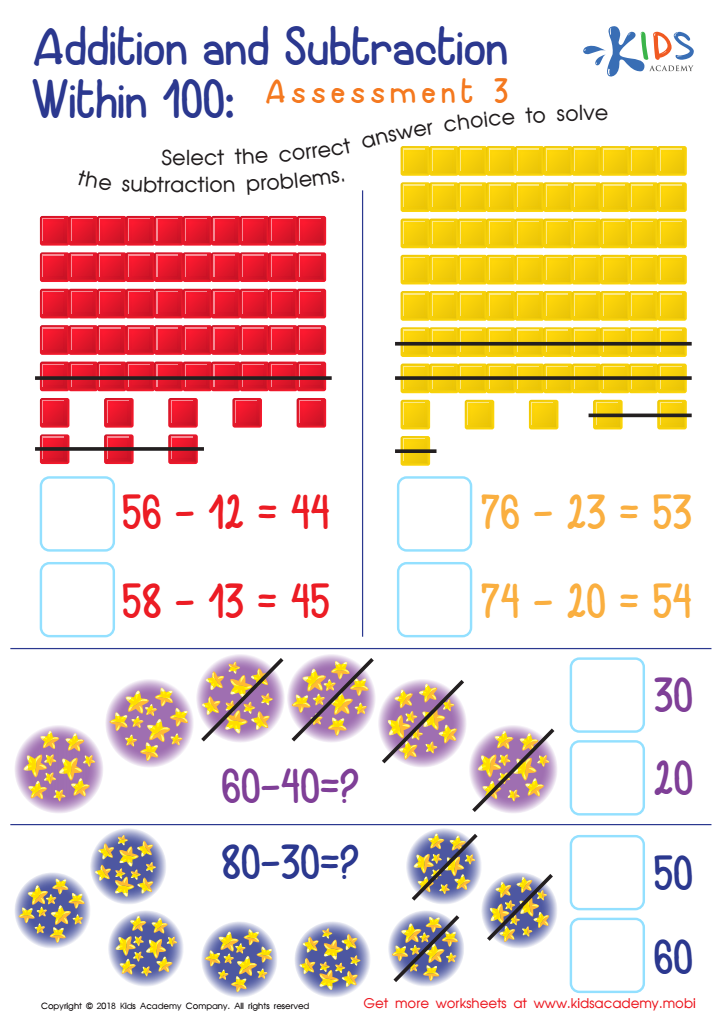
Addition and Subtraction Within 1: Assessment 3 Worksheet








Subtraction skills are foundational in early mathematics education and hold significant importance for children aged 4 to 7. Mastering subtraction not only helps children develop essential numeracy skills but also fosters critical thinking and problem-solving abilities. At this age, children transition from concrete manipulatives to more abstract understanding, making it crucial for parents and teachers to support this learning process.
Understanding subtraction also enhances a child's ability to grasp more advanced math concepts later on. For example, it lays a groundwork for understanding addition, as they learn that subtraction is the inverse operation. Furthermore, subtraction skills promote cognitive development, aiding children in logical reasoning and the ability to follow mathematical processes.
Beyond academics, fluency in subtraction can build a child's confidence. It allows them to navigate real-life situations, such as sharing items, understanding time, and managing money, all of which require basic subtraction skills. By investing time and effort in fostering these skills, parents and teachers empower children to become adept problem solvers, better prepared for future challenges both in and out of the classroom. Encouraging a positive attitude toward math at an early age can lay a lifelong foundation for learning and appreciation of the subject.








