Understanding Math Concepts Math Worksheets for Ages 4-7
3 filtered results
-
From - To
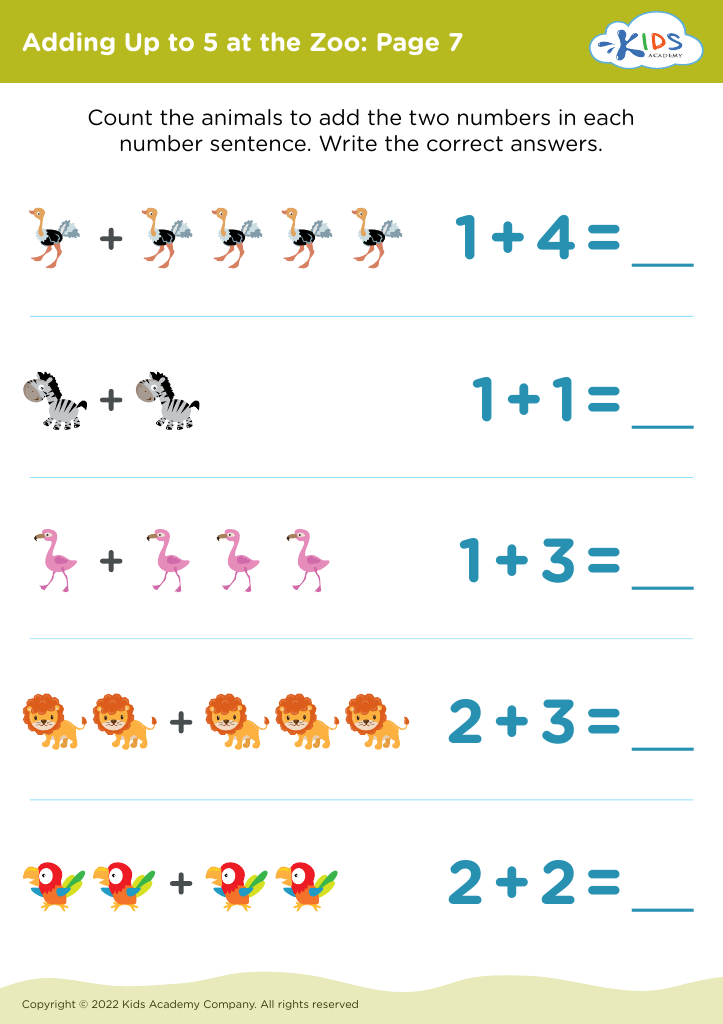
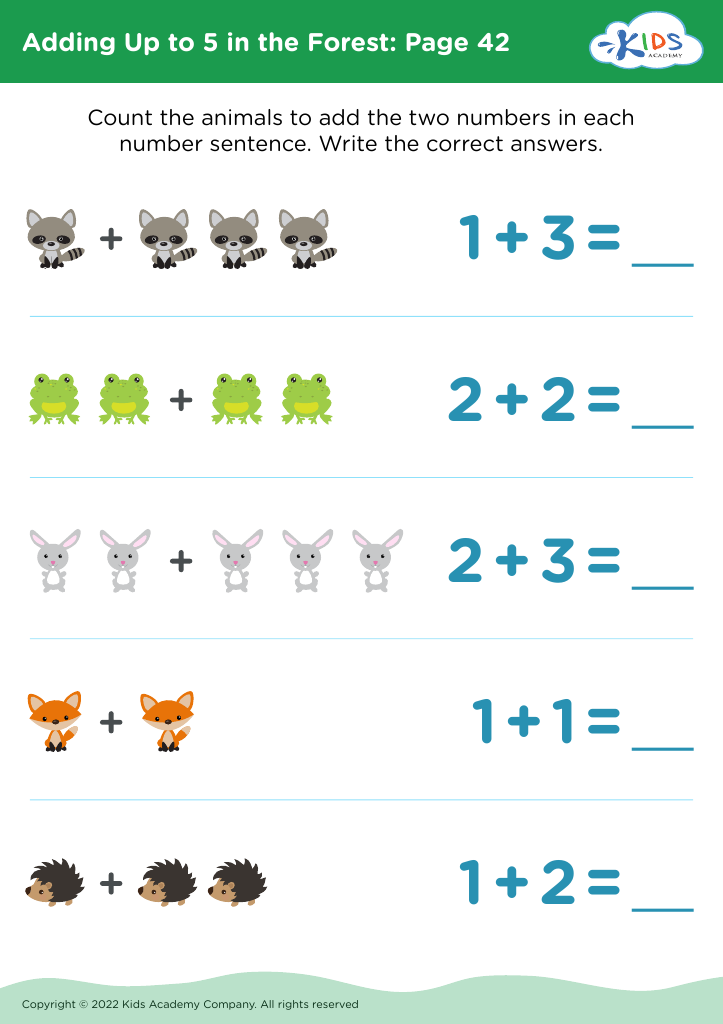
"Understanding Math Concepts Math Worksheets for Ages 4-7" by Kids Academy offers engaging, age-appropriate resources that foster mathematical skills in young learners. These worksheets help children grasp fundamental concepts such as number recognition, counting, basic addition, subtraction, and shapes. Designed by educators, each activity nurtures problem-solving abilities and positive attitudes towards math. Bright illustrations and interactive tasks ensure that learning remains enjoyable and effective. Whether used at home or in the classroom, Kids Academy’s worksheets provide an excellent foundation for your child's mathematical journey, catering to their developmental stages and paving the way for future academic success.
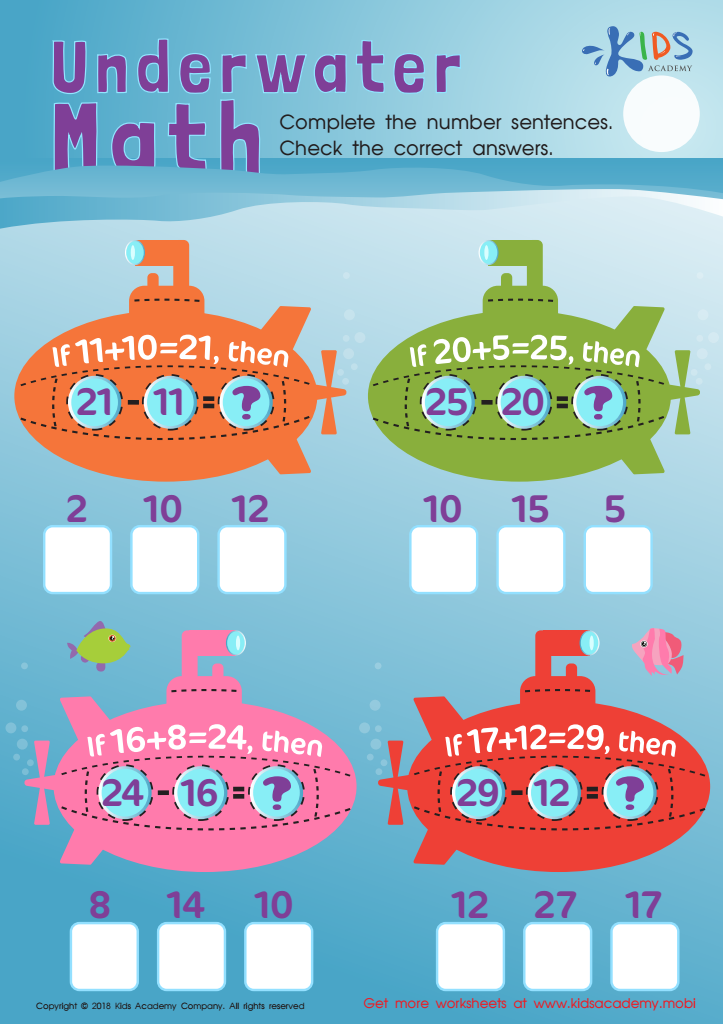
Addition and Subtraction: Underwater Math Worksheet
 Assign to My Students








Understanding math concepts from an early age is critically important for the intellectual development of children aged 4-7. At this stage, children's brains are highly receptive and adept at absorbing foundational knowledge that will support future learning. Introducing math concepts early helps nurture logical thinking, problem-solving skills, and a strong numerical foundation.
Learning math becomes not just about numbers but understanding relationships, patterns, and structures, which are integral to everyday decision-making and problem-solving. For instance, comprehending basic concepts like counting, sequencing, and basic operations forms the groundwork for more complex math and science concepts later on. Early exposure to math helps develop a child's ability to reason, think critically, and solve problems efficiently.
Moreover, teaching math concepts through engaging and playful activities can foster a positive attitude towards learning. Children who experience fun and success in early math are more likely to develop confidence and enthusiasm for the subject, which is essential for ongoing academic achievement.
In summary, parents and teachers should prioritize early math education as it equips children with essential skills for their academic journey and prepares them for the complexities of the world around them. Making math concepts accessible and enjoyable can set the stage for a lifelong interest and proficiency in the subject.








