Understanding seasons Math Worksheets for Ages 4-7
5 filtered results
-
From - To
Dive into the engaging world of seasons with our "Understanding Seasons Math Worksheets" tailored for ages 4-7! These beautifully illustrated worksheets blend math and science, making learning both enjoyable and educational. Your child will explore numbers, shapes, and patterns through the lens of seasonal changes. Each worksheet is designed to enhance key math skills like counting, addition, subtraction, and sorting, all while introducing concepts related to fall, winter, spring, and summer. Perfect for young learners, parents, and educators, these worksheets offer a fun, interactive way to master foundational math within the context of our ever-changing seasons.
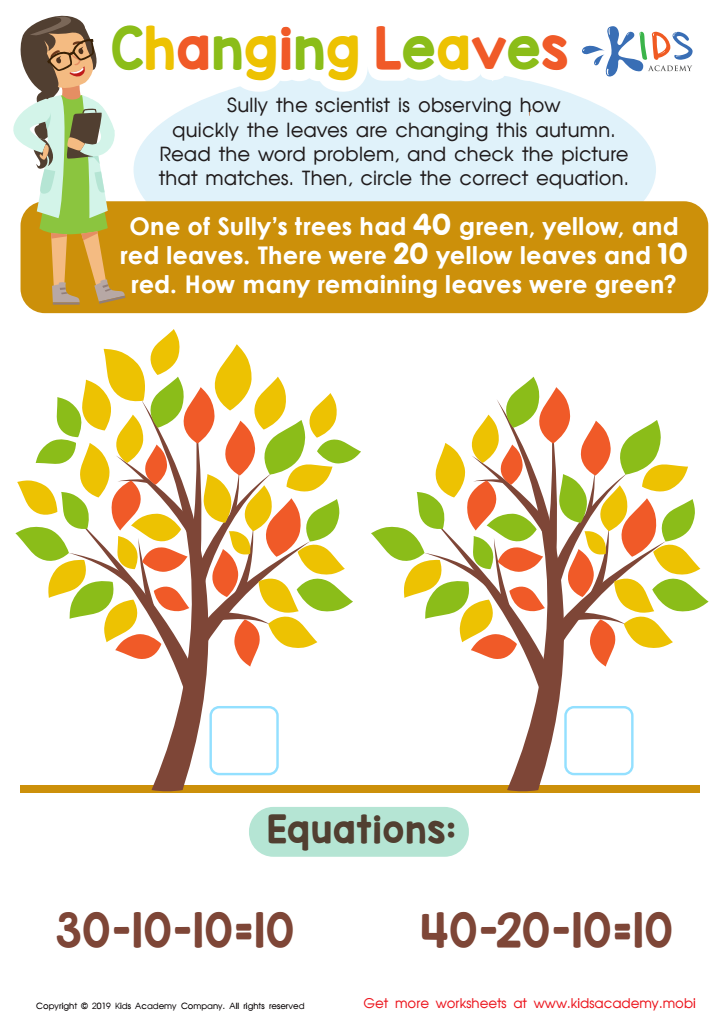
Changing Leaves Worksheet
 Assign to My Students
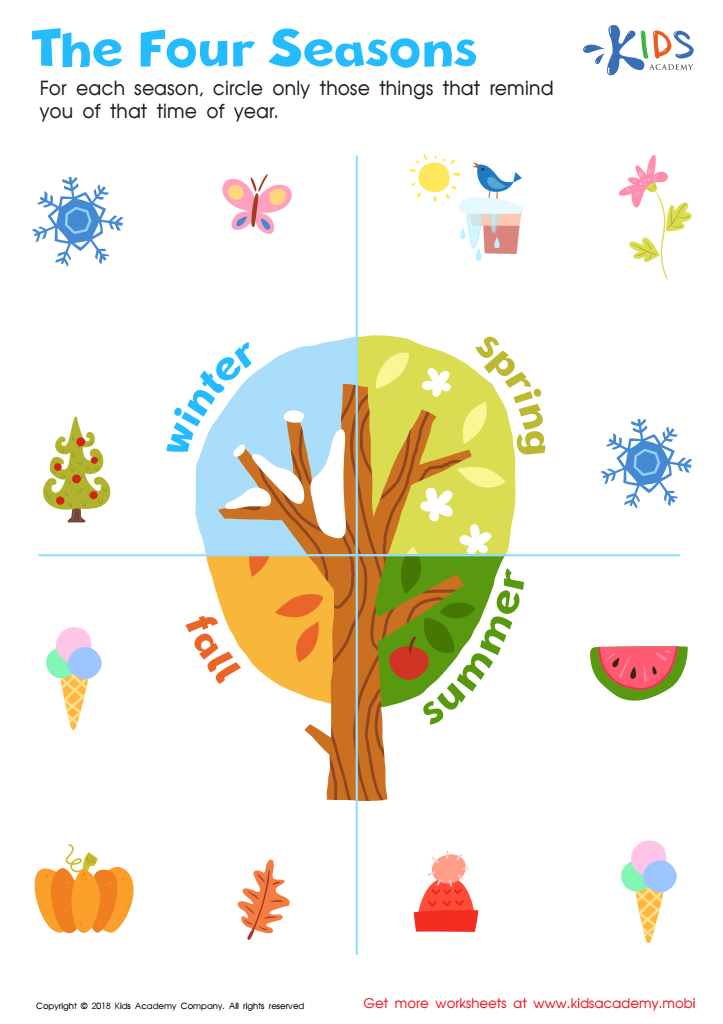
The Four Seasons Worksheet







Understanding seasons and incorporating math into lessons for children aged 4-7 is crucial for several reasons. First and foremost, it connects real-world experiences with foundational mathematical concepts, making learning both relevant and engaging. At this age, kids are naturally curious about the world around them. Seasons provide a perfect context for discussing patterns, sequences, and time, all fundamental math concepts.
By observing changes in weather, daylight, and activities associated with different seasons, children can start learning about counting days, understanding calendars, and recognizing numeric patterns. For instance, they might count the number of sunny days in summer or track the decline in temperature as winter approaches. These activities make abstract concepts tangible, promoting better retention and comprehension.
Teachers and parents who emphasize learning about seasons through math can also foster critical thinking. Kids will learn to predict, compare, and contrast seasonal changes, thus enhancing their analytical skills. Moreover, aligning lessons with the natural rhythms of the year makes education more holistic and attuned to their developmental stage.
In essence, integrating seasons into early math education enriches a child’s learning journey, making it a significant component of their cognitive and academic growth. This practice equips them with practical, lifelong skills that go beyond the classroom.








