
Visualization skills Math Worksheets for Ages 4-7
5 filtered results
Difficulty Level
Grade
Age
-
From - To
Subject
Activity
Standards
Unlock your child's potential with our Visualization Skills Math Worksheets designed specifically for ages 4-7. These engaging worksheets help young learners enhance their spatial awareness and mental imagery abilities through fun and interactive activities. Our resources focus on developing critical thinking skills as children solve problems related to shapes, patterns, and numbers. Each worksheet promotes creativity while fostering essential math skills, laying a strong foundation for future learning. Perfect for home or classroom use, these visually stimulating materials make math exciting and accessible. Boost your child’s confidence and ensure they thrive in their early mathematical journey with our thoughtfully crafted worksheets!
Favorites
With answer key
Interactive
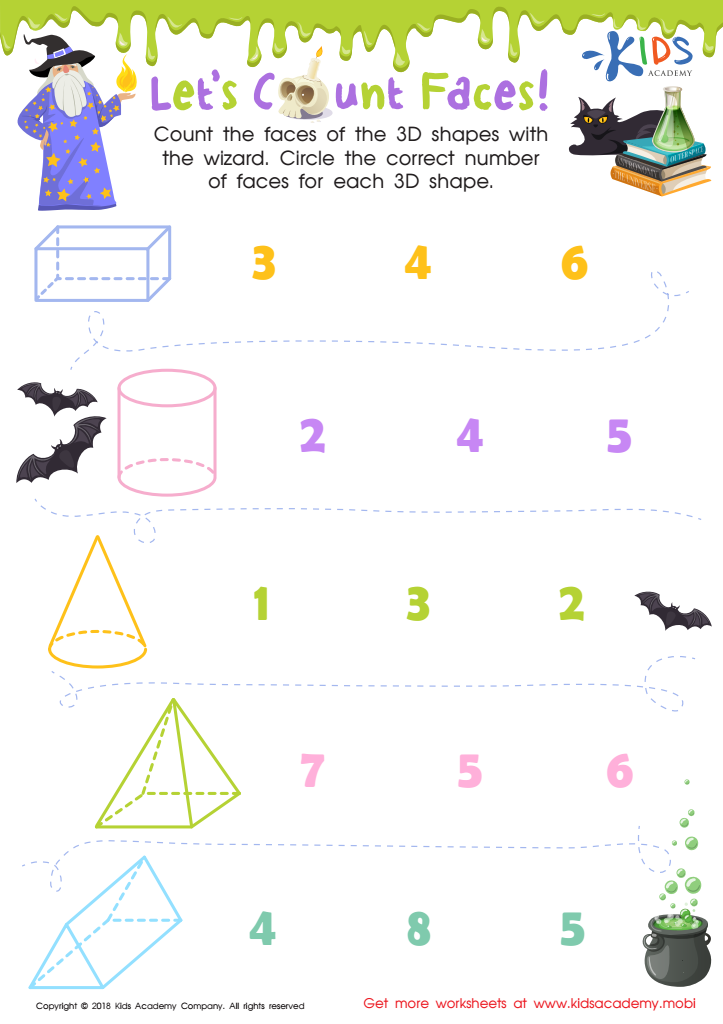
Let's Count Faces! Worksheet
Help the wizard count the faces of 3D shapes! Ask your kids to identify the shapes before beginning, then have them circle the correct number of faces. Enjoy this fun wizard-themed worksheet with your kids!
 Assign to My Students
Let's Count Faces! Worksheet
Worksheet
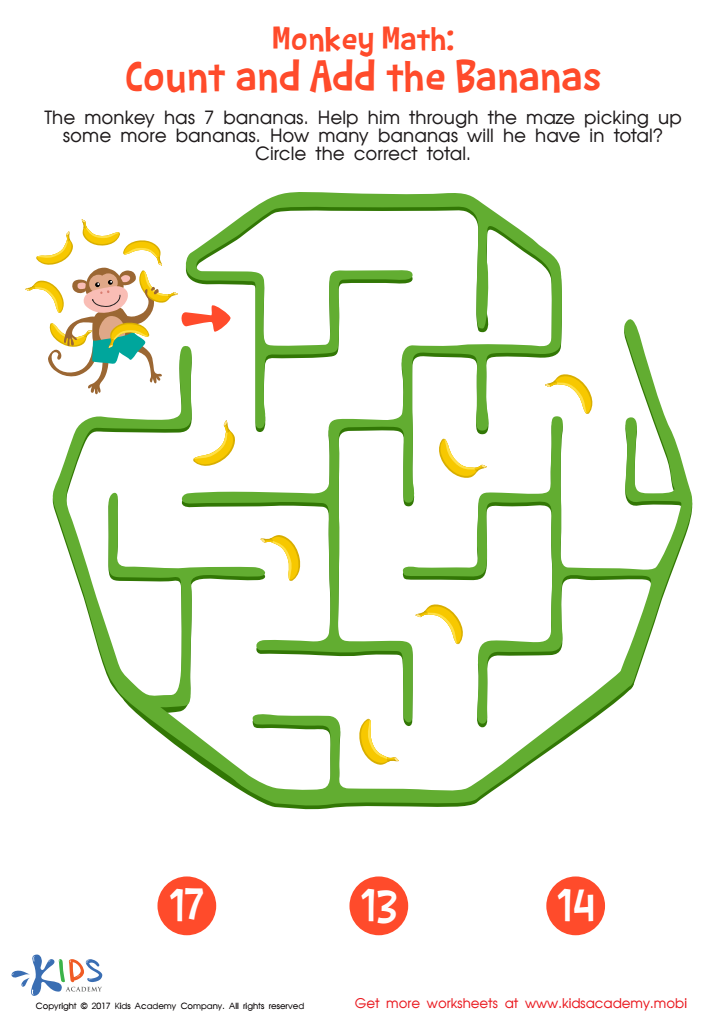
Monkey Math Worksheet
Worksheet
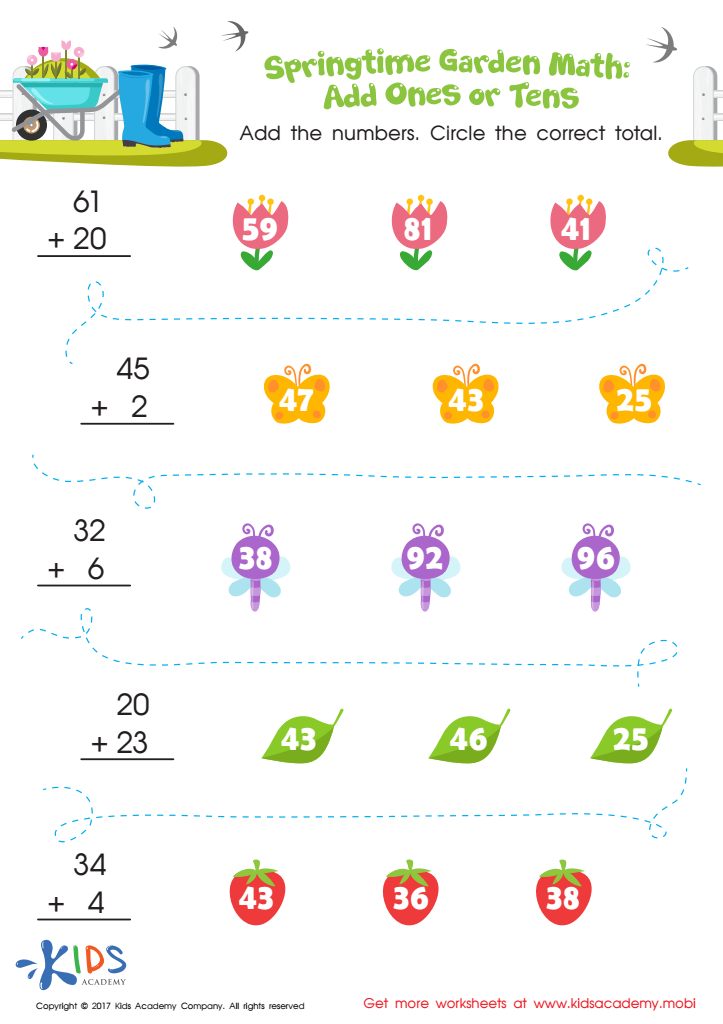
Springtime Garden Math Worksheet
Get your kid ready for math success with this bright garden-themed addition worksheet! They'll practice adding two-digit numbers and check their answers with the choices provided. It's an effective way to help kids build skills, as practice strengthens understanding. Get printing for math mastery!
Springtime Garden Math Worksheet
Worksheet
Join Kids Academy for Free
Who is primarily going to use this learning content?








Visualization skills in mathematics are crucial for children ages 4-7 as they lay the foundation for understanding mathematical concepts. At this age, kids are naturally curious and start developing imagination, which can be harnessed to make math more engaging and understandable. When parents and teachers nurture a child's ability to visualize mathematical ideas, they help them form mental models that enhance comprehension of numbers, shapes, and relationships.
By fostering these skills, children can better grasp abstract concepts such as addition, subtraction, and spatial awareness. Visualization aids in concrete representation, allowing learners to "see" math problems, making them less daunting. It encourages problem-solving strategies and enhances critical thinking, equipping children to tackle more complex tasks later.
Furthermore, research indicates that strong visualization skills contribute positively to academic performance not only in math but across subjects. By incorporating visualization techniques like drawings, block play, and manipulatives, adults can create a rich learning environment. This holistic approach not only builds foundational math skills but also instills confidence in young learners, promoting a positive attitude towards math that can last a lifetime. Hence, it is crucial for both parents and teachers to prioritize these skills in early education.








