Sorting skills Numbers 0–10 Worksheets for Ages 4-7
3 filtered results
-
From - To
Enhance your child’s early math abilities with our "Sorting Skills: Numbers 0-10 Worksheets" designed for ages 4-7. These fun and interactive worksheets provide engaging activities that help young learners master sorting based on quantity, size, and number. Your child will practice differentiating and categorizing objects in creative ways, reinforcing their understanding of numbers while developing critical thinking skills. Each worksheet is thoughtfully crafted, ensuring an enjoyable learning experience that can be easily integrated into home or classroom settings. Ideal for preschool or kindergarten learners, these worksheets make sorting essential concepts accessible and fun, guiding children toward math success with confidence!
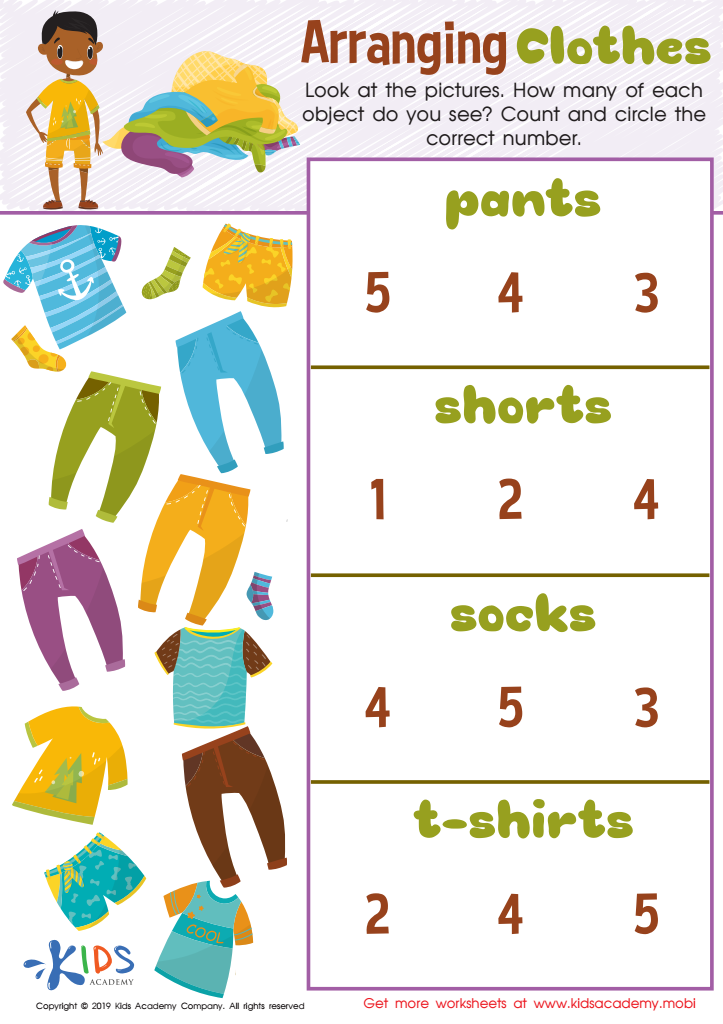
Arranging Clothes Worksheet
 Assign to My Students
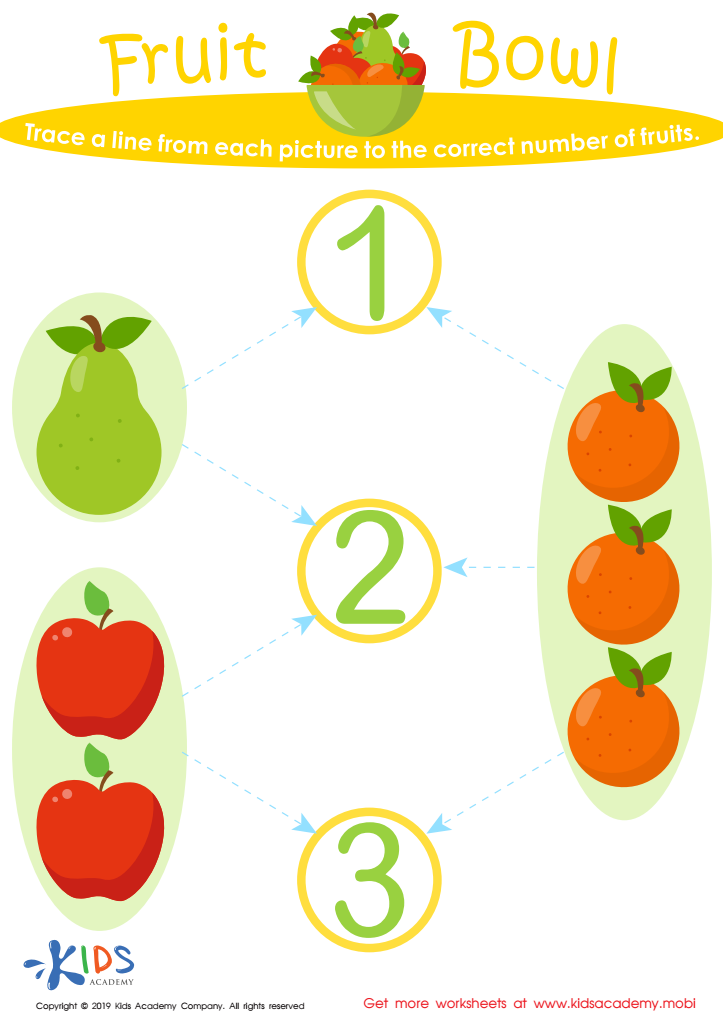
Fruit Bowl Worksheet
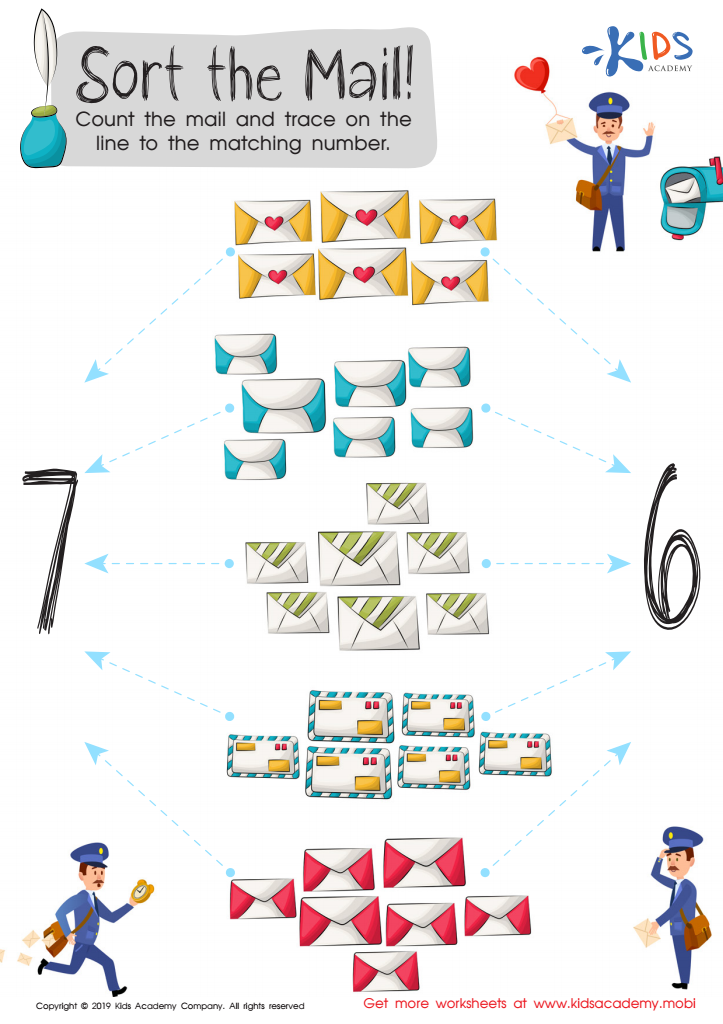
Sort the Mail Worksheet








Sorting skills are fundamental for children aged 4-7, especially when it comes to numbers 0-10. For parents and teachers, supporting the development of these skills is crucial because they lay the groundwork for critical mathematical understanding and cognitive development.
First, sorting helps children recognize patterns and relationships. Understanding how to group numbers encourages them to make connections, develop reasoning skills, and enhance their ability to problem-solve. This evidence-based approach nurtures early math abilities, paving the way for more complex concepts in the future.
Additionally, sorting fosters organizational skills and boosts confidence. As children learn to categorize numbers, they gain a sense of control over their environment, making learning more manageable and enjoyable. These skills promote both self-esteem and independence, essential traits for lifelong learning.
Furthermore, combining sorting activities with play can make learning engaging and fun. For example, activities such as counting objects, using blocks, or even sorting colors can create a dynamic learning experience that captures children's attention.
Overall, parents and teachers should prioritize sorting skills not just for immediate academic success but to build a strong foundation for overall cognitive growth and develop a lifelong love of learning in young children.








