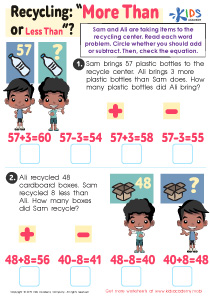
Shape Recognition Numbers up to 100 Worksheets for Ages 4-7
3 filtered results
-
From - To
Welcome to our "Shape Recognition Numbers up to 100 Worksheets" page, designed for ages 4-7! Our engaging worksheets offer young learners a fun way to practice identifying shapes while mastering numbers up to 100. Through various activities, kids improve their counting, number recognition, and geometric shape identification skills. These printables are perfect for hands-on learning, ensuring children develop a solid foundation in math while enhancing their cognitive abilities. Ideal for classroom and home settings, our resources support your child's educational journey with creative and interactive exercises. Encourage your little one to explore numbers and shapes today!
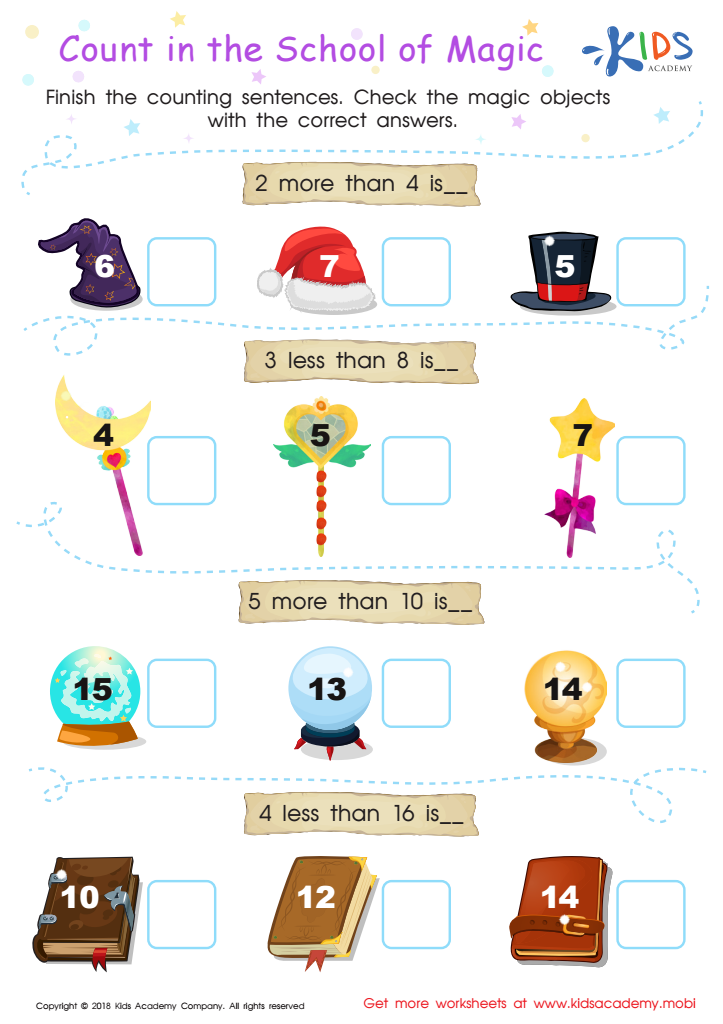
Count in the School of Magic Worksheet
 Assign to My Students
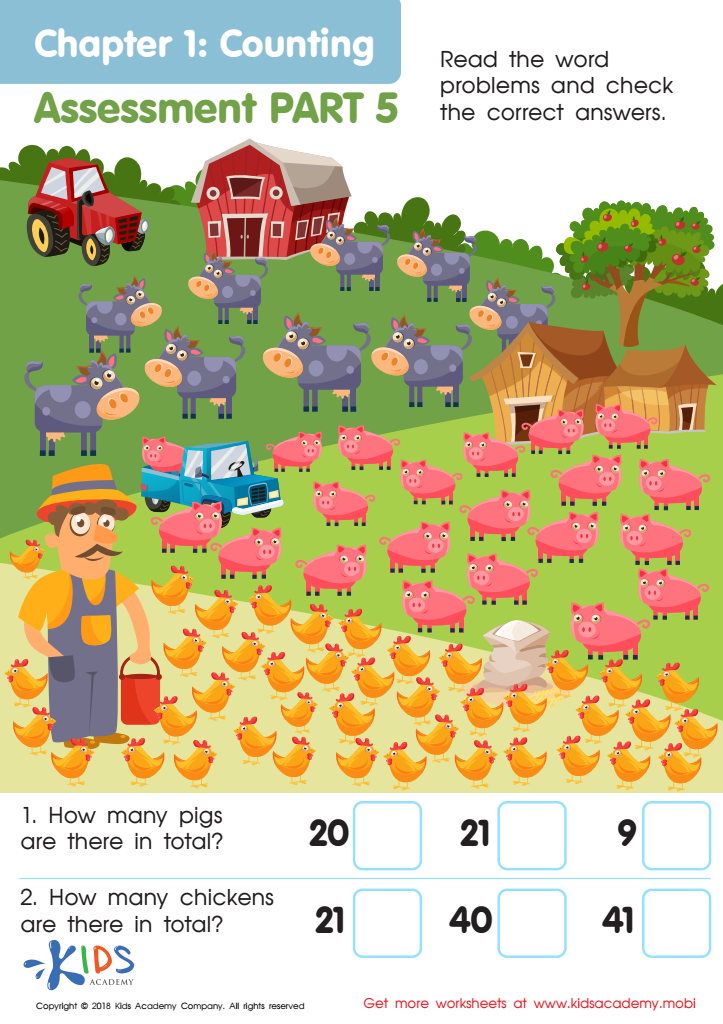
Counting: Assessment 5 Worksheet
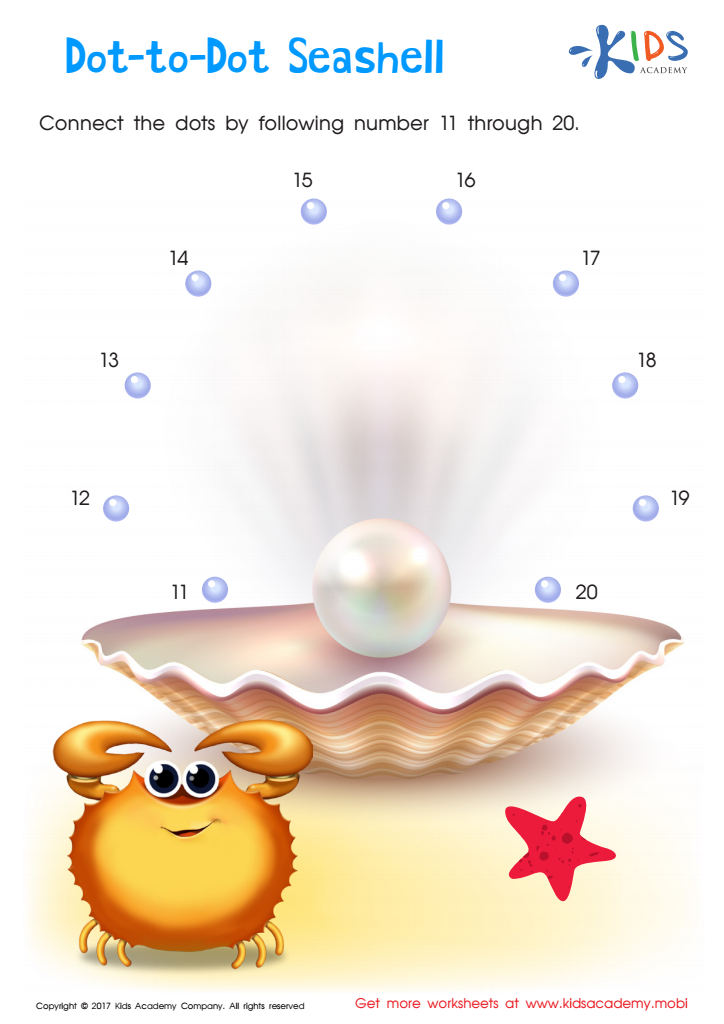
Ordering 11–20: Dot–to–dot Seashell Printable








Understanding shape recognition and numbers up to 100 is foundational for young children aged 4-7 because it paves the way for more complex mathematical and problem-solving skills.
Shape recognition helps children identify and differentiate various shapes, which is a vital pre-reading skill. This form of cognitive development enables them to notice differences and similarities in objects, an ability crucial for letter recognition, as many letters and numbers are similar in shape.
Moreover, integrating numbers up to 100 from an early age enhances numerical literacy. Recognizing, counting, and placing numbers in sequence lays the groundwork for basic arithmetic. Numbers up to 100 further familiarize children with patterns, quantities, and simple operations like addition and subtraction, which are essential as they advance in their educational journey.
Parents and teachers should prioritize these skills as they build a child's confidence and interest in math. Early engagement in these areas makes abstract concepts more concrete and understandable. Accordingly, incorporating playful and interactive activities focusing on shapes and numbers can stimulate curiosity and foster a positive attitude towards learning.
A strong grasp of shape recognition and numbers by the age of 7 ensures that children are not only ready but also mentally equipped to handle more challenging academic standards and applications in real-life scenarios.