Animal knowledge Reading Non-Fiction Worksheets for Ages 4-7
3 filtered results
-
From - To
Discover the fascinating world of animals with our engaging Animal Knowledge Reading Non-Fiction Worksheets, specially designed for children ages 4-7. These worksheets combine fun facts and interactive activities that spark curiosity and promote literacy skills. Young learners will explore various animal species, their habitats, and unique characteristics, encouraging a love for reading and learning. Ideal for classroom use or at-home study, these worksheets also reinforce comprehension and critical thinking. Perfect for early grade teachers and parents alike, our resources empower kids to connect with nature while enhancing their reading abilities. Unleash your child's inner explorer today!
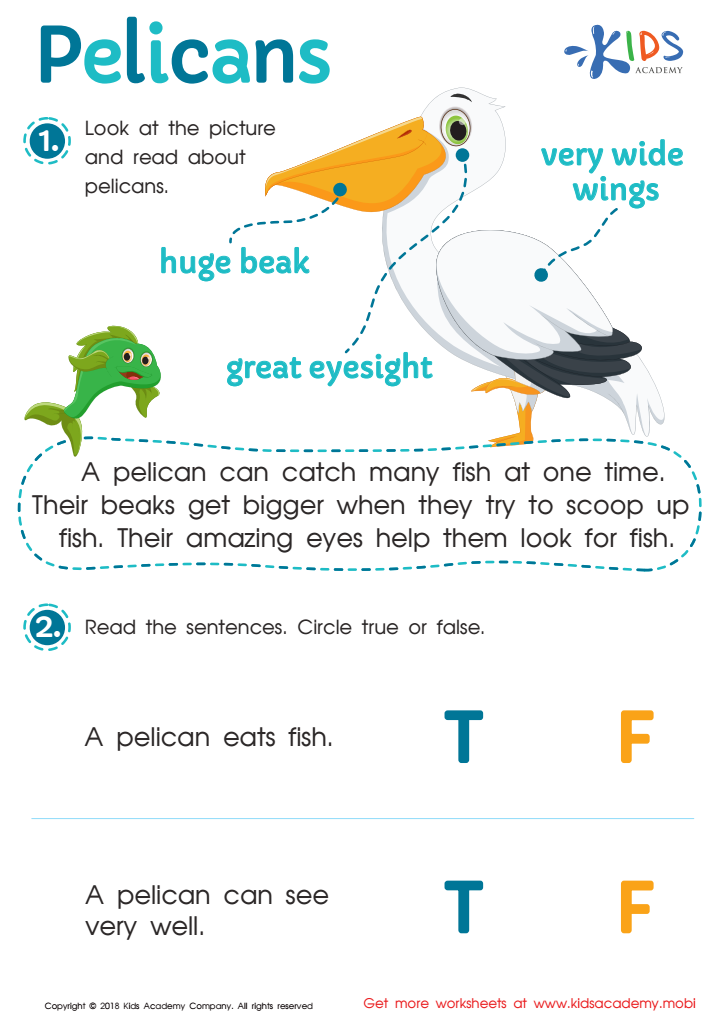
Pelicans Worksheet
 Assign to My Students
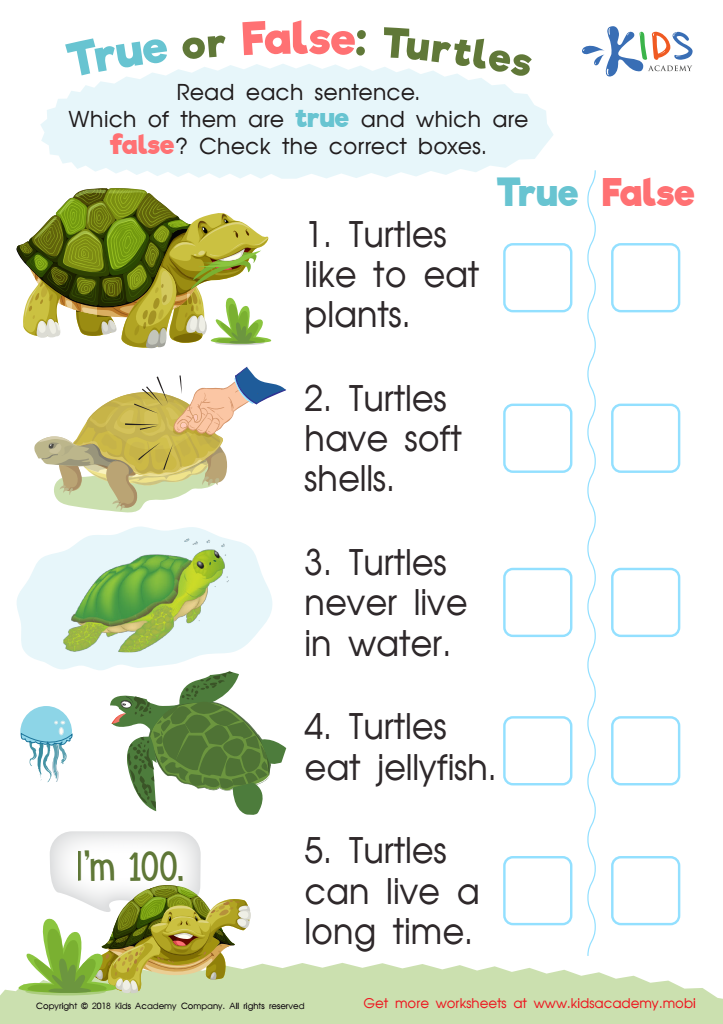
True or False: Turtles Worksheet
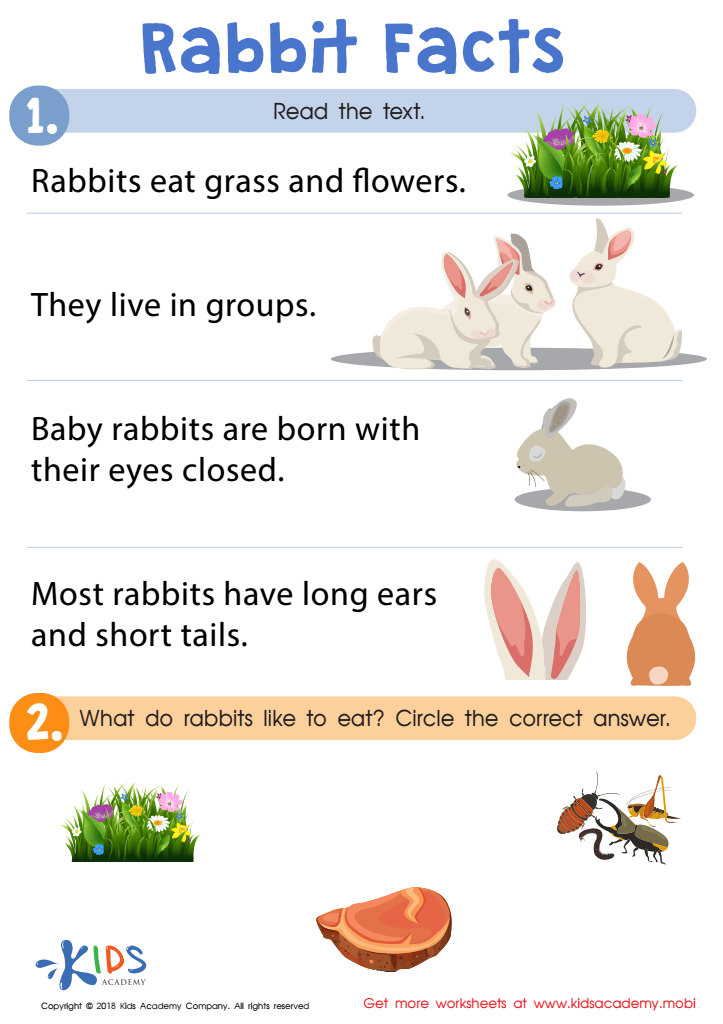
Rabbit Facts Worksheet








Parents and teachers should prioritize animal knowledge through reading non-fiction for children ages 4-7 for several compelling reasons. First, exposure to non-fiction about animals fosters curiosity and a love for learning. At this age, children are naturally inquisitive, and animal books can answer their pressing questions, sparking further exploration and discovery.
Additionally, animal knowledge supports essential literacy skills. Non-fiction texts introduce young readers to informative vocabulary and concepts, enhancing their language development and comprehension abilities. Early familiarity with factual formats also prepares children for future academic pursuits where analytical skills are key.
Furthermore, learning about animals fosters empathy and environmental awareness. As children discover diverse species and habitats, they develop a deeper appreciation for wildlife and the planet, promoting responsible attitudes toward nature and conservation.
Reading non-fiction about animals also encourages critical thinking as children learn to distinguish facts from fiction. This skill is fundamental in developing informed individuals capable of assessing information critically.
In summary, engaging children with animal knowledge through non-fiction books cultivates curiosity, enriches literacy skills, promotes empathy, and builds critical thinking, making it a valuable component of early education.








