Comprehension skills Reading Non-Fiction Worksheets for Ages 4-7
5 filtered results
-
From - To
Unlock the world of knowledge with our "Comprehension Skills Reading Non-Fiction Worksheets" designed for children ages 4-7. These engaging worksheets foster essential comprehension skills while introducing young learners to fascinating subjects outside of fiction. Each activity is tailored to enhance reading abilities, helping kids understand key concepts, facts, and details in a fun and interactive way. With colorful illustrations and thought-provoking questions, your child will develop critical thinking skills as they explore topics such as nature, animals, and science. Perfect for homeschooling or classroom use, these worksheets make learning an exciting adventure in understanding the real world!
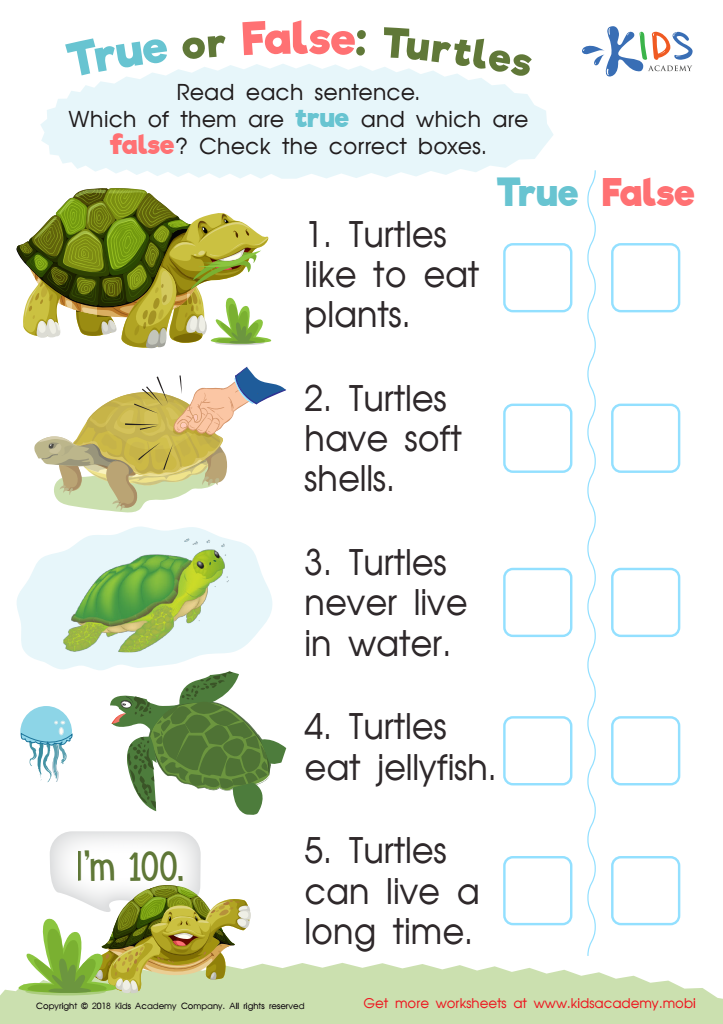
True or False: Turtles Worksheet
 Assign to My Students
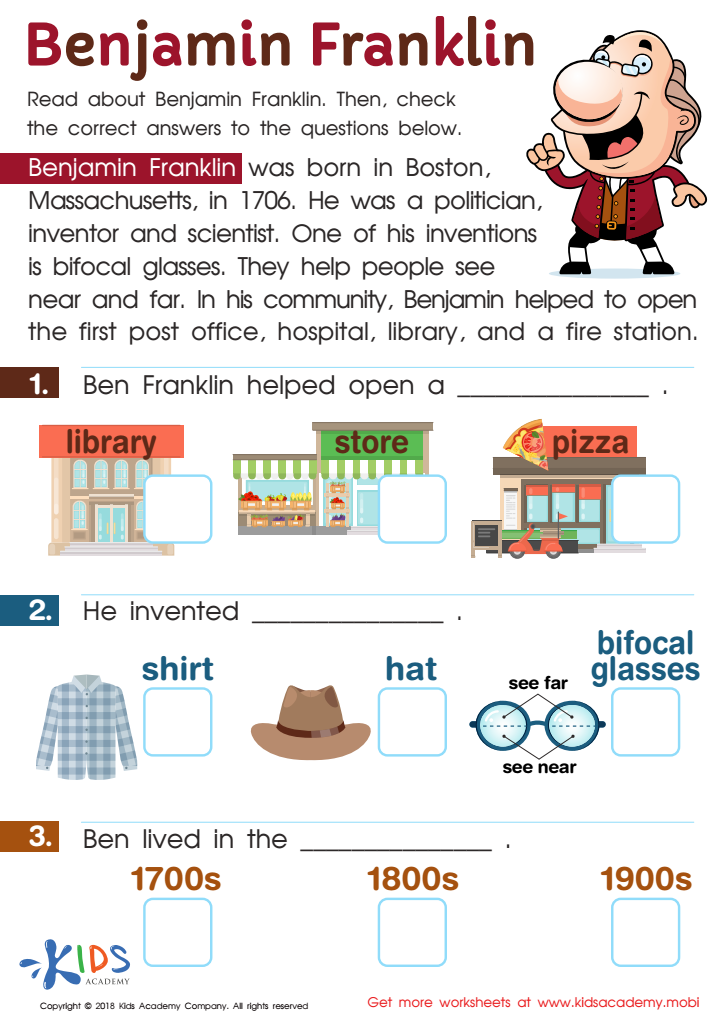
Benjamin Franklin Worksheet
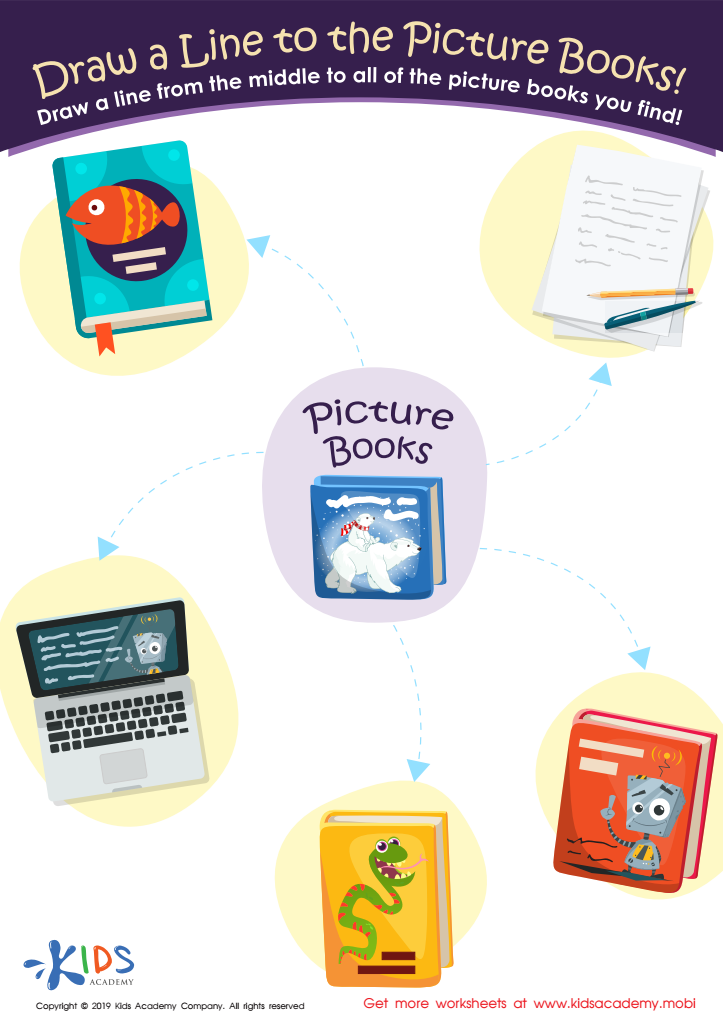
Draw a Line to the Picture Books Worksheet
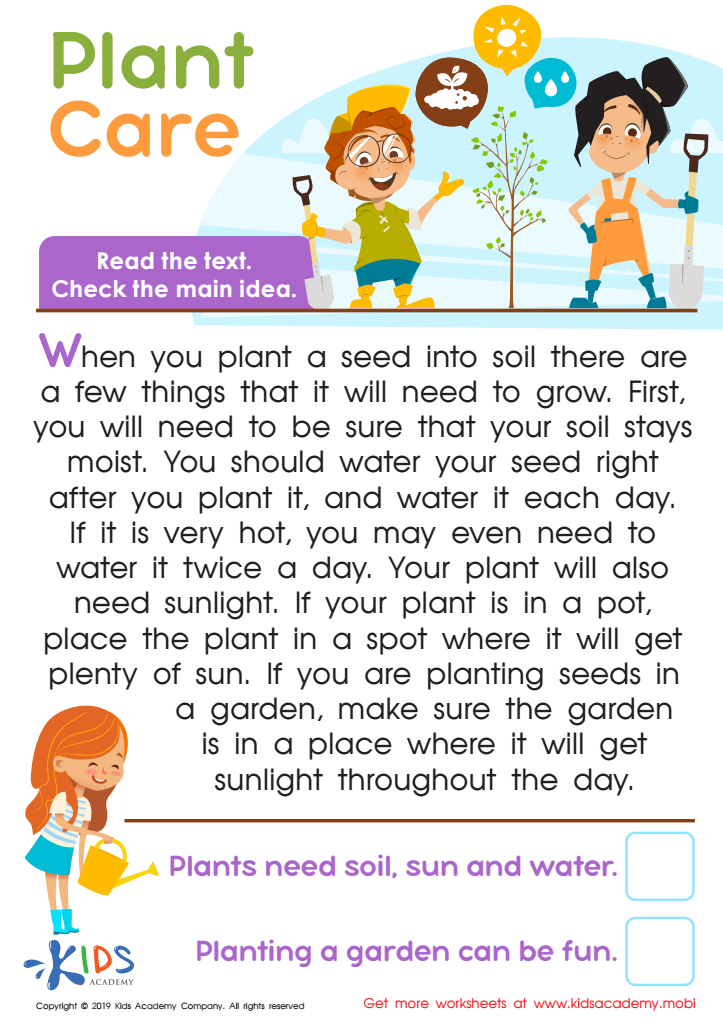
Plant Care Worksheet
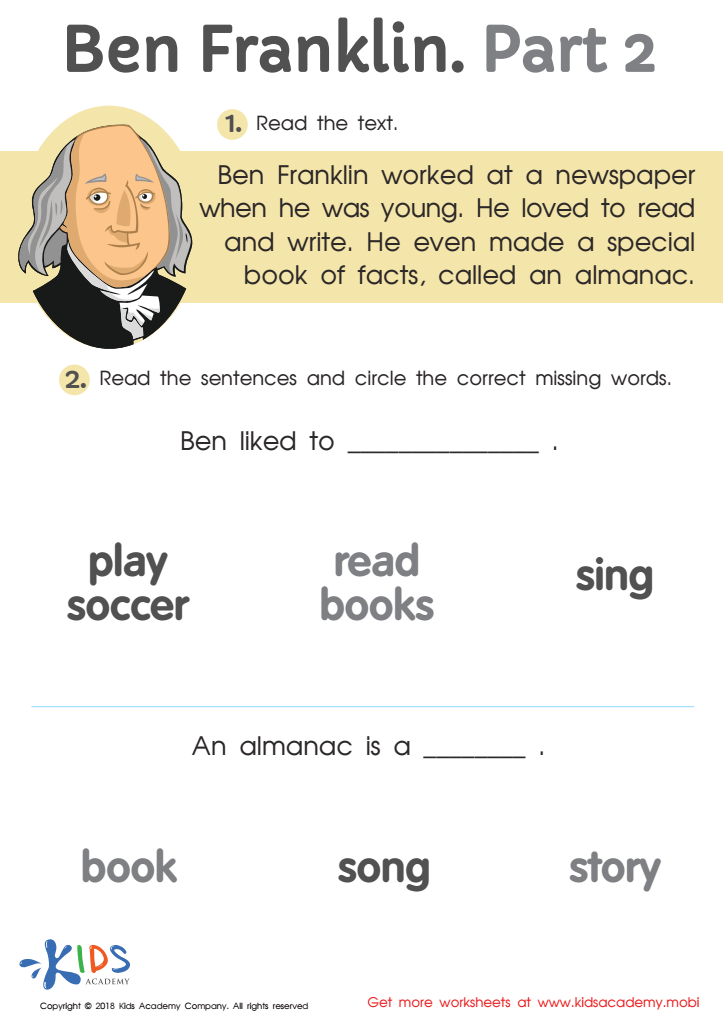
Ben Franklin Part 2 Worksheet








Parents and teachers should prioritize comprehension skills in reading non-fiction for children aged 4-7 because these skills lay the foundation for lifelong learning and critical thinking. At this early developmental stage, children are naturally curious and eager to explore the world around them. Engaging with non-fiction material helps them understand real-world concepts, facts, and processes, fostering an appreciation for knowledge and inquiry.
Improving comprehension skills allows young readers to grasp key ideas, identify main points, and make connections to their own experiences. This is essential not only for academic growth but also for nurturing curiosity and a love for reading. When children comprehend what they read, they are more likely to retain information and express their understanding, fostering better verbal communication and vocabulary development.
Additionally, proficiency in non-fiction comprehension supports success in various subjects, especially in science and social studies. Encouraging children to ask questions about the text develops critical thinking and analytical skills. Finally, focusing on these skills mirrors the skills necessary for life-long learning, empowering children to become informed and engaged citizens. For these reasons, fostering comprehension skills through non-fiction reading is crucial for both parents and educators alike.








