Enhancing observation skills Reading Non-Fiction Worksheets for Ages 4-7
3 filtered results
-
From - To
Unlock the power of observation with our "Enhancing Observation Skills: Reading Non-Fiction Worksheets" designed specifically for ages 4-7. These engaging worksheets encourage young learners to explore the world around them by enhancing their observational abilities. Through fun activities and informative non-fiction texts, children will learn to identify details, compare and contrast information, and develop critical thinking skills. Our carefully crafted exercises foster a love for reading while nurturing curiosity about diverse subjects. From animals to nature, each worksheet provides a hands-on approach to learning. Perfect for classrooms or at-home education, watch your child's confidence and skills soar!
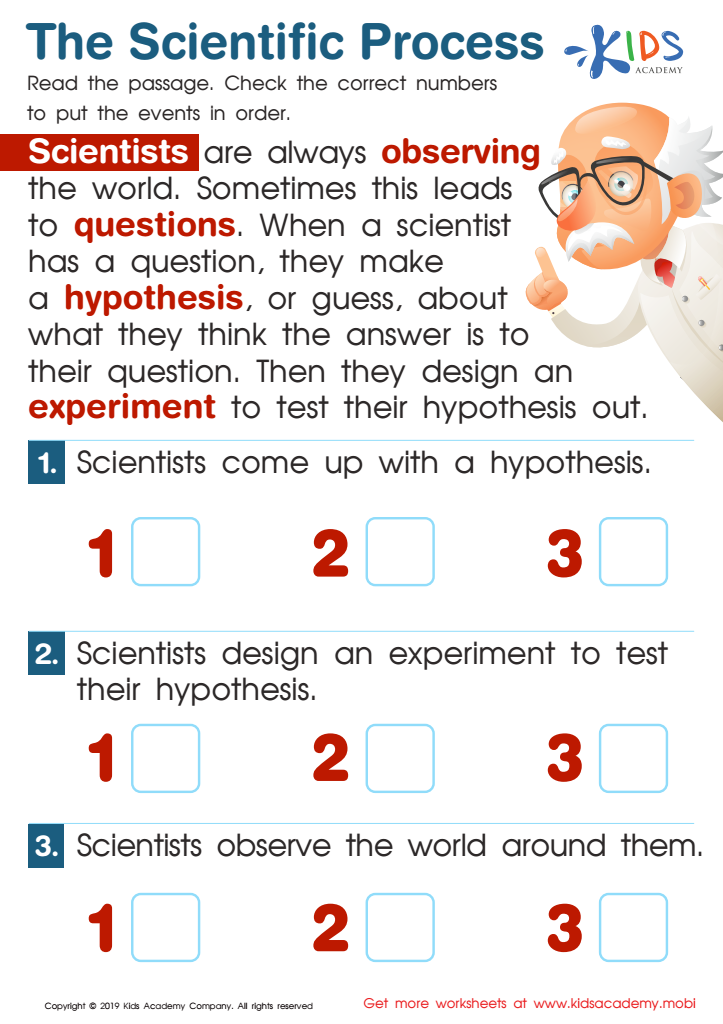
The Scientific Process Worksheet
 Assign to My Students
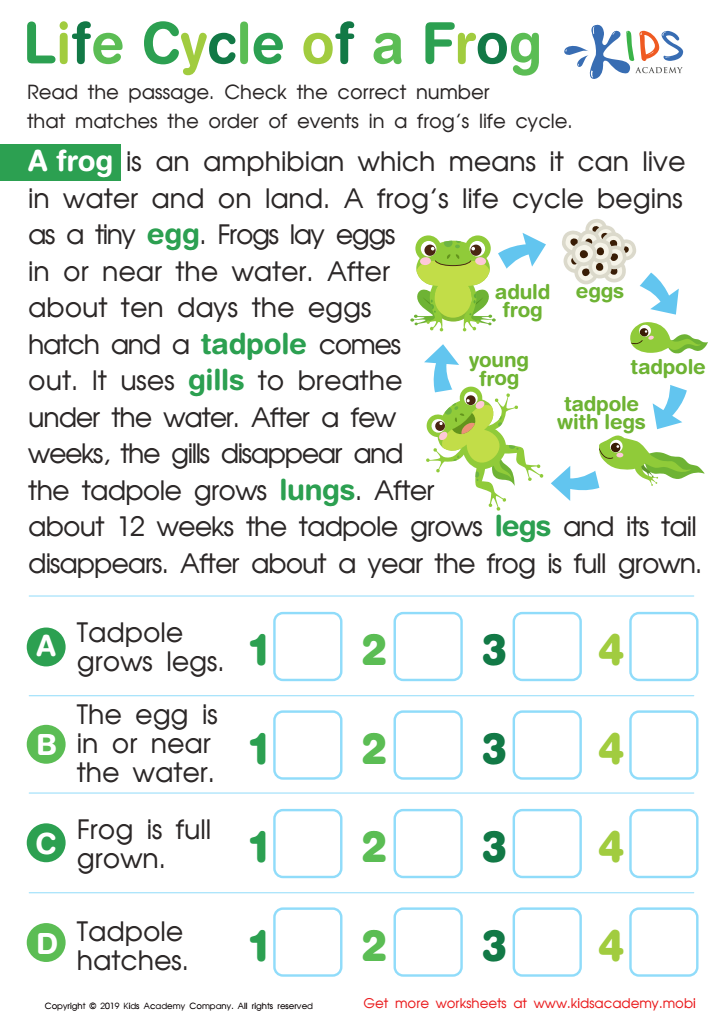
Life Cycle of a Frog Worksheet
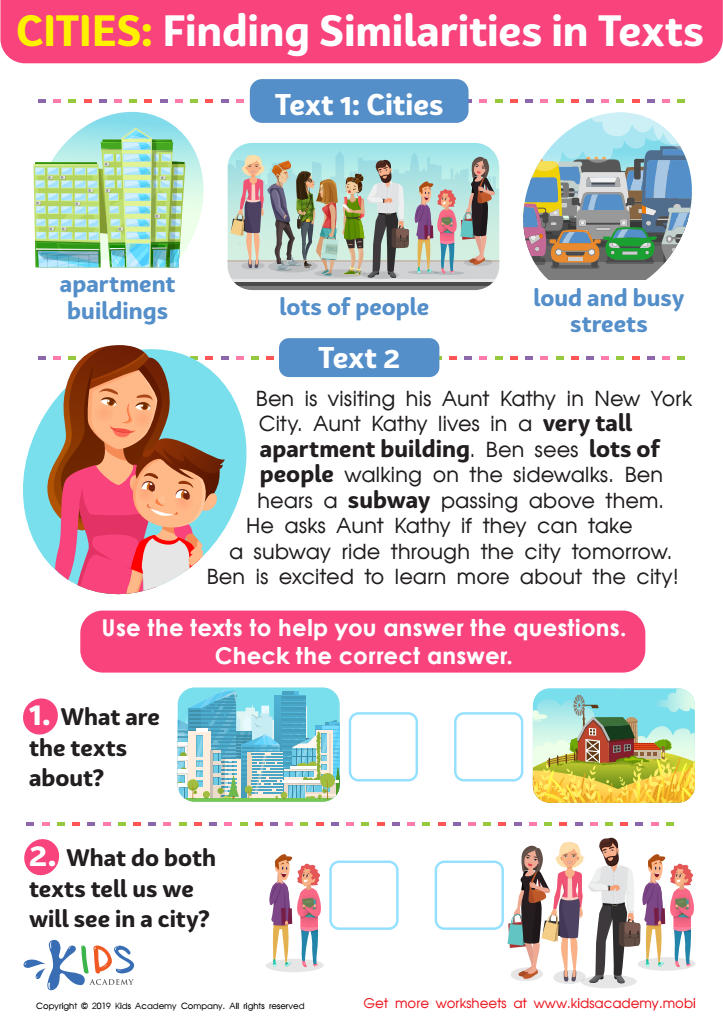
Cities: Finding Similarities Worksheet








Enhancing observation skills through reading non-fiction is vital for children aged 4-7, as it lays a foundation for critical thinking and lifelong learning. At this age, children's natural curiosity drives their desire to explore the world around them. When parents and teachers encourage reading non-fiction, they provide children with opportunities to engage with real-world topics, fostering a sense of wonder and inquiry.
Observation skills are crucial because they enable children to notice details, identify patterns, and make connections between concepts. By reading non-fiction, kids learn to pay attention to visuals, facts, and information presented in various formats, such as charts and diagrams. This not only aids comprehension but also boosts their ability to think analytically about the information they encounter.
Moreover, developing observation skills enhances vocabulary and language development, as children encounter new words and contexts. As they discuss what they read with adults, their ability to express thoughts and ask questions improves. Ultimately, supporting literacy through non-fiction reading cultivates informed, curious, and observant learners, equipping them with the critical skills needed for academic success and informed decision-making in life. Parents and teachers play a significant role in transforming reading into an engaging and enlightening exploration of the world.








