Logical Reasoning Reading Non-Fiction Worksheets for Ages 4-7
3 filtered results
-
From - To
Welcome to our collection of Logical Reasoning Reading Non-Fiction Worksheets for Ages 4-7! These engaging worksheets are designed to enhance young learners’ critical thinking and comprehension skills by exploring captivating non-fiction topics. Each worksheet combines fun visuals with age-appropriate reading passages that challenge children to identify key ideas, make connections, and draw conclusions. Ideal for classroom use or at-home learning, these resources foster curiosity and promote a deeper understanding of the world around them. Give your child a head start in developing essential reasoning skills while enjoying the exciting journey through non-fiction literature. Explore and watch their confidence grow!
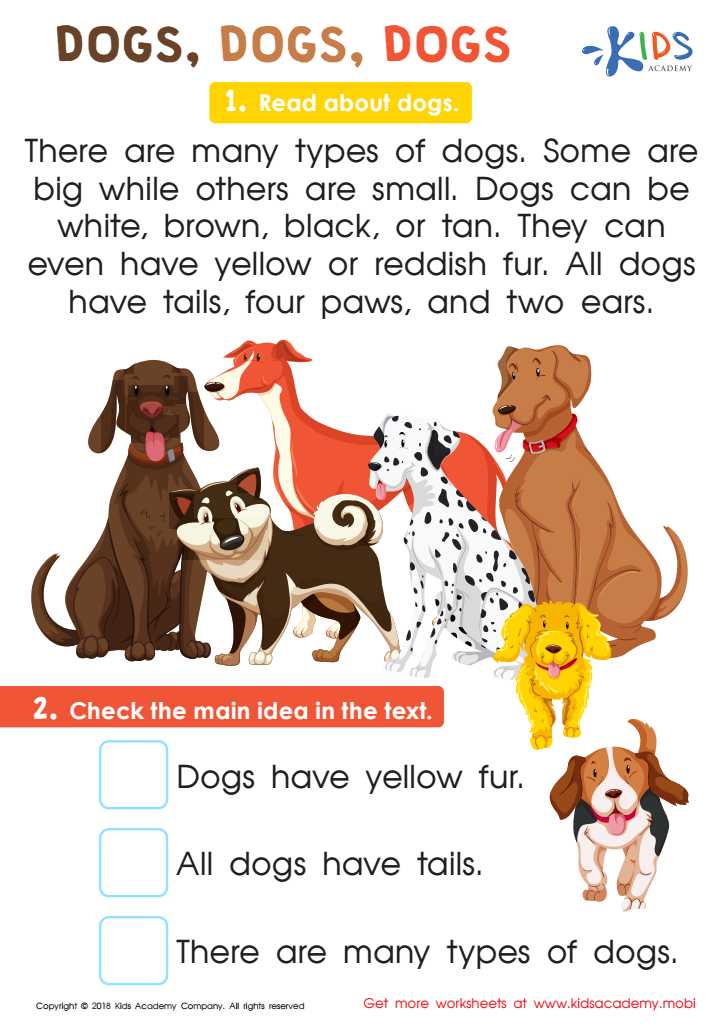
Dogs, Dogs Worksheet
 Assign to My Students
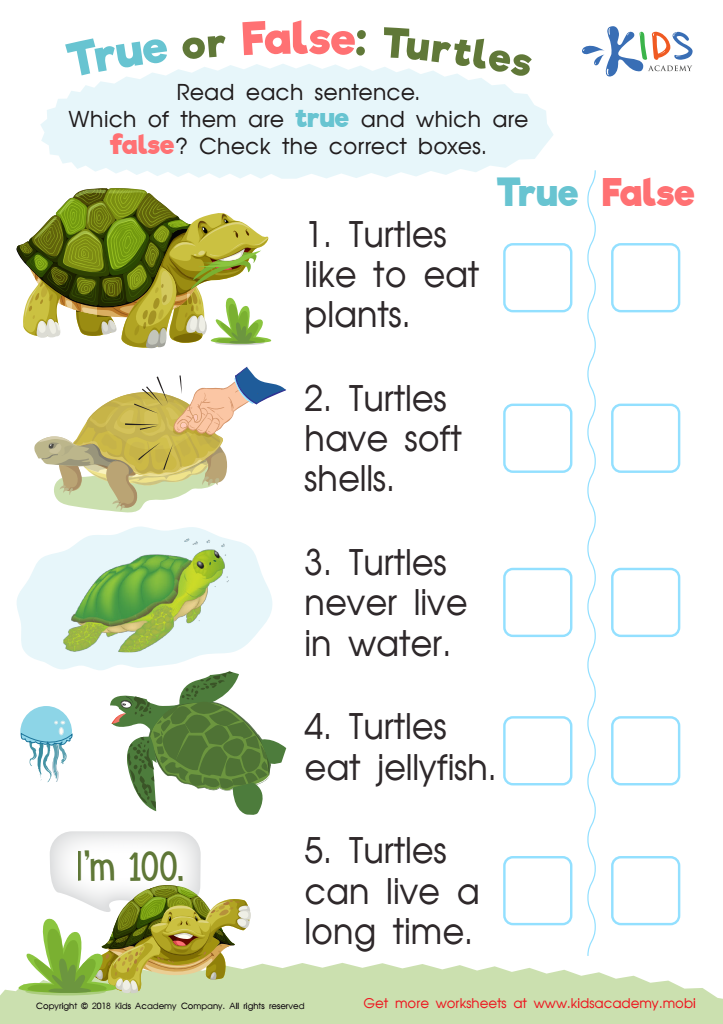
True or False: Turtles Worksheet
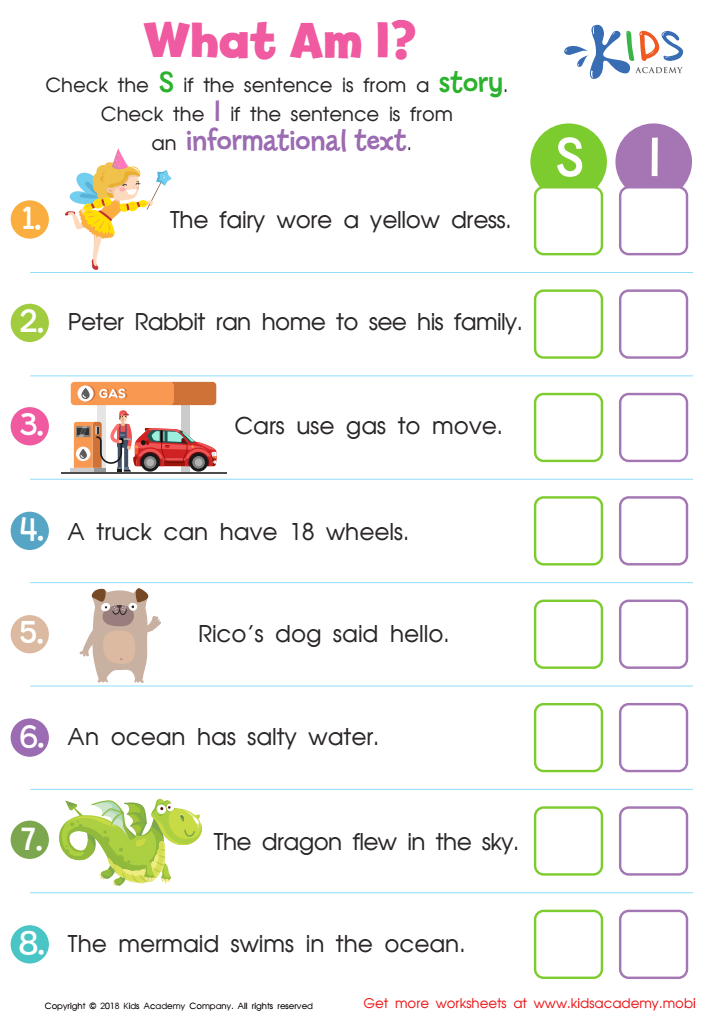
What Am I? Worksheet








Parents and teachers should care about Logical Reasoning in reading non-fiction for ages 4-7 because it lays the foundational skills necessary for critical thinking and problem-solving. At this early stage, children are naturally curious, and introducing them to non-fiction exposes them to real-world concepts, fostering a love for learning and exploration.
By engaging with logical reasoning in non-fiction texts, children learn to analyze information, make connections, and draw conclusions based on evidence. These skills enhance their ability to understand and process complex ideas, preparing them for future academic challenges. Additionally, logical reasoning helps children differentiate between fact and fiction, an essential skill in today’s information-rich world.
Moreover, as children read and engage with factual content, they also develop their vocabulary and comprehension skills. Early engagement with such materials promotes a deeper understanding of subjects like science, geography, and history, which can ignite lasting passions and knowledge.
Overall, the benefits of fostering logical reasoning through non-fiction reading are profound, guiding young children toward a well-rounded education, encouraging inquiry, and nurturing their cognitive and emotional development. Investing time in these early experiences will yield lifelong advantages in their academic and everyday lives.








