
Vocabulary development Reading Non-Fiction Worksheets for Ages 4-7
4 filtered results
Difficulty Level
Grade
Age
-
From - To
Subject
Activity
Standards
Enhance your child’s vocabulary skills with our engaging non-fiction worksheets designed for ages 4 to 7. These educational resources from Kids Academy focus on real-world topics, helping young learners improve their language and comprehension through fun activities. Each worksheet presents new words within interesting contexts, encouraging kids to explore and understand their meanings. Ideal for early readers, our worksheets blend reading practice with interactive learning, promoting critical thinking and curiosity. Perfect for both classroom and home use, these tools support foundational language skills and foster a lifelong love for reading and learning. Explore our collection today!
Favorites
With answer key
Interactive
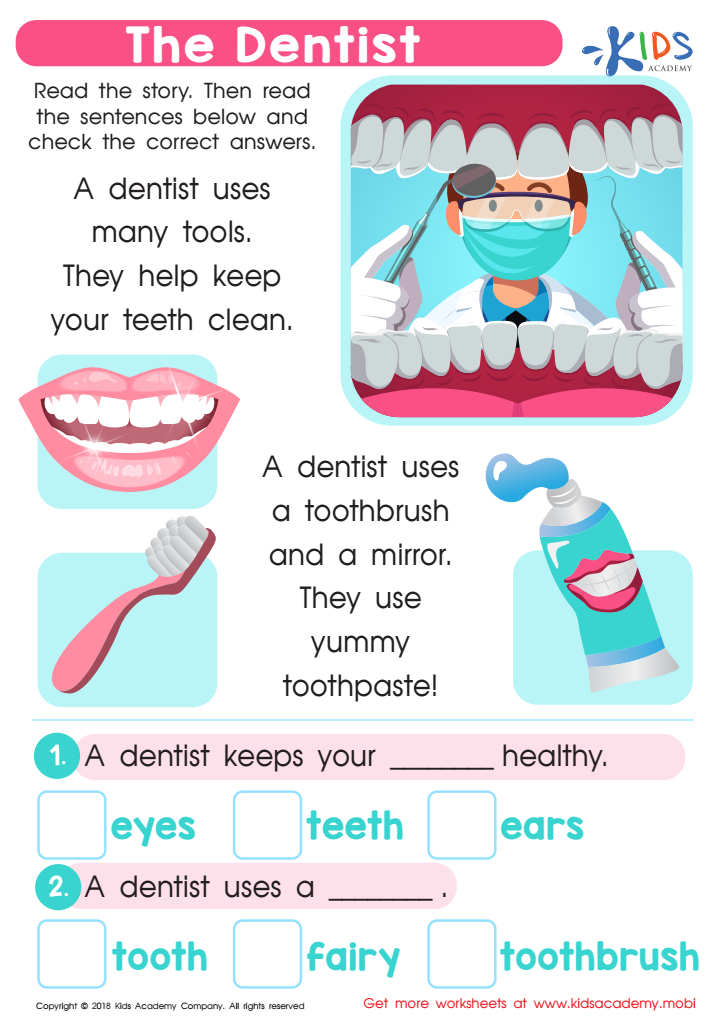
The Dentist Worksheet
Community helpers are essential for our wellbeing. This vibrant worksheet is a great way to introduce children to the dentist and their tools. They'll read the text, use the pictures and answer questions about what the dentist does and what they use. It's a great way to make the dentist more approachable, as well as help with comprehension.
 Assign to My Students
The Dentist Worksheet
Worksheet
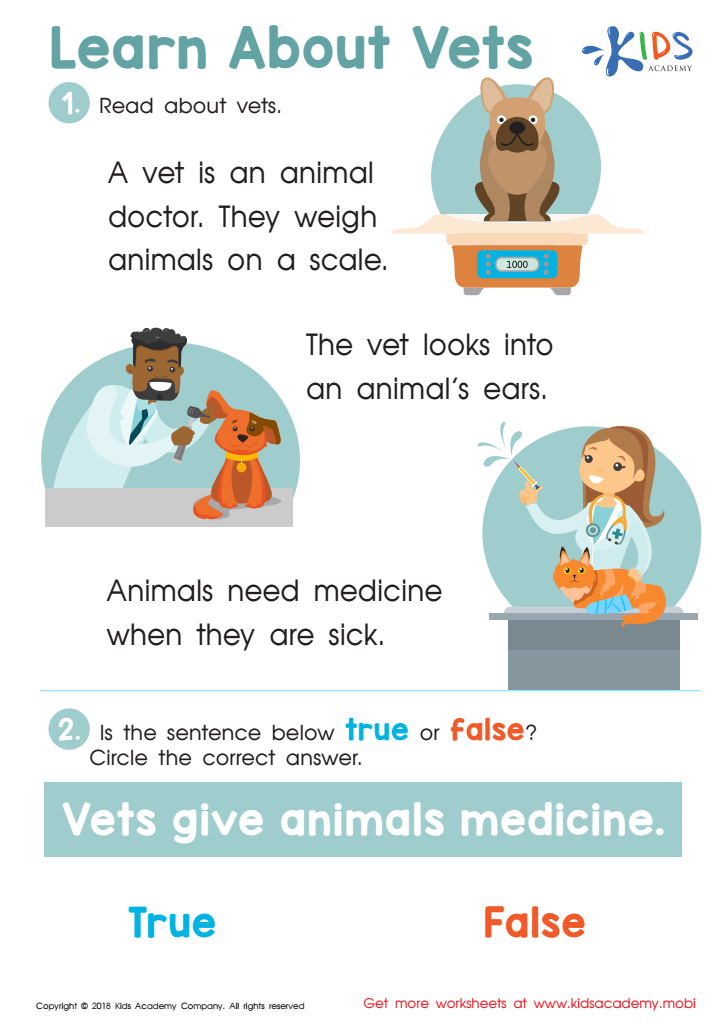
Learn About Vets Worksheet
Assess your child's reading comprehension and recall with this ELA worksheet! It reviews interesting facts about vets with brief passages and pictures to help your reader. Ask the question at the bottom to see what they learned. It's a great way to check understanding!
Learn About Vets Worksheet
Worksheet
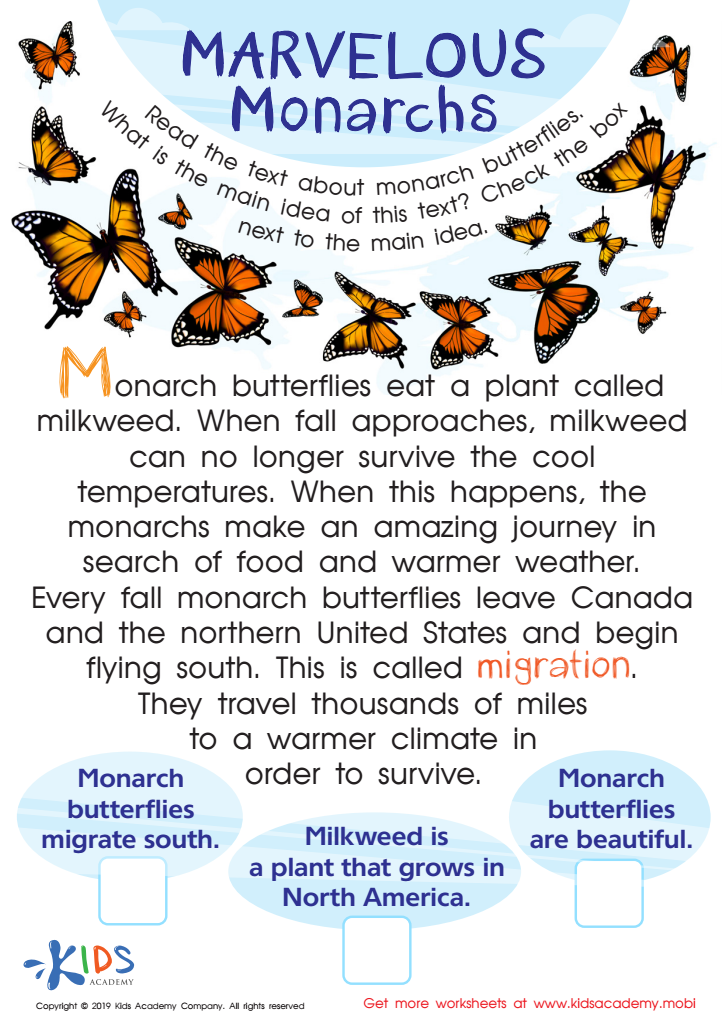
Marvelous Monarchs Worksheet
Help your kids have fun while reading - start with small words and short sentences. This worksheet can test your kids' reading and comprehension skills. Ask them to read the text about Monarch butterflies and help them locate the main idea.
Marvelous Monarchs Worksheet
Worksheet
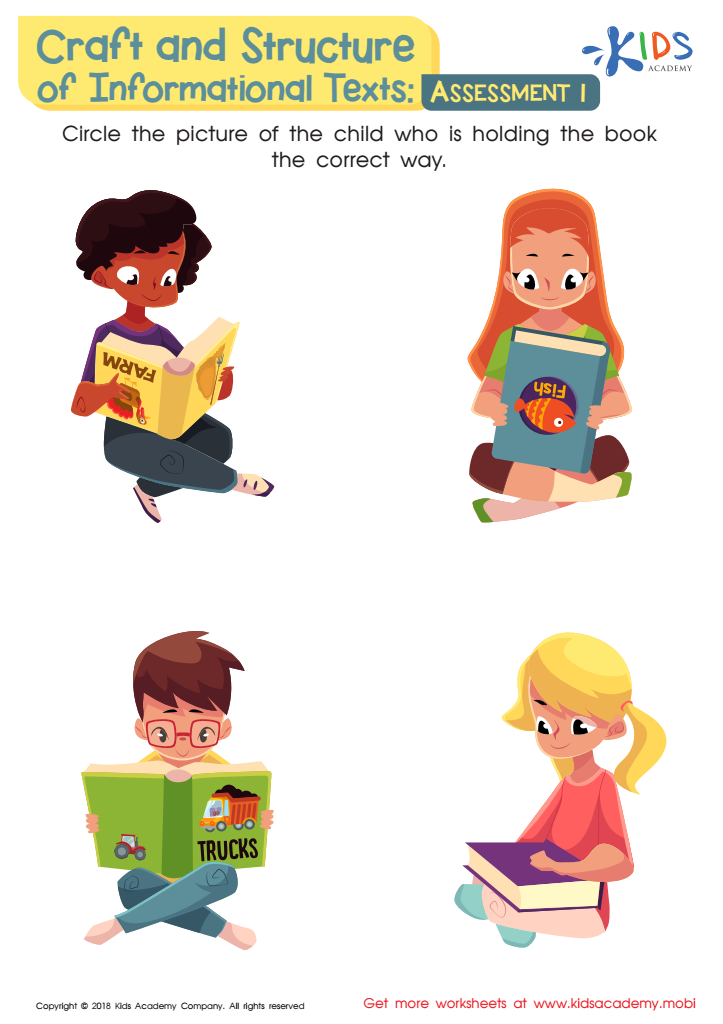
Craft and Structure of Informational Texts: Assessment 1 Worksheet
Young children need to know how to hold books correctly when they start reading. This assessment worksheet helps them show they know what to do. They'll look at the pictures and circle the child who is holding the book correctly. It's a great way to tell they are well on their way to becoming lifetime readers!
Craft and Structure of Informational Texts: Assessment 1 Worksheet
Worksheet
Join Kids Academy for Free
Who is primarily going to use this learning content?








Vocabulary development through reading non-fiction plays a critical role in the educational development of children ages 4-7. At this early age, children's brains are exceptionally receptive to new information and learning. Reading non-fiction helps to build a foundation of factual knowledge about the world around them, stimulating curiosity and broadening their understanding of various subjects like animals, space, cultures, and nature.
Expanding their vocabulary systematically through non-fiction not only introduces children to new words but also builds comprehension skills as they learn to understand and use these words in real-life contexts. This directly relates to improved communication skills, as a richer vocabulary allows children to express themselves more clearly and effectively.
Furthermore, non-fiction reading helps children develop critical thinking abilities. By exposing them to real-world concepts and data, they learn to ask questions, make predictions, and gather information, which are fundamental components of cognitive development.
Parents and teachers who prioritize vocabulary development in non-fiction reading set the stage for children's lifelong learning. It ensures that children are not only equipped with skills that are vital for academic success but also instills a love for learning and discovery that transcends the boundaries of fiction.
Overall, paying attention to vocabulary development through non-fiction reading enhances children's intellectual growth and prepares them for future educational challenges, fostering an enriching environment for early developmental success.








