Critical thinking skills Sight Words Worksheets for Ages 4-7
3 filtered results
Difficulty Level
Grade
Age
-
From - To
Subject
Activity
Standards
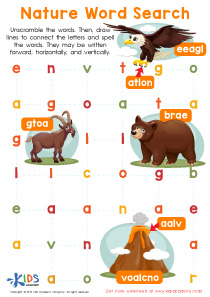
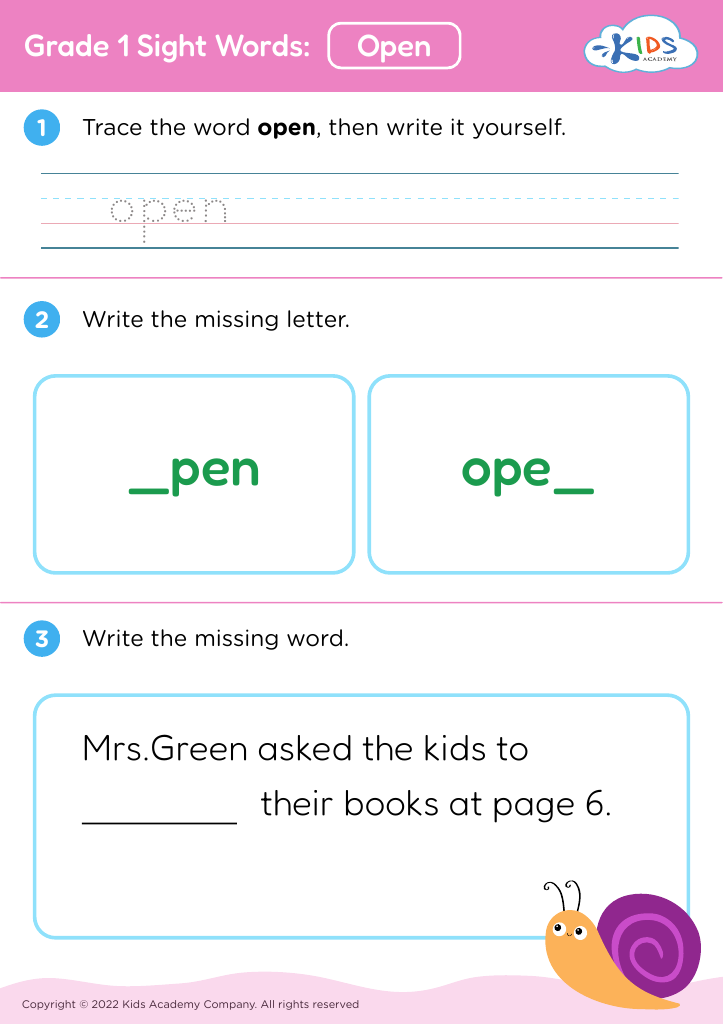
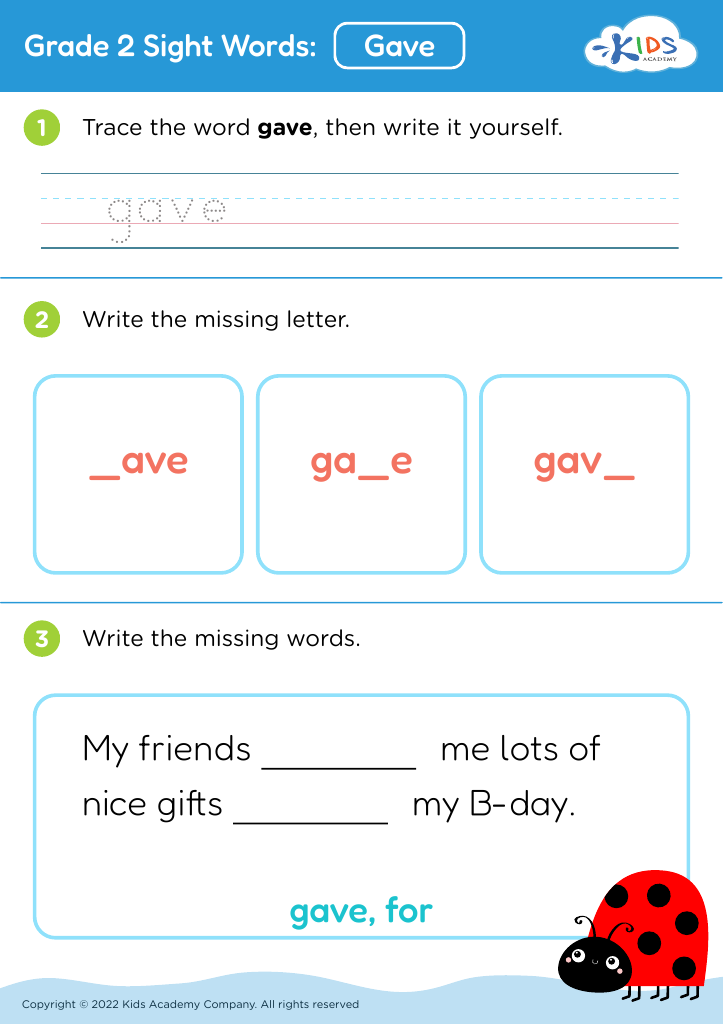
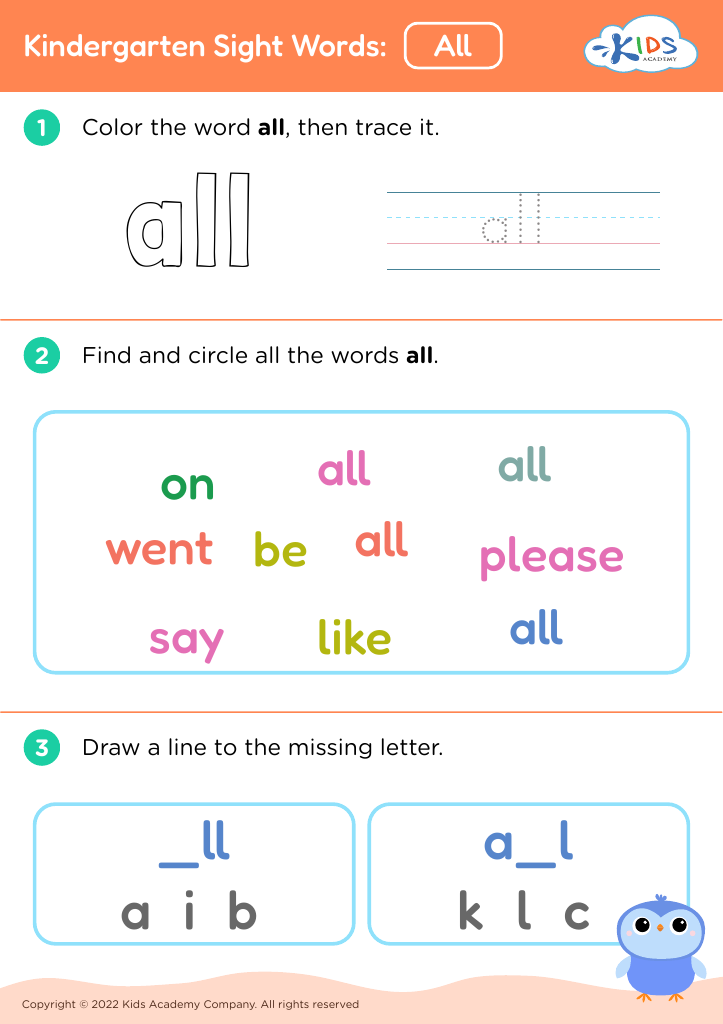
Enhance your child's reading journey with our Critical Thinking Skills Sight Words Worksheets, specially designed for ages 4-7. These engaging worksheets combine essential sight word practice with exercises that promote critical thinking and problem-solving skills. Your little learners will enjoy fun activities that challenge their comprehension and encourage them to make connections, analyze information, and think creatively as they explore words frequently used in early reading. With colorful illustrations and interactive tasks, these worksheets make learning enjoyable and effective, laying a solid foundation for literacy and cognitive growth. Perfect for homeschooling, classroom use, or supplemental learning at home!
Favorites
With answer key
Interactive






Join Kids Academy for Free
Who is primarily going to use this learning content?








Critical thinking skills and sight words are essential foundations for young learners aged 4-7, and both parents and teachers play a crucial role in nurturing them.
First, sight words—common words that children learn to recognize on sight—are vital for developing reading fluency. When children become proficient in these words, they can focus on comprehension instead of struggling with decoding, which boosts their confidence and enjoyment in reading.
Critical thinking skills, on the other hand, empower children to analyze, evaluate, and synthesize information. At this age, children are naturally curious, and encouraging them to ask questions develops their ability to think deeply and approach problems logically. Integrating critical thinking exercises with sight words can create a dynamic learning environment where children connect reading with interpretation, reasoning, and problem-solving.
When parents and teachers work together to emphasize both sight words and critical thinking, they provide children with a comprehensive learning experience that enhances literacy. This multidisciplinary approach either nurtures a lifelong love of reading or creates strong cognitive skills that translate beyond academics. Ultimately, fostering these skills prepares children for future academic challenges and everyday decision-making, making it a priority for adults involved in their education.