Hand-eye Coordination ABC Order Worksheets for 4-Year-Olds
5 filtered results
Difficulty Level
Grade
Age
-
From - To
Subject
Activity
Standards
Introduce your 4-year-old to the exciting world of letters with our Hand-eye Coordination ABC Order Worksheets! Specifically designed to boost both cognitive and motor skills, these engaging activities make learning the alphabet fun and interactive. Perfect for small hands, our worksheets help children correctly sequence letters while simultaneously enhancing their hand-eye coordination. Empower your little learner to build a solid foundation in literacy and invaluable skills for future success. Download today and watch as your child discovers the joy of mastering ABC order—with great precision and confidence!
Favorites
With answer key
Interactive
Letter A Tracing Page
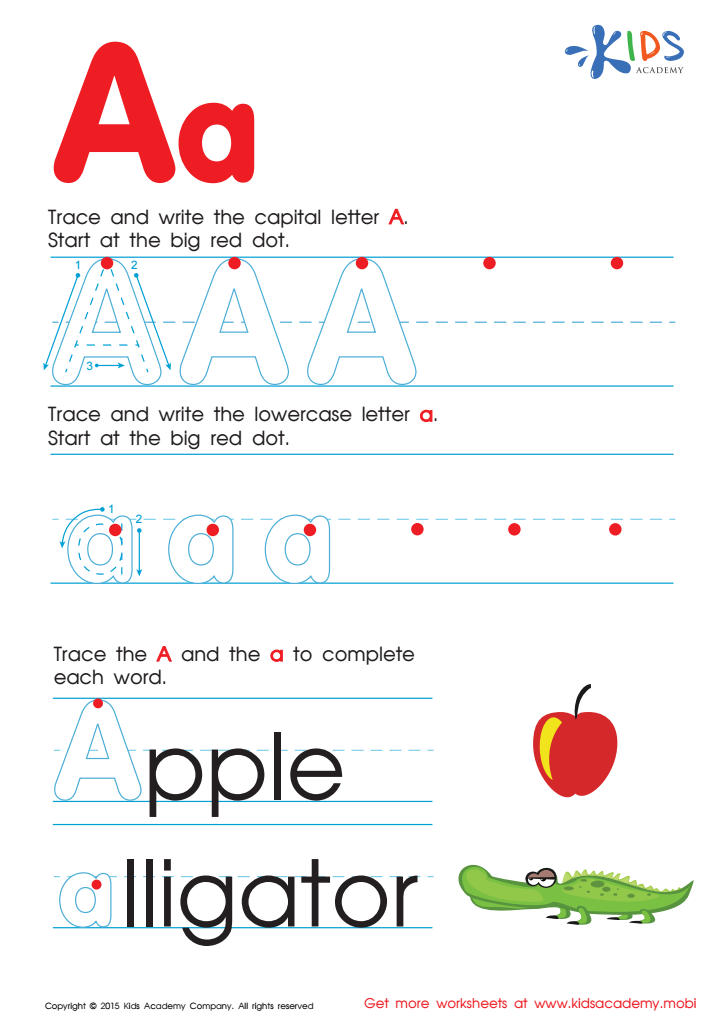
Trace and write the letter "A"! Start with the big red dot, then do the capital and lowercase versions. Then write it again with two words - apple and alligator. Download more tracing worksheets at Kids Academy.
 Assign to My Students
Letter A Tracing Page
Worksheet

Letter O Tracing Page
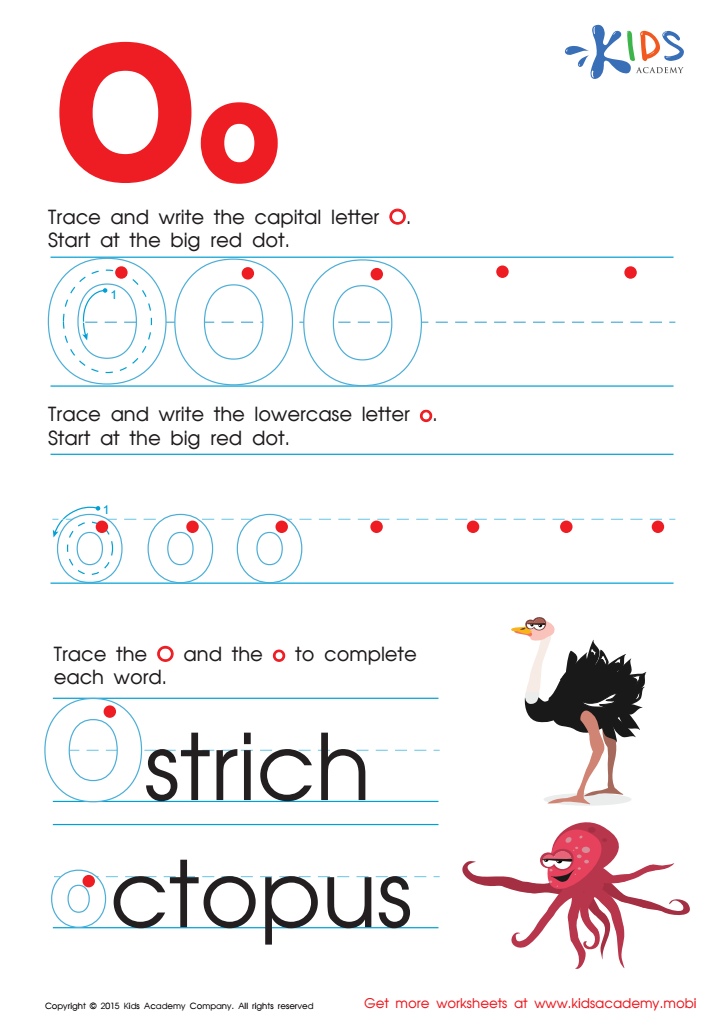
Practice writing the letter "O" with our new worksheet. Trace and write the letter several times, starting at the red dot. First do the uppercase letter, then the lowercase. Use the pictures to complete the words "Ostrich" and "octopus". Kids Academy offers more fun alphabet worksheets.
Letter O Tracing Page
Worksheet
Letter P Tracing Page
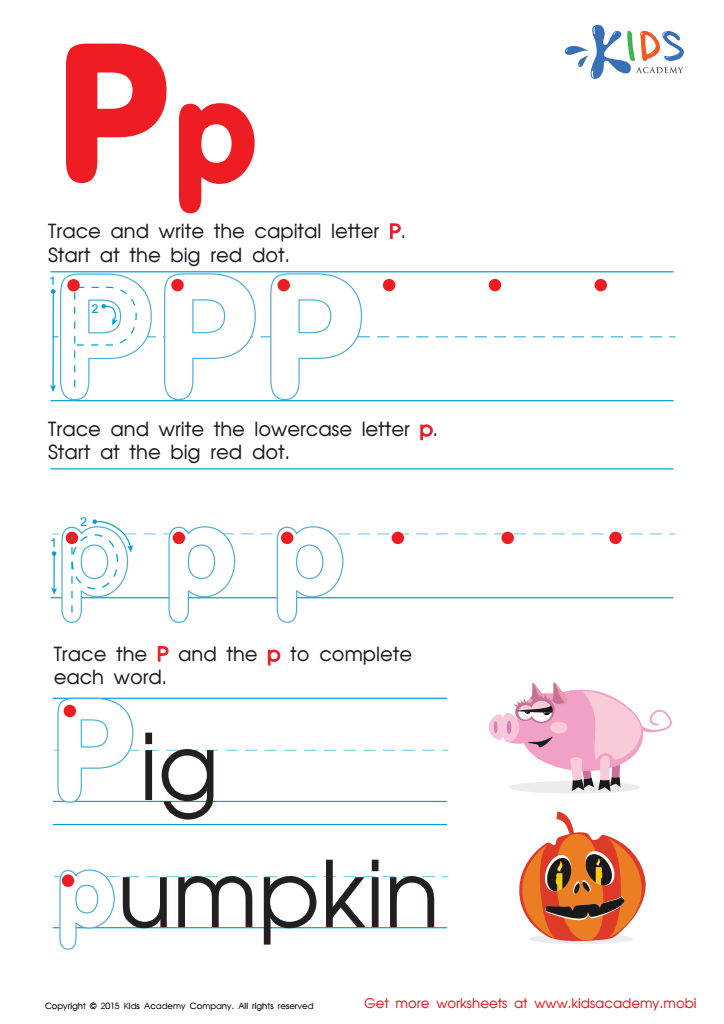
Trace the lines from the red dot to learn to write "P"! Then practice this letter with the fun activities: complete the word "Pig" and "Pumpkin". Check out Kids Academy to get more free ABC worksheets.
Letter P Tracing Page
Worksheet

Letter H Tracing Page
Trace the letter "H", then practice writing its lowercase form. Finally, choose your favorite form of transport and ride away! Get our worksheets to make learning fun and easy.
Letter H Tracing Page
Worksheet

Letter D Tracing Page
Trace and write capital and lowercase letter "D" with our free printable alphabet worksheet! Be careful not to mix up "b" and "d" - just look at the ducks and write their first letter. The dolphin wants to join the fun too - do you like dolphins? Get more fun worksheets and activities at Kids Academy!
Letter D Tracing Page
Worksheet
Join Kids Academy for Free
Who is primarily going to use this learning content?







Hand-eye coordination and understanding alphabetical order are crucial developmental milestones for 4-year-olds, playing an important role in their overall growth. Parents and teachers should prioritize hand-eye coordination activities because they are fundamental to a child's ability to perform everyday tasks. Developing this skill helps children gain control over their movements, which is essential for activities such as writing, cutting with scissors, and even tying shoelaces. When children practice actions that require them to synchronize their vision with their hand movements, like arranging objects or stacking blocks, they lay the foundation for better motor skills, attention, and spatial awareness.
Additionally, introducing alphabetical order at an early age fosters essential literacy skills. By familiarizing children with the sequence of letters, educators ignite curiosity about the written language and create a smoother transition as the child starts to read and write. Alphabetical order exercises can be fun and interactive, ensuring that learning is enjoyable while reinforcing cognitive abilities such as memory and organization.
Blending hand-eye coordination with ABC order activities means that children benefit from the synergy between physical and cognitive learning. Simple, engaging exercises like sorting alphabet blocks or arranging letters in order encourage children to observe and physically interact with their learning environment, hence promoting a holistic developmental approach.