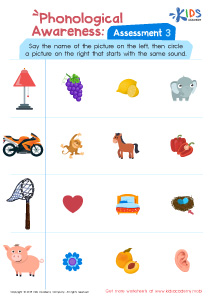
Vocabulary enhancement Consonants Worksheets for 4-Year-Olds
4 filtered results
Difficulty Level
Grade
Age
-
From - To
Subject
Activity
Standards
Boost your child's vocabulary with our fun and engaging Consonants Worksheets designed specifically for 4-year-olds! These worksheets aim to enhance early literacy skills by introducing consonants and associated vocabulary in an interactive way. Each activity is crafted to capture young learners' attention, fostering a love for language while supporting cognitive development. From identifying consonants to matching words with pictures, these worksheets provide a variety of hands-on exercises suitable for home and classroom settings. Help lay the foundation for your child's future reading success and language comprehension as they explore the world of consonants while having fun! Perfect for aspiring young readers!
Favorites
With answer key
Interactive
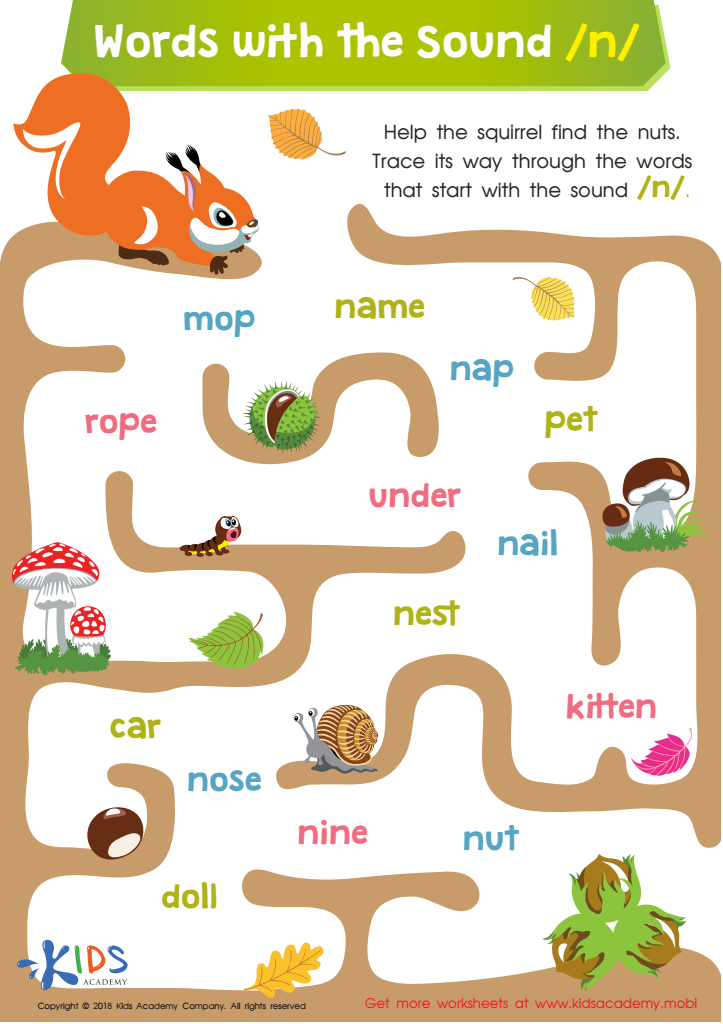
Words with Sound N Reading Worksheet
Young readers will love the colourful pictures and simple sight words on this download worksheet. They can trace their way through the maze as they help the cute squirrel reach his acorns, finding words with the sound "n" as they go. It's a fun way to work on reading skills - they won't even realise they're learning!
 Assign to My Students
Words with Sound N Reading Worksheet
Worksheet
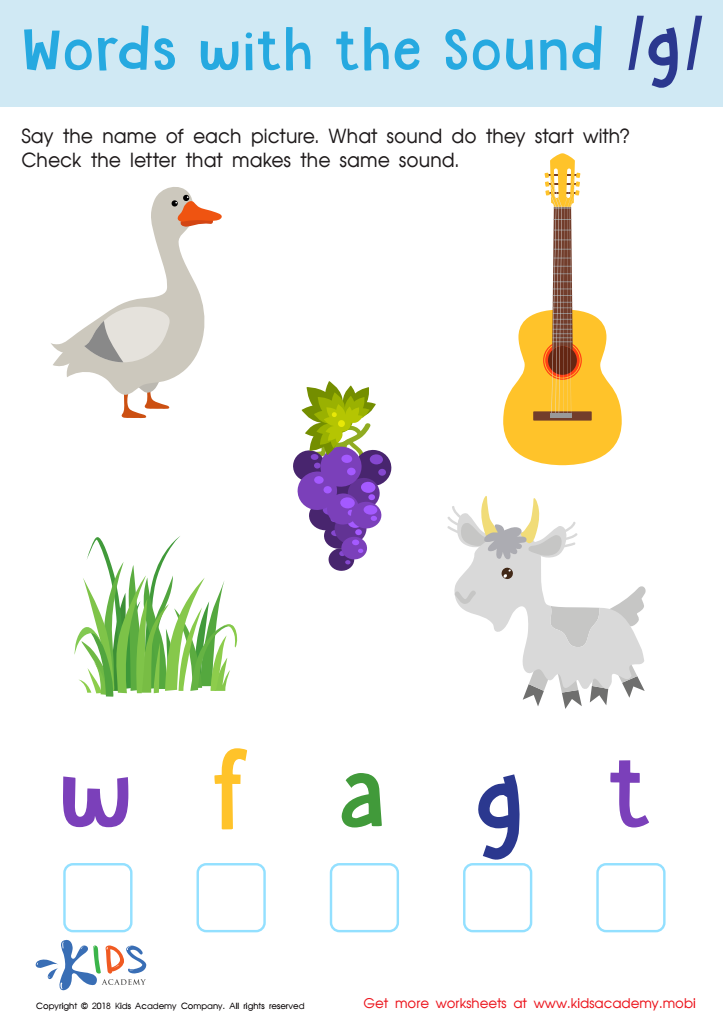
Words with sound g Reading Worksheet
Help your child learn the soft "g" sound with this phonics worksheet. Ask them to name each picture, then identify the letter sound it begins with. If it's "g", they can check the box. Have them repeat each word, listening for the soft "g" sound before moving on to the next page.
Words with sound g Reading Worksheet
Worksheet
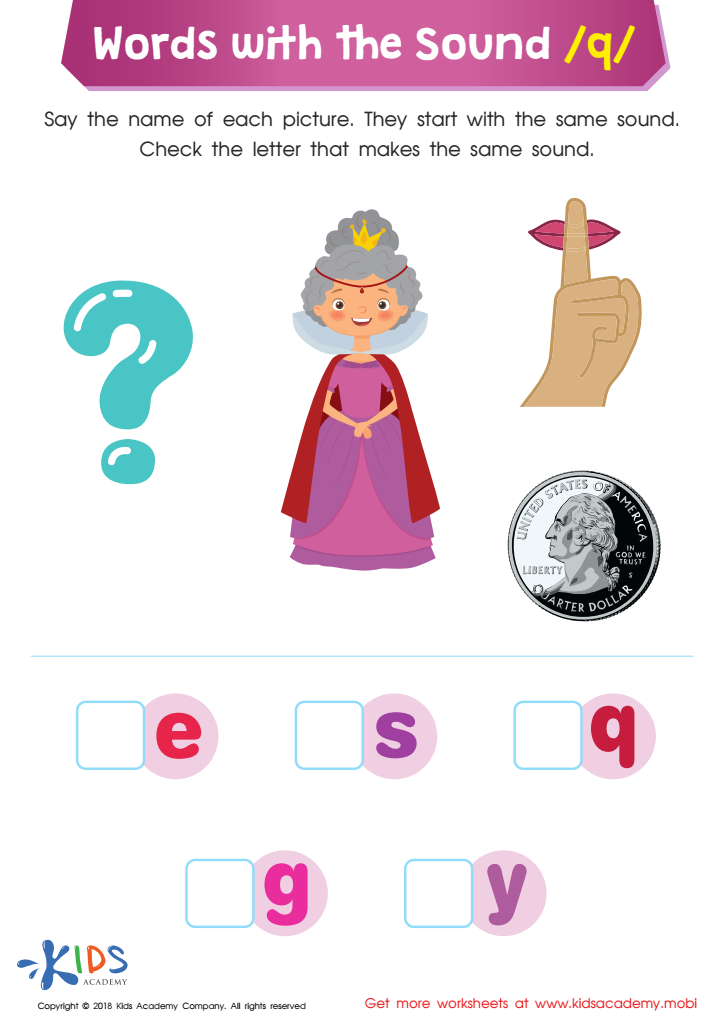
Words with Sound Q Reading Worksheet
Beginning readers will love this free PDF worksheet! Bright colors and familiar pictures make it fun, as they say the name of each image and work on fine motor skills. Letters “q” is featured among others, helping to recognize and isolate its sound, which is often seen with a “u” behind it.
Words with Sound Q Reading Worksheet
Worksheet
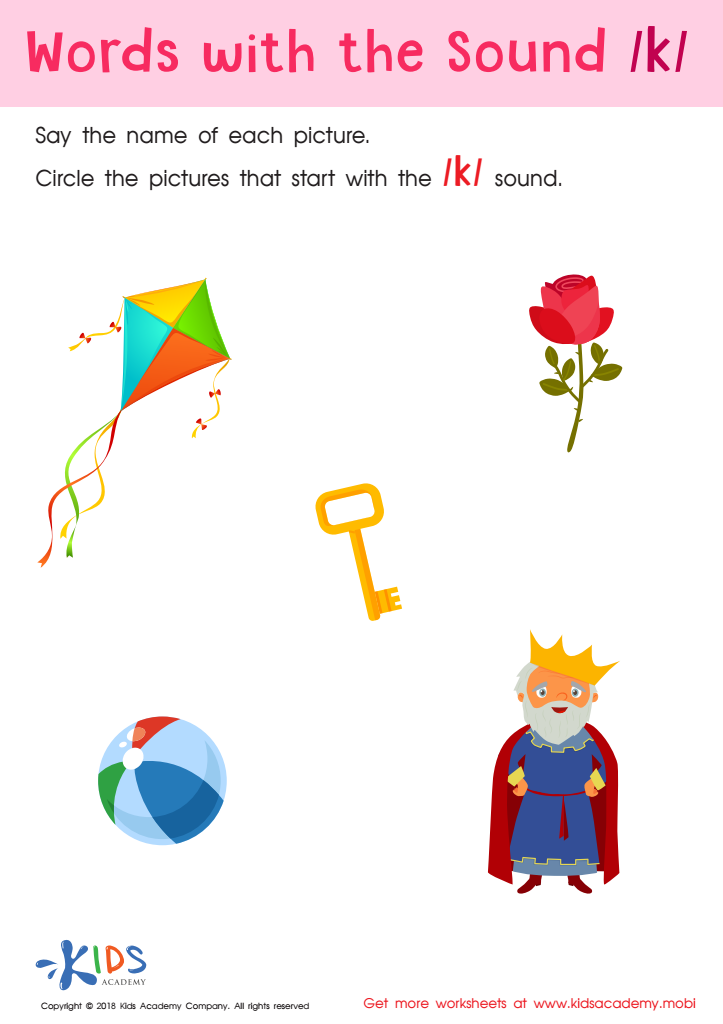
Words with sound k Reading Worksheet
Help your preschooler master the hard "k" sound with this fun worksheet from Kids Academy! Ask your child to say each picture aloud and circle only the pictures that start with "k". This early reading exercise will boost phonics skills and is sure to be loved by your little learner!
Words with sound k Reading Worksheet
Worksheet
Join Kids Academy for Free
Who is primarily going to use this learning content?



Vocabulary enhancement is crucial for 4-year-olds as it lays the foundation for effective communication, critical thinking, and overall literacy development. While consonants are the backbone of most words, focusing on them can significantly impact a child's language acquisition. At this age, children are rapidly expanding their vocabulary and developing pronunciation skills. By concentrating on consonant sounds, parents and teachers can help children articulate words correctly, fostering clearer communication.
Understanding consonants assists children in phonemic awareness, a key predictor of future reading success. Engaging activities such as rhyming games and storytelling not only make learning fun but also immerse children in a rich linguistic environment. When parents and teachers prioritize vocabulary enhancement through consonants, they are also promoting cognitive development and social skills, as effective communication is essential for interaction with peers.
Moreover, strong vocabulary skills can boost children's confidence and encourage them to express their thoughts and ideas more freely. With a robust vocabulary enriched by consonants, children will be far better prepared for the challenges of literacy as they advance to more complex reading and writing tasks. Hence, investing in vocabulary enhancement at this critical developmental stage can lead to lifelong benefits in communication and learning.