Fine motor skills improvement Alphabet Worksheets for 4-Year-Olds
3 filtered results
-
From - To
Enhance your child's fine motor skills with our Alphabet Worksheets tailored for 4-year-olds! Designed by educational experts, these fun and engaging activities help preschoolers strengthen their hand-eye coordination, pencil grip, and handwriting abilities while learning the alphabet. From tracing letters to interactive coloring tasks, our worksheets make early literacy enjoyable and effective. Ideal for both classroom and home use, these resources ensure that young learners build strong foundational skills. Explore our collection today and give your child a head start in their educational journey with confidence and ease. Visit us at Kids Academy and start learning through play!
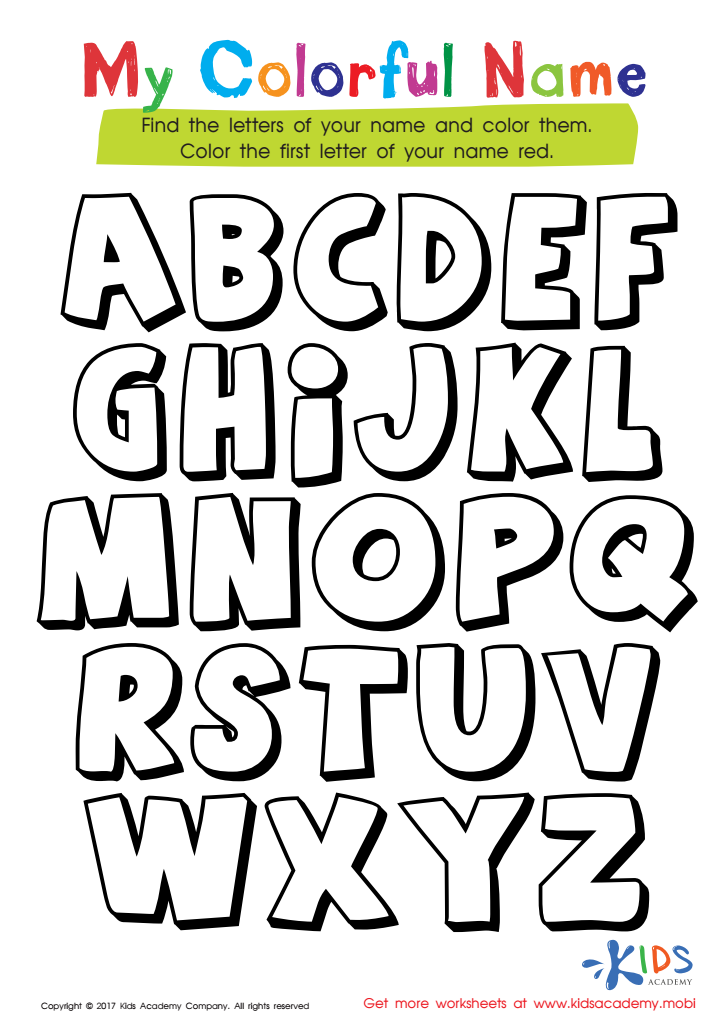
My Colorful Name Worksheet
 Assign to My Students
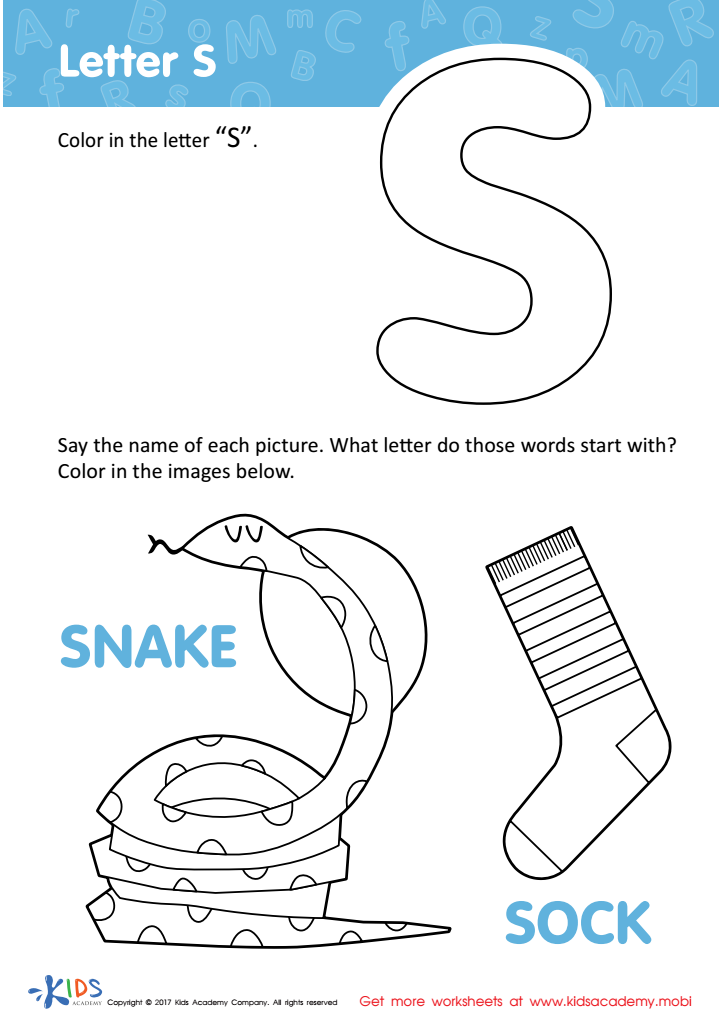
Letter S Coloring Sheet
Assign to My Students
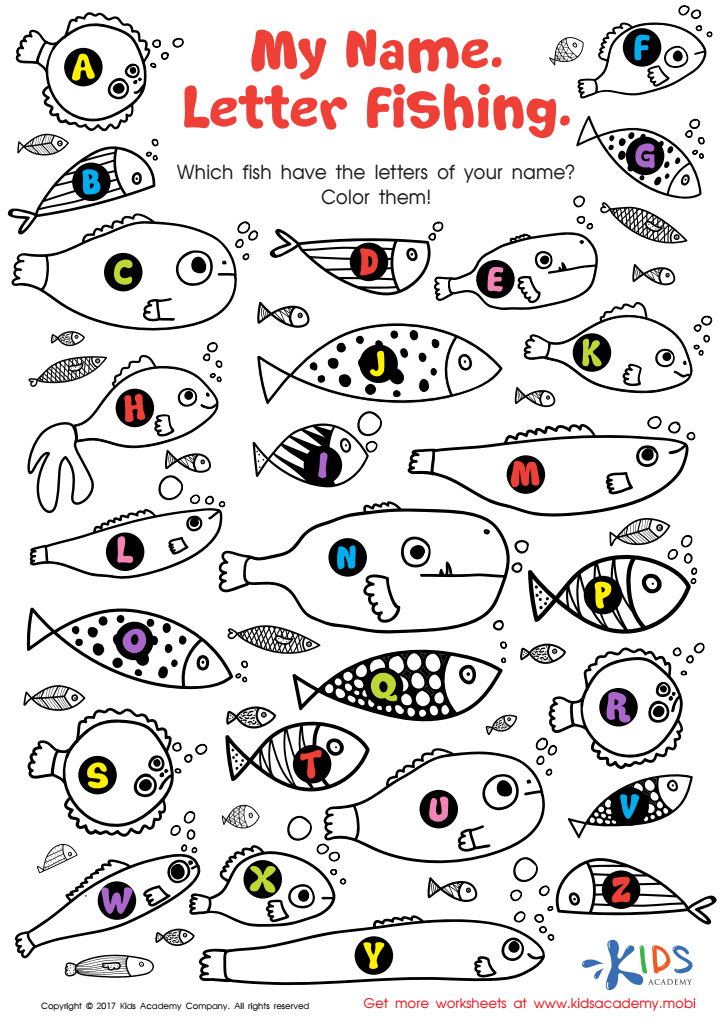
My Name: Letter Fishing Worksheet
Assign to My Students







Fine motor skills are essential building blocks for children's overall growth and future academic success, making their improvement a crucial concern for parents and teachers alike. For 4-year-olds, these skills involve the use of small muscles in the hands and fingers to perform tasks including writing, cutting, and manipulating small objects. Focusing on the alphabet helps in fine motor skills development since it often involves activities like tracing, coloring, and manipulating letters.
Writing letters requires precise hand-eye coordination and controlled movements, fostering hand muscle strength and dexterity. When children repeatedly practice writing the alphabet, they build the skills necessary for future tasks, such as writing words and sentences. Furthermore, these activities can enhance a child's ability to perform daily functions like buttoning a shirt or tying shoelaces.
Fine motor skill development also promotes cognitive growth. Tasks such as sorting alphabet letters can improve problem-solving skills and spatial awareness. Engaging with the alphabet can lay a strong foundation for literacy early in a child’s life, aiding in language recognition and phonics skills.
Incorporating fine motor skills improvement activities in early education supports not just academic skills, but also overall child development, thereby ensuring that children have the critical skills needed for school readiness and beyond.







