Fine Motor Skills Letter E Worksheets for 4-Year-Olds
3 filtered results
Difficulty Level
Grade
Age
-
From - To
Subject
Activity
Standards
Explore our engaging Fine Motor Skills Letter E Worksheets designed specifically for 4-year-olds! These printable worksheets provide an exciting way for young learners to strengthen their fine motor abilities while learning about the letter E. Each activity is carefully crafted to improve hand-eye coordination, coloring skills, and precision through fun tasks like tracing, cutting, and connecting dots. Kids will love the vibrant visuals and hands-on approaches, making learning both enjoyable and effective. Perfect for at-home practice or classroom use, our worksheets seamlessly blend education with creativity, ensuring a strong foundation for future learning. Unlock your child's potential with our Letter E activities today!
Favorites
With answer key
Interactive
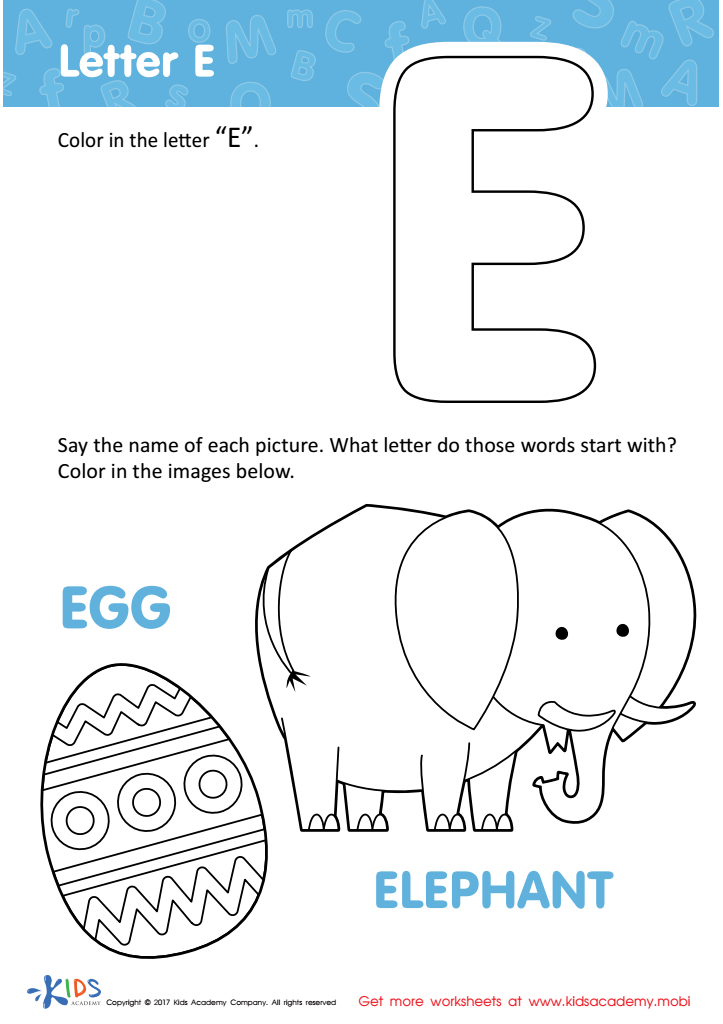
Letter E Coloring Sheet
Coloring pages are great for teaching kids the alphabet and words! This "E" page features a cute elephant and Easter egg. Kids will love it and learn the letter "E" at the same time. 80 words
Download (PDF)
 Assign to My Students
Assign to My Students
Letter E Coloring Sheet
Worksheet
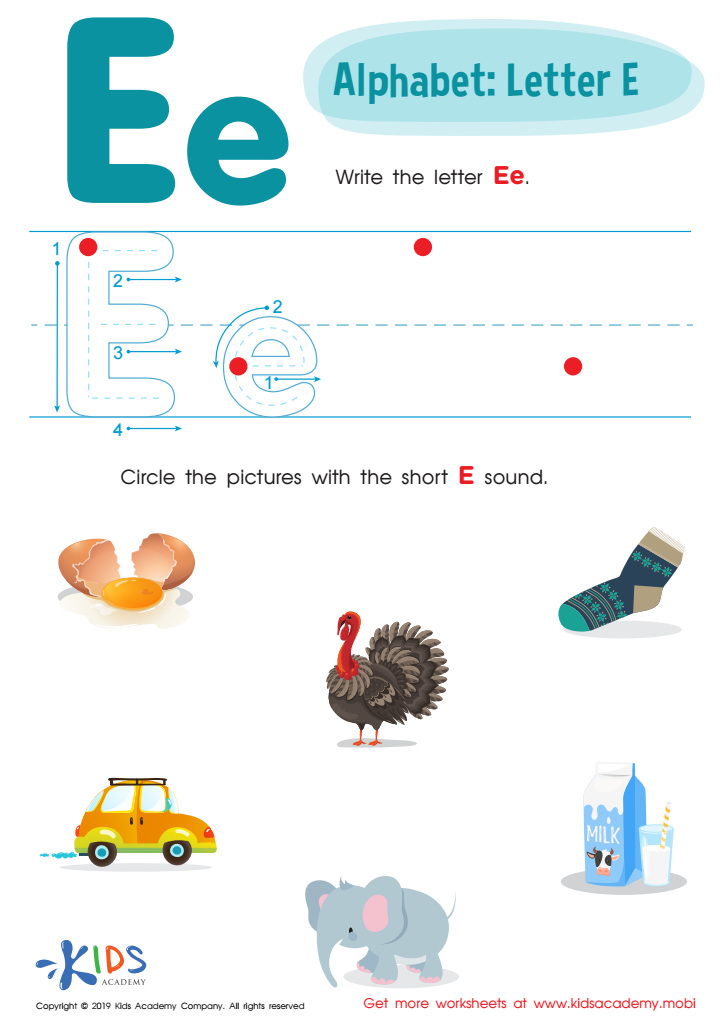
Letter E Tracing Worksheet
Students trace and write uppercase and lowercase letter E. They sound out "E" words, choosing those with short "E" sounds. Preschoolers identify the difference between the 'E' sounds in words like "egg" and "turkey." A tracing sheet helps them to understand.
Letter E Tracing Worksheet
Worksheet
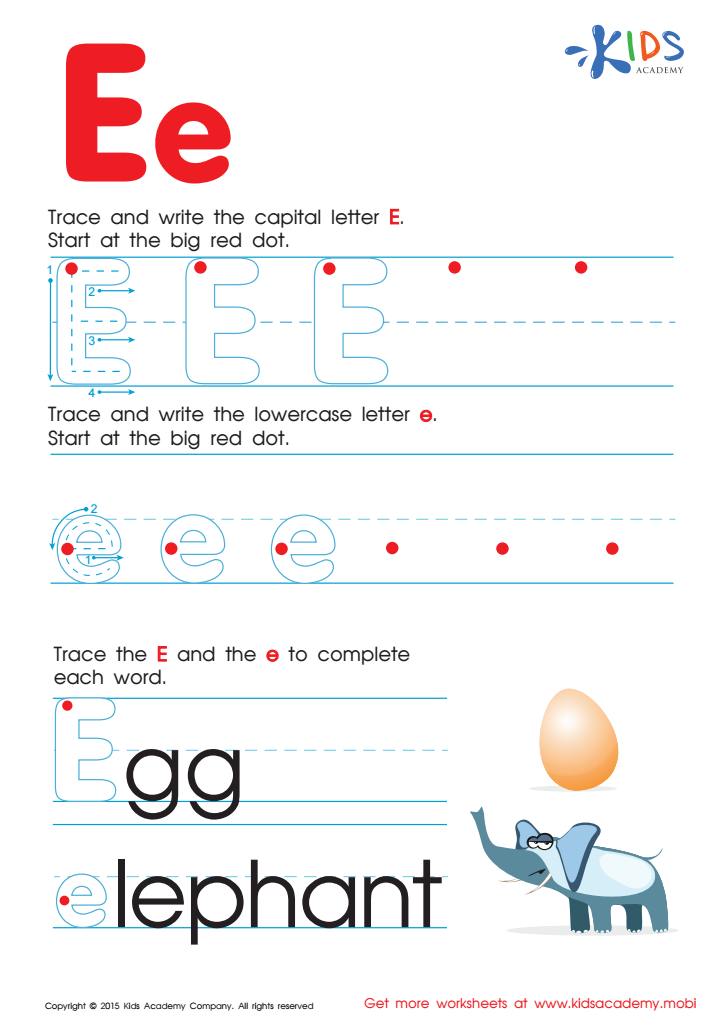
Letter E Tracing Page
Trace and write the uppercase and lowercase "E" starting at the big red dot. Complete words to perfect letter writing. Egg and Elephant must be written carefully. More alphabet worksheets for kindergarten are available for download to spend more time with your children learning.
Letter E Tracing Page
Worksheet
Join Kids Academy for Free
Who is primarily going to use this learning content?






Parents and teachers should prioritize fine motor skills development in 4-year-olds, particularly in activities related to the letter "E." Fine motor skills encompass the small muscles in the hands, fingers, and wrists, which are crucial for a child's daily functioning and learning processes. Mastering the shape and writing of the letter "E" offers a powerful opportunity for enhancing these skills.
Engaging with the letter "E" allows children to practice hand-eye coordination, finger dexterity, and grasping techniques. Activities such as tracing the letter with their fingers, using scissors to cut out shapes, or crafting letters with playdough can significantly strengthen these abilities. As they develop fine motor skills, children gain confidence in their capability to hold writing instruments, manipulate small objects, and perform tasks that demand precision, leading to improved academic readiness.
Moreover, strengthening fine motor skills fosters cognitive development. These skills correlate with children's overall ability to express themselves, both verbally and through writing. Encouraging activities centered around the letter "E," like coloring pictures of elephants or facilitating crafts associated with the letter, creates an engaging learning environment that stimulates creativity while promoting essential skills for later academic success. Overall, a focus on fine motor skills is vital for holistic child development.