
Letter Tracing Practice Letter Recognition Worksheets for 4-Year-Olds
5 filtered results
Difficulty Level
Grade
Age
-
From - To
Subject
Activity
Standards
Enhance your child's early literacy skills with our engaging Letter Tracing Practice and Letter Recognition Worksheets designed specifically for 4-year-olds. Our printable resources foster a fun learning environment while helping children identify letters and improve fine motor skills through tracing activities. Each worksheet features colorful illustrations and interactive tasks that captivate young learners, ensuring they stay motivated. As kids trace and recognize letters, they build a strong foundation for future reading and writing success. Perfect for parents and educators, these worksheets are tailored to make learning enjoyable and effective. Start your child's journey towards literacy today with our innovative resources!
Favorites
With answer key
Interactive
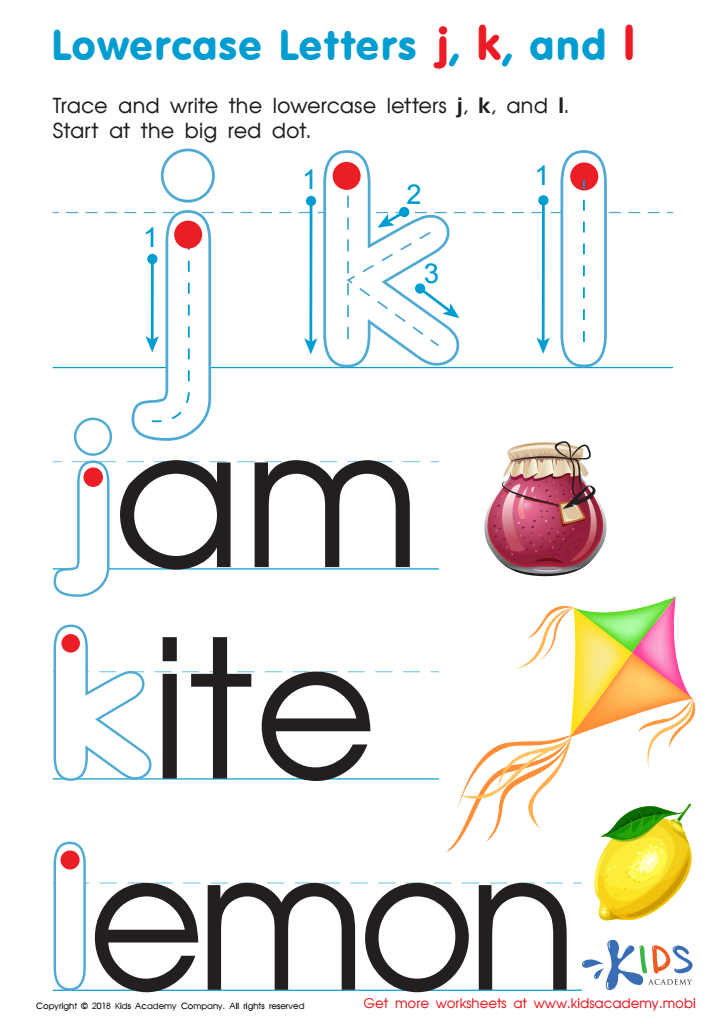
Lowercase Letters j k l Worksheet
Teach your child the difference between uppercase and lowercase letters. Have them trace and write the lowercase letters j, k, and l, starting at the red dot. Guide your child's hand to form the letters correctly.
Lowercase Letters j k l Worksheet
Worksheet
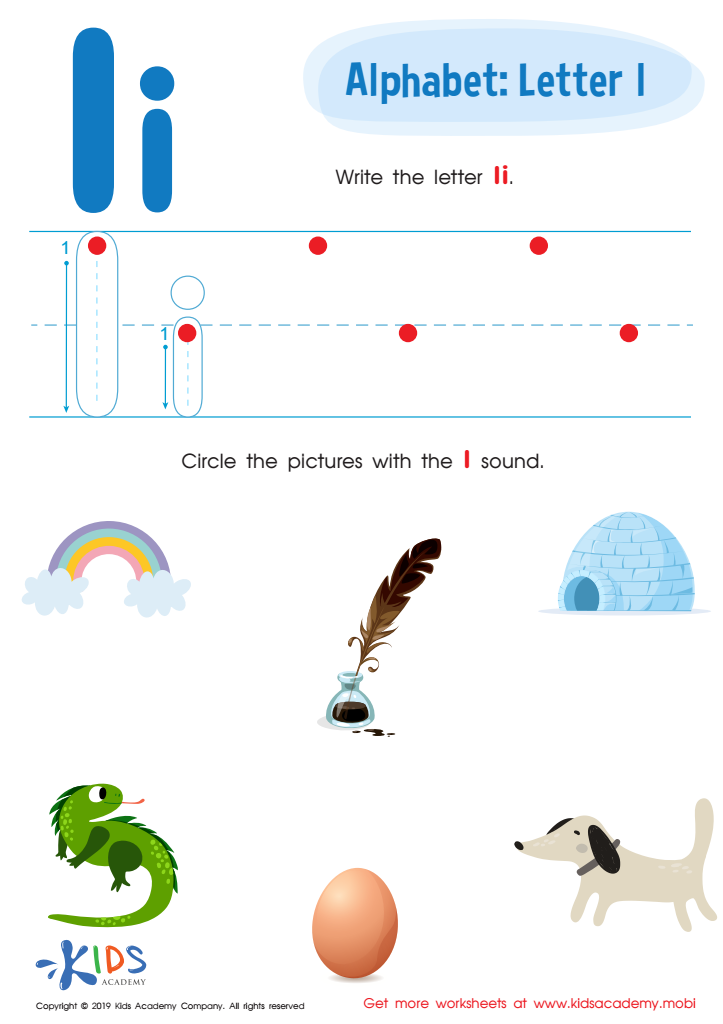
Letter I Tracing Worksheet
Kids can hone tracing, writing and identifying skills for the letter 'I' with this worksheet. Whether visual or reading/writing learners, every child can benefit from the tasks - tracing, writing and circling objects beginning with 'I'. This free sheet will soon get preschoolers confident with the 'I' letter!
Letter I Tracing Worksheet
Worksheet
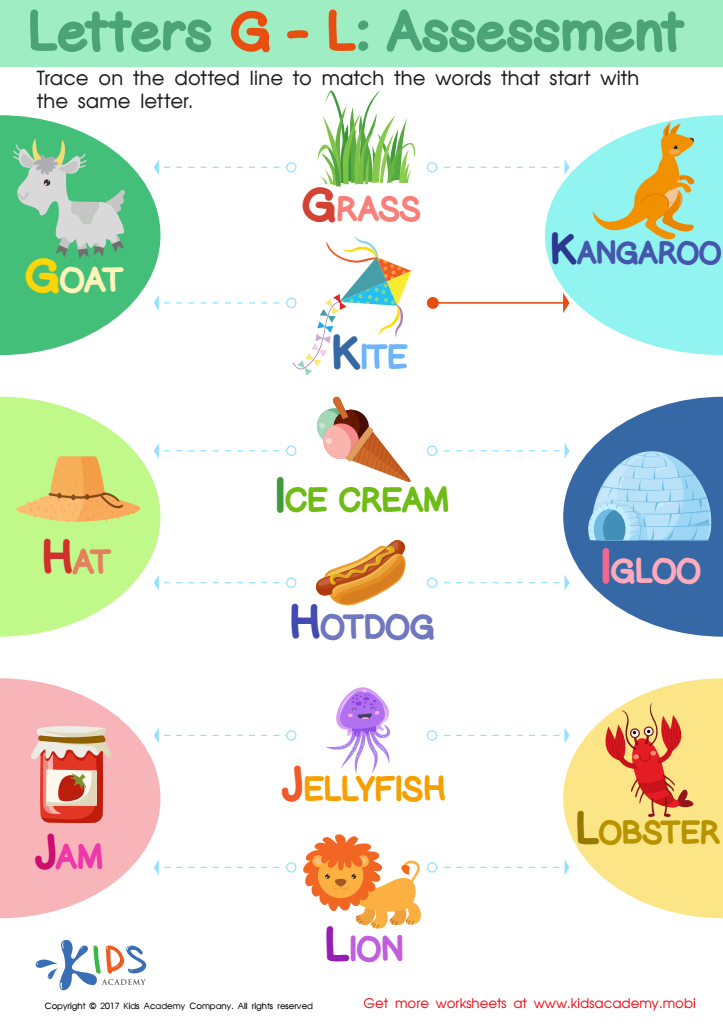
Letters G-L Worksheet
This fun worksheet helps preschoolers develop reading and phonics skills. It gets kids to match G-L words that start with the same letter, making it engaging and educational.
Letters G-L Worksheet
Worksheet
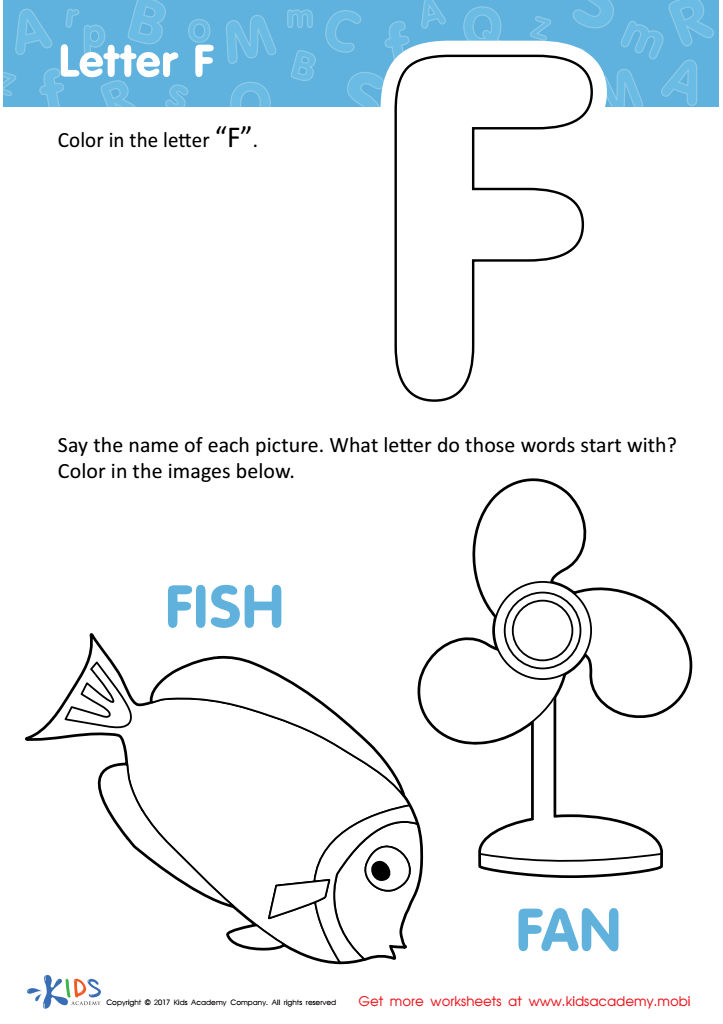
Letter F Coloring Sheet
Coloring pages help kids learn to recognize letters and sounds. Our "F" page has kids color a fish and a fan. It's a great way to introduce them to the letter "F" using words they already know.
Download (PDF)
 Assign to My Students
Assign to My Students
Letter F Coloring Sheet
Worksheet
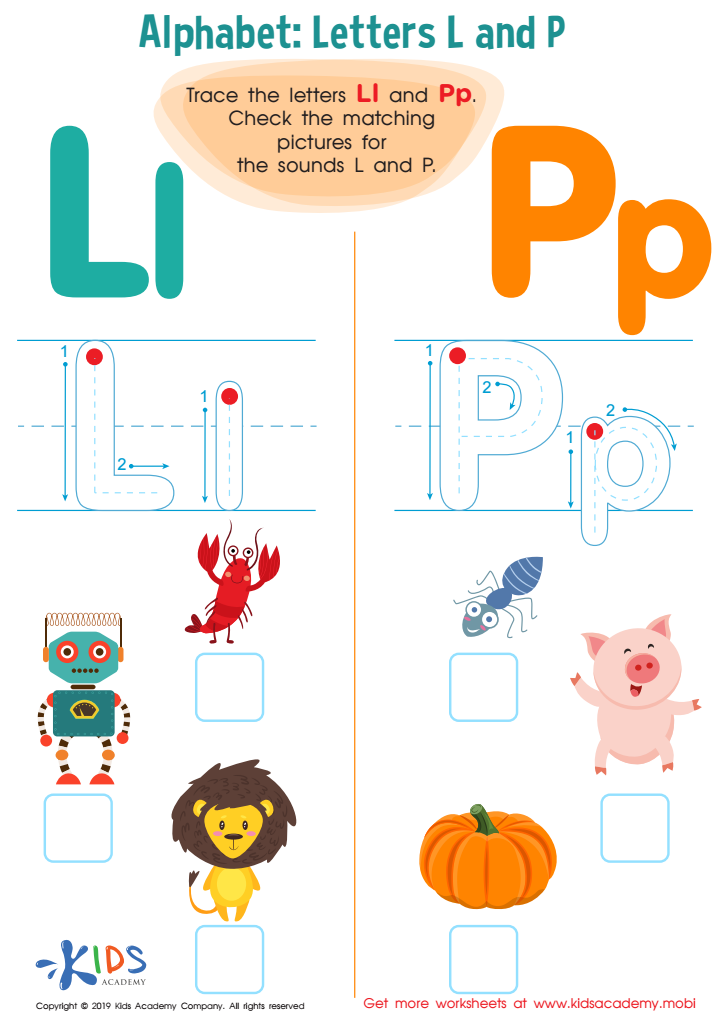
Letter L and P Tracing Worksheet
This traceable worksheet can motivate your students to learn and practice core skills. They'll trace the letters 'L' and 'P' and identify the pictures next to them. With this exercise, they'll unlock their learning abilities and excel in the subject!
Letter L and P Tracing Worksheet
Worksheet
Join Kids Academy for Free
Who is primarily going to use this learning content?








Letter tracing practice and letter recognition are fundamental components of early literacy development for 4-year-olds. Parents and teachers should prioritize these activities for several important reasons.
Firstly, letter tracing helps children develop fine motor skills essential for writing. By practicing tracing letters, children gain the coordination needed for holding pencils and forming letters, laying the groundwork for neat handwriting in the future.
Secondly, recognizing letters is crucial for reading readiness. When children can identify letters, they are better equipped to understand that letters represent sounds, fostering phonemic awareness. This early knowledge is key for successful reading and vocabulary development later on.
Additionally, engaging in letter tracing can enhance a child's cognitive skills, including memory and attention span. As they focus on the shapes and sounds of letters, children learn to concentrate, thereby improving their overall learning abilities.
Lastly, incorporating fun and interactive tracing activities can boost a child's confidence and motivation. When they see tangible progress in their skills, it encourages a love for learning and exploration.
In summary, supporting letter tracing and recognition fosters essential skills that contribute not only to literacy but also to a child's overall development and foundational learning experiences.







