Lowercase letter writing Letter Recognition Worksheets for 4-Year-Olds
3 filtered results
-
From - To
Discover engaging and effective Lowercase Letter Writing Letter Recognition Worksheets for 4-year-olds at Kids Academy! Our fun-filled worksheets are specifically crafted to help young learners identify and write lowercase letters with ease. Each beautifully designed sheet focuses on letter formation, improving fine motor skills, and reinforcing letter recognition through captivating activities and illustrations. Perfect for preschool and early kindergarten students, these worksheets make learning the alphabet an enjoyable adventure. Support your child's handwriting journey with our expertly created resources and transform alphabet lessons into a delightful experience. Download today to watch your little ones' confidence soar!
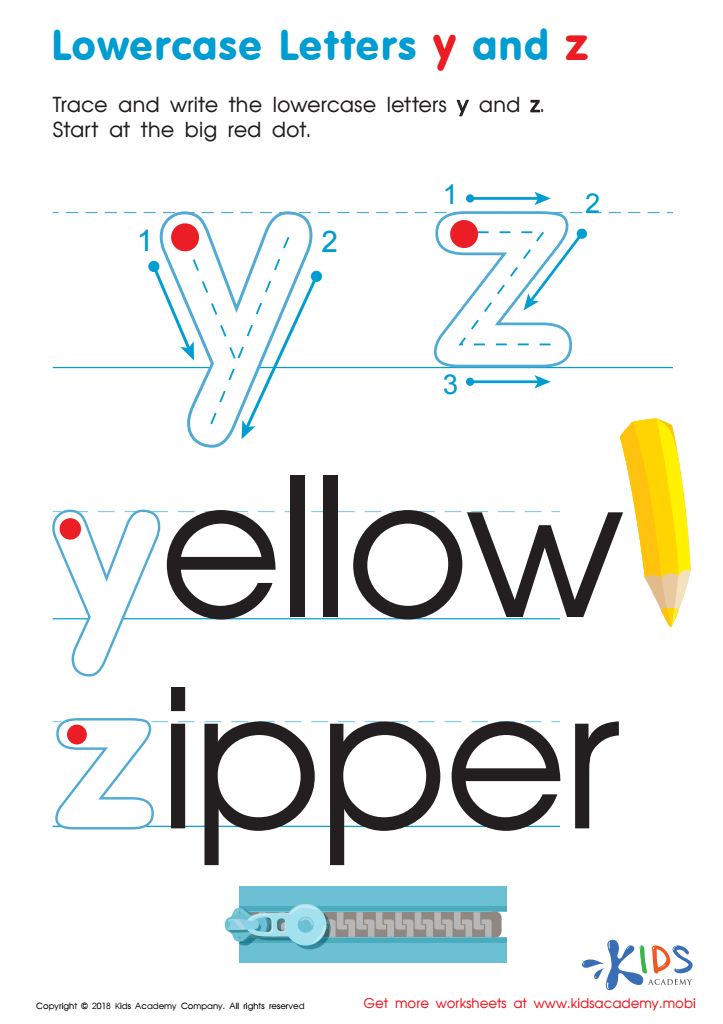
Lowercase Letters y z Worksheet
 Assign to My Students
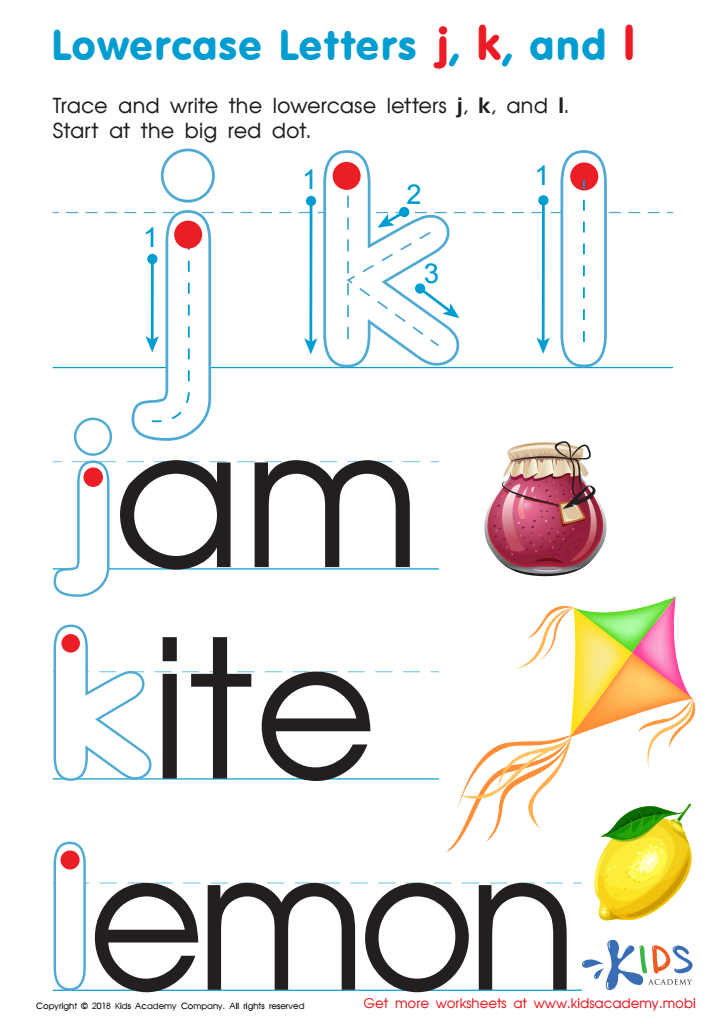
Lowercase Letters j k l Worksheet
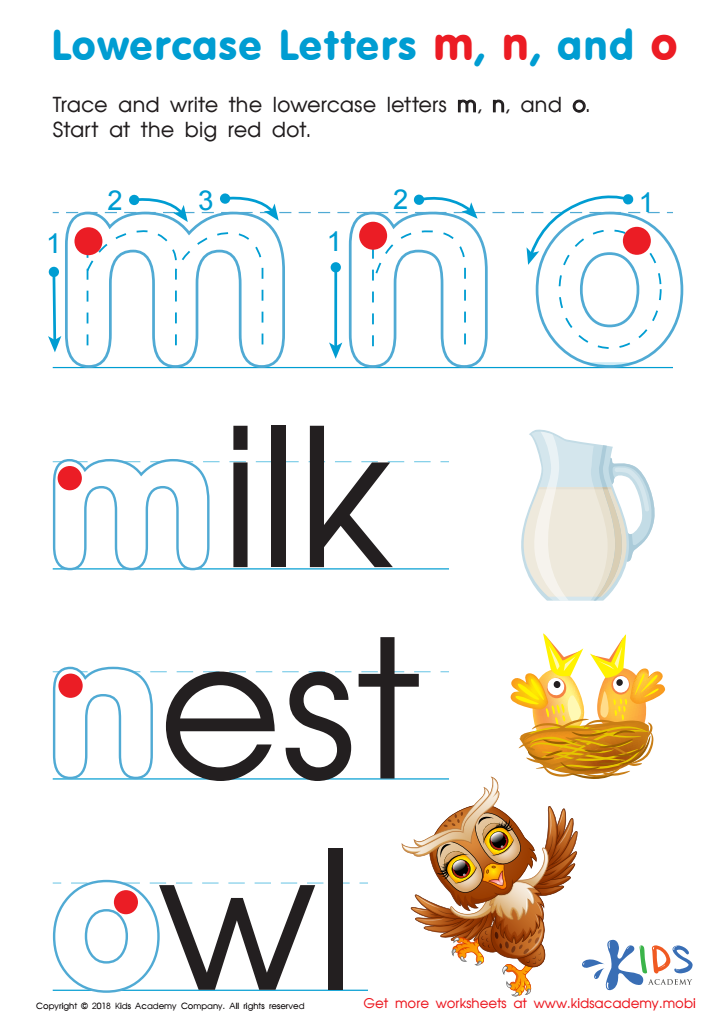
Lowercase Letters m n o Worksheet








Lowercase letter writing and recognition is crucial for 4-year-olds because it lays the foundation for early literacy and academic success. At this pivotal age, children’s brains are primed for learning and language development. Recognizing and writing lowercase letters early helps kids make sense of the alphabet and the way letters interact in words, fostering essential reading and writing skills.
Patterns in English reading often start with lowercase letters, thus, familiarity with them enables smoother transitions to reading sentences and storybooks. This skill cultivates phonemic awareness, crucial for decoding words and enhancing vocabulary. Early exposure demystifies the differences between uppercase and lowercase letters, ensuring that children can comprehend diverse text formats they will encounter in educational settings and daily life.
Lowercase letter praxis also enhances fine motor skills, coordination, and hand-eye dexterity, important for all types of writing and even daily activities. For parents and teachers, promoting lowercase letter recognition supports a child's confidence, providing them with tools to express themselves and engage meaningfully with the learning environment. Montessori methods and playful exercises — tracing, drawing, using sandpaper letters, and interactive games — ensure engaging, effective learning. Thus, prioritizing lowercase letter proficiency transforms early education into a solid bridge to a child’s future academic and social achievements.







