Phonics practice Letter Recognition Worksheets for 4-Year-Olds
3 filtered results
-
From - To
Introducing our Phonics Practice Letter Recognition Worksheets, designed specifically for 4-year-olds! These engaging worksheets are a wonderful resource to help your child recognize letters and sound out words early in their learning journey. Packed with fun activities, they promote essential phonics skills while fostering a love for reading and writing. Each worksheet encourages children to identify, trace, and color letters, reinforcing their understanding in an interactive way. Ideal for home or classroom use, these phonics-based activities lay a strong foundation for language development. Explore our collection today to support your child's literacy skills and make learning enjoyable!
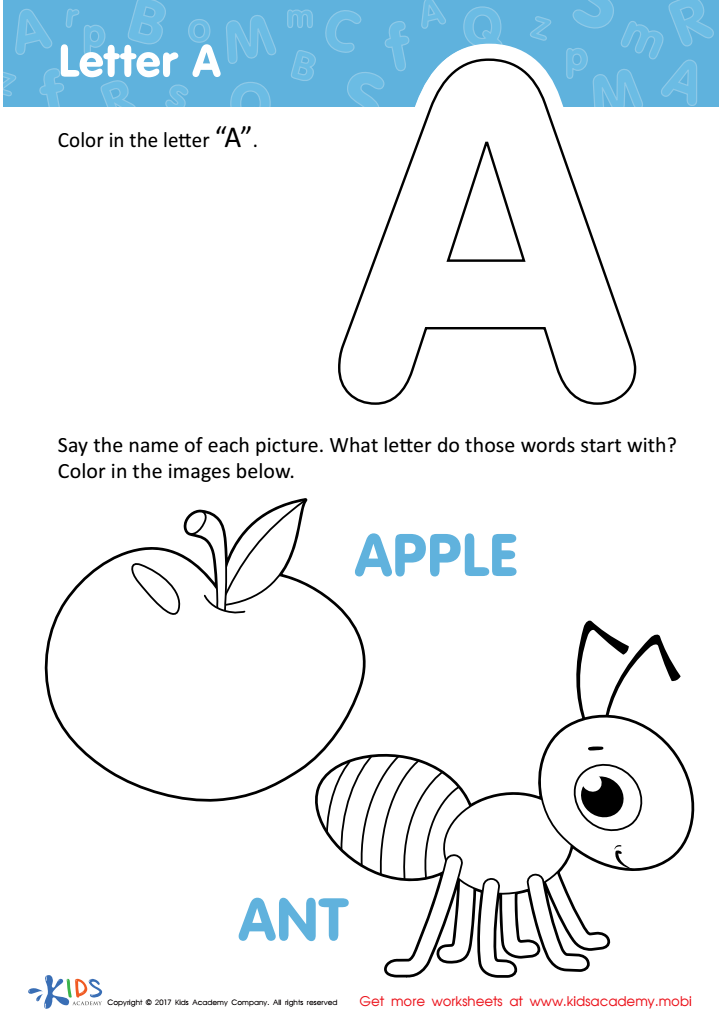
Letter A Coloring Sheet
 Assign to My Students
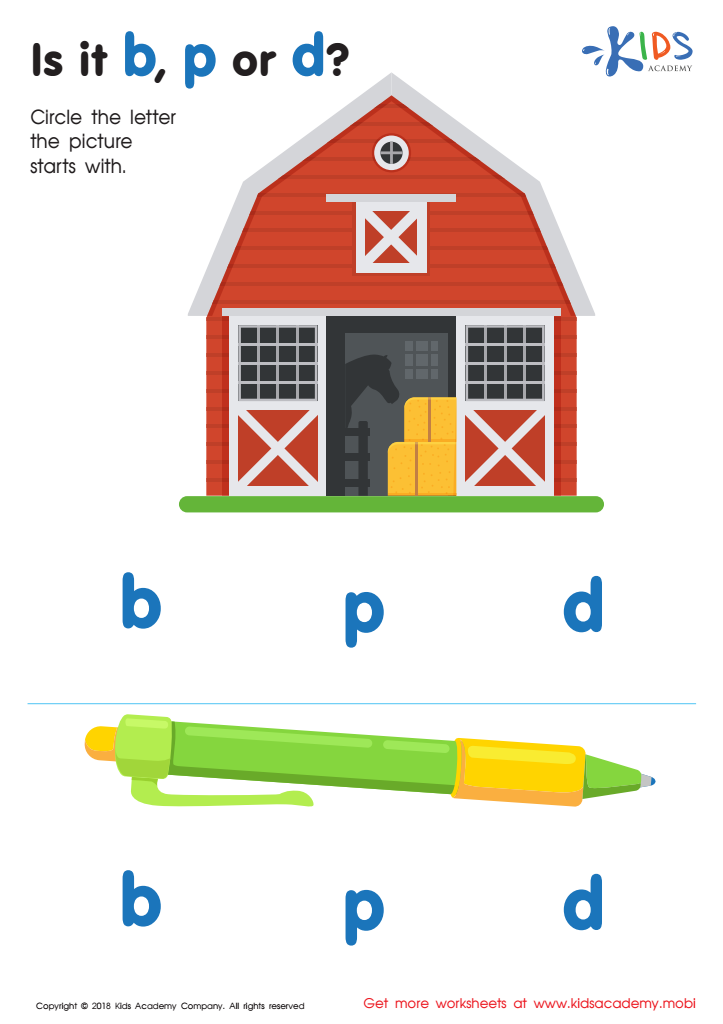
Is it b, p or d? Worksheet
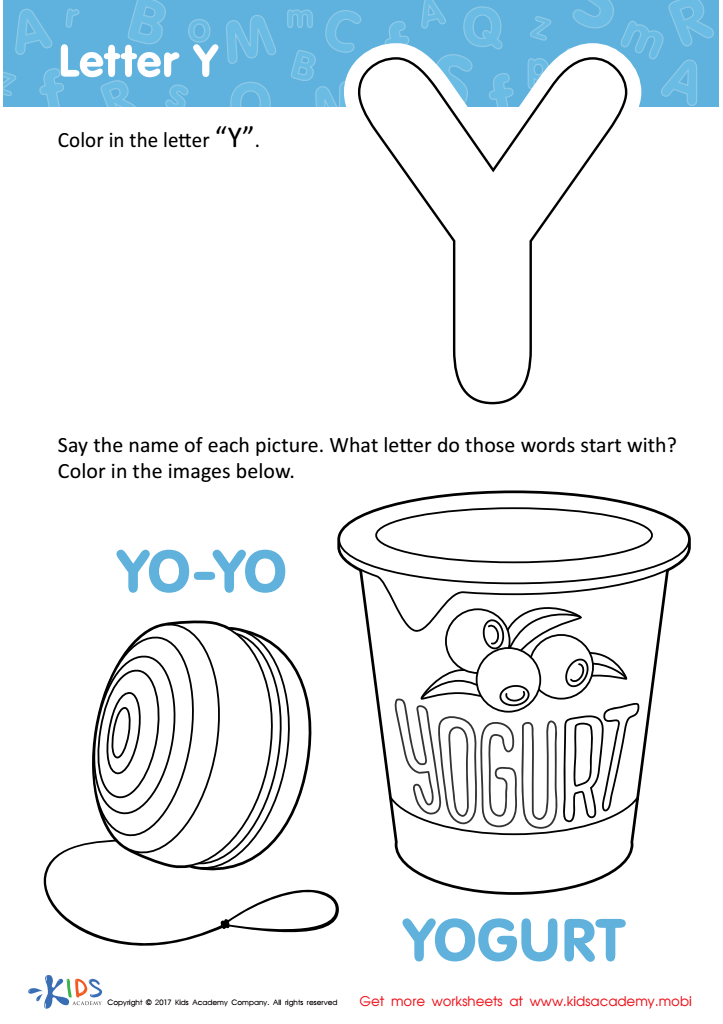
Letter Y Coloring Sheet
Assign to My Students








Phonics practice and letter recognition are foundational skills for young learners, especially for 4-year-olds. At this age, children are like sponges, soaking up language and literacy concepts. Phonics, the relationship between letters and sounds, helps children understand the basics of reading. This early stage of language development is crucial, as it lays the groundwork for their future reading and writing skills.
Parents and teachers should prioritize letter recognition because it supports the development of vocabulary and comprehension skills. Recognizing letters enables children to decode written words, facilitating their ability to read simple texts independently. By engaging with phonics activities, children develop phonemic awareness — the ability to hear, identify, and manipulate sounds in words — which is essential for spelling and reading fluency.
Additionally, consistent practice in recognizing letters can significantly boost a child’s confidence and motivation to learn. When children can identify letters and their sounds, they feel more empowered to explore books and express themselves through writing. Encouraging these skills through fun and interactive methods, such as games and songs, will create a positive learning environment, fostering a lifelong love for reading. Therefore, investing time in phonics and letter recognition is an investment in a child's educational future.







