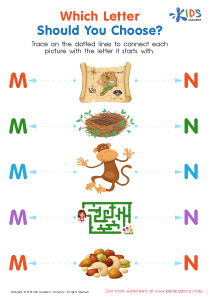
Alphabet familiarity Lowercase/Small Letters Worksheets for 4-Year-Olds
3 filtered results
-
From - To
Welcome to our Alphabet Familiarity Lowercase Worksheets for 4-Year-Olds! Designed to spark young learners' interest in letters, these engaging worksheets provide a fun way for children to explore lowercase letters through various activities. From tracing and matching to identifying and coloring, our resources are tailored to boost recognition and confidence in using small letters. Each worksheet encourages play-based learning, helping kids associate letters with words and sounds in interactive ways. Ideal for home or classroom use, these lively worksheets support foundational literacy skills while keeping learning enjoyable. Dive into the world of letters and watch your child thrive!
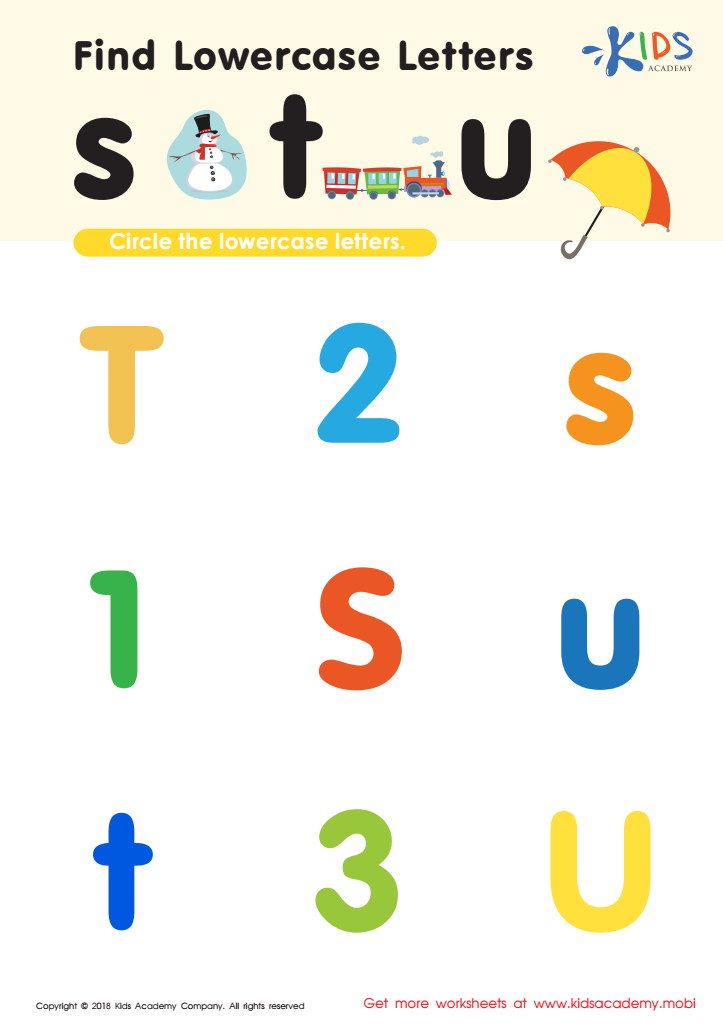
Find lowercase Letters s t u Worksheet
 Assign to My Students
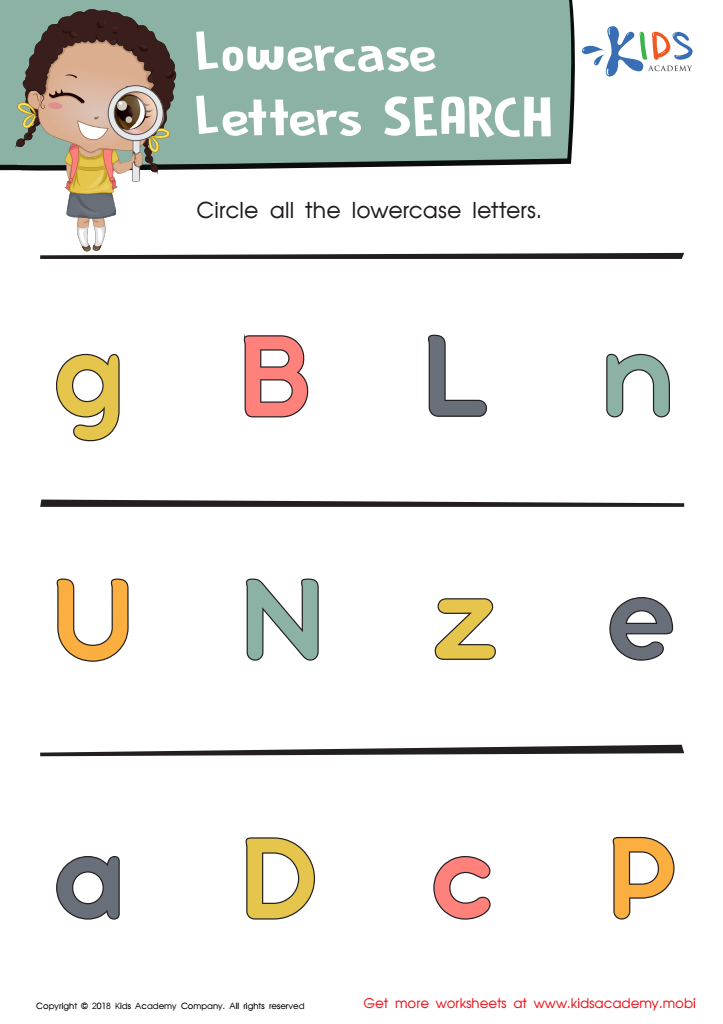
Lowercase Letters Search: Assessment Worksheet
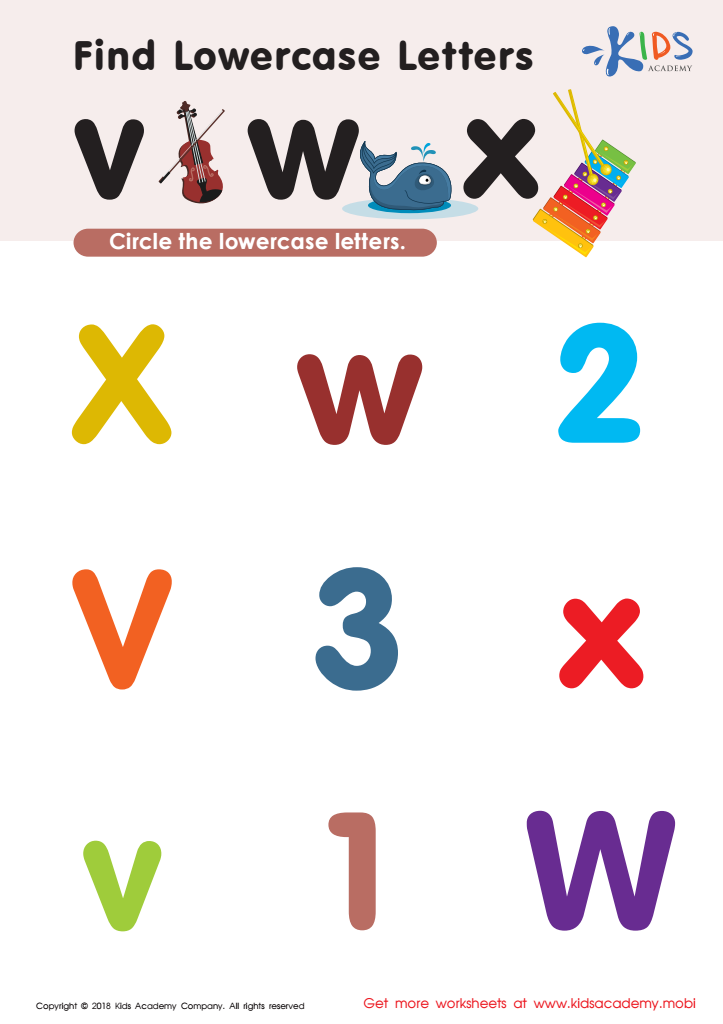
Find Lowercase Letters v w x Worksheet


Fostering familiarity with lowercase letters in 4-year-olds is crucial for a variety of developmental and educational reasons. At this age, children are beginning to explore the world of literacy, and lowercase letters are the foundation of reading and writing skills. Since most text in books and everyday materials use lowercase letters, early exposure helps children recognize and understand written language effectively.
When parents and teachers emphasize lowercase letter familiarity, they support language development and basic text comprehension. Kids learning lowercase will encounter them more frequently in practical contexts, enhancing reading fluency and helping with spelling. This familiarity aids in letter recognition, contributing to improved pre-reading skills.
Furthermore, mastering lowercase letters can also boost a child's confidence in expressing themselves through writing. Crafting handwritten notes or drawing captions encourages creativity while reinforcing their understanding of letters.
Overall, prioritizing lowercase letter familiarity not only prepares children for academic success but also cultivates a lifelong love for reading and writing. By nurturing these early literacy skills, caregivers can create a solid foundation for their child’s educational journey. Investing in such vital skills at this young age ultimately sets the stage for future learning and communication tools.