Rhyming skills development Rhyming Worksheets for 4-Year-Olds
3 filtered results
-
From - To
Enhance your child's language skills with our engaging Rhyming Worksheets designed for 4-year-olds! These interactive activities boost phonemic awareness, vocabulary, and creativity by encouraging young learners to explore sound patterns and word relationships. Our carefully crafted worksheets make learning fun and accessible, allowing children to practice recognizing, producing, and attaching meaning to rhymes. With colorful illustrations and age-appropriate exercises, your little ones will develop confidence in their reading and speaking abilities. Perfect for homeschooling, preschool, or additional practice, our resources set a strong foundation for literacy success. Help your child explore the joyful world of rhymes today!
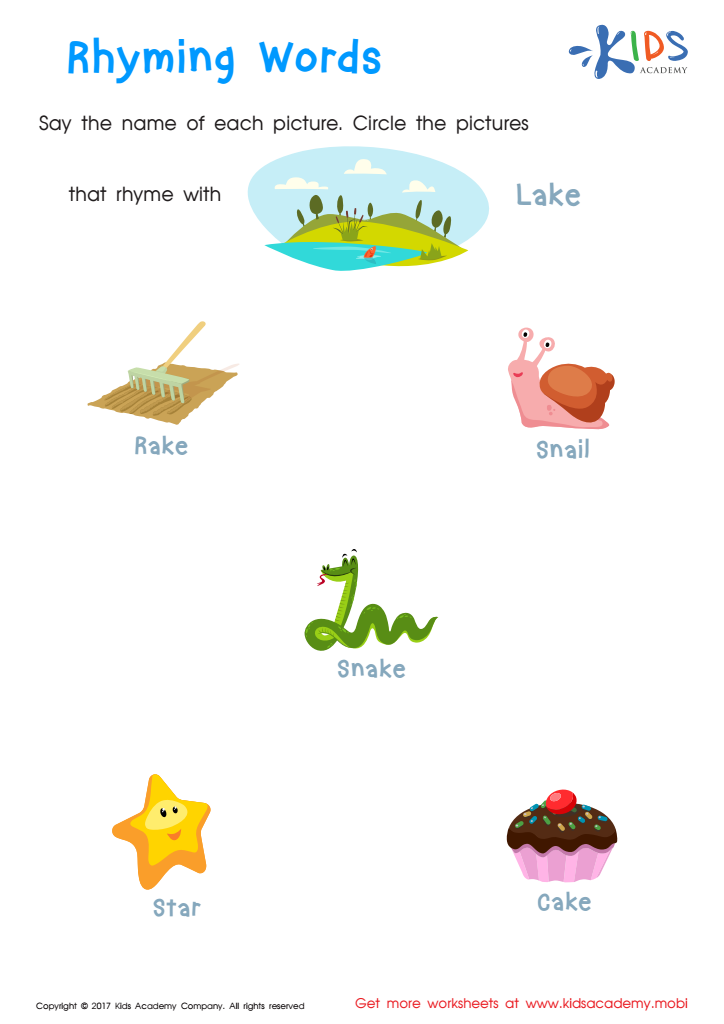
Rhyming Words Rhyming Worksheet
 Assign to My Students
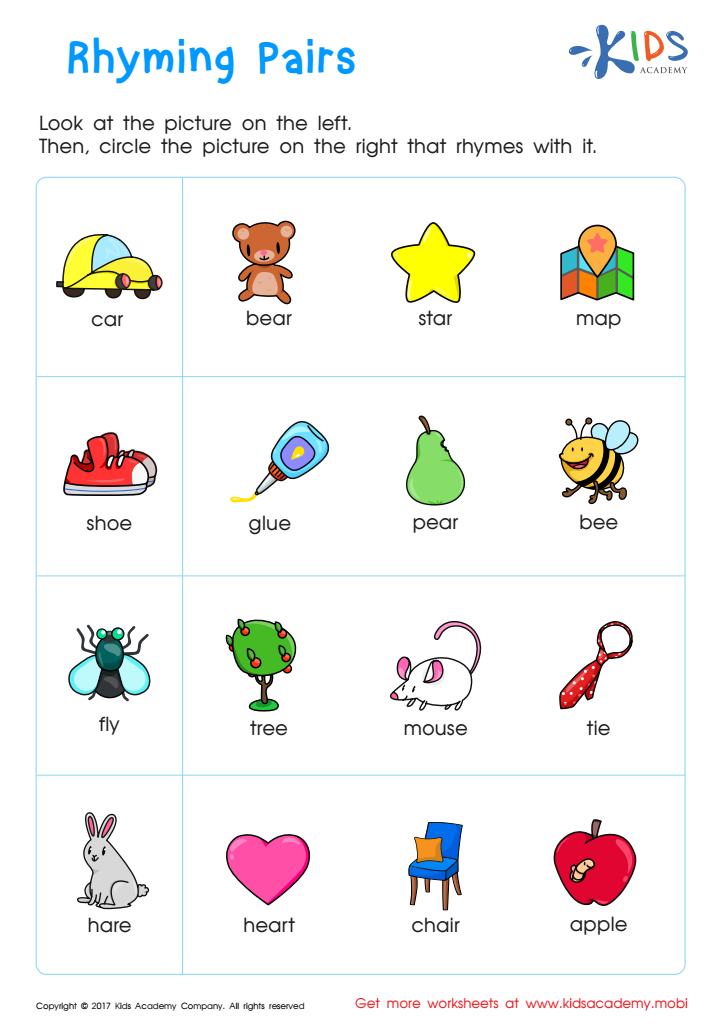

First Words: Picture Rhymes Worksheet







Rhyming skills play a crucial role in early language development for 4-year-olds. When parents or teachers foster a child's ability to recognize and produce rhymes, they are laying a strong foundation for literacy skills that will benefit the child in their academic journey.
First, rhyming enhances phonemic awareness, which is the understanding of sound in spoken language. This awareness is a critical precursor to reading. By identifying and manipulating sounds in words, children learn how to break down language into its component phonemes, making it easier for them to decode words later on.
Additionally, engaging with rhymes helps boost vocabulary building. When children hear and create rhymes, they are exposed to a rich array of words, which broadens their understanding of language. It also promotes listening skills as children pay close attention to the sounds and patterns of words.
Moreover, rhyming can be a fun and interactive activity. Through songs, games, and poetry, it encourages creativity and social interaction, enhancing overall communication skills. Thus, by supporting rhyming skills, parents and teachers not only contribute to phonics and reading readiness but also support cognitive development, self-expression, and a love for language.