Fine motor skills development Tracing Letters Worksheets for 4-Year-Olds
3 filtered results
-
From - To
Enhance your child’s fine motor skills with our Tracing Letters Worksheets for 4-Year-Olds! Designed to develop precision and control, these printables transform learning into a fun experience. By tracing letters, children strengthen hand muscles essential for writing and other daily tasks. Each worksheet offers engaging activities to keep young learners motivated and focused. Perfect for preschoolers, these tools support both educators and parents in building foundational skills. Foster early literacy and motor development effectively with Kids Academy. Ideal for home or classroom use, our resources ensure every child progresses confidently towards fluent reading and writing. Discover learning magic today!
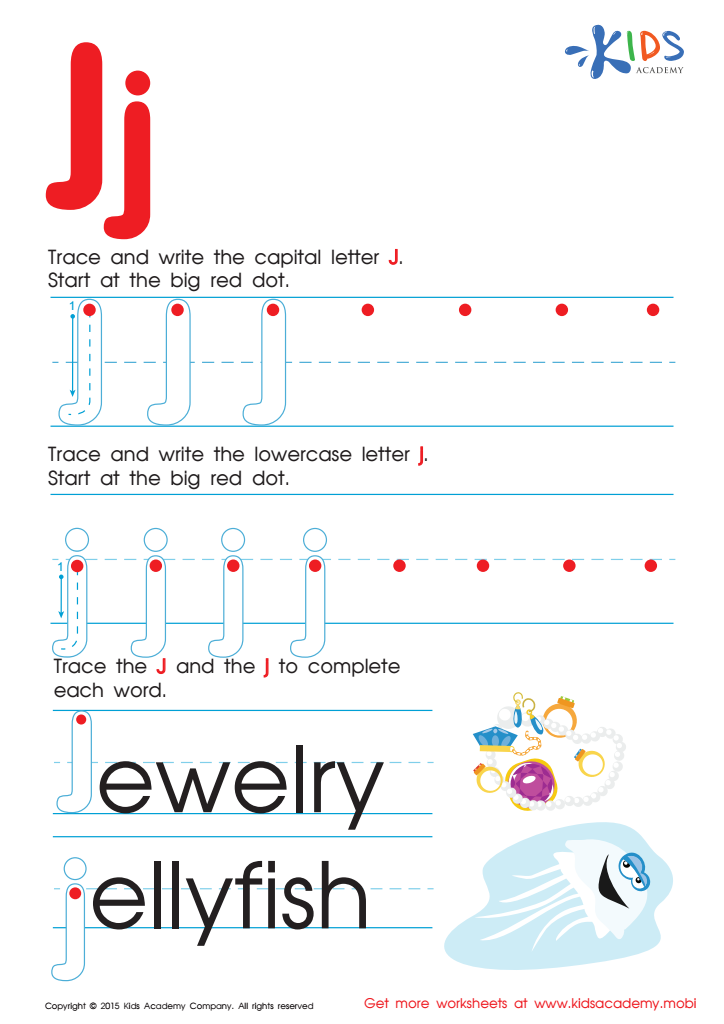
Letter J Tracing Page
 Assign to My Students
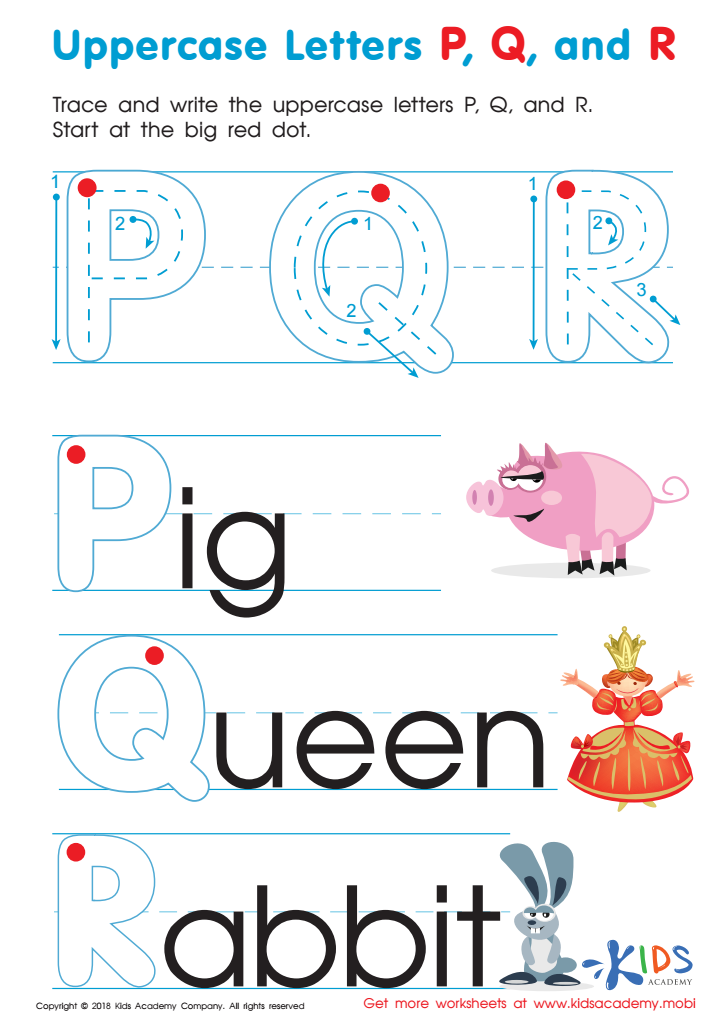
Uppercase Letters P, Q, and R Worksheet
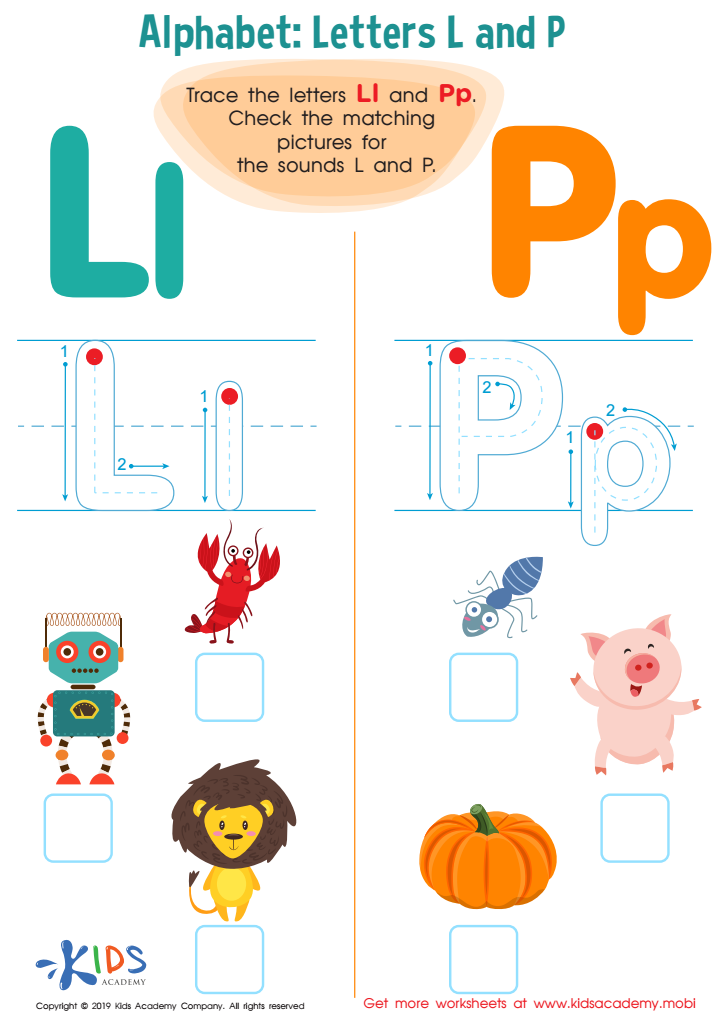
Letter L and P Tracing Worksheet








Fine motor skills development, particularly through activities like tracing letters, is crucial for 4-year-olds and should be a priority for both parents and teachers. At this age, children's brains are rapidly developing, and engaging in tasks that refine these skills offers a multitude of benefits that extend far beyond penmanship.
Firstly, tracing letters helps young children build the necessary hand-eye coordination required for various tasks, including writing, cutting, and even tying shoelaces. These skills are foundational for academic success as well as daily life. When children trace letters, they are not merely memorizing shapes but also reinforcing muscle memory. This action helps them develop stronger and more controlled fine motor skills.
Secondly, fine motor development through tracing letters improves cognitive skills. It enhances a child' concentration and patience, which are critical attributes for learning. The repetitive nature of tracing fosters neural connections in the brain that support memory, focus, and spatial recognition.
Lastly, gaining proficiency in fine motor tasks by tracing letters boosts a child's confidence and fosters a sense of accomplishment. These positive experiences early on encourage a love of learning and perseverance. As a key building block for overall growth, fine motor skills development through letter tracing thus plays an essential role in laying a solid educational foundation.








