Alphabet understanding Upper & Lowercase Letters Worksheets for 4-Year-Olds
3 filtered results
-
From - To
Introduce your 4-year-old to the exciting world of letters with our engaging Alphabet Understanding Upper & Lowercase Letters Worksheets! These fun and interactive activities are designed to help young learners recognize, differentiate, and master both uppercase and lowercase letters. Packed with vibrant illustrations and playful exercises, these worksheets cater to various learning styles, ensuring that every child can enjoy the process. As your child traces, matches, and identifies letters, they’ll build foundational literacy skills essential for their educational journey. Perfect for home or classroom use, our worksheets guarantee hours of learning-filled fun while fostering a love for reading and writing. Get started today!
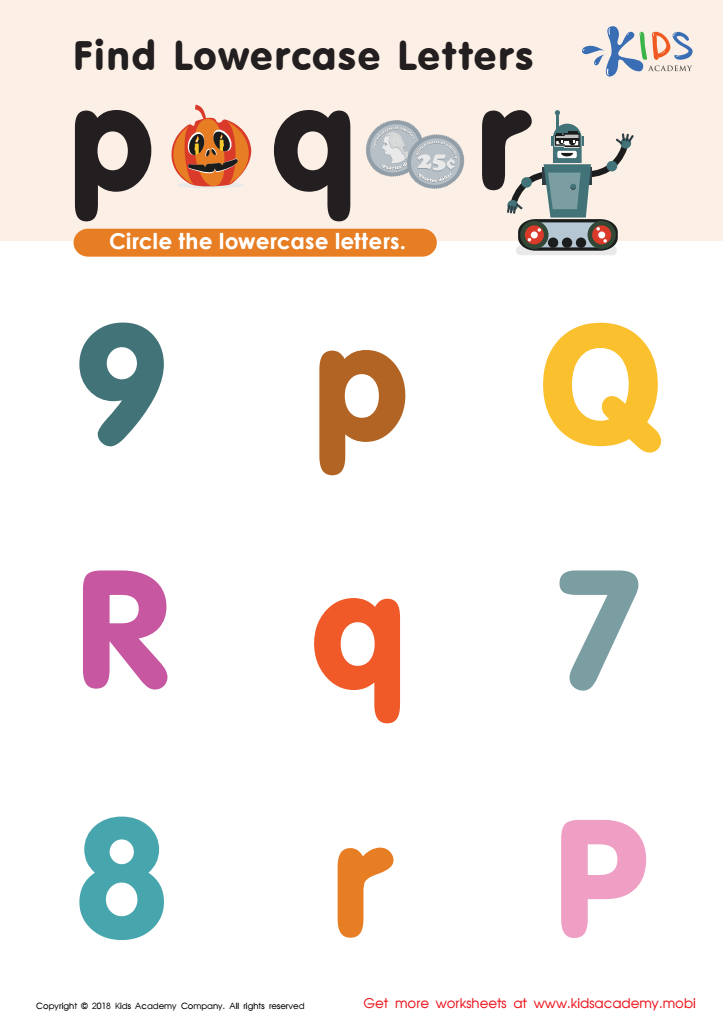
Find lowercase Letters p q r Worksheet
 Assign to My Students


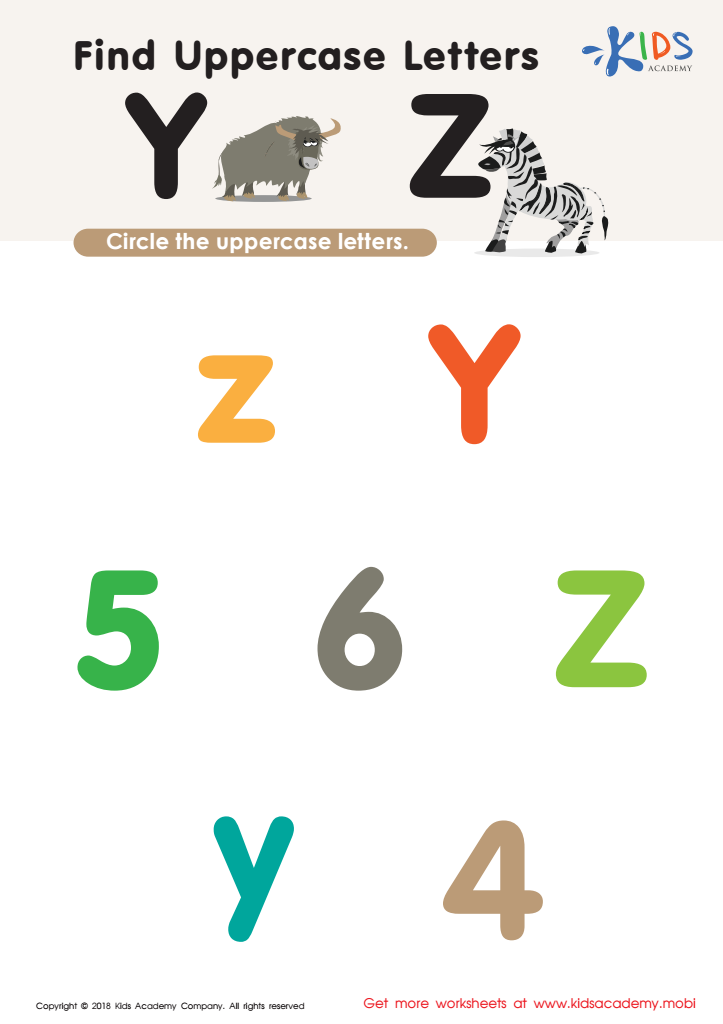
Find Uppercase Letters Y Z Worksheet
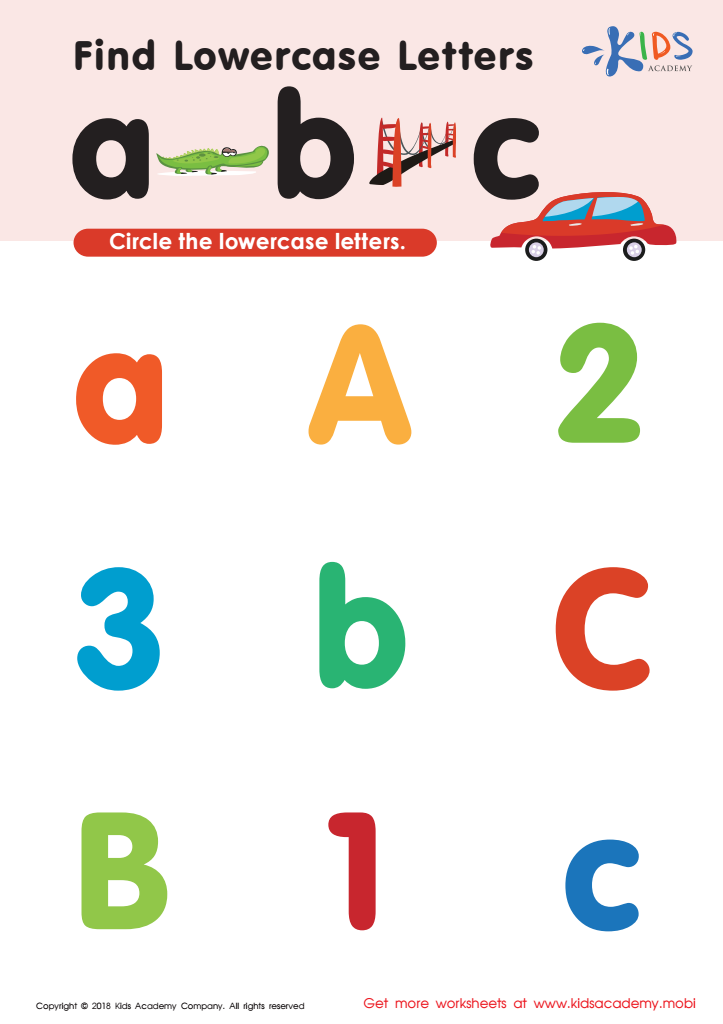
Find lowercase letters a b c Worksheet






Understanding uppercase and lowercase letters is crucial for 4-year-olds as it lays the foundation for literacy and overall language development. When children recognize and differentiate between these letter forms, they enhance their phonemic awareness, which is essential for decoding written words. This comprehension supports early reading skills, helping children to connect sounds with letters, an important step in their journey toward reading fluency.
Moreover, mastering the distinction between uppercase and lowercase letters aids in writing. Children learn proper letter formation, which is vital for effective communication. Recognizing uppercase letters helps children understand their usage in sentences—like recognizing the start of names or the beginning of sentences—fostering grammar skills from an early age.
Parents and teachers can facilitate this learning through engaging activities like letter games, songs, and reading interactive books that emphasize both forms. This support nurtures children's curiosity and builds confidence in their abilities. Ultimately, a solid grasp of uppercase and lowercase letters cultivates vital skills that will benefit children's academic success, social interactions, and lifelong learning. By recognizing its importance, parents and teachers can create positive, enriching learning experiences that fuel children's enthusiasm for literacy.







