Fine motor skills development Upper & Lowercase Letters Worksheets for 4-Year-Olds
3 filtered results
-
From - To
Enhance your 4-year-old’s fine motor skills with our Upper & Lowercase Letters Worksheets. These tailored printables focus on helping young learners meticulously practice writing both uppercase and lowercase letters, essential for early literacy. Each interactive sheet offers exercises that strengthen hand muscles and coordination, setting the foundation for effortless writing. Designed to engage and educate, these worksheets make learning fun and productive for preschoolers. Boost your child's confidence and skill as they trace, write, and explore the alphabet, while also developing crucial fine motor abilities. Perfect for home or classroom use. Download, print and watch their skills flourish!
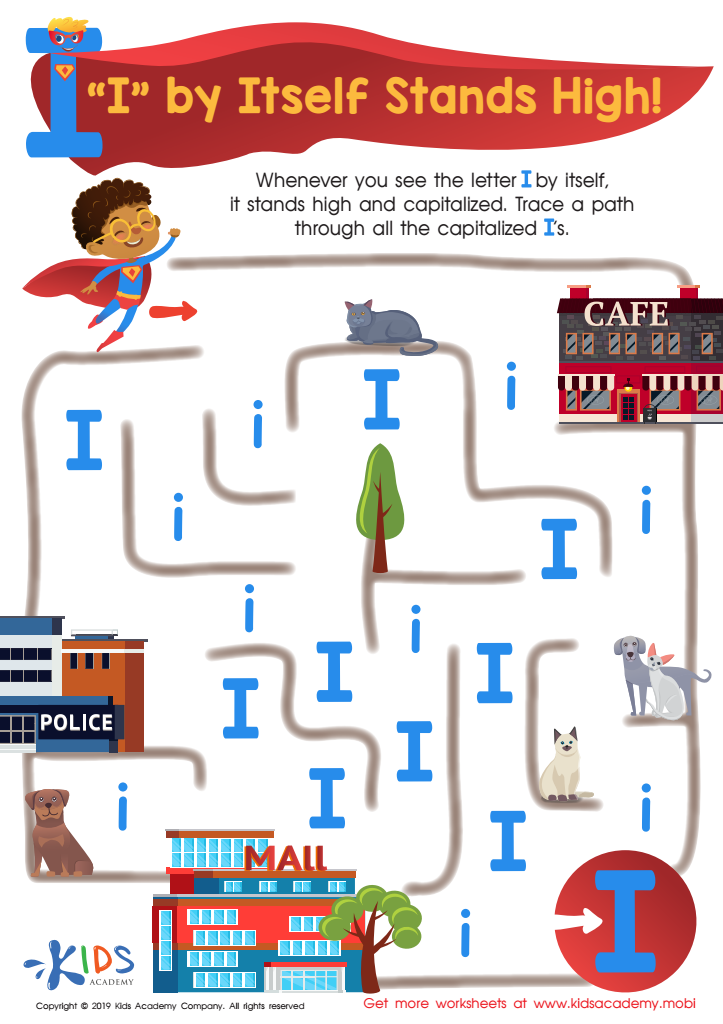
I Stands High Worksheet
 Assign to My Students











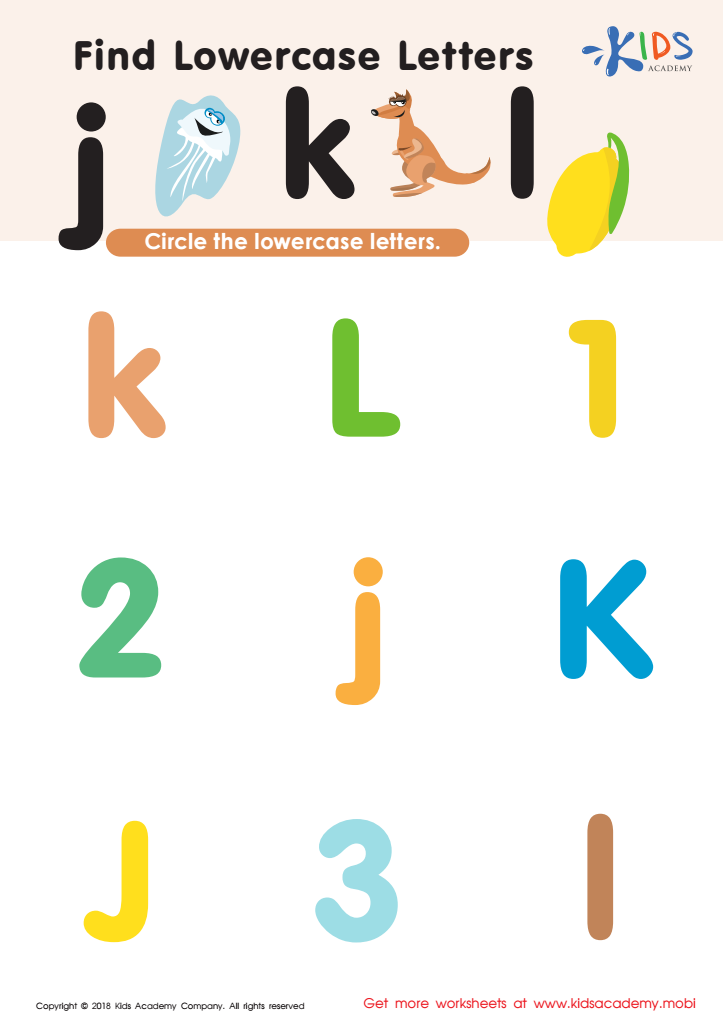
Find Lowercase Letters j k l Worksheet
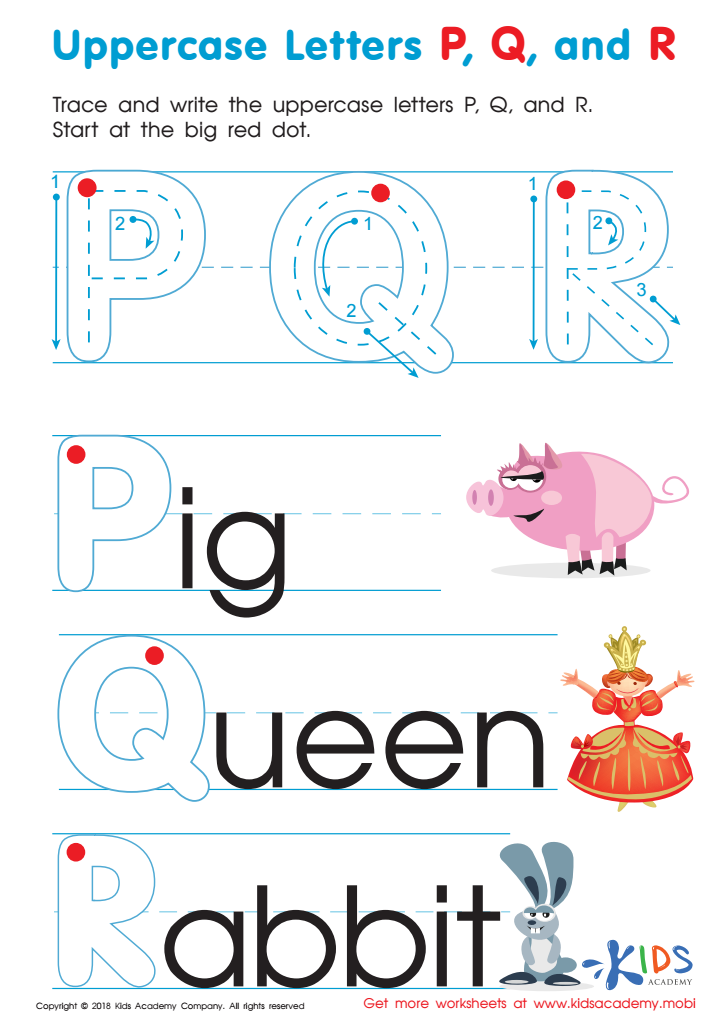
Uppercase Letters P, Q, and R Worksheet






Parents and teachers should place a strong emphasis on developing fine motor skills as well as the ability to recognize and write uppercase and lowercase letters for 4-year-olds because these skills form the foundation for ongoing academic and personal development. Fine motor skills involve the coordination of small muscles in the hands and fingers, which are essential for tasks such as writing, buttoning clothes, and using utensils. When a child masters these muscles early on, they gain not only the capability to perform day-to-day activities independently but also cultivate better hand-eye coordination and spatial awareness.
Learning uppercase and lowercase letters at the age of four is crucial for literacy development. Proficiency in letter recognition enables children to understand the alphabetic principle, which is the concept that letters make sounds, and combined in certain ways, form words. This early literacy skill is predictive of future reading success and academic achievement. Furthermore, the cognitive exercise of recognizing letter shapes enhances visual tracking and cognitive processing skills.
Integrating these skills into developmental milestones sets a strong base for academic learning and everyday functioning. Encouraging activities like drawing, cutting with scissors, or playing with building blocks can make these fundamental skills attainable and enjoyable. Thus, prioritizing fine motor skill development alongside literacy lays a solid groundwork for confident and competent learners.







