Lowercase letter writing Upper & Lowercase Letters Worksheets for 4-Year-Olds
3 filtered results
-
From - To
Enhance your child's literacy skills early with our engaging Lowercase Letter Writing worksheets, specifically designed for 4-year-olds. These printable resources encourage young learners to practice recognizing and writing both uppercase and lowercase letters in a fun, interactive way. Each worksheet features colorful illustrations and simple instructions to captivate young minds. By enabling children to trace and write, they develop essential motor skills while building confidence in their reading and writing abilities. Perfect for home or classroom use, our worksheets make learning enjoyable and effective. Dive into the world of letters and watch your child thrive as they master the alphabet!
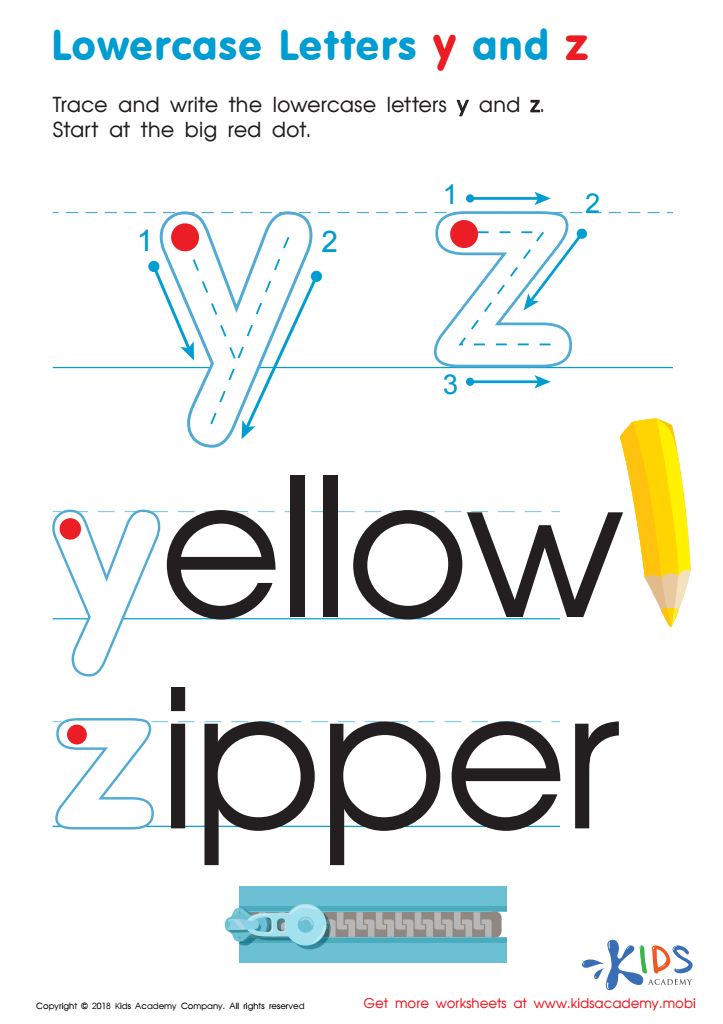
Lowercase Letters y z Worksheet
 Assign to My Students

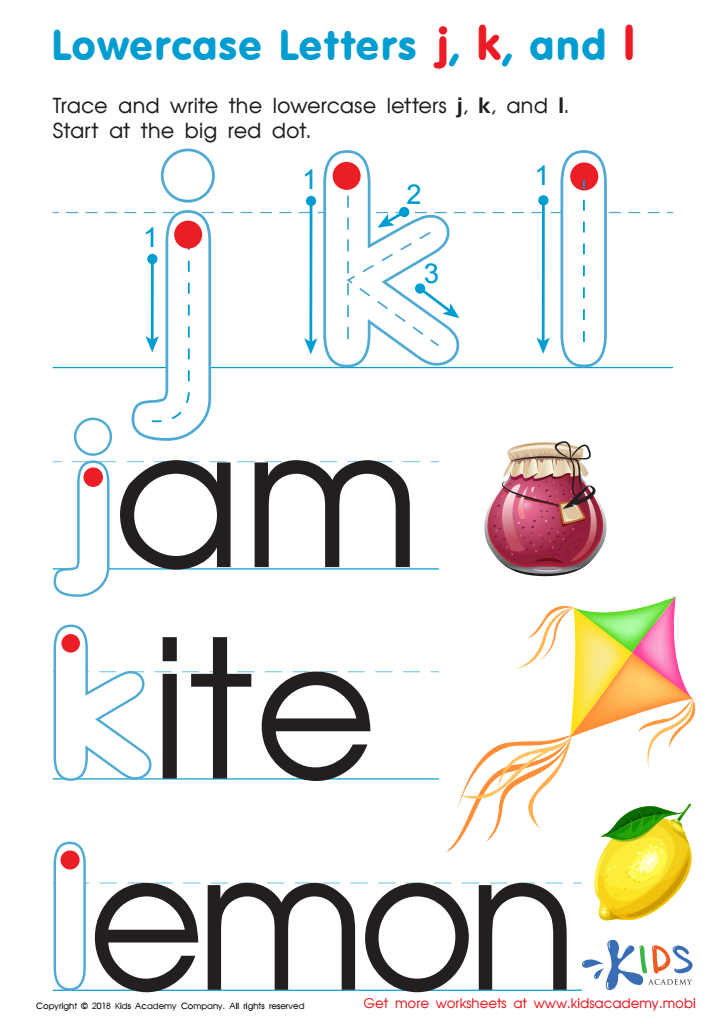
Lowercase Letters j k l Worksheet
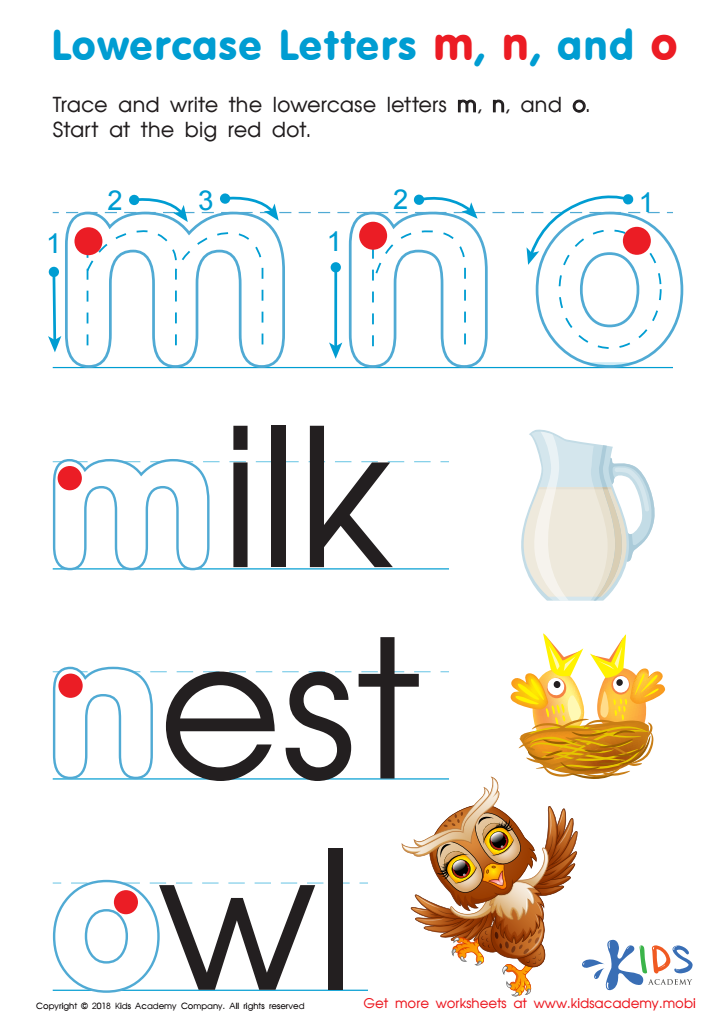
Lowercase Letters m n o Worksheet






Teaching 4-year-olds the difference between uppercase and lowercase letters is essential for several reasons. Firstly, early literacy skills serve as the foundation for reading and writing. Recognizing and writing both uppercase and lowercase letters enhances children's phonemic awareness, helping them to understand the sounds associated with letters, which is crucial for decoding words.
Additionally, uppercase letters are often used at the beginning of sentences and for proper nouns, while lowercase letters appear more frequently in text. Understanding this distinction fosters proper grammar and punctuation awareness, preparing children for more advanced language skills as they progress.
Practicing the writing of both uppercase and lowercase letters not only strengthens fine motor skills but also builds confidence in expressing themselves through writing. Children who are comfortable with letter formation tend to be more willing to tackle writing tasks in their academic journey.
Moreover, familiarity with letter writing can pave the way for successful identification of letters in their environment, whether in books, street signs, or labels, facilitating real-life literacy experiences.
In summary, reinforcing uppercase and lowercase letter writing is a fundamental aspect of early education that directly impacts children's reading and writing capabilities. Parents and teachers play a pivotal role in supporting this essential developmental milestone.







