Uppercase identification Upper & Lowercase Letters Worksheets for 4-Year-Olds
5 filtered results
-
From - To
Help your 4-year-old master letter recognition with our engaging Upper & Lowercase Letters Worksheets! Specially designed to make learning fun, these worksheets focus on identifying uppercase letters alongside their lowercase counterparts. Boost your child's literacy skills through interactive, visually appealing exercises that reinforce letter matching, shape recognition, and alphabetical order. Perfect for preschoolers, these resources offer a foundation for reading and writing success. Equip your young learner with the tools they need to confidently recognize and differentiate between upper and lowercase letters. Start the educational adventure and watch as your child flourishes in early literacy development!
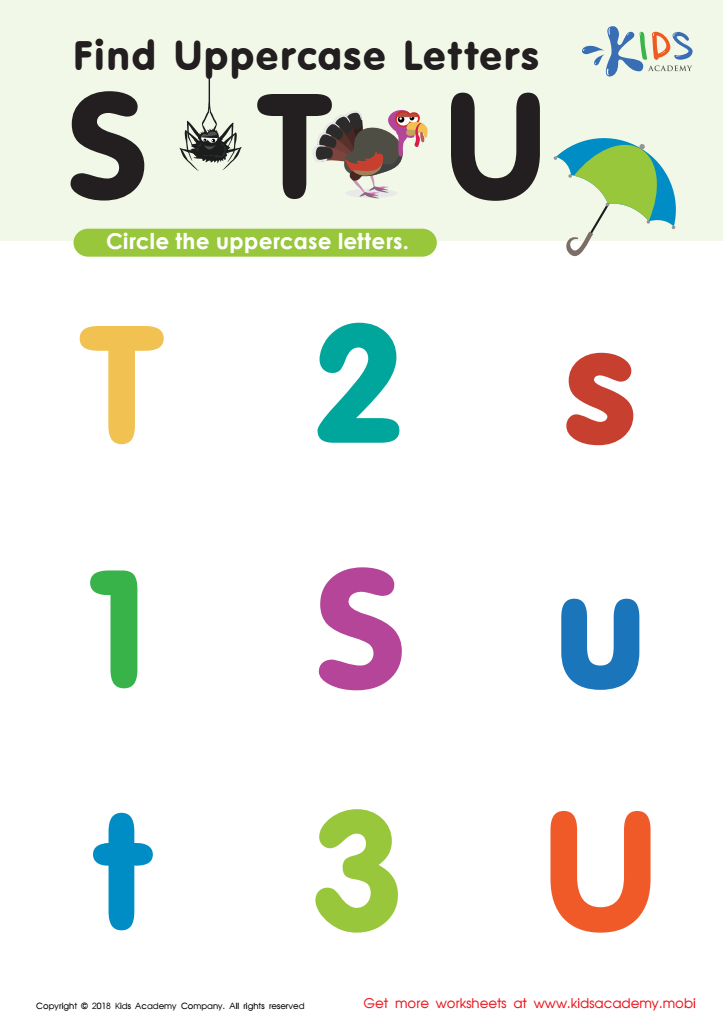
Find Uppercase Letters Worksheet
 Assign to My Students
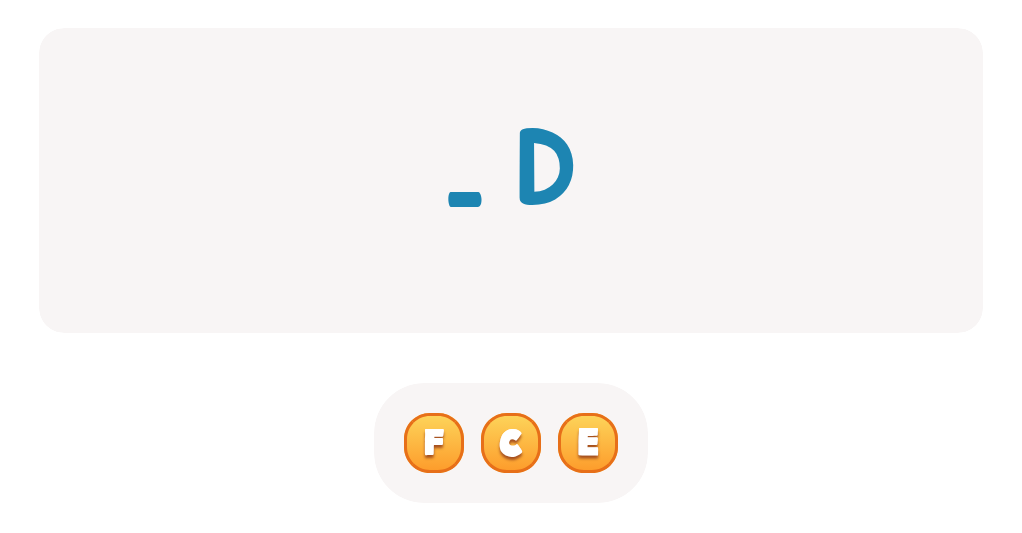

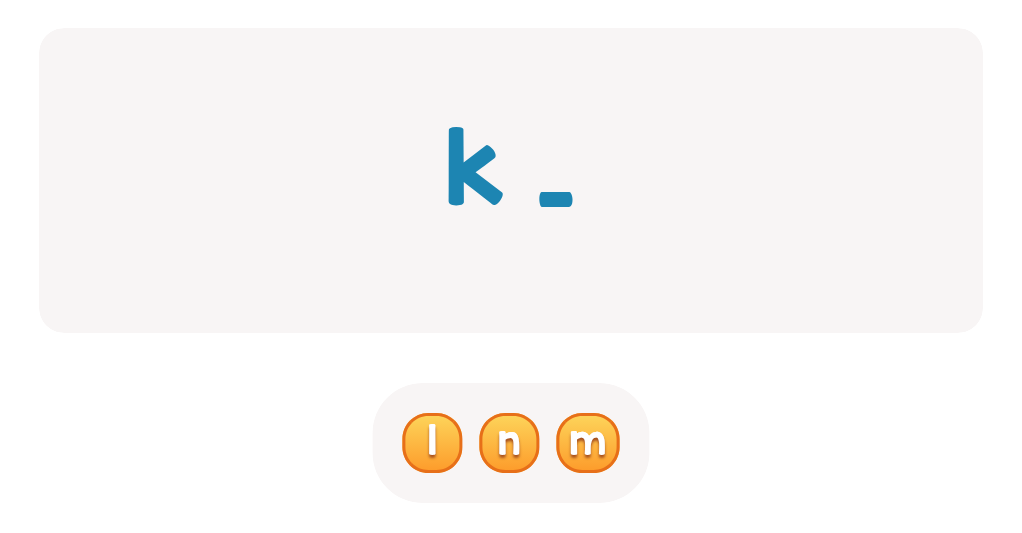
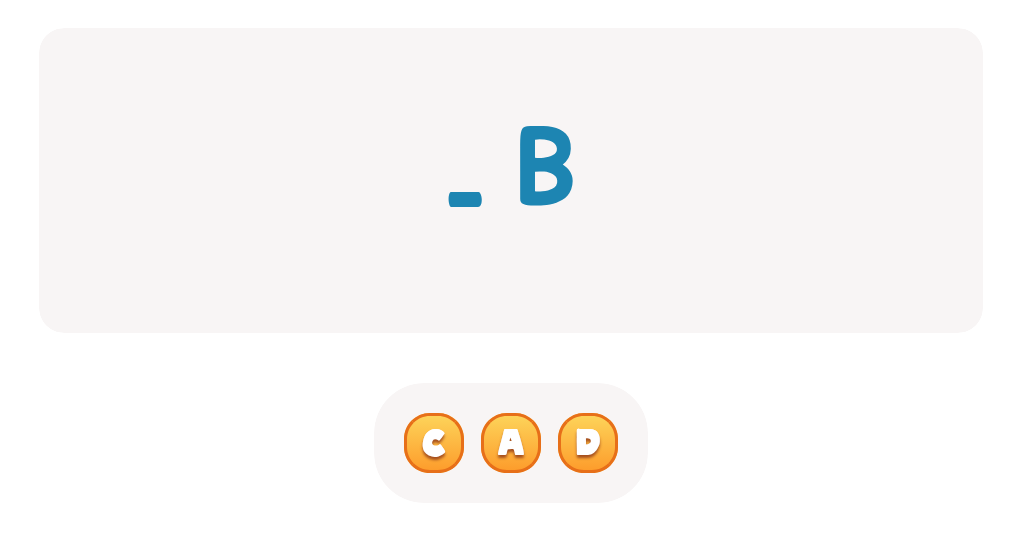
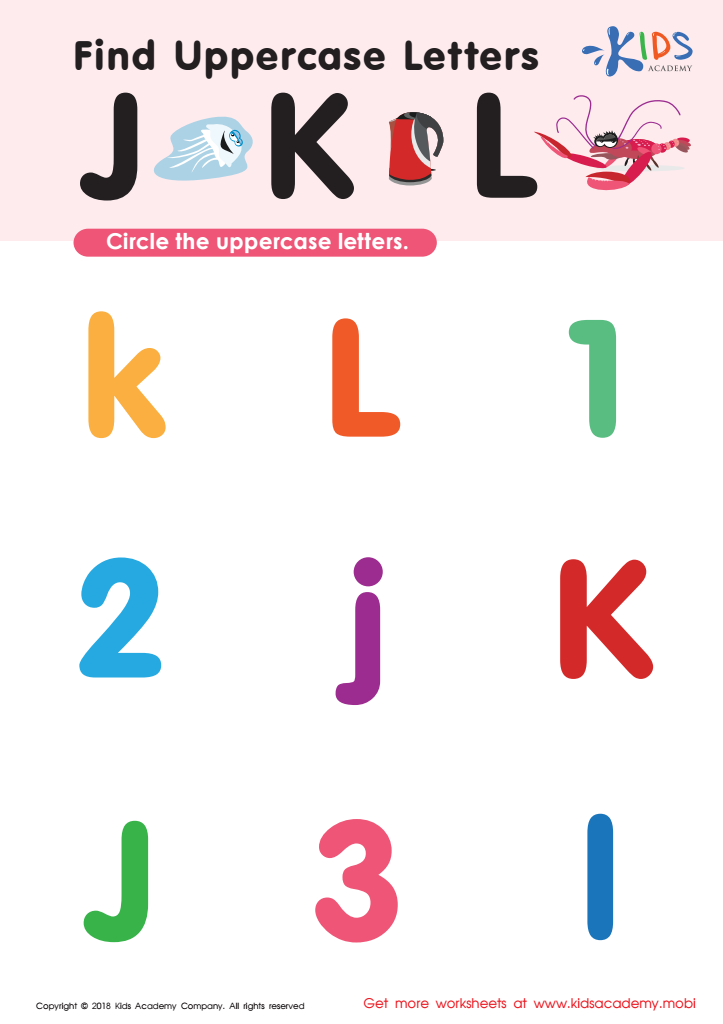
Find Uppercase Letters J, K, and L Worksheet

Find Uppercase Letters A, B, and C Worksheet
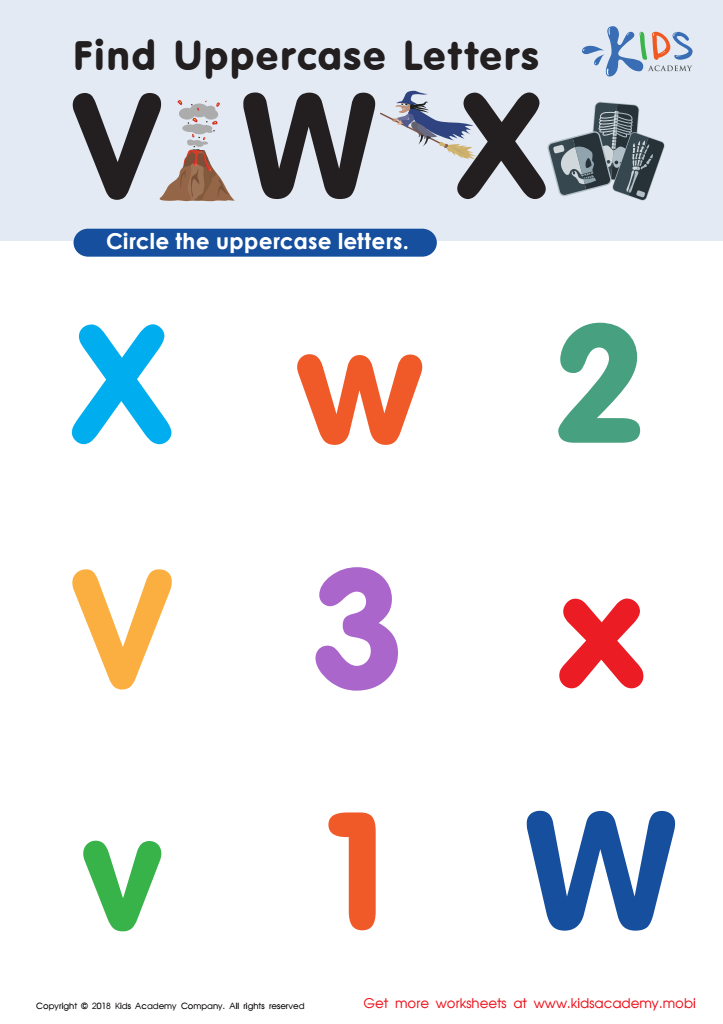
Find Uppercase Letters V, W, X Worksheet
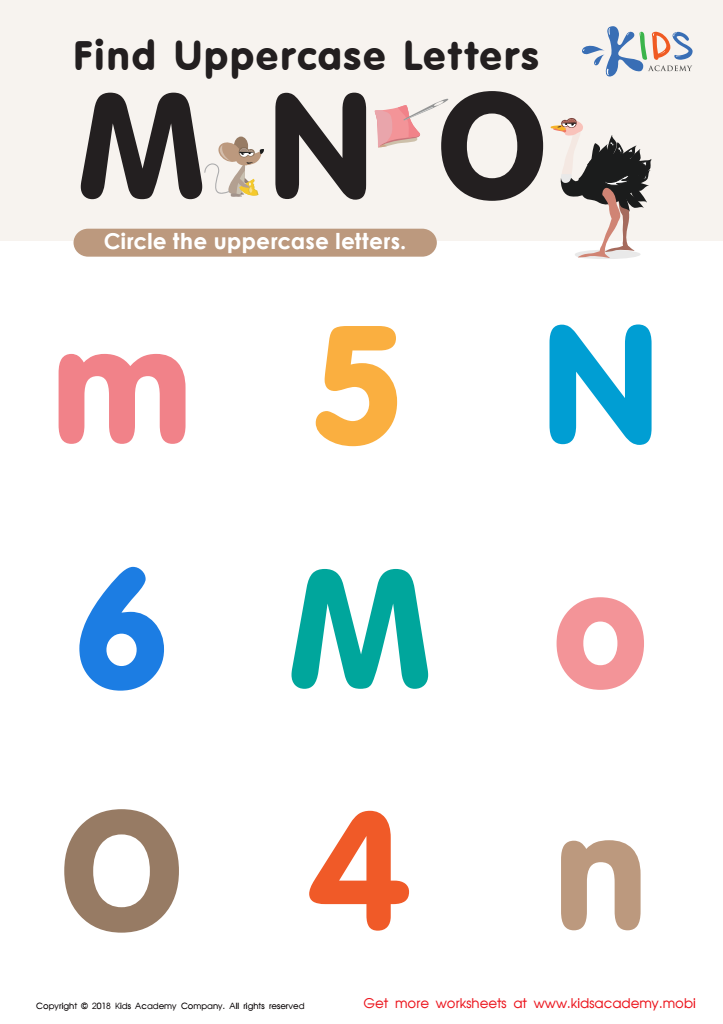
Find Uppercase Letters M, N, and O Worksheet






Parents and teachers should care about uppercase and lowercase letter identification for 4-year-olds because it lays the foundation for effective literacy skills. Early recognition and differentiation between letter forms are crucial for reading and writing development. By knowing both uppercase and lowercase letters, children can begin to understand that each letter can have multiple shapes yet represent the same sound.
Engaging young learners in these activities supports their cognitive development, as it requires visual recognition, memory, and the ability to differentiate similar symbols. It also nurtures fine motor skills as children learn to replicate each form in their writing.
Furthermore, early mastery of recognizing and identifying letters boosts confidence and enthusiasm for learning. This foundational knowledge helps them decode words when they start reading and write proficiently. In the classroom or at home, consistent practice in identifying and using uppercase and lowercase letters fosters an engaging, supportive, and literate environment, which is critical in the early years.
Ultimately, early familiarity with both uppercase and lowercase letters equips 4-year-olds with essential tools that make the transition to more complex literacy activities smoother, allowing for more robust educational growth and success.







