Visual discrimination Upper & Lowercase Letters Worksheets for 4-Year-Olds
4 filtered results
-
From - To
Enhance your 4-year-old's learning journey with our engaging Visual Discrimination Worksheets focused on Upper and Lowercase Letters! Designed to spark curiosity and imagination, these worksheets help young learners identify differences and similarities between letters. As children color, trace, and match upper and lowercase letters, they develop critical visual discrimination skills essential for reading and writing. Our fun and interactive activities promote fine motor skills and boost letter recognition, making learning both effective and enjoyable. Perfect for parents and educators, these worksheets provide a solid foundation for literacy development. Dive into the world of letters and let your child’s learning adventure begin!
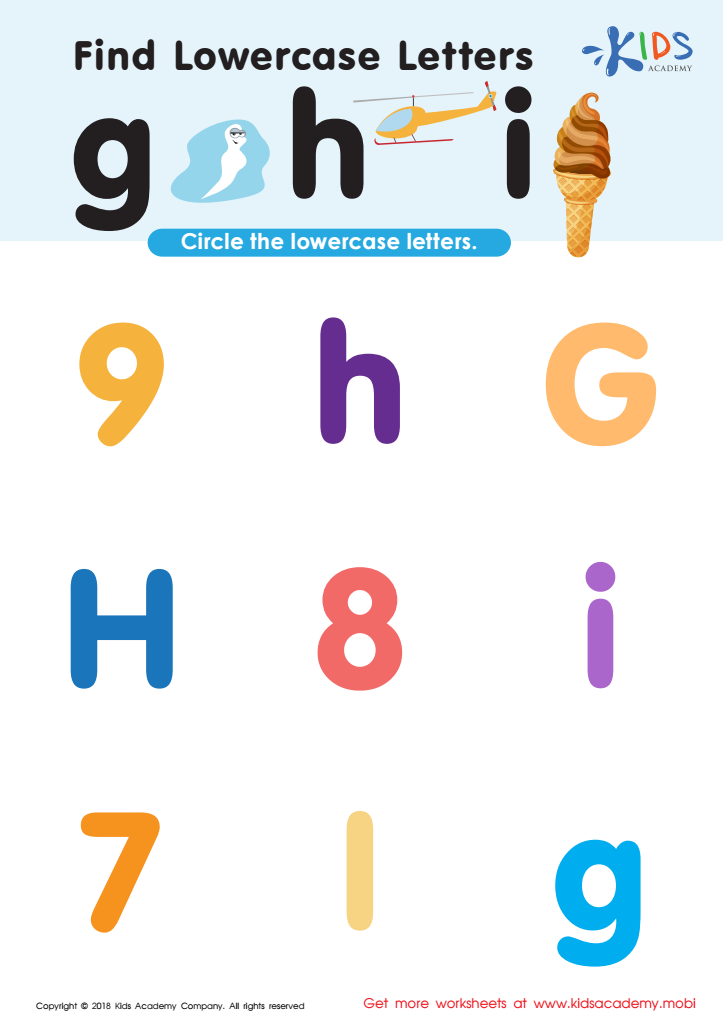
Find Lowercase Letters g h i Worksheet
 Assign to My Students

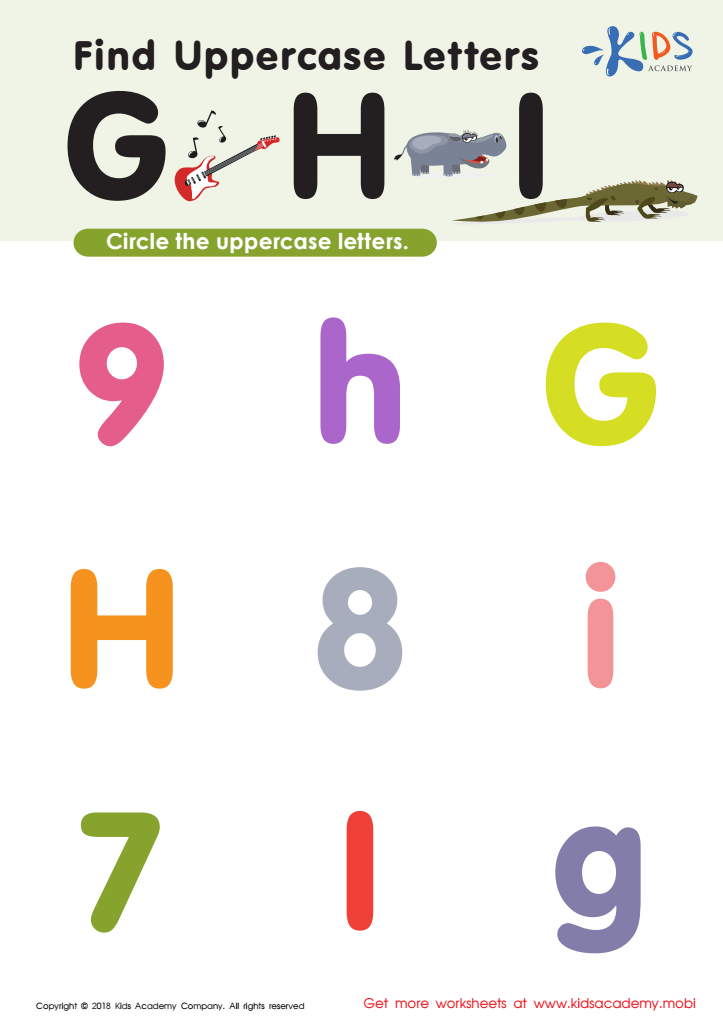
Find Uppercase Letters G, H, and I Worksheet
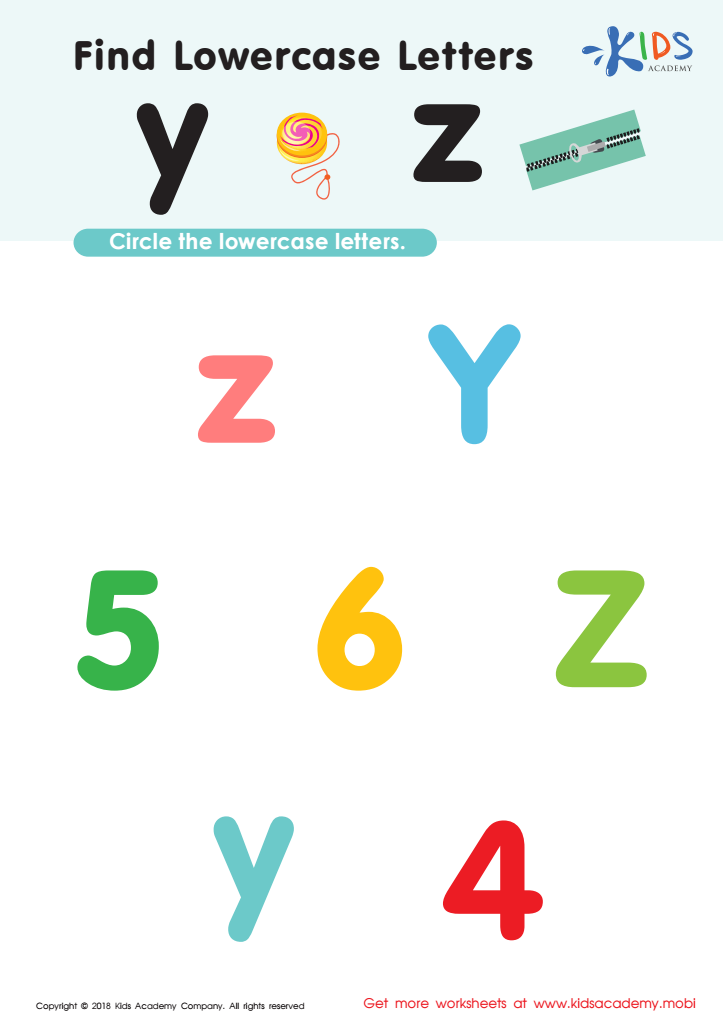
Find Lowercase Letters y z Worksheet
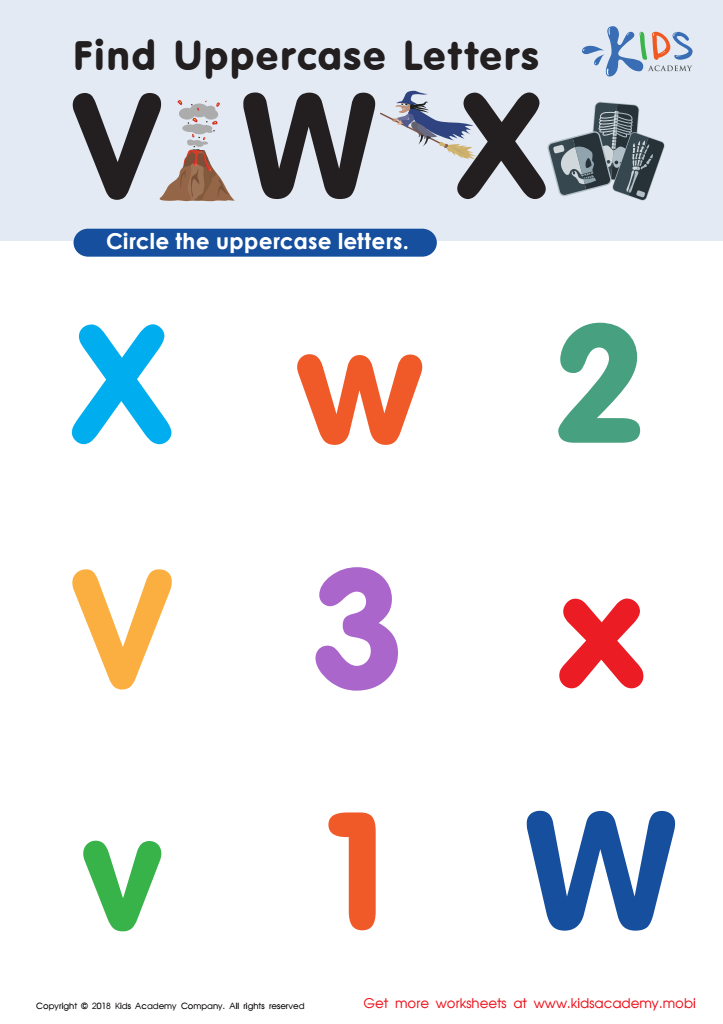
Find Uppercase Letters V, W, X Worksheet






Visual discrimination is a crucial skill for 4-year-olds, particularly when recognizing uppercase and lowercase letters. Parents and teachers should prioritize this skill as it lays the foundation for literacy development. Children who can distinguish between different letter forms are better equipped to read and write, assisting them in identifying words and their beginning sounds.
Without a solid grasp of visual discrimination, children may struggle with tasks such as letter recognition, spelling, and even understanding the structure of simple sentences. This skill also fosters confidence in young learners, making them more willing to engage with reading materials and prompting a love for books.
Furthermore, developing visual discrimination helps enhance other cognitive skills, such as problem-solving and critical thinking, which are vital for overall academic success. Parents can support this skill at home through fun activities like games involving flashcards, magnetic letters, or letter sorting. Similarly, teachers can implement engaging classroom strategies that reinforce letter recognition during literacy lessons.
Ultimately, cultivating visual discrimination not only supports early reading and writing but also equips children with the essential tools for future learning. Thus, visual discrimination should be a focal point for both parents and educators of preschool-aged children.







