
Addition up to 5 Worksheets for 4-Year-Olds
4 filtered results
Difficulty Level
Grade
Age
-
From - To
Subject
Activity
Standards
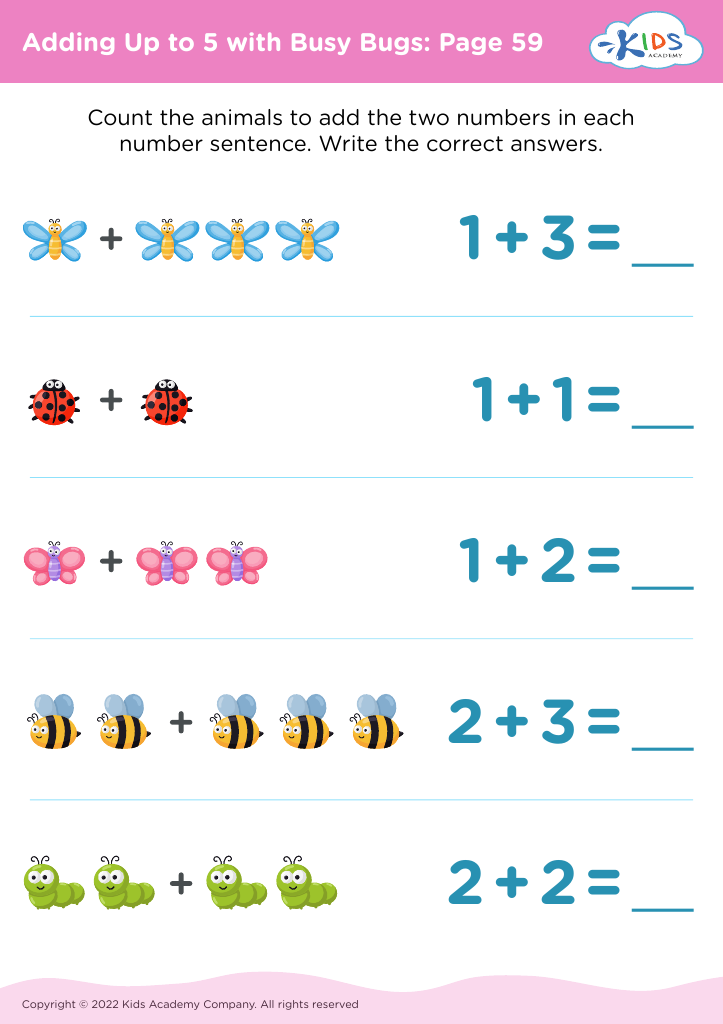
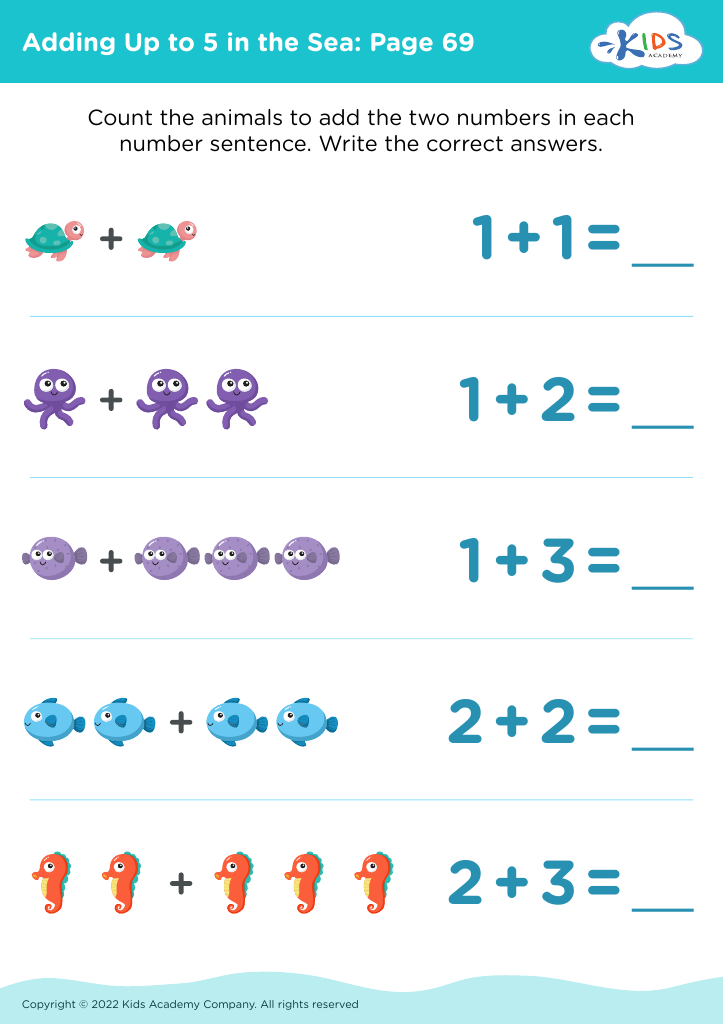
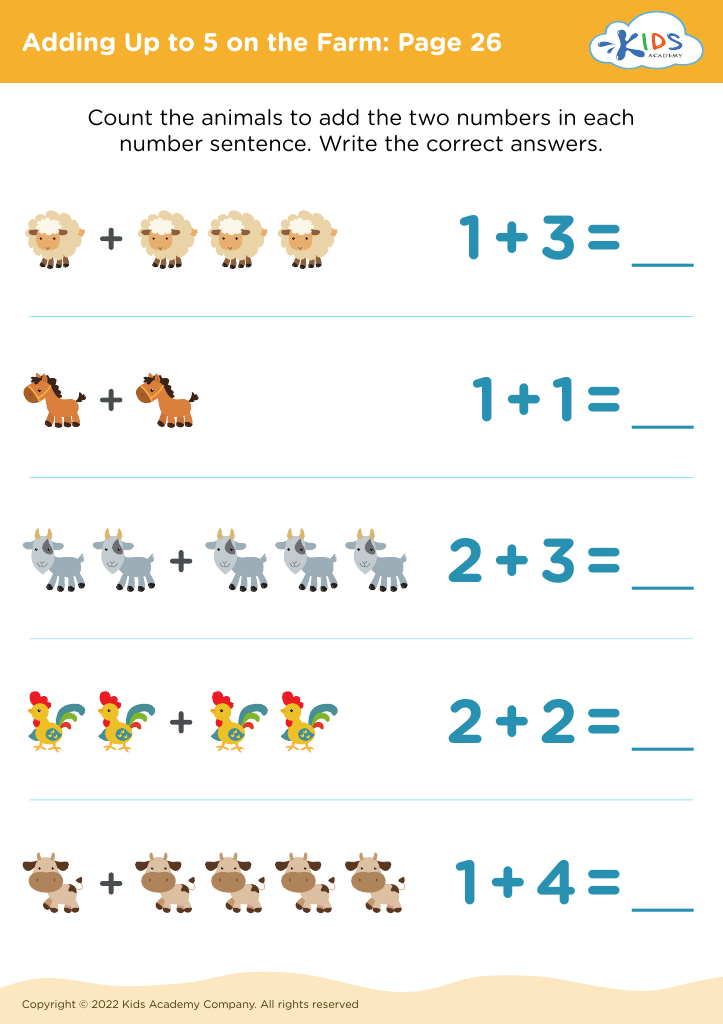
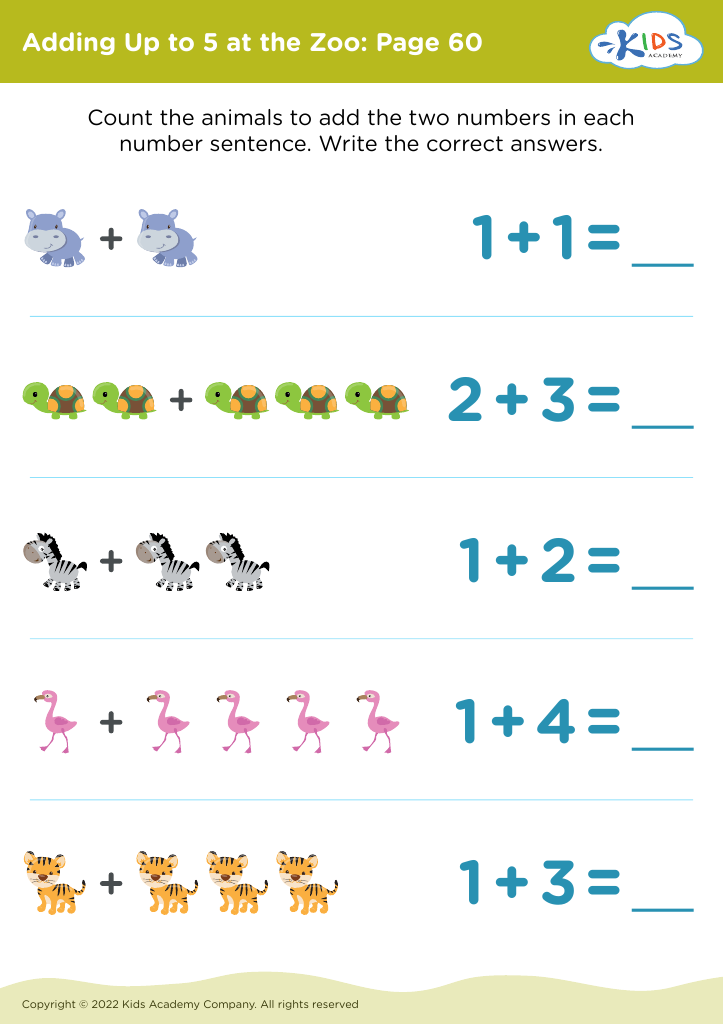
Welcome to our "Addition up to 5 Worksheets for 4-Year-Olds" webpage! Here, you’ll find a delightful collection of engaging and colorful worksheets designed to introduce young learners to basic addition concepts. Perfect for preschoolers, these printable worksheets help children master counting and simple addition through fun activities and vibrant illustrations. Your child will enjoy connecting dots, counting objects, and solving age-appropriate problems, all while building foundational math skills. Whether at home or in the classroom, our worksheets encourage hands-on learning and make math enjoyable for your little ones. Start their math journey today with these delightful resources!
Favorites
With answer key
Interactive
Join Kids Academy for Free
Who is primarily going to use this learning content?




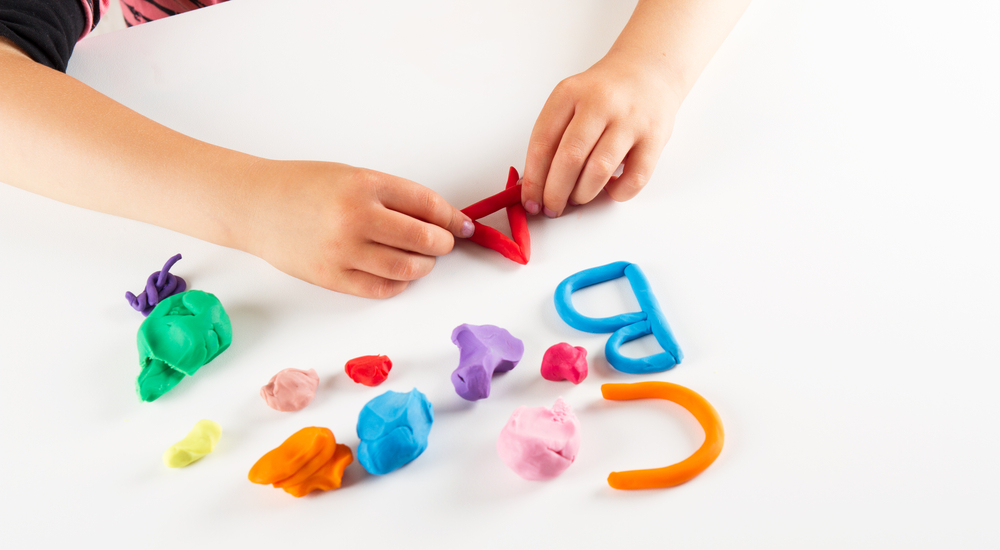



Teaching addition up to 5 to 4-year-olds is crucial for their early cognitive development and lays the foundation for later mathematical skills. At this age, children are naturally curious and eager to learn about their world, and introducing basic addition helps enhance their critical thinking and problem-solving abilities. Understanding simple addition fosters number recognition and basic arithmetic, which are essential skills they will build upon in their educational journey.
Moreover, engaging young children in addition through playful activities can make learning enjoyable. It incorporates counting games, visual aids, and hands-on activities, which not only captivate their interest but also strengthen their fine motor skills and spatial awareness.
Additionally, early numeracy skills are linked to overall academic performance. When children grasp these foundational concepts, they become more confident learners, setting a positive trajectory for their future studies. Moreover, addition teaches vital life skills, such as measurement and quantity comparison, which are applicable in everyday situations.
Ultimately, by prioritizing the teaching of addition up to 5, parents and teachers support holistic development, nurture a positive attitude toward math, and equip children with essential skills for lifelong learning and problem-solving.








