Comparative analysis Worksheets for 4-Year-Olds
3 filtered results
-
From - To
Welcome to our Comparative Analysis Worksheets for 4-Year-Olds! These engaging worksheets are designed to help young learners develop critical thinking and observational skills through fun comparisons. Children will explore concepts such as big vs. small, more vs. less, and same vs. different. Our worksheets incorporate colorful illustrations and interactive activities that keep kids motivated while fostering their analytical abilities. Perfect for use at home or in the classroom, these resources support early childhood development in a playful way. Discover the joy of learning as children enhance their understanding of comparisons and boost their cognitive skills with our thoughtfully crafted worksheets!
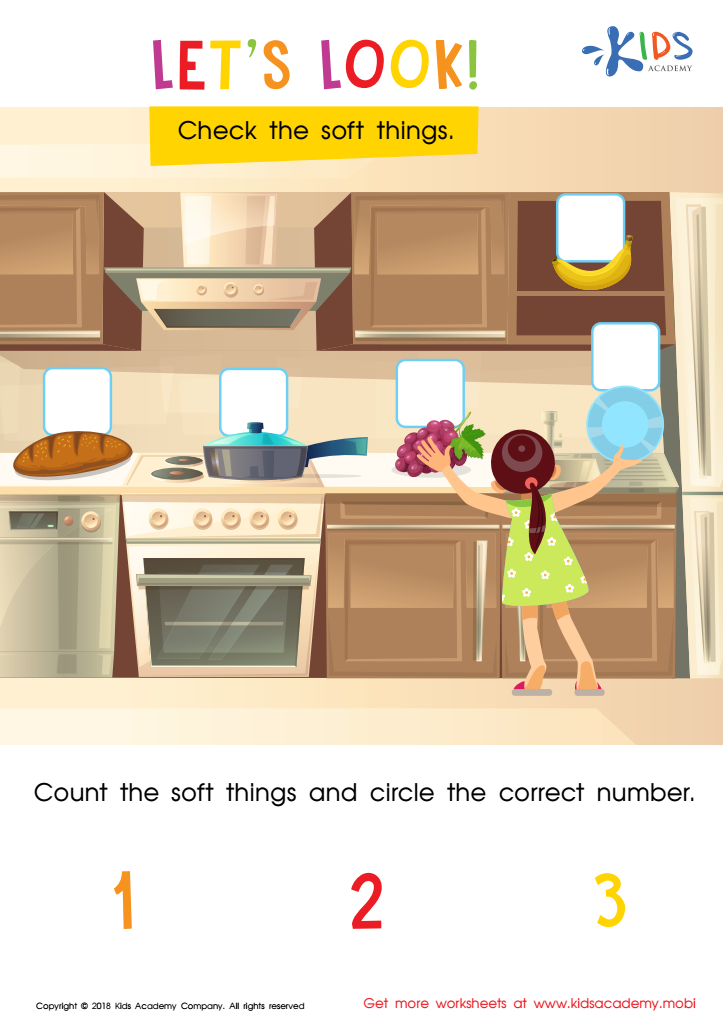
Let's Look! Assessment Worksheet
 Assign to My Students
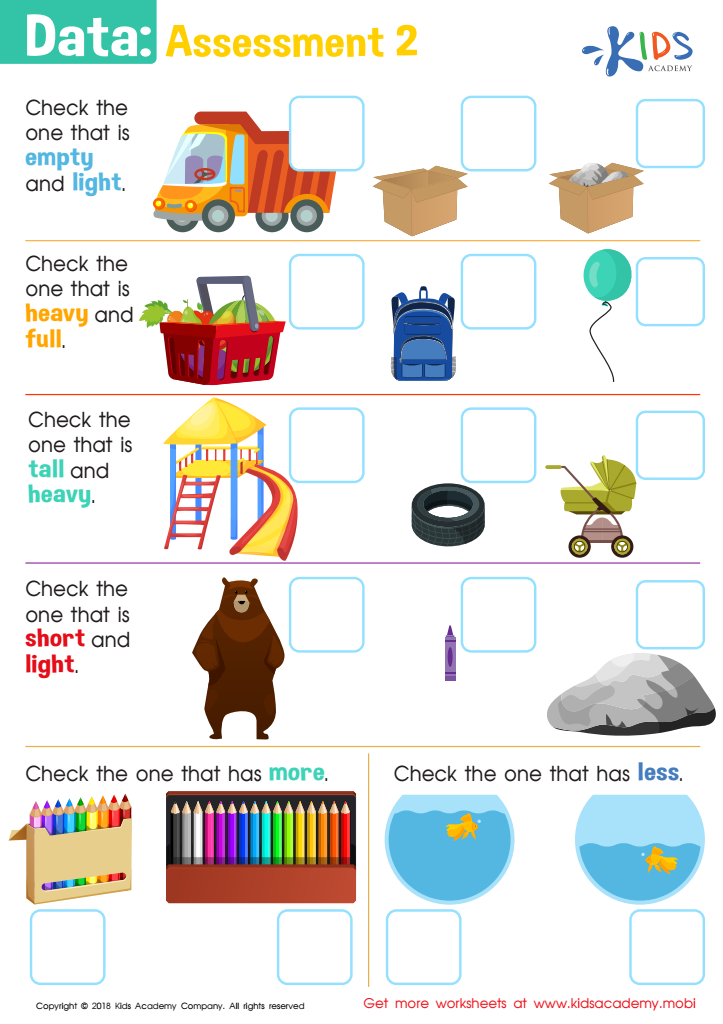
Data: Assessment 2 Worksheet







Comparative analysis for 4-year-olds is essential for both parents and teachers as it provides valuable insights into children's developmental progress and learning outcomes. At this age, children are experiencing significant cognitive and social growth, making it crucial to understand their individual needs and capabilities. By comparing a child's abilities and behaviors to developmental milestones or peer performance benchmarks, educators and parents can identify strengths and areas for improvement, tailoring support accordingly.
This process helps in fostering an enriched learning environment. For instance, if a child's language skills lag behind their peers, teachers can integrate targeted activities that promote vocabulary and communication. Conversely, recognizing that a child excels in fine motor skills may lead to advanced opportunities that keep them engaged and challenged.
Moreover, comparative analysis promotes a holistic view of child development, encompassing emotional, social, and cognitive aspects. It encourages collaborative discussions among parents and educators, leading to unified strategies that ensure each child’s unique potential is nurtured. Ultimately, the goal is to enhance each child’s learning experience and support their overall growth, preparing them not only for school success but also for lifelong learning. Hence, paying attention to comparative analysis is vital for fostering a rich developmental journey for young learners.








