
Mathematical thinking Worksheets for 4-Year-Olds
4 filtered results
Difficulty Level
Grade
Age
-
From - To
Subject
Activity
Standards
Discover our carefully-designed Mathematical Thinking Worksheets for 4-Year-Olds at Kids Academy, crafted to ignite your child’s passion for early math. Our collection includes engaging and age-appropriate activities to develop foundational skills such as pattern recognition, number sense, and problem-solving. Each worksheet combines vibrant visuals with interactive elements to keep young minds captivated while nurturing a love for learning. Designed by educational experts, these worksheets provide a fun yet educational way for preschoolers to explore the world of numbers, shapes, and logical thinking. Perfect for parents and teachers seeking quality resources to support their educational journey.
Favorites
With answer key
Interactive
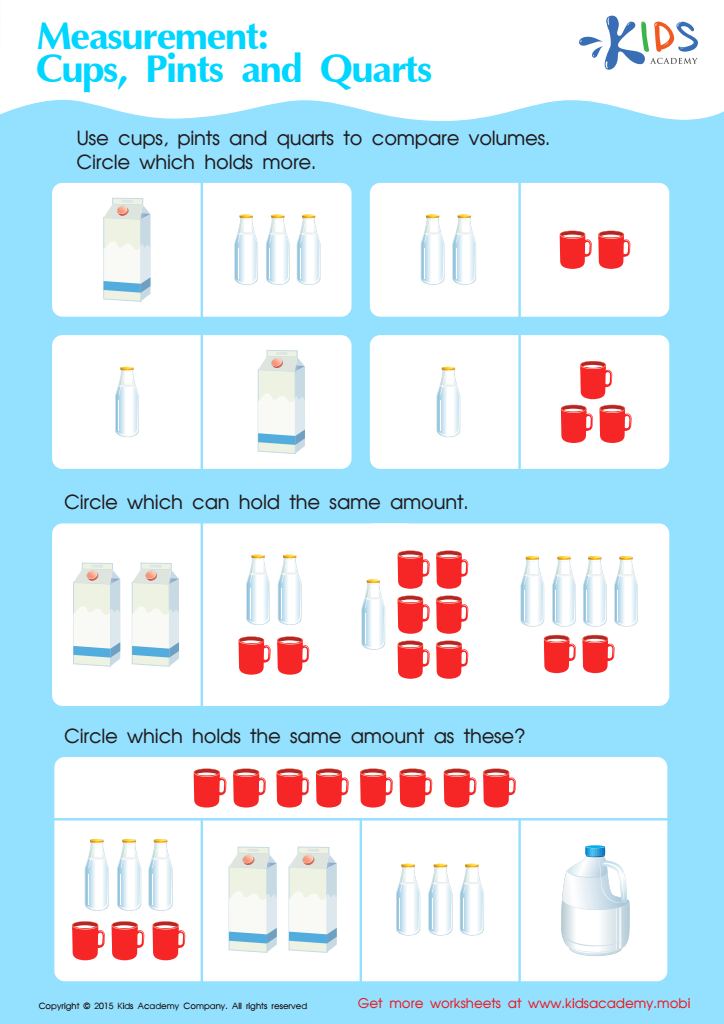
Measurement: Compare Volumes Worksheet
Compare volumes with Kids Academy and have fun! (80 words)
Practice measuring with Kids Academy and have fun! Compare volumes in pictures and circle which holds more. Keep learning with free math worksheets available on our website. Enjoy the process and have fun!
 Assign to My Students
Measurement: Compare Volumes Worksheet
Worksheet
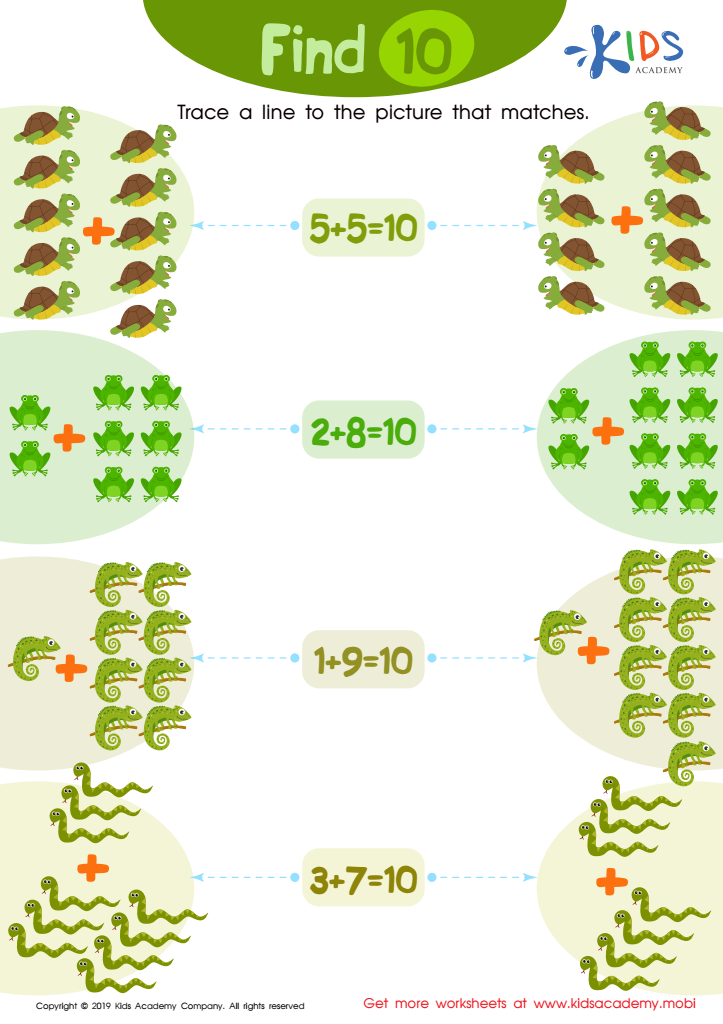
Find 10 Worksheet
Counting can be tricky, but your kids can master it with regular practice. Here's a fun activity to help: count the animals, then trace a line to the pictures that matches. With these tips, math will be an easy walk in the park.
Find 10 Worksheet
Worksheet
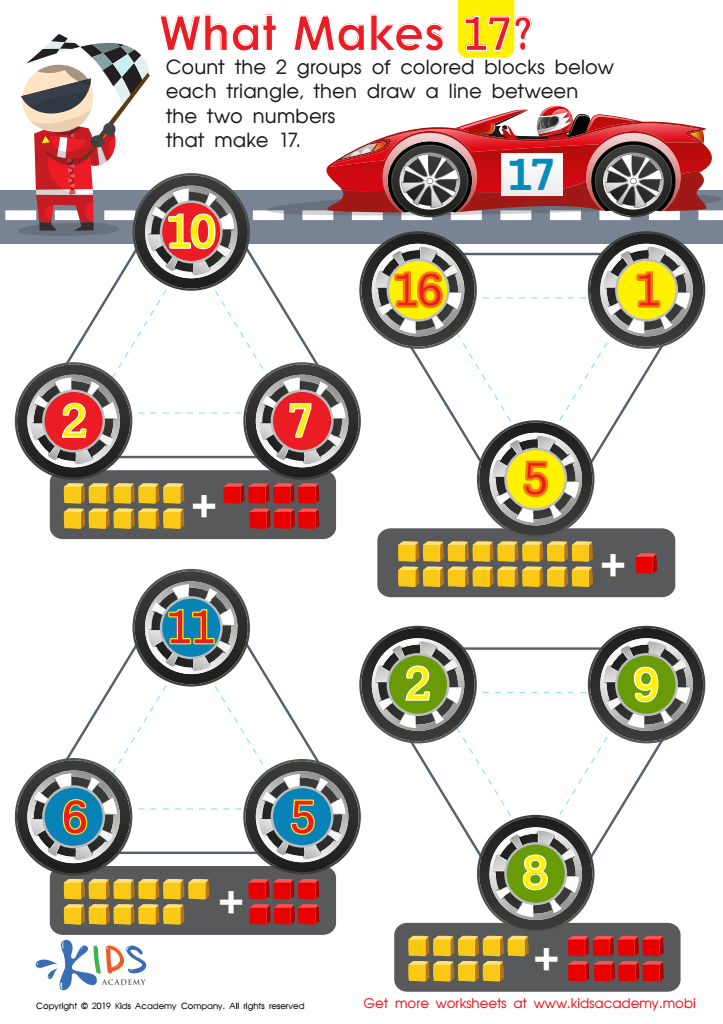
What Makes 17 Worksheet
Practice makes perfect! Let your kindergartners explore addition using this worksheet. Count the blocks in each triangle to reach the same total of 17, and draw a line between the two numbers. Once they get the hang of it, nothing will be too difficult!
What Makes 17 Worksheet
Worksheet
Join Kids Academy for Free
Who is primarily going to use this learning content?








Mathematical thinking is vital for 4-year-olds because it lays the foundational building blocks for future learning and cognitive development. Early introduction to math concepts nurtures logical reasoning, problem-solving skills, and critical thinking. For young children, math comes alive in everyday activities; counting blocks, recognizing patterns, and sorting objects are all formative experiences.
When parents and teachers engage children with mathematical thinking, they empower them to explore and make sense of the world. Counting how many apples are needed for a snack, identifying shapes around the house, and comparing the size of toys foster an intuitive understanding of quantities, relationships, and properties. Crucially, these activities are often social and collaborative, enhancing communication and social skills as children explain their thought processes and listen to others' ideas.
Moreover, early exposure to math promotes a positive attitude toward the subject. Children who interact with math-based play and learning in a supportive environment develop confidence and are less likely to encounter anxiety or avoidance behaviors in later school years. By caring about and encouraging mathematical thinking, parents and teachers play a crucial role in developing children's intellectual curiosity, academic readiness, and lifelong learning capabilities.








