Practice addition Worksheets for 4-Year-Olds
3 filtered results
-
From - To
Welcome to our Practice Addition Worksheets for 4-Year-Olds! Designed to make learning fun, our engaging worksheets help your little ones grasp the basics of addition through colorful illustrations and interactive activities. These worksheets encourage hands-on practice, boosting number recognition and early math skills while nurturing a love for learning. Perfect for home or school use, they include simple exercises tailored to fit the developmental stage of young learners. Start your child’s math journey today with our easy-to-use resources and watch their confidence soar as they master the foundational skills of addition!
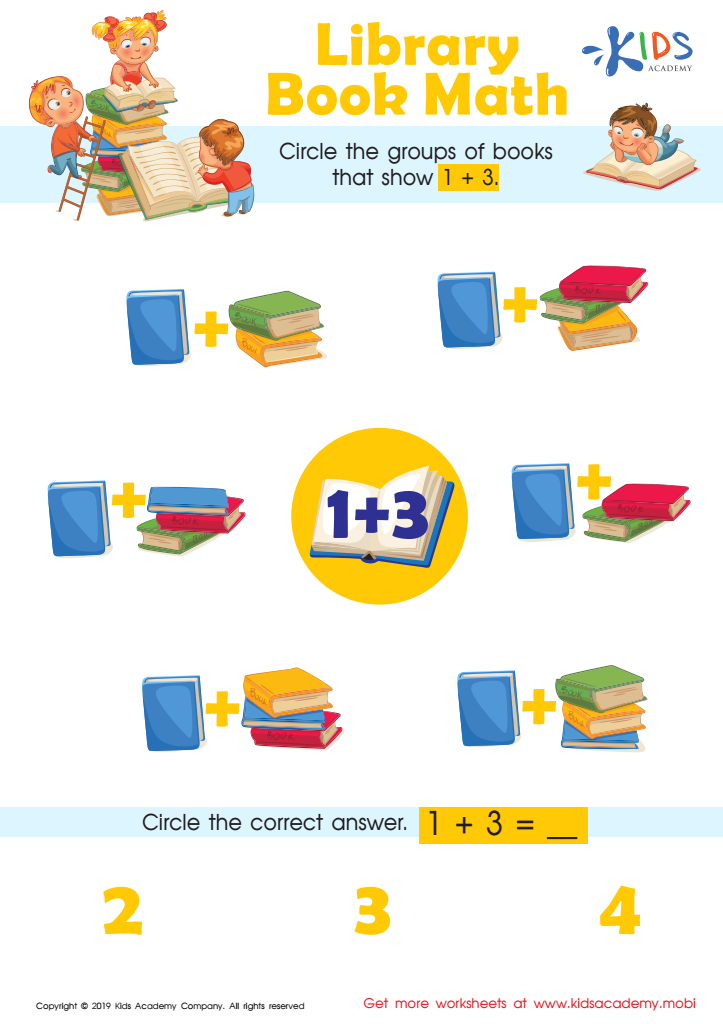
Library Book Math Worksheet
 Assign to My Students







Parents and teachers should prioritize practice addition for 4-year-olds because it lays a crucial foundation for early mathematics and cognitive development. At this age, children are naturally curious and eager to explore numbers and patterns. Engaging them in addition practice enhances their number sense and problem-solving skills, helping them understand the world around them.
Early exposure to addition promotes critical thinking and reasoning abilities. Activities involving addition, such as counting toys or using fingers, encourage interactive learning and make math fun, reducing the anxiety often associated with the subject later in life. These foundational skills not only support academic success in mathematics but also build confidence in a child’s ability to tackle challenges.
Furthermore, practicing addition enhances fine motor skills through hands-on activities and fosters communication skills as children articulate their thought processes. It also strengthens parent-child or teacher-student relationships through cooperative learning experiences. In essence, introducing addition at this developmental stage prepares children for future academic pursuits and instills a love for learning. Thus, nurturing mathematical understanding early on contributes significantly to a child's overall growth and prepares them for a successful educational journey.








