
Reading proficiency Worksheets for 4-Year-Olds
5 filtered results
Difficulty Level
Grade
Age
-
From - To
Subject
Activity
Standards
Boost your child's reading skills with our engaging Reading Proficiency Worksheets for 4-Year-Olds! Designed to enhance comprehension and fluency, these printable activities are perfect for young learners. Your child will explore letter recognition, rhyming words, and vocabulary building while having fun. Each worksheet is tailored to encourage essential literacy skills at this crucial developmental stage. Foster a love for reading through playful exercises that spark curiosity and creativity. With our worksheets, children can learn at their own pace, ensuring a solid foundation for future reading success. Start your child's reading journey today with our delightful, educational resources!
Favorites
With answer key
Interactive
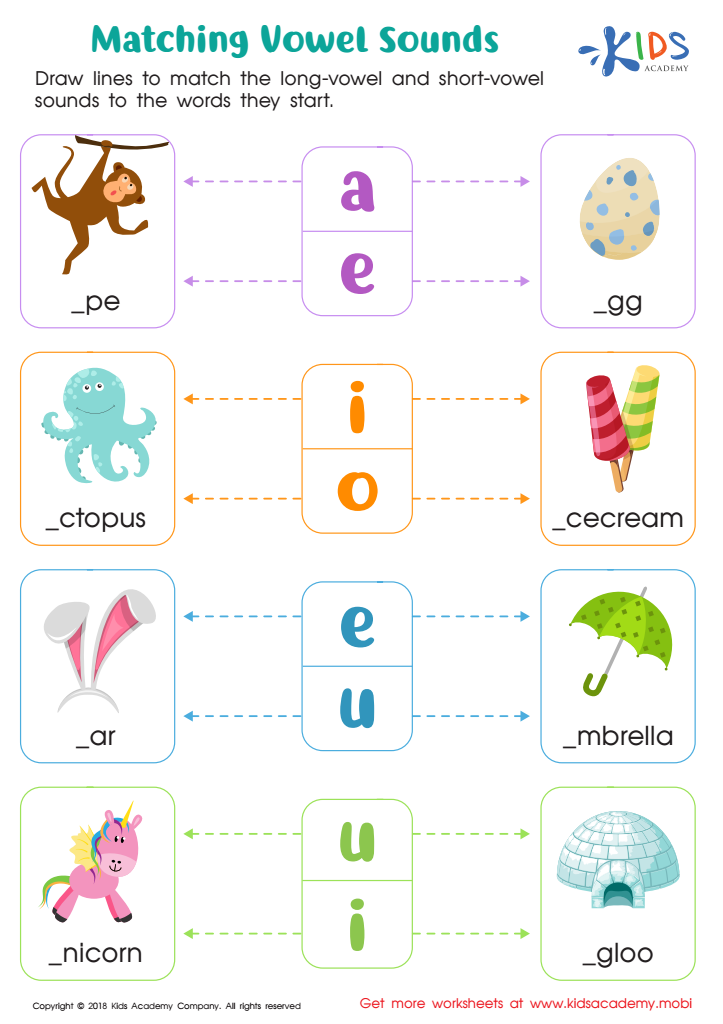
Matching Vowel Sounds Worksheet
Teach your child phonics with a fun worksheet! Ask your child to name a vowel sound and listen if it's long or short. Differentiating between long and short vowel sounds can be tricky, but this matching worksheet makes it easy for kids to understand. Have fun and master phonics - the worksheet will help them understand the difference between long and short vowel sounds!
Matching Vowel Sounds Worksheet
Worksheet
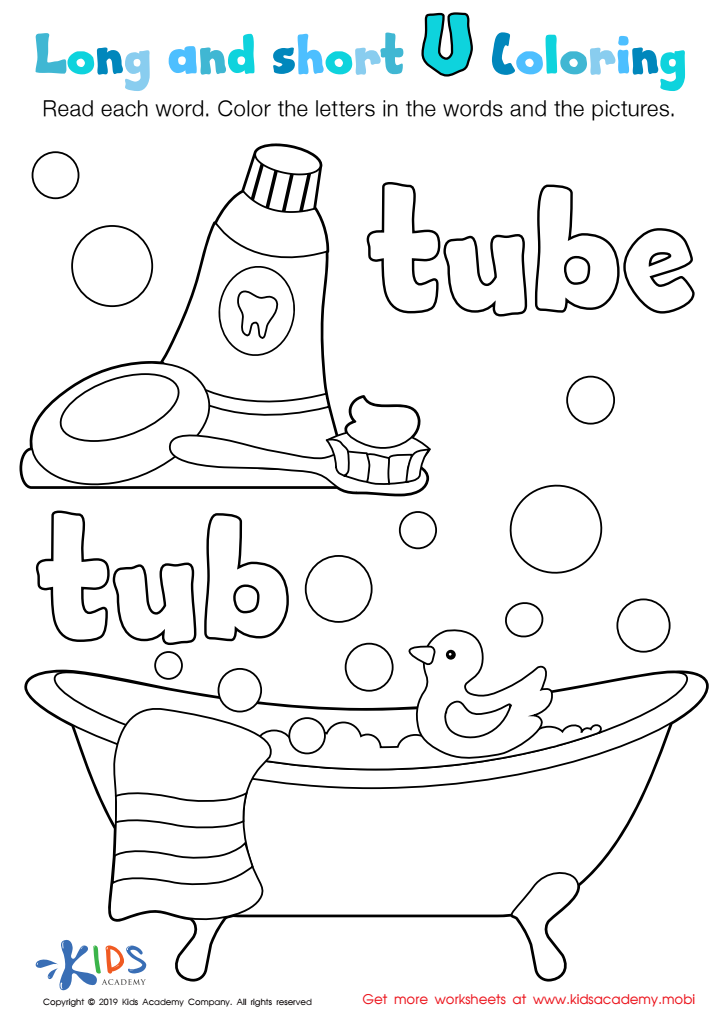
Long and Short U Worksheet
Revised: Spice up your lesson on long and short vowels with this fun printout! Kids read the words "tube" and "tub," then reinforce the sound by coloring in the words and pictures. It's a great way to make phonics class enjoyable!
Download (PDF)
 Assign to My Students
Assign to My Students
Long and Short U Worksheet
Worksheet
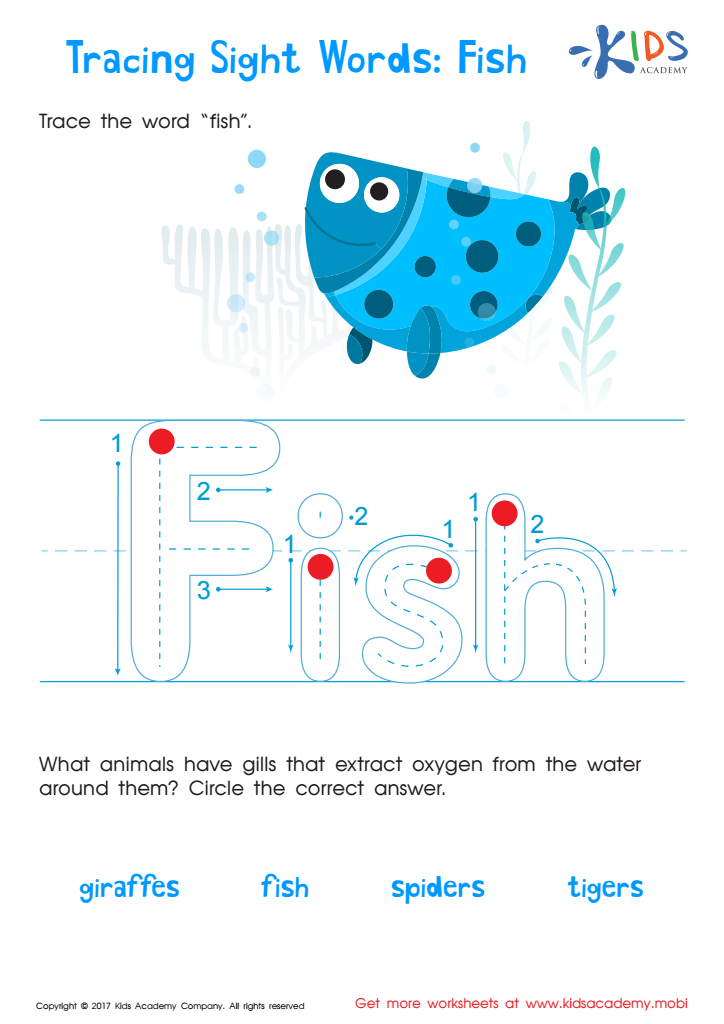
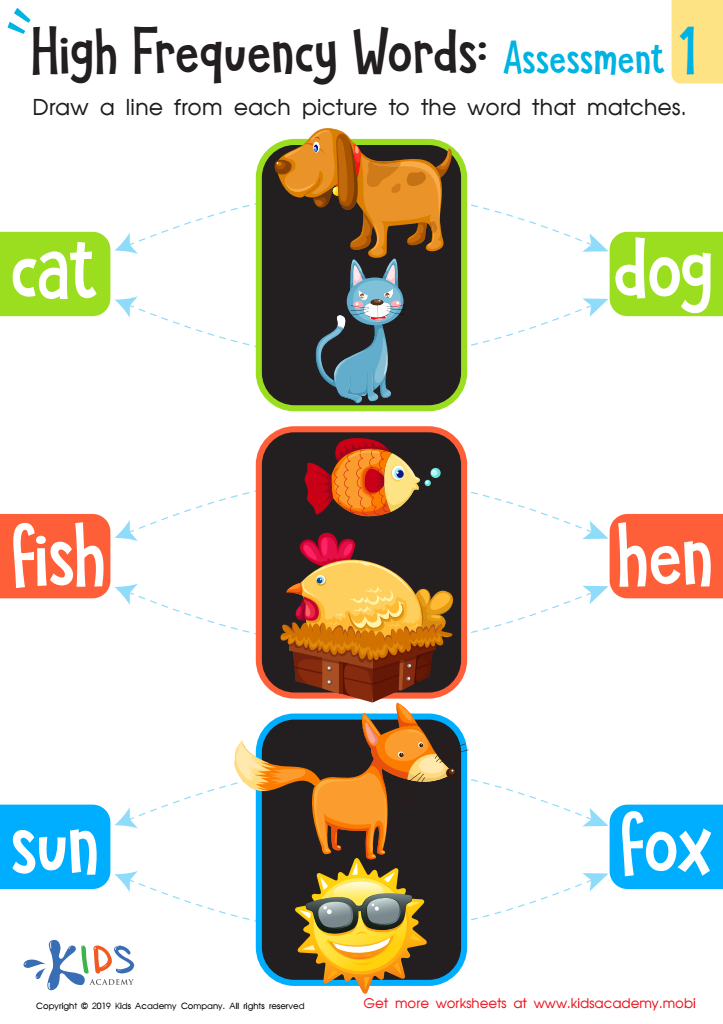
High Frequency Words: Assessment 1 Worksheet
Emergent readers need to know high-frequency words accurately and quickly to develop fluency. Connecting these words to colorful, fun pictures helps reading prosody. This assessment worksheet uses traceable lines to help learners match pictures to words.
High Frequency Words: Assessment 1 Worksheet
Worksheet
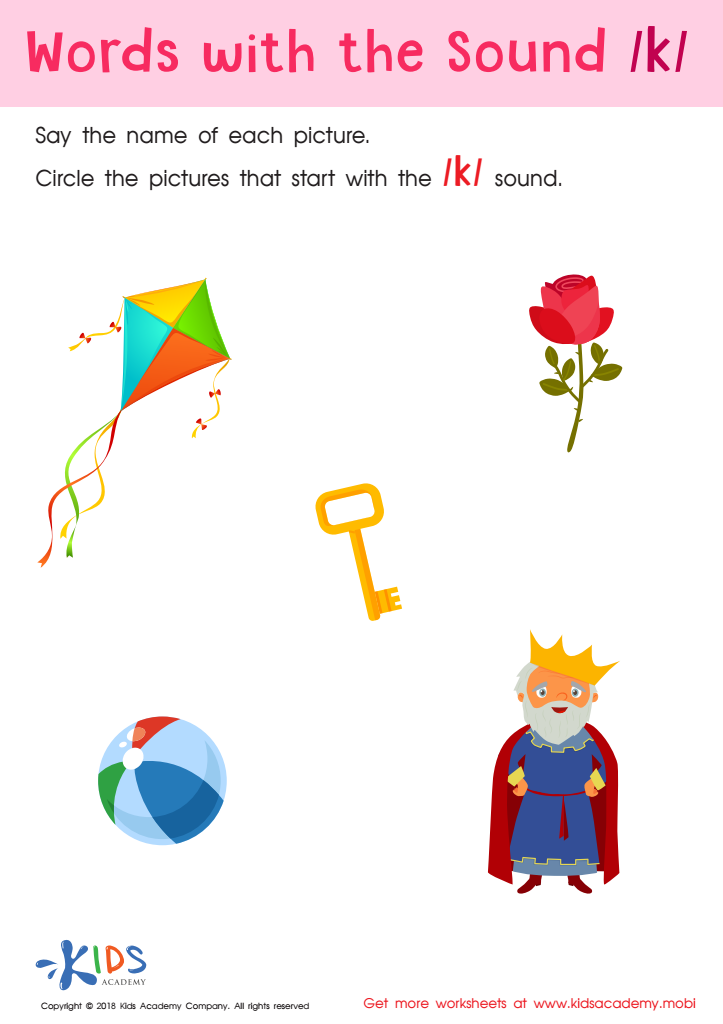
Words with sound k Reading Worksheet
Help your preschooler master the hard "k" sound with this fun worksheet from Kids Academy! Ask your child to say each picture aloud and circle only the pictures that start with "k". This early reading exercise will boost phonics skills and is sure to be loved by your little learner!
Words with sound k Reading Worksheet
Worksheet
Join Kids Academy for Free
Who is primarily going to use this learning content?






.jpg)
Reading proficiency in 4-year-olds sets the foundation for lifelong learning and academic success. At this age, children exhibit rapid brain development, making it an ideal time to introduce literacy skills. Early exposure to reading not only helps develop vocabulary and comprehension but also fosters a love for books and learning. Parents and teachers who prioritize reading proficiency promote critical cognitive development, enabling children to think creatively and express themselves effectively.
Additionally, children who are read to regularly demonstrate improved social skills, emotional intelligence, and a greater sense of curiosity about the world around them. By nurturing early reading habits, parents and teachers can combat potential learning gaps, especially for those from disadvantaged backgrounds. Research indicates that early literacy experiences correlate strongly with future academic performance, as proficient readers are more likely to succeed throughout their educational journey.
Moreover, functional communication skills built through reading enhance a child’s ability to interact with peers and adults, promoting stronger relationships. Therefore, instilling reading proficiency at this young age is crucial, benefiting not just individual children but the overall classroom environment and community, paving the way for a more educated society. Engaging with and supporting early literacy is an investment in a child’s future.








