Understanding comparisons Worksheets for 4-Year-Olds
3 filtered results
-
From - To
"Understanding Comparisons Worksheets for 4-Year-Olds" offer engaging activities that help your child grasp fundamental comparison concepts. Tailored for preschoolers, these worksheets make learning fun with colorful visuals and simple exercises. Children will explore comparisons by distinguishing between sizes, quantities, and lengths, nurturing their critical thinking and observation skills. Perfect for early learners, these activities not only reinforce basic math but also build essential vocabulary. Whether it's identifying bigger and smaller items or comparing objects, your preschooler will enjoy every moment. Start your child's educational journey with these specially designed comparison worksheets and watch their confidence grow.
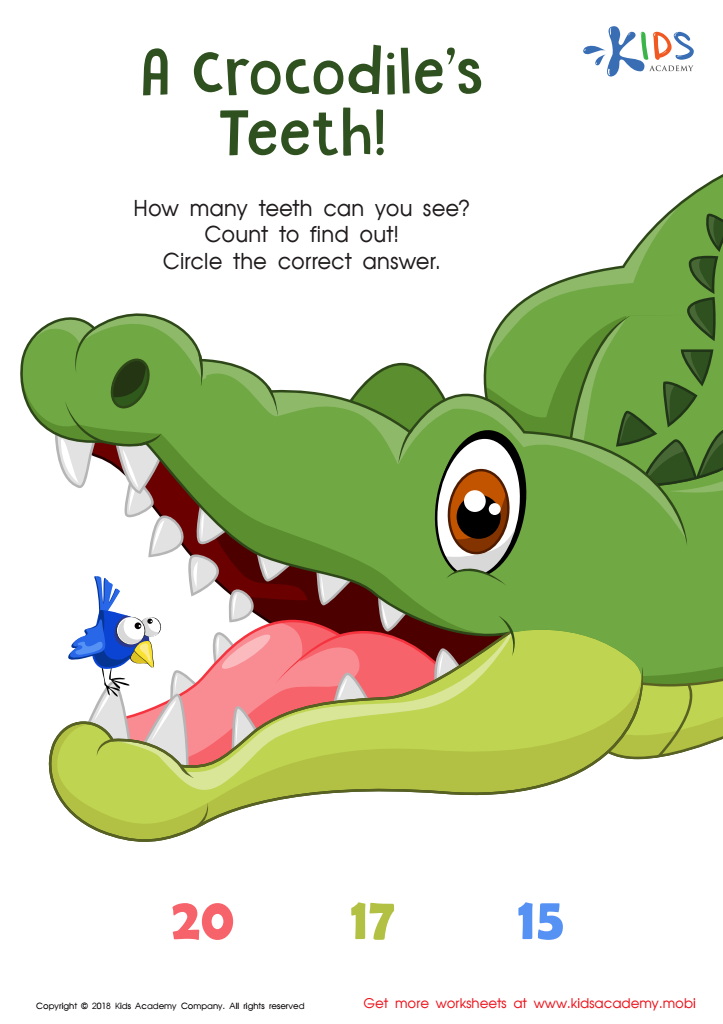
A Crocodile's Teeth Worksheet
 Assign to My Students
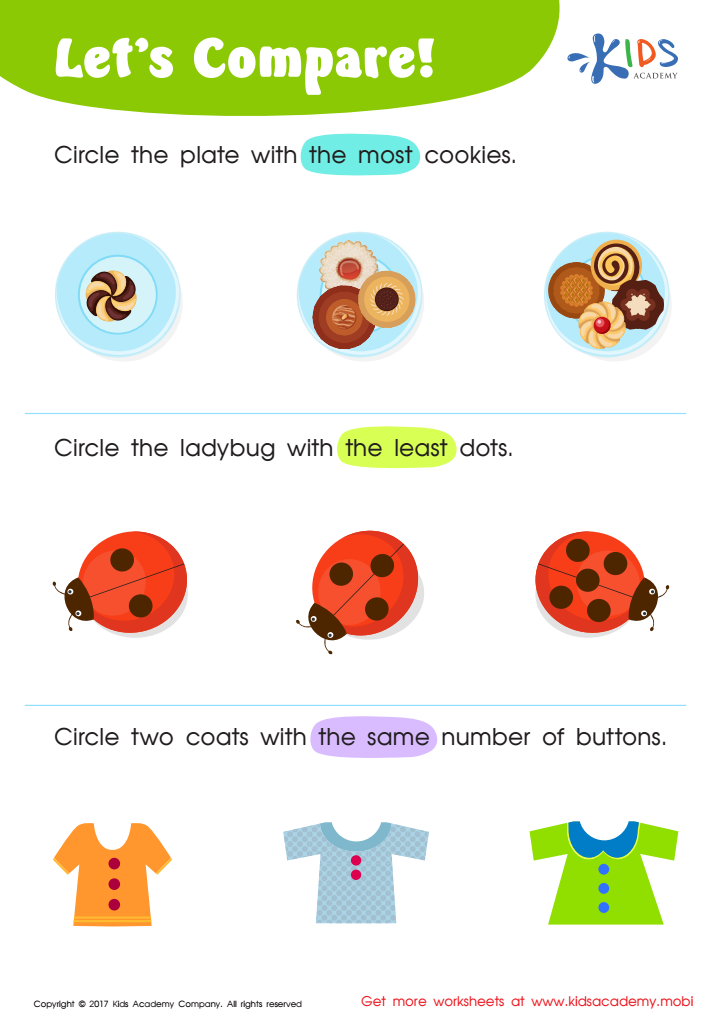
Matching: Classifying Toys by Size Worksheet
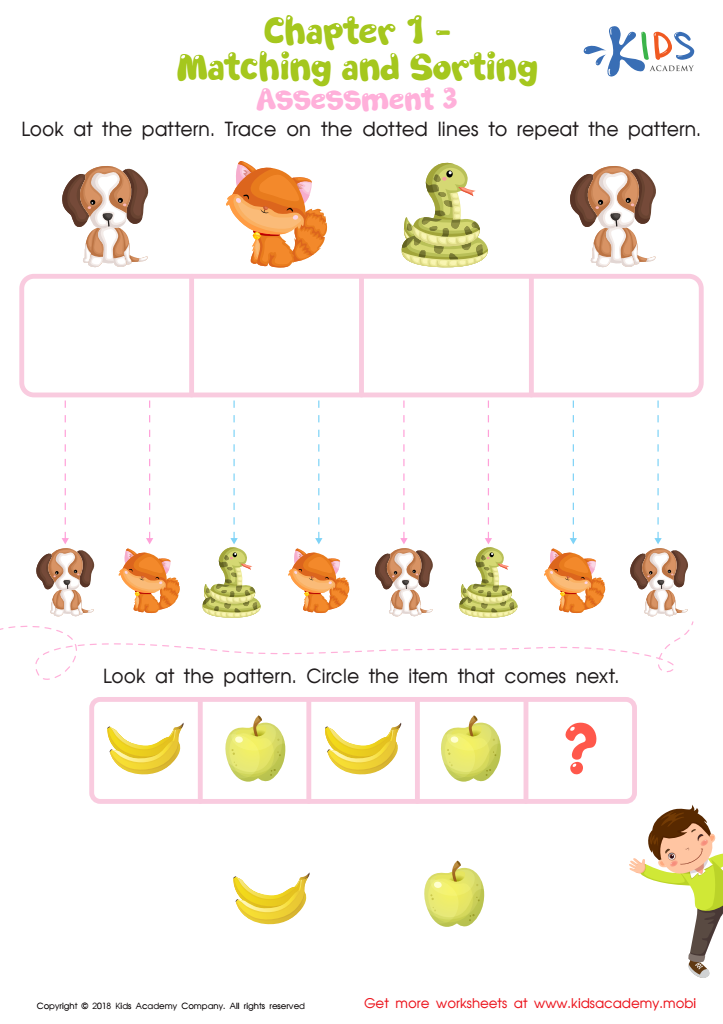
Matching and Sorting for Preschool: Assessment 3 Worksheet







Understanding comparisons is vital in early childhood development as it lays foundational cognitive, social, and life skills. When parents and teachers help 4-year-olds grasp comparisons, they foster essential mathematical and analytical skills. For instance, distinguishing between big and small, more and less, or fast and slow, aids in their general comprehension of the world and quantitative thinking.
At this age, children are naturally curious and are eager to make sense of their environment. When they learn how to compare, they start developing logical thinking and decision-making skills. This is crucial for problem-solving, which extends beyond academics into everyday tasks. For example, knowing that one toy is bigger than another can influence their choice of where to store their belongings.
Moreover, comparisons can enhance language development. Using descriptive words like "taller," "heavier," or "brighter" broadens their vocabulary and communication skills. Socially, understanding basic comparisons can help in interactions with peers, promoting empathy and cooperation. Children learn to comprehend and articulate differences in needs and perspectives.
In summary, nurturing comparison skills in 4-year-olds aids in cognitive development, language acquisition, and social interaction. It's a critical step that helps create a well-rounded foundation for their future educational and personal success.








